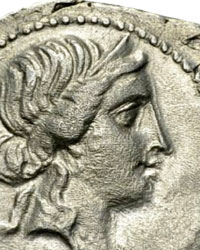
Achämenidenreich Tetradrachm 350-334 BC, Rare!


05
Tage
07
Stunden
54
Minuten
55
Sekunden
Aktuelles Gebot
€ 150
Mindestpreis nicht erreicht

Experte
Von Willem Knapen ausgewählt
Studierte Ägyptologie und bewertete früher archäologische Objekte zur Auktion. Hat über zehn Jahre Erfahrung mit antiken Münzen.
Schätzung € 1.600 - € 1.800
28 andere Benutzer beobachten dieses Objekt
 | 150 € | |
|---|---|---|
 | 35 € | |
| 30 € | |
Käuferschutz auf Catawiki
Ihre Zahlung wird von uns sicher verwahrt, bis Sie Ihr Objekt erhalten.Details ansehen
Trustpilot 4.4 | 134906 Bewertungen
Auf Trustpilot als hervorragend bewertet.
Silber-Tetradrachm aus Karien, Achaimenische Periode (ca. 350–334 v. Chr.), guter bis sehr feiner Zustand, Gewicht 15,2 g, Durchmesser 21 mm, mit Echtheitszertifikat.
KI-gestützte Zusammenfassung
Vom Verkäufer bereitgestellte Beschreibung
*This coin comes with certificate of authenticity*
CARIA. Achaemenid Period. (Circa 350-334 BC).Tetradrachm.
Obv : Persian king in kneeling-running stance right, drawing bow.
Rev : Satrap on horseback right, thrusting spear.
Konuk, Influences, Group 2; SNG Copenhagen (Persian Empire) 290-291.
Condition : Good very fine.
Material : Silver.
Axis : 6h.
Weight : 15.2 gr.
Diameter : 21 mm.
Struck in Caria during the final decades of Achaemenid rule, this remarkable silver tetradrachm captures the visual language of imperial power at a moment of profound historical transition. The obverse presents the Persian king in the dynamic kneeling-running stance, bow drawn and poised for action—a canonical image of Achaemenid royal ideology, emphasizing vigilance, authority, and divine legitimacy. The energetic posture conveys not merely motion, but the ever-ready might of the Great King and his dominion.
On the reverse, a local satrap is shown on horseback, thrusting his spear forward. This powerful equestrian scene reflects the military and administrative realities of western Asia Minor, where Persian-appointed governors ruled vast territories while maintaining strong local identities. The pairing of royal and satrapal imagery on a single coin underscores the dual structure of Achaemenid governance: centralized imperial authority complemented by regional power.
Coins of this group, as classified by Konuk, vividly illustrate the interaction between Persian imperial iconography and Anatolian artistic traditions. Issued shortly before Alexander the Great’s conquest, this tetradrachm stands as a compelling witness to the last phase of Persian control in Caria—an era marked by cultural fusion, political tension, and the approaching end of an empire.
A historically charged and visually striking issue, ideal for collectors of Achaemenid coinage, Asia Minor, or the late Classical world.
The lot could be subject to additional costs such as customs clearance and the costs of import duties. Please note that these costs fall to the buyer.
Der Verkäufer stellt sich vor
Ich bin Antiken-Münzenhändler und habe mich sofort in die Antike verliebt, seitdem ich vor Jahren mit dem Verkauf begonnen habe. Sie finden bei meinen Auktionen immer eine gute Mischung aus erschwinglichen und hochwertigeren Stücken, mit einer besonderen Vorliebe für byzantinische Münzen (manchmal aus meiner eigenen Sammlung).
Übersetzt mit Google Übersetzer*This coin comes with certificate of authenticity*
CARIA. Achaemenid Period. (Circa 350-334 BC).Tetradrachm.
Obv : Persian king in kneeling-running stance right, drawing bow.
Rev : Satrap on horseback right, thrusting spear.
Konuk, Influences, Group 2; SNG Copenhagen (Persian Empire) 290-291.
Condition : Good very fine.
Material : Silver.
Axis : 6h.
Weight : 15.2 gr.
Diameter : 21 mm.
Struck in Caria during the final decades of Achaemenid rule, this remarkable silver tetradrachm captures the visual language of imperial power at a moment of profound historical transition. The obverse presents the Persian king in the dynamic kneeling-running stance, bow drawn and poised for action—a canonical image of Achaemenid royal ideology, emphasizing vigilance, authority, and divine legitimacy. The energetic posture conveys not merely motion, but the ever-ready might of the Great King and his dominion.
On the reverse, a local satrap is shown on horseback, thrusting his spear forward. This powerful equestrian scene reflects the military and administrative realities of western Asia Minor, where Persian-appointed governors ruled vast territories while maintaining strong local identities. The pairing of royal and satrapal imagery on a single coin underscores the dual structure of Achaemenid governance: centralized imperial authority complemented by regional power.
Coins of this group, as classified by Konuk, vividly illustrate the interaction between Persian imperial iconography and Anatolian artistic traditions. Issued shortly before Alexander the Great’s conquest, this tetradrachm stands as a compelling witness to the last phase of Persian control in Caria—an era marked by cultural fusion, political tension, and the approaching end of an empire.
A historically charged and visually striking issue, ideal for collectors of Achaemenid coinage, Asia Minor, or the late Classical world.
The lot could be subject to additional costs such as customs clearance and the costs of import duties. Please note that these costs fall to the buyer.
Der Verkäufer stellt sich vor
Ich bin Antiken-Münzenhändler und habe mich sofort in die Antike verliebt, seitdem ich vor Jahren mit dem Verkauf begonnen habe. Sie finden bei meinen Auktionen immer eine gute Mischung aus erschwinglichen und hochwertigeren Stücken, mit einer besonderen Vorliebe für byzantinische Münzen (manchmal aus meiner eigenen Sammlung).
Übersetzt mit Google ÜbersetzerDetails
Epoche
Vor 1400
Kultur/ Region
Achämenidenreich
Jahr / Periode und Variation
350-334 BC, Rare!
Nennwert
Tetradrachm
Metall
AR
Zustand
Good VF
Verkauft von