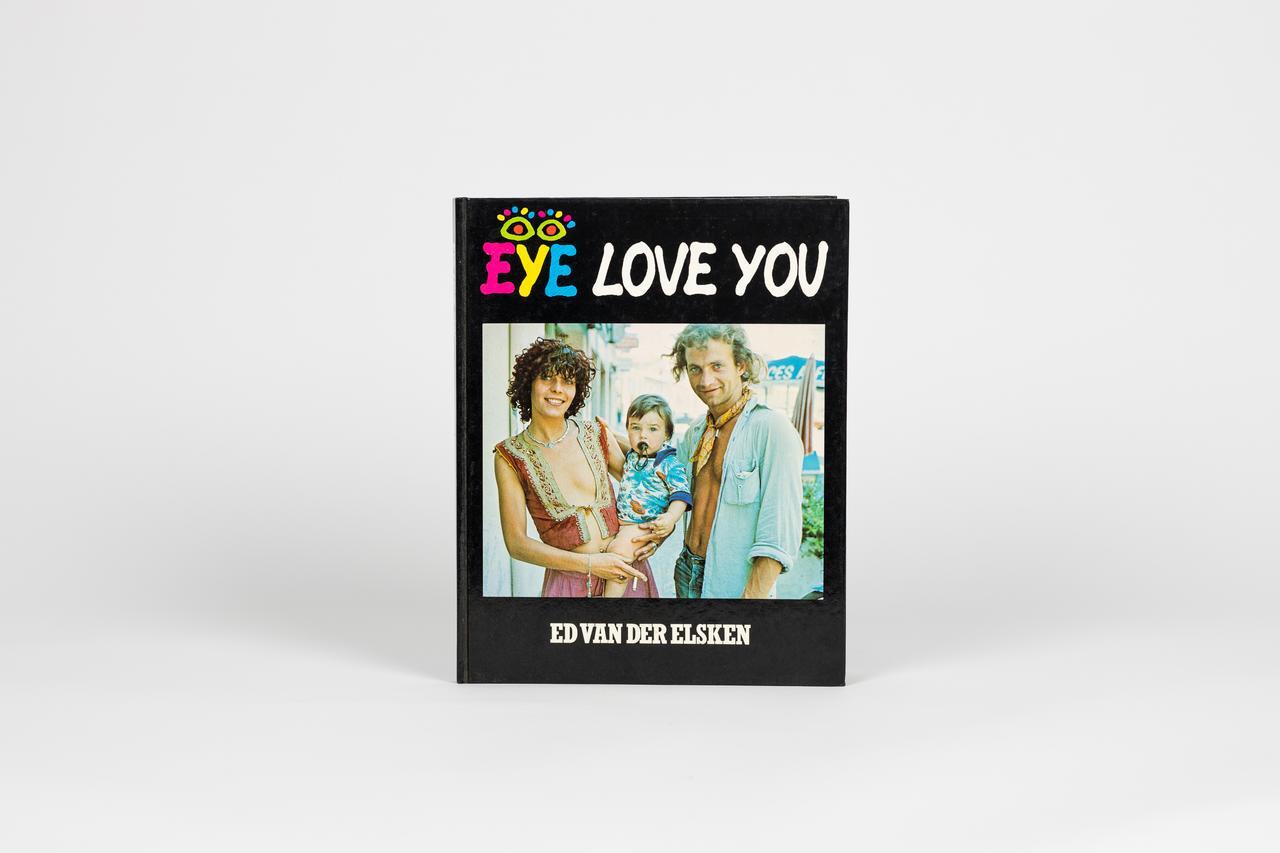
Christian Boltanski - Les suisses morts (MINT CONDITION) - 1991


13
days
02
hours
29
minutes
07
seconds

6 other people are watching this object
 | €1 |
|---|
Catawiki Buyer Protection
Your payment’s safe with us until you receive your object.View details
Trustpilot 4.4 | 133996 reviews
Rated Excellent on Trustpilot.
Christian Boltanski’s Les suisses morts, first edition paperback (1991) published by Museum für Moderne Kunst, Frankfurt, 100 pages, 188 × 204 mm, text in English and German, in as new condition.
AI-assisted summary
Description from the seller
PLEASE ENJOY the ONE-SELLER-AUCTION by 5Uhr30.com (Ecki Heuser, Cologne, Germany) - with INTERNATIONAL PHOTOBOOKS from my PRIVATE COLLECTION and from RECENT ACQUISITATIONS.
RARE OPPORTUNITY to purchase this FANTASTIC ARTIST AND PHOTO BOOK
by Christian Boltanski (1944-2021) - in BRANDNEW CONDITION.
Mentioned here:
802 photobooks from the M. + M. Auer collection, page 694.
Christian Boltanski is famous for a lot of brilliant artist books like "Menschlich" or "Kaddish".
New, mint, unread - COLLECTOR'S COPY.
This is a lot by 5Uhr30.com (Ecki Heuser, Cologne, Germany).
5Uhr30.com guarantees detailed and accurate descriptions, 100% protection,
100% insurance and combined shipping worldwide.
Museum für Moderne Kunst, Frankfurt. 1991. First edition, first printing.
Paperback (as issued). 188 x 204 mm. 100 pages. Text in English and German.
Great photo and artist book - in perfect condition.
"Christian Liberté Boltanski was a French sculptor, photographer, painter, and film maker. He is best known for his photography installations and contemporary French conceptual style.
Boltanski was born in Paris on 6 September 1944. His father, Étienne Alexandre Boltanski, a physician, was Jewish and had come to France from Russia, while Marie-Elise Ilari-Guérin, his Roman Catholic mother originated from Corsica, descended from Ukrainian Jews. His Jewish heritage was a large influence in Boltanski's household. During World War II, while living in Paris, his father escaped deportation by hiding in a space under the floorboards of the family apartment for a year and a half. Christian grew up with this knowledge, and his early experiences with wartime affairs deeply affected him. These experiences would influence his artwork later on. He dropped out of school at age 12.
Boltanski began creating art in the late 1950s, but did not rise to prominence until almost a decade later through a few short, avant-garde films and some published notebooks in which he referenced his childhood. He had his first one-man exhibition at the Théâtre Le Ranelagh in May 1968. His earliest works included imagery of ideal families and imaginary lifestyles (something Boltanski always lacked), made to display as if they were in museums.
Boltanski began creating mixed media/materials installations in 1986 with light as essential concept. Tin boxes, altar-like construction of framed and manipulated photographs (e.g. Le Lycée Chases, 1986–1987), photographs of Jewish schoolchildren taken in Vienna in 1931, used as a forceful reminder of mass murder of Jews by the Nazis, all those elements and materials used in his work are used in order to represent deep contemplation regarding reconstruction of past. While creating Reserve (exhibition at Museum für Gegenwartskunst in Basel in 1989), Boltanski filled rooms and corridors with worn clothing items as a way of inciting profound sensation of human tragedy at concentration camps. As in his previous works, objects serve as relentless reminders of human experience and suffering. His piece, Monument (Odessa), uses six photographs of Jewish students in 1939 and lights to resemble Yahrzeit candles to honor and remember the dead. "My work is about the fact of dying, but it's not about the Holocaust itself." In 1971 Boltanski produced his installation, L' Album de la famille D. 1939-1964.
Additionally, his enormous installation titled "No Man's Land" (2010) at the Park Avenue Armory in New York City, is a great example of how his constructions and installations trace the lives of the lost and forgotten."
(Wikipedia)
Seller's Story
welcome to 5h30.
5Uhr30 is based in ehrenfeld, the trendiest neighborhood in cologne - with a shop and with a showroom for photography.
5H30 offers very rare, very beautiful, very special photobooks - sold-out, modern-antiquarian and antiquarian. we are also offering photo invitation cards, film and photo posters, photo catalogs and original photo prints.
5Uhr30 is specialized on german photo publications,
but also has an exciting range of photo books from all over europe, japan, north and south america. travel brochures, children's books, company brochures...everything that has to do with photography in the narrower or broader sense inspires us. please visit us if you are in cologne or the surrounding area. You will not regret it! :)
5:30 am always tries to offer the best condition.
5h30 is shipping worldwide, fast and safe -
with 100% protection, with full insurance and with tracking number.
please contact us by email, if you have any questions or if you are looking for something special, cause only a part of our offers are online.
Thanks for your interest.
ecki heuser and team
Translated by Google TranslatePLEASE ENJOY the ONE-SELLER-AUCTION by 5Uhr30.com (Ecki Heuser, Cologne, Germany) - with INTERNATIONAL PHOTOBOOKS from my PRIVATE COLLECTION and from RECENT ACQUISITATIONS.
RARE OPPORTUNITY to purchase this FANTASTIC ARTIST AND PHOTO BOOK
by Christian Boltanski (1944-2021) - in BRANDNEW CONDITION.
Mentioned here:
802 photobooks from the M. + M. Auer collection, page 694.
Christian Boltanski is famous for a lot of brilliant artist books like "Menschlich" or "Kaddish".
New, mint, unread - COLLECTOR'S COPY.
This is a lot by 5Uhr30.com (Ecki Heuser, Cologne, Germany).
5Uhr30.com guarantees detailed and accurate descriptions, 100% protection,
100% insurance and combined shipping worldwide.
Museum für Moderne Kunst, Frankfurt. 1991. First edition, first printing.
Paperback (as issued). 188 x 204 mm. 100 pages. Text in English and German.
Great photo and artist book - in perfect condition.
"Christian Liberté Boltanski was a French sculptor, photographer, painter, and film maker. He is best known for his photography installations and contemporary French conceptual style.
Boltanski was born in Paris on 6 September 1944. His father, Étienne Alexandre Boltanski, a physician, was Jewish and had come to France from Russia, while Marie-Elise Ilari-Guérin, his Roman Catholic mother originated from Corsica, descended from Ukrainian Jews. His Jewish heritage was a large influence in Boltanski's household. During World War II, while living in Paris, his father escaped deportation by hiding in a space under the floorboards of the family apartment for a year and a half. Christian grew up with this knowledge, and his early experiences with wartime affairs deeply affected him. These experiences would influence his artwork later on. He dropped out of school at age 12.
Boltanski began creating art in the late 1950s, but did not rise to prominence until almost a decade later through a few short, avant-garde films and some published notebooks in which he referenced his childhood. He had his first one-man exhibition at the Théâtre Le Ranelagh in May 1968. His earliest works included imagery of ideal families and imaginary lifestyles (something Boltanski always lacked), made to display as if they were in museums.
Boltanski began creating mixed media/materials installations in 1986 with light as essential concept. Tin boxes, altar-like construction of framed and manipulated photographs (e.g. Le Lycée Chases, 1986–1987), photographs of Jewish schoolchildren taken in Vienna in 1931, used as a forceful reminder of mass murder of Jews by the Nazis, all those elements and materials used in his work are used in order to represent deep contemplation regarding reconstruction of past. While creating Reserve (exhibition at Museum für Gegenwartskunst in Basel in 1989), Boltanski filled rooms and corridors with worn clothing items as a way of inciting profound sensation of human tragedy at concentration camps. As in his previous works, objects serve as relentless reminders of human experience and suffering. His piece, Monument (Odessa), uses six photographs of Jewish students in 1939 and lights to resemble Yahrzeit candles to honor and remember the dead. "My work is about the fact of dying, but it's not about the Holocaust itself." In 1971 Boltanski produced his installation, L' Album de la famille D. 1939-1964.
Additionally, his enormous installation titled "No Man's Land" (2010) at the Park Avenue Armory in New York City, is a great example of how his constructions and installations trace the lives of the lost and forgotten."
(Wikipedia)
Seller's Story
welcome to 5h30.
5Uhr30 is based in ehrenfeld, the trendiest neighborhood in cologne - with a shop and with a showroom for photography.
5H30 offers very rare, very beautiful, very special photobooks - sold-out, modern-antiquarian and antiquarian. we are also offering photo invitation cards, film and photo posters, photo catalogs and original photo prints.
5Uhr30 is specialized on german photo publications,
but also has an exciting range of photo books from all over europe, japan, north and south america. travel brochures, children's books, company brochures...everything that has to do with photography in the narrower or broader sense inspires us. please visit us if you are in cologne or the surrounding area. You will not regret it! :)
5:30 am always tries to offer the best condition.
5h30 is shipping worldwide, fast and safe -
with 100% protection, with full insurance and with tracking number.
please contact us by email, if you have any questions or if you are looking for something special, cause only a part of our offers are online.
Thanks for your interest.
ecki heuser and team
Translated by Google TranslateDetails
Number of books
1
Subject
Art, Photography
Book title
Les suisses morts (MINT CONDITION)
Author/ Illustrator
Christian Boltanski
Condition
As new
Publication year oldest item
1991
Height
204 mm
Edition
1st Edition
Width
188 mm
Language
English, German
Original language
Yes
Publisher
Museum für Moderne Kunst, Frankfurt
Binding/ Material
Softback
Number of pages
100
Sold by
GermanyVerified
protop
Rechtliche Informationen des Verkäufers
- Unternehmen:
- 5Uhr30.com
- Repräsentant:
- Ecki Heuser
- Adresse:
- 5Uhr30.com
Thebäerstr. 34
50823 Köln
GERMANY - Telefonnummer:
- +491728184000
- Email:
- photobooks@5Uhr30.com
- USt-IdNr.:
- DE154811593
AGB
AGB des Verkäufers. Mit einem Gebot auf dieses Los akzeptieren Sie ebenfalls die AGB des Verkäufers.
Widerrufsbelehrung
- Frist: 14 Tage sowie gemäß den hier angegebenen Bedingungen
- Rücksendkosten: Käufer trägt die unmittelbaren Kosten der Rücksendung der Ware
- Vollständige Widerrufsbelehrung