Baltic Amber with Insects - Amber - 33 mm - 12.5 mm


00
days
01
hour
09
minutes
43
seconds
Current bid
€ 20
Reserve price not met

Expert
Selected by Georgia Foteinou
Holds BSc in geology and post-graduate qualifications in geochemistry.
Estimate € 200 - € 250
7 other people are watching this object
 Bidder 1094 Bidder 1094 | €20 | |
|---|---|---|
 Bidder 5582 Bidder 5582 | €15 | |
 Bidder 1040 Bidder 1040 | €10 |
Catawiki Buyer Protection
Your payment’s safe with us until you receive your object.View details
Trustpilot 4.4 | 122115 reviews
Rated Excellent on Trustpilot.
Baltic amber with insects from Latvia, a Paleogene Eocene specimen where well preserved inclusions offer a vivid glimpse into prehistoric life.
AI-assisted summary
Description from the seller
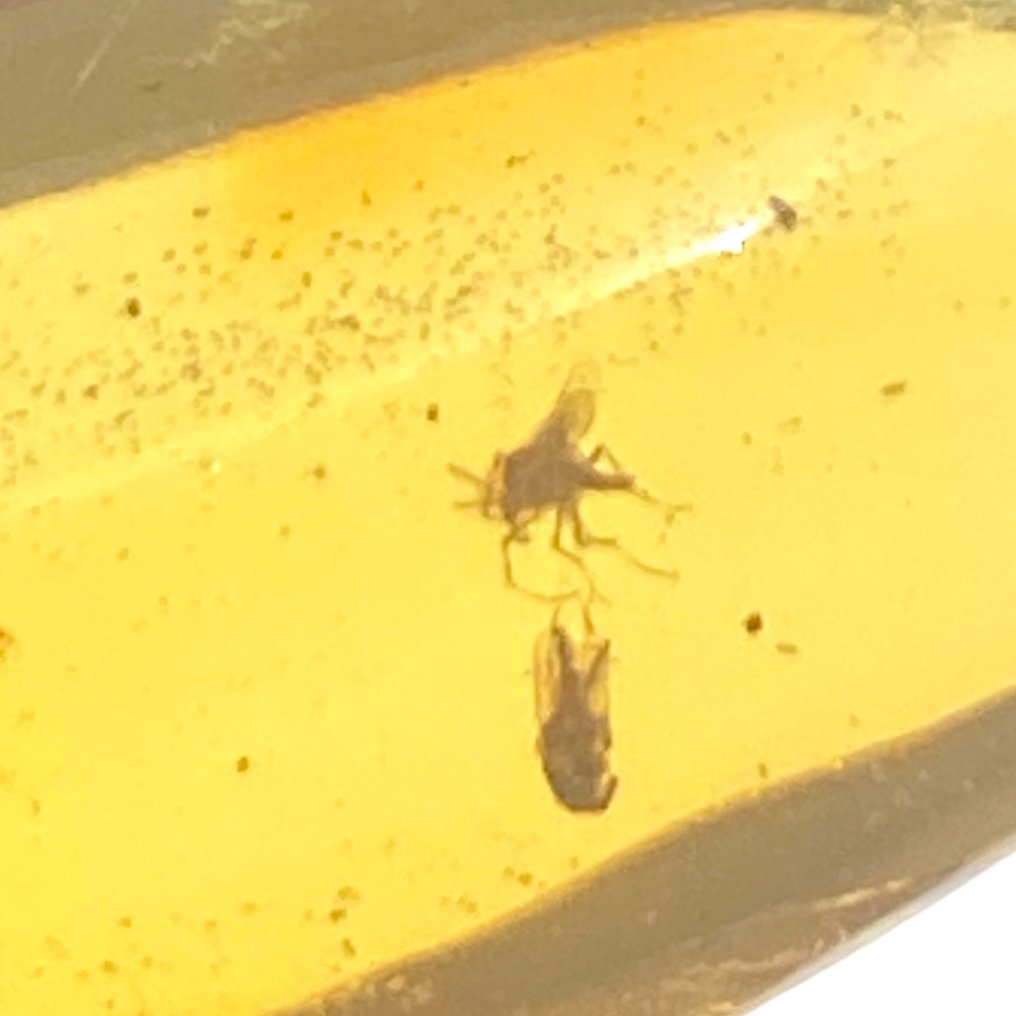
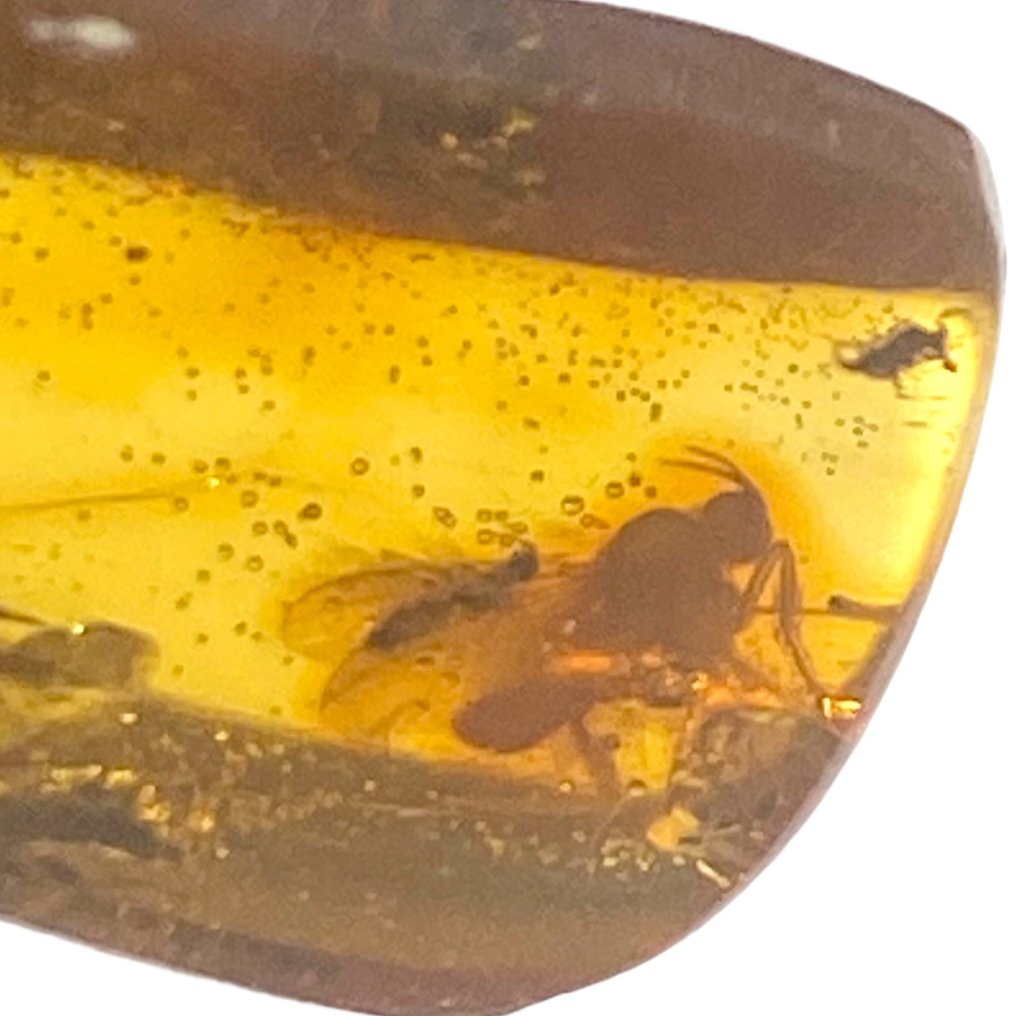
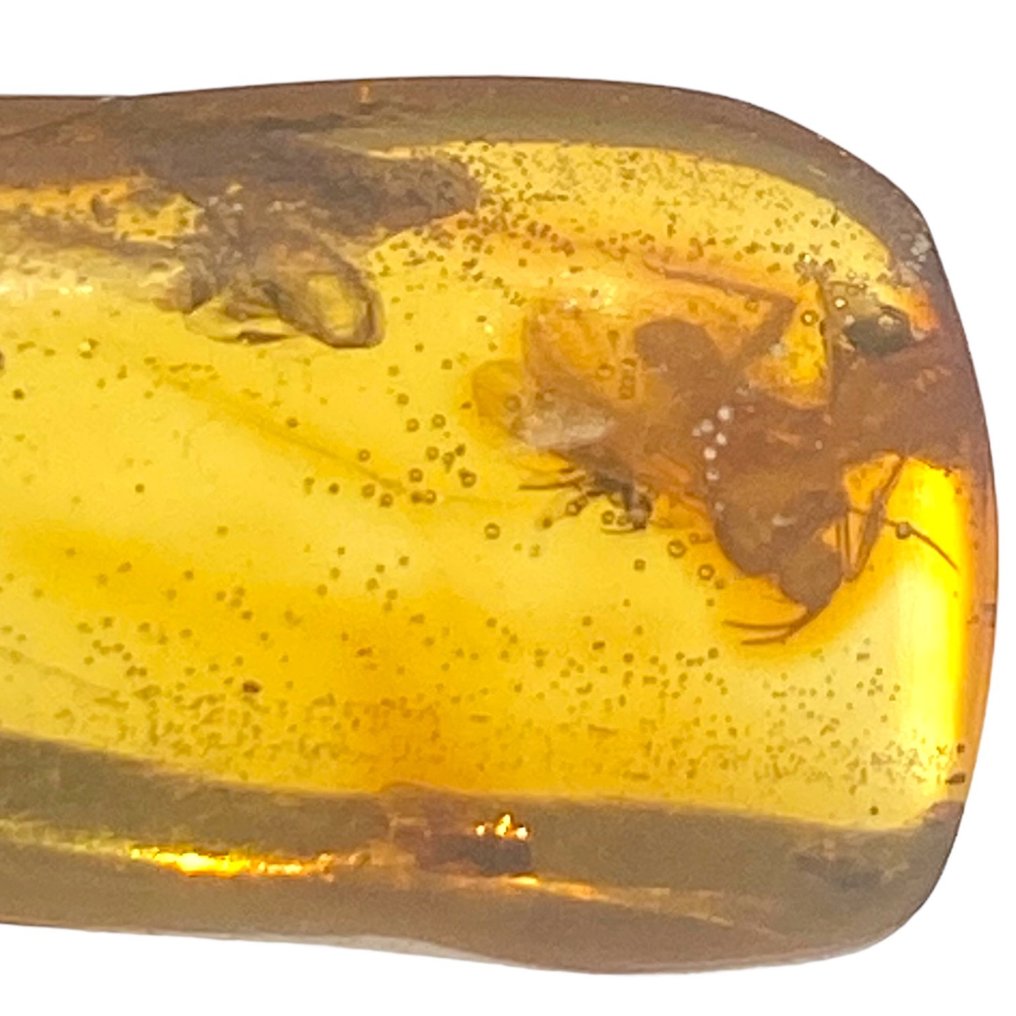
Sample of Baltic amber, a fossil resin of plant origin formed millions of years ago from conifer trees. Originating from Latvia. One of the most interesting features of this specimen is the presence of insects trapped inside it.
When amber was forming, small insects or other organisms could fall onto the still sticky resin of the trees. Over time, this resin fossilized and hardened, trapping the insects inside transparent layers. This preservation process has allowed insects to remain well-preserved for millions of years, giving us a unique window into prehistoric life.
Insects trapped in Baltic amber are a valuable source of information for scientists. Through the study of these fossil insects, entomologists and paleontologists can gain insights into the morphology, ecology, and evolution of various species. They can also provide clues about past environmental conditions, including climates and habitats.
Seller's Story
The Mineral Art Gallery offers minerals, fossils, shells and natural elements.
Born in Italy in 2017, today she collaborates with international galleries and collectors, she is a direct importer of large minerals and naturalistic collectible elements; deals with the processing to insert them inside the living space. A section of the gallery was dedicated to the Wunderkammer, "chamber of wonders or cabinet of curiosities" in which Mirabilia elements are presented: naturalia and italiania, a union between "the present is the past".
All lots are shipped via DHL Express and Fercam couriers, with insured parcel and tracking.
Translated by Google TranslateSample of Baltic amber, a fossil resin of plant origin formed millions of years ago from conifer trees. Originating from Latvia. One of the most interesting features of this specimen is the presence of insects trapped inside it.
When amber was forming, small insects or other organisms could fall onto the still sticky resin of the trees. Over time, this resin fossilized and hardened, trapping the insects inside transparent layers. This preservation process has allowed insects to remain well-preserved for millions of years, giving us a unique window into prehistoric life.
Insects trapped in Baltic amber are a valuable source of information for scientists. Through the study of these fossil insects, entomologists and paleontologists can gain insights into the morphology, ecology, and evolution of various species. They can also provide clues about past environmental conditions, including climates and habitats.
Seller's Story
The Mineral Art Gallery offers minerals, fossils, shells and natural elements.
Born in Italy in 2017, today she collaborates with international galleries and collectors, she is a direct importer of large minerals and naturalistic collectible elements; deals with the processing to insert them inside the living space. A section of the gallery was dedicated to the Wunderkammer, "chamber of wonders or cabinet of curiosities" in which Mirabilia elements are presented: naturalia and italiania, a union between "the present is the past".
All lots are shipped via DHL Express and Fercam couriers, with insured parcel and tracking.
Translated by Google TranslateDetails
Specimen
Baltic Amber with Insects
Geological Period
Paleogene, Eocene (56 - 33.9 million years)
Condition
Natural
Weight
2 g
Height
33 mm
Width
12.5 mm
Depth
6.5 mm
Sold by