Kakejiku 掛軸 (hanging scroll) - Traditional Japanese Calligraphy - Paper - 三国幽眠 Mikuni Yūmin (1810–1896) - Japan - 江戸 Edo period (1862)



03
days
21
hours
04
minutes
16
seconds

No bids placed
Catawiki Buyer Protection
Your payment’s safe with us until you receive your object.View details
Trustpilot 4.4 | 122115 reviews
Rated Excellent on Trustpilot.
A Tokugawa era kakejiku by Mikuni Yūmin with bold brushwork and two red seals, dated 1862, featuring scholarly Edo period calligraphy on natural virtue.
AI-assisted summary
Description from the seller
Item Description:
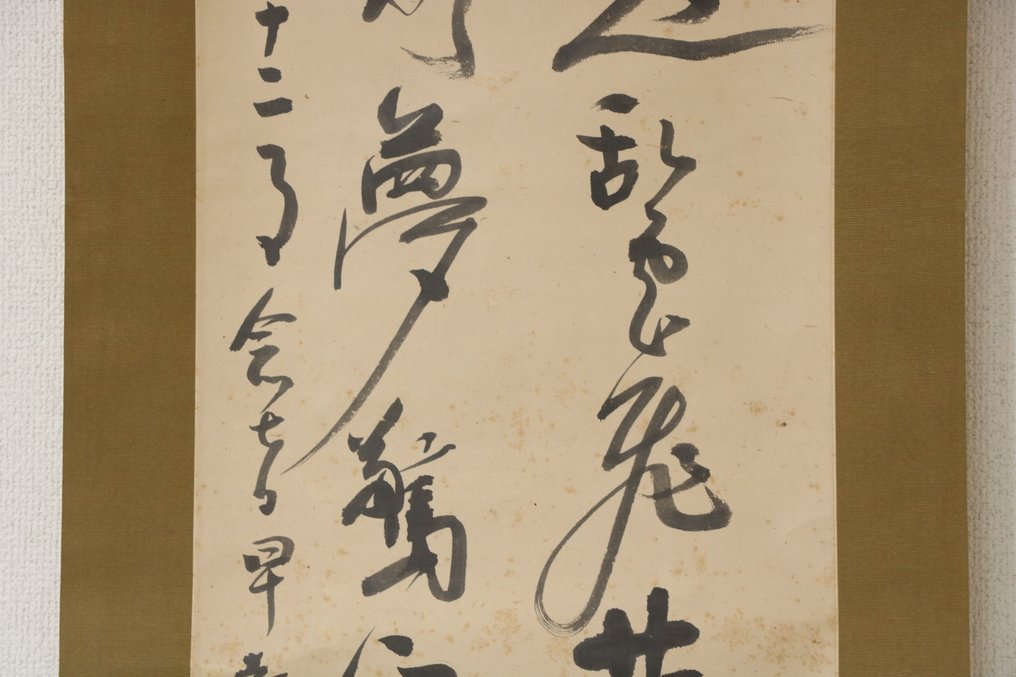
This is a Japanese hanging scroll (kakejiku) featuring a dynamic poetic calligraphy by Mikuni Yūmin (三国幽眠), a renowned Confucian scholar and calligrapher active during the late Edo to Meiji periods. The inscription is a Chinese-style poetic verse expressing the power of nature and virtue, written in bold, flowing brushwork that reflects deep scholarly refinement.
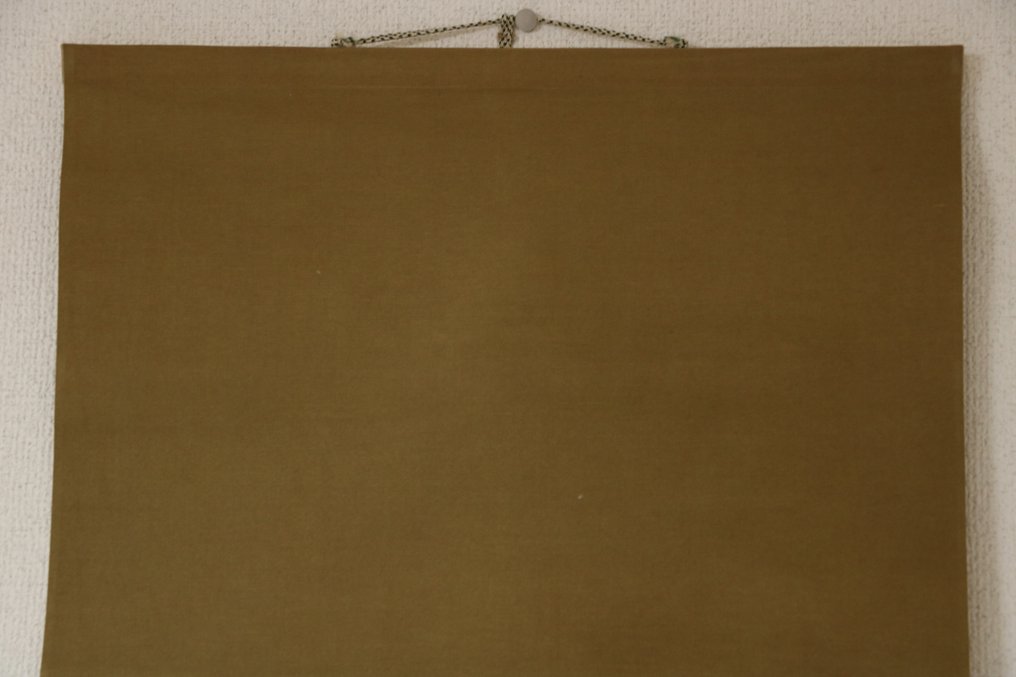
The scroll is dated Bunkyū 2 (文久二年 / 1862), placing it in the final years of the Tokugawa shogunate. The calligraphy features a traditional vertical format with two red seals and a signature by the artist. The mounting uses a warm brown outer fabric, accented with a golden floral-patterned inner border. The roller ends are crafted from dark lacquered wood. A transcription sheet and original wooden storage box accompany the scroll, both of which verify the piece's authenticity.
Visible foxing and age-related spots can be seen throughout the surface and mounting, consistent with a well-preserved 19th-century work. This is a valuable addition for collectors of Japanese calligraphy, literati culture, or historical East Asian art.
Size:
Height: 201 cm
Width: 47.5 cm
Artist Profile:
Mikuni Yūmin (三国幽眠, 1810–1896) was a prominent Confucian scholar and calligrapher active from the late Edo through the Meiji period. Born on October 1, 1810, in Mikuni (present-day Fukui Prefecture) to a wealthy merchant family, he studied in Kyoto and served as a private tutor to the aristocratic Takatsukasa family. He was associated with the sonjō (revere the emperor, expel the barbarians) movement alongside thinkers like Yanagawa Seigan. During the Ansei Purge, he was exiled but later returned to serve the Meiji government as an official lecturer in the Ministry of Religion. His style blends Confucian depth with expressive brushwork. His courtesy name was Shijō (士縄), and he also used the art names Takano (鷹巣) and Rokuroku Sanjin (碌々山人). One of his known writings is Kōkyō Bōkun (孝経傍訓), a Confucian text commentary.
NOITICE:
The lot will be carefully packaged and sent by Japan Post, DHL or FedEx depend on the situation.
It takes about 3 weeks to receive normally.
Import duties, taxes, and charges are not included in the item price or shipping cost.
These charges are the buyer's responsibility.
Sometimes Customes or delivery company in your country contact you for Customs clearance via phone or email. Please make sure that you could answer the phone. If you don't, the parcel will return to me and it cost more double shipping fee for reshipping.
I appreciate your cooperation.
Item Description:
This is a Japanese hanging scroll (kakejiku) featuring a dynamic poetic calligraphy by Mikuni Yūmin (三国幽眠), a renowned Confucian scholar and calligrapher active during the late Edo to Meiji periods. The inscription is a Chinese-style poetic verse expressing the power of nature and virtue, written in bold, flowing brushwork that reflects deep scholarly refinement.
The scroll is dated Bunkyū 2 (文久二年 / 1862), placing it in the final years of the Tokugawa shogunate. The calligraphy features a traditional vertical format with two red seals and a signature by the artist. The mounting uses a warm brown outer fabric, accented with a golden floral-patterned inner border. The roller ends are crafted from dark lacquered wood. A transcription sheet and original wooden storage box accompany the scroll, both of which verify the piece's authenticity.
Visible foxing and age-related spots can be seen throughout the surface and mounting, consistent with a well-preserved 19th-century work. This is a valuable addition for collectors of Japanese calligraphy, literati culture, or historical East Asian art.
Size:
Height: 201 cm
Width: 47.5 cm
Artist Profile:
Mikuni Yūmin (三国幽眠, 1810–1896) was a prominent Confucian scholar and calligrapher active from the late Edo through the Meiji period. Born on October 1, 1810, in Mikuni (present-day Fukui Prefecture) to a wealthy merchant family, he studied in Kyoto and served as a private tutor to the aristocratic Takatsukasa family. He was associated with the sonjō (revere the emperor, expel the barbarians) movement alongside thinkers like Yanagawa Seigan. During the Ansei Purge, he was exiled but later returned to serve the Meiji government as an official lecturer in the Ministry of Religion. His style blends Confucian depth with expressive brushwork. His courtesy name was Shijō (士縄), and he also used the art names Takano (鷹巣) and Rokuroku Sanjin (碌々山人). One of his known writings is Kōkyō Bōkun (孝経傍訓), a Confucian text commentary.
NOITICE:
The lot will be carefully packaged and sent by Japan Post, DHL or FedEx depend on the situation.
It takes about 3 weeks to receive normally.
Import duties, taxes, and charges are not included in the item price or shipping cost.
These charges are the buyer's responsibility.
Sometimes Customes or delivery company in your country contact you for Customs clearance via phone or email. Please make sure that you could answer the phone. If you don't, the parcel will return to me and it cost more double shipping fee for reshipping.
I appreciate your cooperation.
Details
Dynastic Style/Period
江戸 Edo period (1862)
Artist
三国幽眠 Mikuni Yūmin (1810–1896)
Country of Origin
Japan
Material
Paper
Height
201 cm
Width
47.5 cm
Title of artwork
Kakejiku 掛軸 (hanging scroll) - Traditional Japanese Calligraphy
Condition
Good condition
