Jean Jacques Barthelemy - Voyage du Jeune Anacharsis en Grèce - 1821
01
day
17
hours
11
minutes
20
seconds

23 other people are watching this object
 Bidder 2450 Bidder 2450 | €15 | |
|---|---|---|
 Bidder 0068 Bidder 0068 | €4 | |
 Bidder 6010 Bidder 6010 | €3 | |
Catawiki Buyer Protection
Your payment’s safe with us until you receive your object.View details
Trustpilot 4.4 | 122053 reviews
Rated Excellent on Trustpilot.
A meticulously bound 1821 edition of Jean Jacques Barthelemy's Voyage du Jeune Anacharsis en Grèce with atlas and 39 plates.
AI-assisted summary
Description from the seller
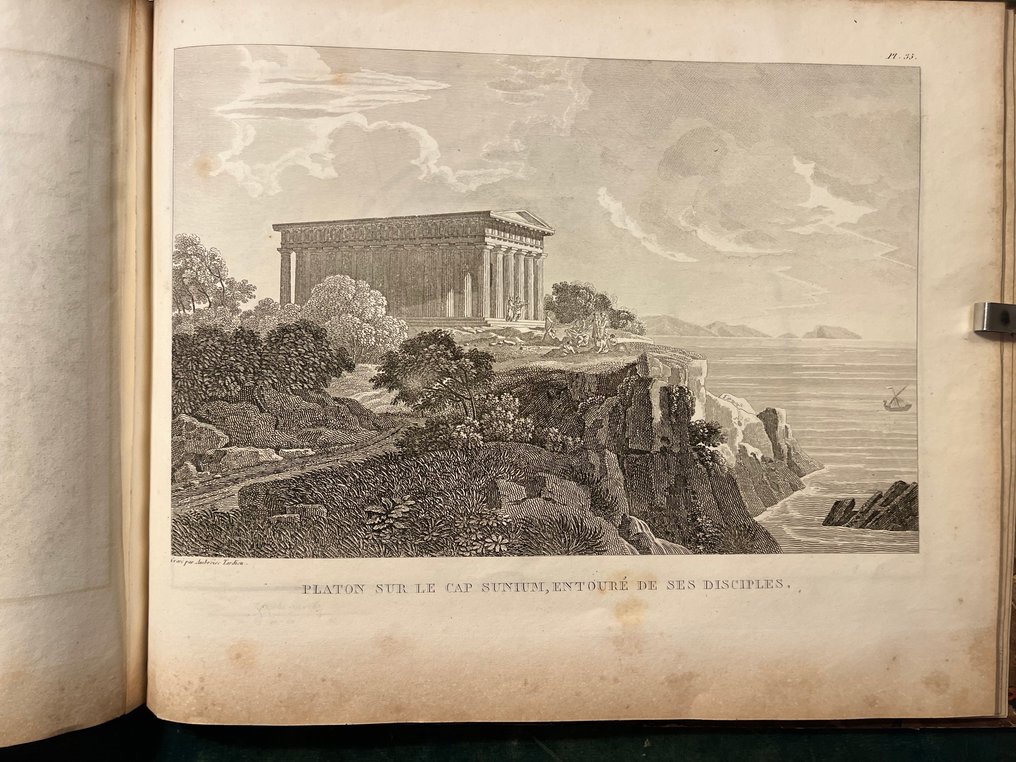
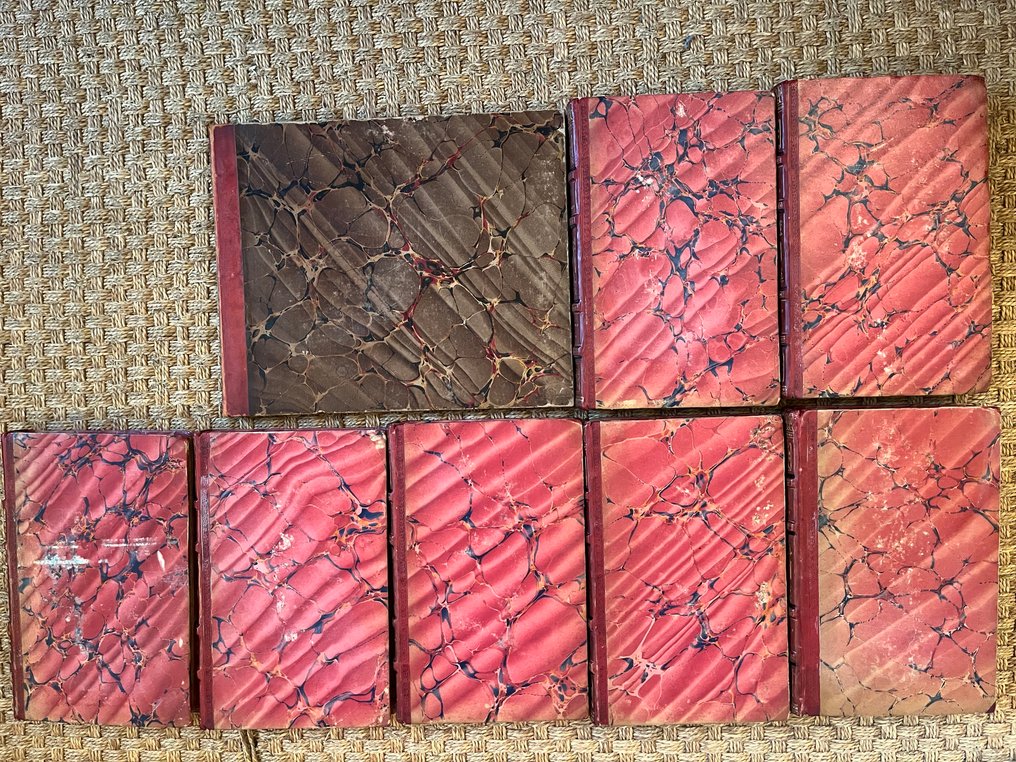
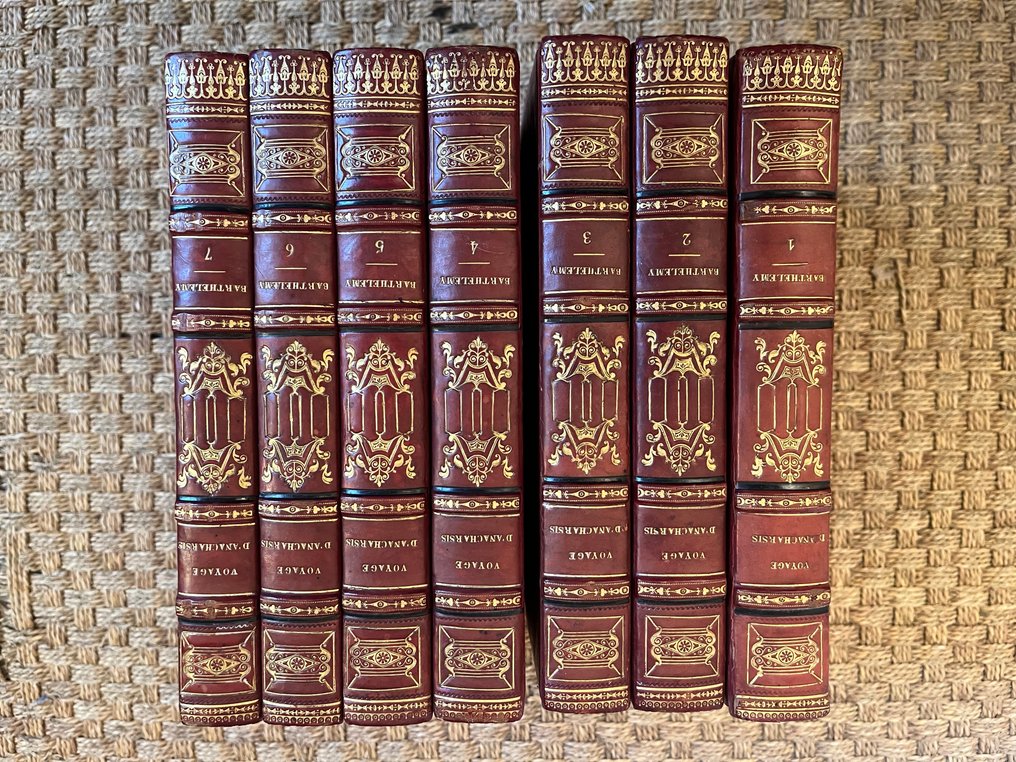
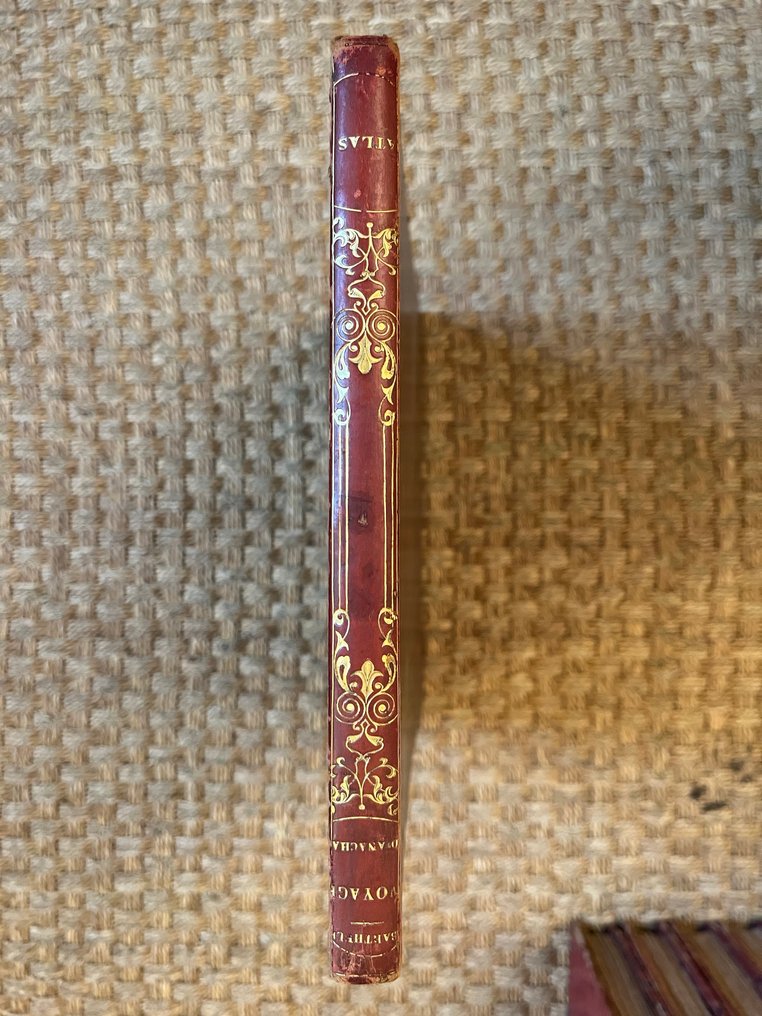
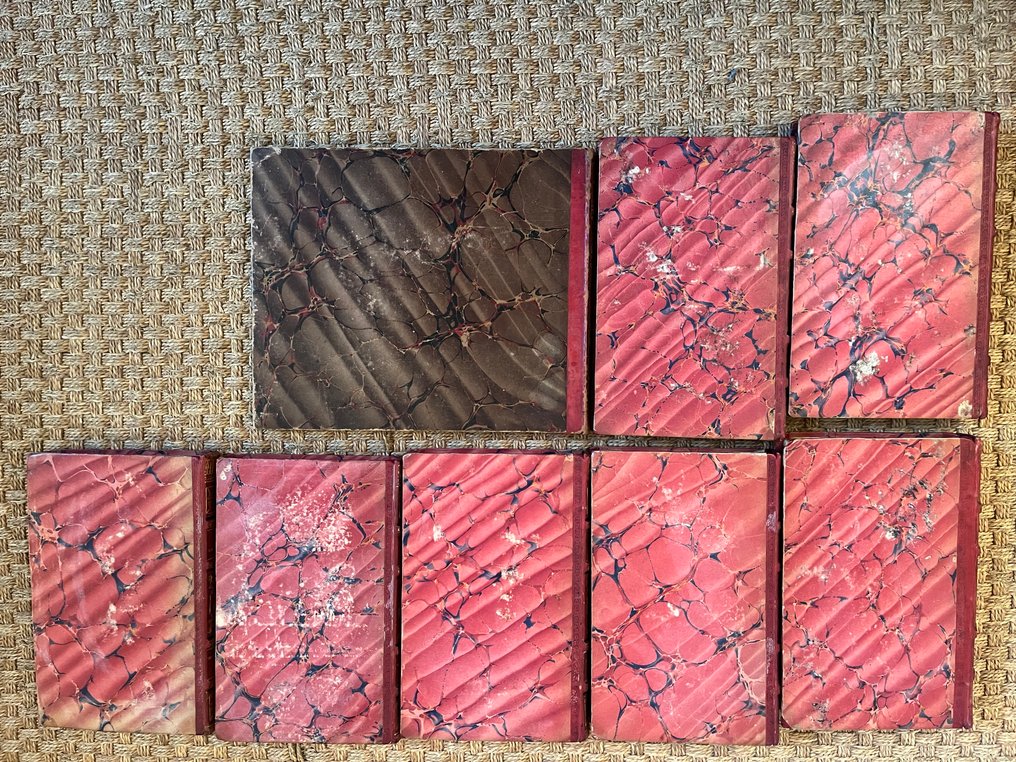
7 volumes of text in 8° format (220 x 145 mm), untrimmed, and 1 volume of oblong atlas (225 x 280 mm), comprising: volume 1. One engraved frontispiece; [3] pages (half-title, printer, title, warning); 140 pages (including table); 354 pages; volume 2. [2] pages (half-title, printer, title); II (table); 506 pages; volume 3. VI (half-title, printer, title, table); 482 pages; volume 4. VI (half-title, printer, title, table); 488 pages; volume 5. VI (half-title, printer, title, table); 479 pages; volume 6. [3] pages (half-title, printer, title, table); 436 pages; volume 7. [2] pages (half-title, printer, title); 448 pages (including table); atlas volume. [3] pages (half-title, printer, title, table); 38 plates, including several fold-outs and some watercolor illustrations; [1] page (explanation of medals); 1 medal plate. A total of 39 plates. (Rare stains, overall good condition). Half red contemporary calf binding, boards covered with red percaline, decorated spine with raised bands, gilt titles and volume numbers, marbled paper endpapers. (Binding rubbed at the headbands, edges, and corners; the atlas hinges worn; overall well preserved). An 1821 edition in 8° format of the account of the journey of young Anacharsis by Jean Jacques Barthélémy (1716-1795), a French clergyman, archaeologist, numismatist, and man of letters. Educated by Jesuits, he notably traveled in Italy with the Duke and Duchess of Choiseul. Later, he became curator of the medal department in Paris. Multilingual and fluent in several Eastern languages, he was also a pioneer in scientific research on the Phoenicians and in numismatic paleography. However, he is best known for his 'Voyage of the Young Anacharsis in Greece,' a work that took him 30 years to complete. Although such scholarly work on ancient life on the eve of the revolution might have been forgotten in these turbulent times, his book quickly gained widespread popularity. Moreover, this comprehensive work continued to be authoritative throughout the first half of the 19th century. Barthélémy’s unique approach replaced traditional historical analysis with descriptions of places, characters, customs, and manners as observed by a fictional traveler, a young Scythian named Anacharsis, who supposedly traveled through Greece around the mid-4th century BC. This copy contains a handwritten note reproducing a letter from Jacques Delille addressed to Abbé Barthélémy, inserted before the title page of the first volume: 'Excerpt from a letter from Delille to the abbé Barthélémy, when Anacharsis appeared. Your work struck me () for its erudition and knowledge, () I found () its style and execution. Before you, no one had imagined that any work could dispense with reading Plato, (), all the historians, and all the philosophers of Greece… A modest literary man was right to say that your book is a true economy. It was impossible to make () a () more brilliant and solid. It reminds me of the metal () composed of all metals and more precious than any of them. It is genius that fused all this.'
7 volumes of text in 8° format (220 x 145 mm), untrimmed, and 1 volume of oblong atlas (225 x 280 mm), comprising: volume 1. One engraved frontispiece; [3] pages (half-title, printer, title, warning); 140 pages (including table); 354 pages; volume 2. [2] pages (half-title, printer, title); II (table); 506 pages; volume 3. VI (half-title, printer, title, table); 482 pages; volume 4. VI (half-title, printer, title, table); 488 pages; volume 5. VI (half-title, printer, title, table); 479 pages; volume 6. [3] pages (half-title, printer, title, table); 436 pages; volume 7. [2] pages (half-title, printer, title); 448 pages (including table); atlas volume. [3] pages (half-title, printer, title, table); 38 plates, including several fold-outs and some watercolor illustrations; [1] page (explanation of medals); 1 medal plate. A total of 39 plates. (Rare stains, overall good condition). Half red contemporary calf binding, boards covered with red percaline, decorated spine with raised bands, gilt titles and volume numbers, marbled paper endpapers. (Binding rubbed at the headbands, edges, and corners; the atlas hinges worn; overall well preserved). An 1821 edition in 8° format of the account of the journey of young Anacharsis by Jean Jacques Barthélémy (1716-1795), a French clergyman, archaeologist, numismatist, and man of letters. Educated by Jesuits, he notably traveled in Italy with the Duke and Duchess of Choiseul. Later, he became curator of the medal department in Paris. Multilingual and fluent in several Eastern languages, he was also a pioneer in scientific research on the Phoenicians and in numismatic paleography. However, he is best known for his 'Voyage of the Young Anacharsis in Greece,' a work that took him 30 years to complete. Although such scholarly work on ancient life on the eve of the revolution might have been forgotten in these turbulent times, his book quickly gained widespread popularity. Moreover, this comprehensive work continued to be authoritative throughout the first half of the 19th century. Barthélémy’s unique approach replaced traditional historical analysis with descriptions of places, characters, customs, and manners as observed by a fictional traveler, a young Scythian named Anacharsis, who supposedly traveled through Greece around the mid-4th century BC. This copy contains a handwritten note reproducing a letter from Jacques Delille addressed to Abbé Barthélémy, inserted before the title page of the first volume: 'Excerpt from a letter from Delille to the abbé Barthélémy, when Anacharsis appeared. Your work struck me () for its erudition and knowledge, () I found () its style and execution. Before you, no one had imagined that any work could dispense with reading Plato, (), all the historians, and all the philosophers of Greece… A modest literary man was right to say that your book is a true economy. It was impossible to make () a () more brilliant and solid. It reminds me of the metal () composed of all metals and more precious than any of them. It is genius that fused all this.'
Details
Number of Books
8
Subject
Travels
Book Title
Voyage du Jeune Anacharsis en Grèce
Author/ Illustrator
Jean Jacques Barthelemy
Condition
Fine
Publication year oldest item
1821
Height
21.5 cm
Edition
Other edition
Width
13.5 cm
Language
French
Original language
Yes
Publisher
Chez Étienne Ledoux Libraire Paris rue Guenegaud n9
Binding/ Material
Leather
Extras
Fold out maps or plates
Number of pages
3500
Sold by
