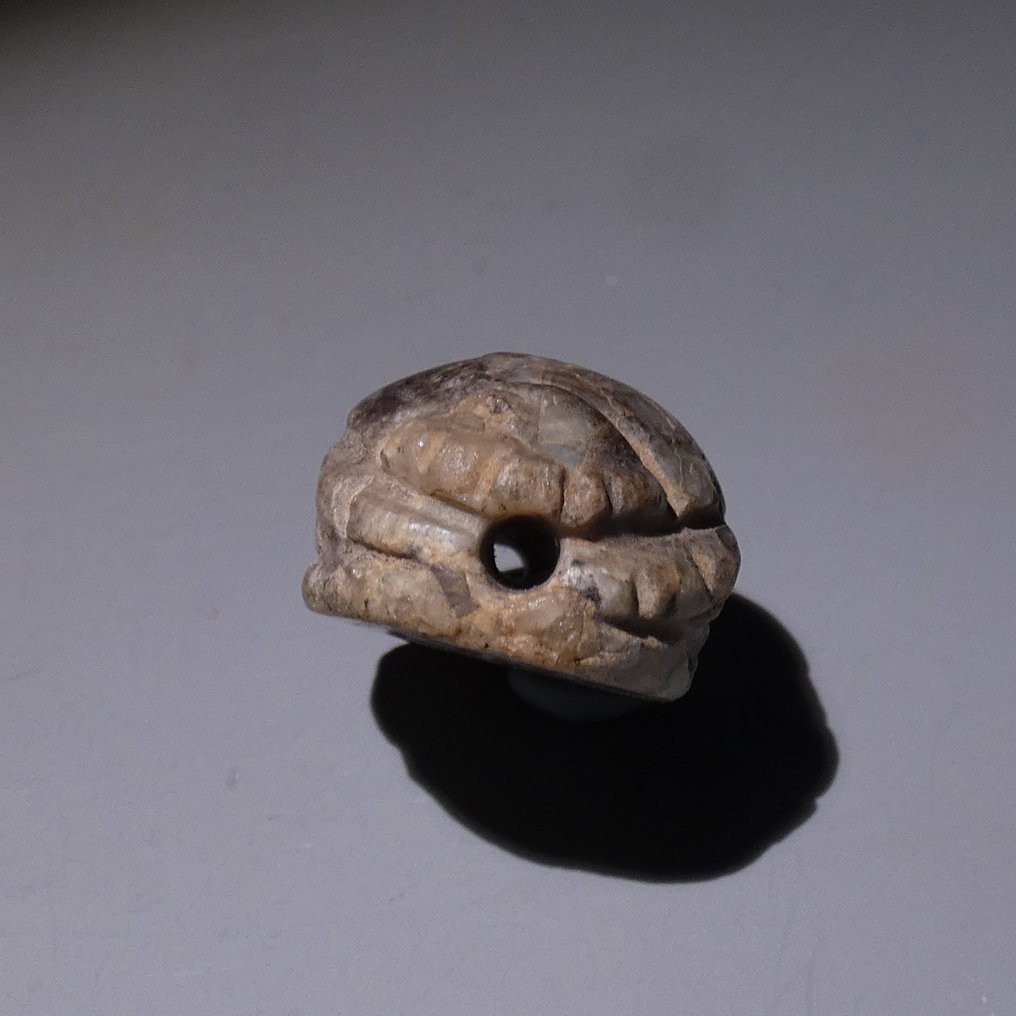
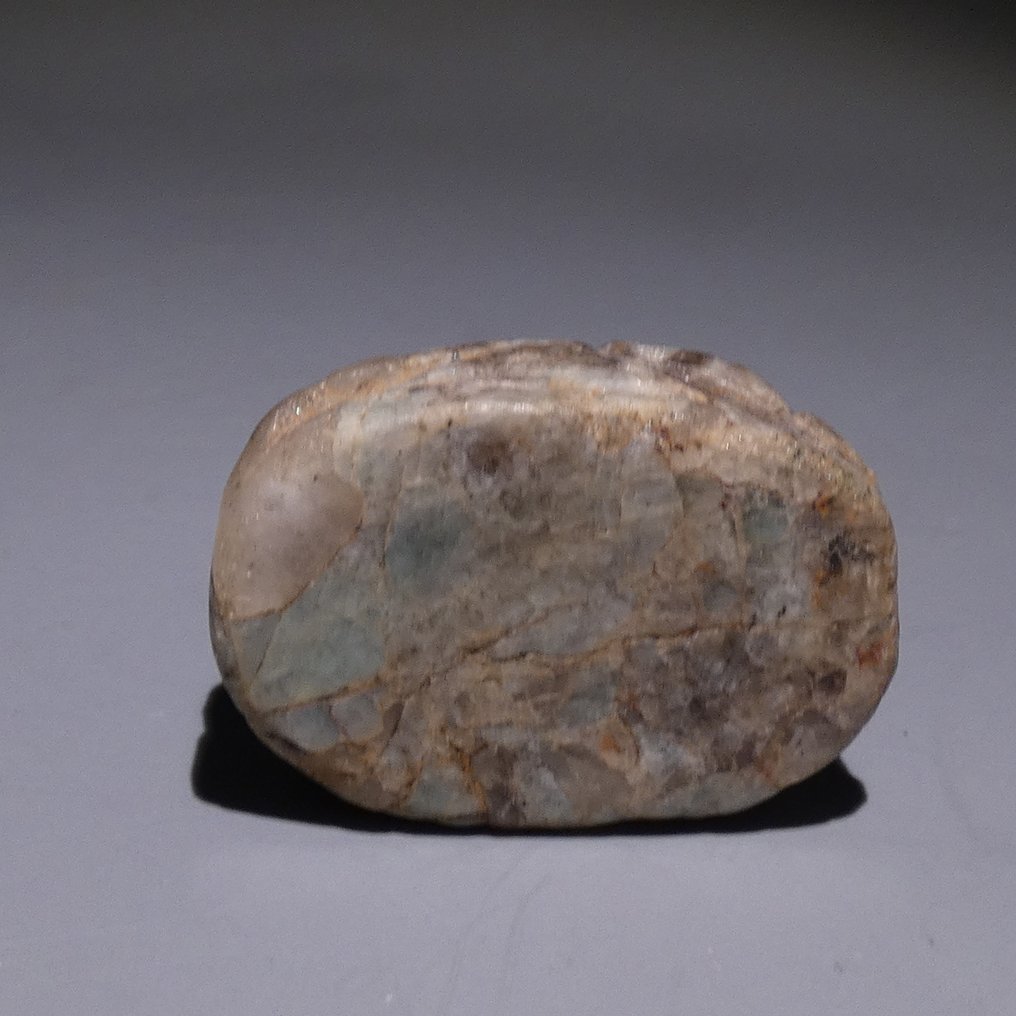
Ancient Egyptian Feldespar Heart scarab. 2,8 cm L. Late Period, 664 – 332 BC.


05
days
15
hours
33
minutes
06
seconds
Current bid
€ 1
Reserve price not met

Expert
Selected by Ruth Garrido Vila
Directed the Ifergan Collection Museum, specialising in Phoenician and Mediterranean archaeology.
Estimate € 1,100 - € 1,400
8 other people are watching this object
 Bidder 8161 Bidder 8161 | €1 |
|---|
Catawiki Buyer Protection
Your payment’s safe with us until you receive your object.View details
Trustpilot 4.4 | 122053 reviews
Rated Excellent on Trustpilot.
This late period heart scarab in green feldspar, 2.8 cm long, offers tangible ancient Egyptian symbolism and provenance from a private French collection.
AI-assisted summary
Description from the seller
Heart Scarab
Feldspar
Ancient Egypt, Late Period, 664 – 332 BC.
2.8 cm long.
Provenance: Private collection, France. Acquired at various auction houses between the 1970s and 2010.
In Ancient Egypt, feldspar was a highly valued mineral due to its color and symbolic properties, especially in the manufacture of amulets and ornamental objects. The most commonly used type was green feldspar, known as amazonite, which was associated with fertility, protection, and eternal life. Its green hue evoked the rebirth and regenerative power of the Nile, so it was considered a sacred material. The Egyptians carved amulets with symbolic shapes, such as scarabs, udjat eyes, and figures of gods, using feldspar for its beauty and durability. These amulets were worn by both the living and the dead, placed among the bandages of mummies to protect the soul in the afterlife. In addition, feldspar was believed to have magical properties that warded off evil and promoted spiritual balance, which is why it was used constantly for centuries in Egyptian funerary art.
Khepri is an ancient Egyptian deity associated with rebirth, the rising sun, and transformation. He is commonly depicted as a dung beetle or as a man with a beetle's head. This connection stems from the beetle's behavior, which rolls balls of dung where it lays its eggs, from which new offspring emerge. The Egyptians saw this cycle as a metaphor for rebirth and spontaneous creation. Khepri personifies the daily movement of the sun at dawn, pushing it across the sky just as the beetle pushes its sphere. His name comes from the Egyptian verb kheper, which means “to come into being” or “to become.” Beetle-shaped amulets were extremely popular and were worn as symbols of protection, regeneration, and good fortune. Many were placed over the hearts of the deceased during the mummification process, with magical inscriptions to ensure resurrection in the afterlife.
Seller's Story
IMPORTANT NOTES:
-We are a professional seller.
- All items sold will come with their professional invoice.
- All items sold will come with their own Certificate of Authenticity (warranty document), including the description, image and provenance of the item.
- All items will be shipped via private courier with insurance (DHL express, CORREOS of Spain, or other similar with tracking number).
- All items when shipped (if required) will be declared as antiques over 100 years old and their price valued.
- For shipping outside of EU: Delivery time subject to customs clearance. Liability and Customs Regulations or Import Requirements applicable in the destination country are the sole responsibility of the buyer. We are not responsible for delays caused by customs procedures. Import taxes and vat are not included in the shipping costs. The import tax or VAT payable depends on the country of destination. Payments of any taxes or any disputes with the Customs Authorities are the sole responsibility of the buyer.
- For some of the items offered, for shipment outside the European Union it is necessary to obtain an Export Permit which will detail the payment by the buyer of Export Fees according to Spanish legislation. If it is necessary it will be mentioned in the description of the article, BECAUSE NOT IN ALL THE CASES IT IS LIKE THAT. These fees will be added to the invoice, at the buyer's expense. These export fees are fixed on the final auction price and the tax rate is not applied directly on the total value of the item to be exported, but rather the different percentages by sections are applied to it: Up to 6,000 euros: 5%. From 6,001 to 60,000 euros: 10%.
This export permit application process can take between 1-2 months maximum.
- We guarantee that he acquired this piece according to all national and international laws related to the ownership of cultural property.
Translated by Google TranslateHeart Scarab
Feldspar
Ancient Egypt, Late Period, 664 – 332 BC.
2.8 cm long.
Provenance: Private collection, France. Acquired at various auction houses between the 1970s and 2010.
In Ancient Egypt, feldspar was a highly valued mineral due to its color and symbolic properties, especially in the manufacture of amulets and ornamental objects. The most commonly used type was green feldspar, known as amazonite, which was associated with fertility, protection, and eternal life. Its green hue evoked the rebirth and regenerative power of the Nile, so it was considered a sacred material. The Egyptians carved amulets with symbolic shapes, such as scarabs, udjat eyes, and figures of gods, using feldspar for its beauty and durability. These amulets were worn by both the living and the dead, placed among the bandages of mummies to protect the soul in the afterlife. In addition, feldspar was believed to have magical properties that warded off evil and promoted spiritual balance, which is why it was used constantly for centuries in Egyptian funerary art.
Khepri is an ancient Egyptian deity associated with rebirth, the rising sun, and transformation. He is commonly depicted as a dung beetle or as a man with a beetle's head. This connection stems from the beetle's behavior, which rolls balls of dung where it lays its eggs, from which new offspring emerge. The Egyptians saw this cycle as a metaphor for rebirth and spontaneous creation. Khepri personifies the daily movement of the sun at dawn, pushing it across the sky just as the beetle pushes its sphere. His name comes from the Egyptian verb kheper, which means “to come into being” or “to become.” Beetle-shaped amulets were extremely popular and were worn as symbols of protection, regeneration, and good fortune. Many were placed over the hearts of the deceased during the mummification process, with magical inscriptions to ensure resurrection in the afterlife.
Seller's Story
IMPORTANT NOTES:
-We are a professional seller.
- All items sold will come with their professional invoice.
- All items sold will come with their own Certificate of Authenticity (warranty document), including the description, image and provenance of the item.
- All items will be shipped via private courier with insurance (DHL express, CORREOS of Spain, or other similar with tracking number).
- All items when shipped (if required) will be declared as antiques over 100 years old and their price valued.
- For shipping outside of EU: Delivery time subject to customs clearance. Liability and Customs Regulations or Import Requirements applicable in the destination country are the sole responsibility of the buyer. We are not responsible for delays caused by customs procedures. Import taxes and vat are not included in the shipping costs. The import tax or VAT payable depends on the country of destination. Payments of any taxes or any disputes with the Customs Authorities are the sole responsibility of the buyer.
- For some of the items offered, for shipment outside the European Union it is necessary to obtain an Export Permit which will detail the payment by the buyer of Export Fees according to Spanish legislation. If it is necessary it will be mentioned in the description of the article, BECAUSE NOT IN ALL THE CASES IT IS LIKE THAT. These fees will be added to the invoice, at the buyer's expense. These export fees are fixed on the final auction price and the tax rate is not applied directly on the total value of the item to be exported, but rather the different percentages by sections are applied to it: Up to 6,000 euros: 5%. From 6,001 to 60,000 euros: 10%.
This export permit application process can take between 1-2 months maximum.
- We guarantee that he acquired this piece according to all national and international laws related to the ownership of cultural property.
Translated by Google TranslateDetails
Culture
Ancient Egyptian
Century/ Timeframe
Late Period, 664 – 332 BC.
Name of object
Heart scarab. 2,8 cm L. Late Period, 664 – 332 BC.
Acquired from
Private collection
Year acquired
2025
Material
Feldespar
Country acquired from
France
Condition
Good
Previous owner acquired from
Private collection
Previous owner - year acquired
1970
Previous owner - country acquired from
France
I verify that I have obtained this object legally and that I am allowed to sell it
Yes
Disclaimer
The seller was informed by Catawiki about documentation requirements and guarantees the following: - the object was legally obtained, - the seller has the right to sell and/or export the object, as relevant, - the seller will provide the necessary provenance information and arrange required documentation and permits/licenses, as applicable and as per local laws, - the seller will notify the buyer of any delays in obtaining permits/licenses. By bidding, you acknowledge that import documentation may be required depending on your country of residence and that obtaining permits/licenses may cause delays in the delivery of your object.
The seller was informed by Catawiki about documentation requirements and guarantees the following: - the object was legally obtained, - the seller has the right to sell and/or export the object, as relevant, - the seller will provide the necessary provenance information and arrange required documentation and permits/licenses, as applicable and as per local laws, - the seller will notify the buyer of any delays in obtaining permits/licenses. By bidding, you acknowledge that import documentation may be required depending on your country of residence and that obtaining permits/licenses may cause delays in the delivery of your object.
