Jean Born - Robj - Bottle - priest - Porcelain - Robj - bottle of liqueur



00
days
00
hours
50
minutes
01
second
Current bid
€ 150
Reserve price met

Expert
Selected by Michel Karis
Art historian with extensive experience working at various auction houses in antiques.
Estimate € 170 - € 200
24 other people are watching this object
 Bidder 9988 Bidder 9988 | €150 | |
|---|---|---|
| Bidder 9988 | €140 | |
| Bidder 9988 | €130 | |
Catawiki Buyer Protection
Your payment’s safe with us until you receive your object.View details
Trustpilot 4.4 | 122115 reviews
Rated Excellent on Trustpilot.
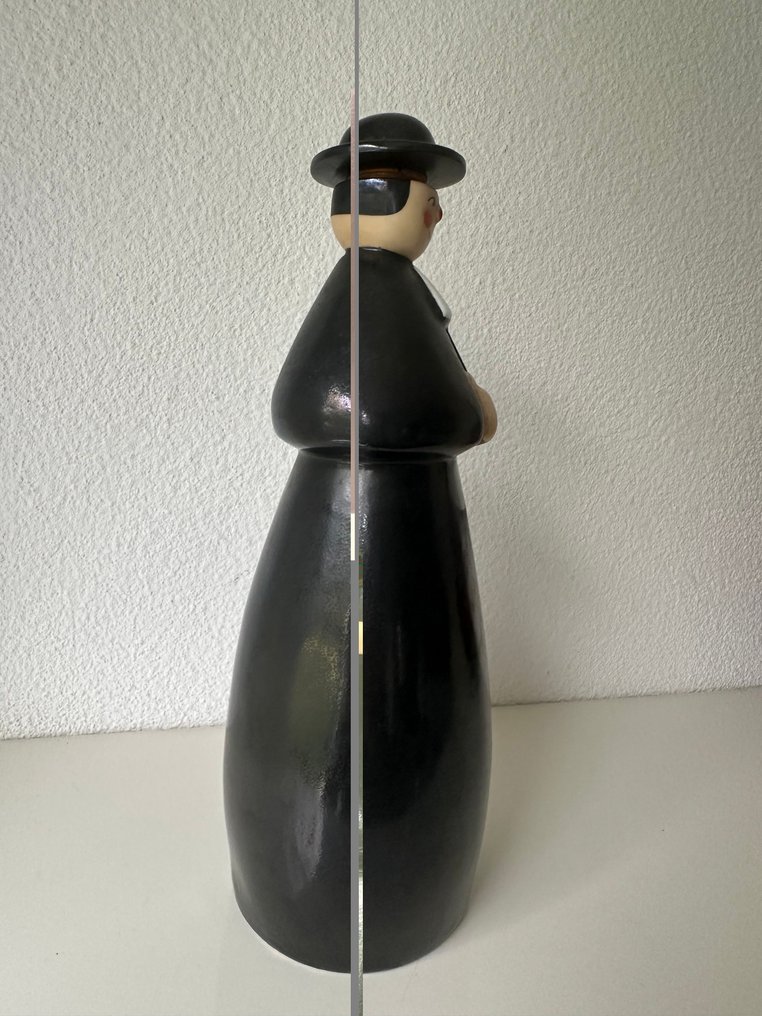
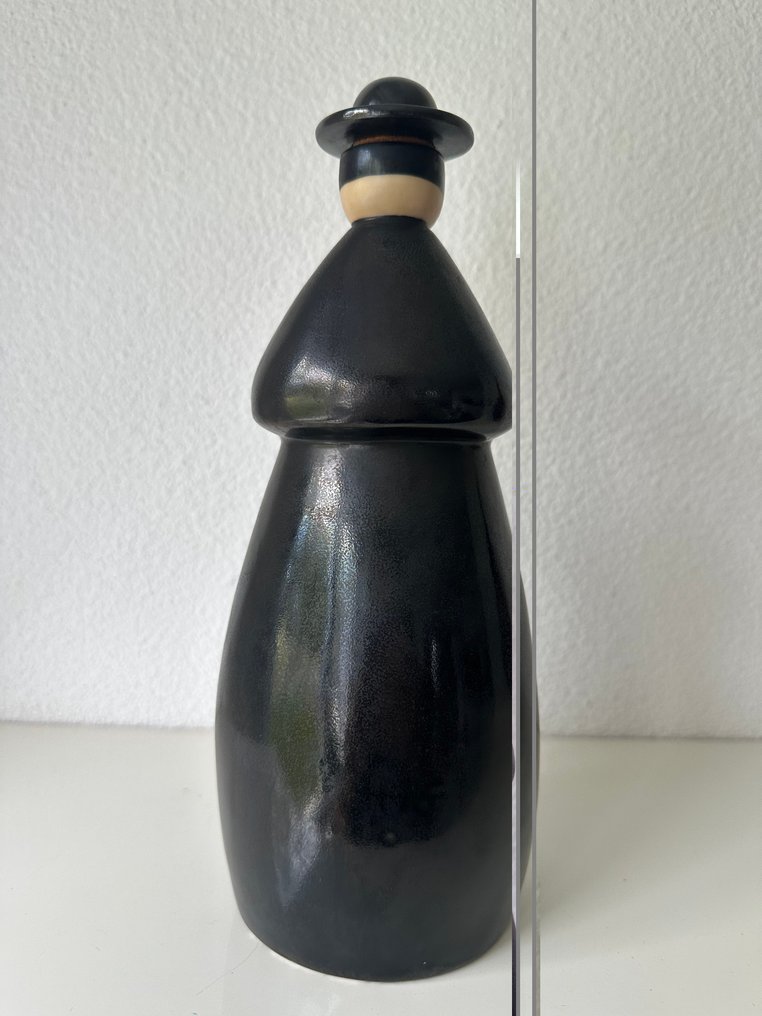
One-piece 20th-century French porcelain liqueur bottle in vintage design by ROBJ, model curé, black polychrome glaze, 26 cm high.
AI-assisted summary
Description from the seller
ROBJ - Paris anthropomorphic liqueur bottle depicting a priest in black polychrome enameled porcelain.
Signed with the stamp on the back.
H. 26cm
Circumference 30.5 cm
Weight: 538g
French 20th-century liquor bottle depicting a priest.
Year 1920
Rare piece in perfect condition for collectors!
ROBJ - Paris anthropomorphic liqueur bottle depicting a priest in polychrome porcelain with black glaze
signed with the maker's mark on the reverse.
Height: 26 cm
Circumference: 30.5 cm
Weight: 538 g
20th-century French liqueur bottle depicting a priest
Circa 1920
A rare piece in perfect condition for collectors!
Fast shipping with DHL and very well-packaged.
In 1908, Jean Born founded the house ROBJ, which produces ceramic objects.
Upon the death of its creator in 1922, the house was taken over by Lucien Willemetz, who definitively helped it take off and leave anonymity with a cheerful and mischievous style, anthropomorphic and colorful, sometimes utilitarian and always humorous.
Contemporary Cubism, the ROBJ house retains vivid colors and simplified forms. The company also embraces modern means of promotion and partners with the art workshops of department stores.
By doing so, she participates in the meeting of artisanal know-how and industry that energizes the 1930s by 'industrializing beauty' to make it accessible to all and thus contribute to the emergence of a new way of living.
ROBJ indeed does not hesitate, for the creation of its pieces, to call upon the best porcelain manufacturers of its time, including Sèvres, Villeroy & Boch, as well as several houses from Limoges.
The company finally established its own decoration workshop in Boulogne-Billancourt, to decorate the raw white porcelain pieces arriving from Limoges itself, hiring decorators to ensure the coloring, which will be fixed and revealed by a muff oven. A 'Robj MB Boulogne' mark is affixed to this production... which ceased with the great economic crisis of 1929.
Before that, until the early 1930s, one often sees ROBJ models in decorative arts magazines, which also highlight the originality and consistently perfect craftsmanship of these porcelain figurines, recognizable at a glance.
ROBJ - Paris anthropomorphic liqueur bottle depicting a priest in black polychrome enameled porcelain.
Signed with the stamp on the back.
H. 26cm
Circumference 30.5 cm
Weight: 538g
French 20th-century liquor bottle depicting a priest.
Year 1920
Rare piece in perfect condition for collectors!
ROBJ - Paris anthropomorphic liqueur bottle depicting a priest in polychrome porcelain with black glaze
signed with the maker's mark on the reverse.
Height: 26 cm
Circumference: 30.5 cm
Weight: 538 g
20th-century French liqueur bottle depicting a priest
Circa 1920
A rare piece in perfect condition for collectors!
Fast shipping with DHL and very well-packaged.
In 1908, Jean Born founded the house ROBJ, which produces ceramic objects.
Upon the death of its creator in 1922, the house was taken over by Lucien Willemetz, who definitively helped it take off and leave anonymity with a cheerful and mischievous style, anthropomorphic and colorful, sometimes utilitarian and always humorous.
Contemporary Cubism, the ROBJ house retains vivid colors and simplified forms. The company also embraces modern means of promotion and partners with the art workshops of department stores.
By doing so, she participates in the meeting of artisanal know-how and industry that energizes the 1930s by 'industrializing beauty' to make it accessible to all and thus contribute to the emergence of a new way of living.
ROBJ indeed does not hesitate, for the creation of its pieces, to call upon the best porcelain manufacturers of its time, including Sèvres, Villeroy & Boch, as well as several houses from Limoges.
The company finally established its own decoration workshop in Boulogne-Billancourt, to decorate the raw white porcelain pieces arriving from Limoges itself, hiring decorators to ensure the coloring, which will be fixed and revealed by a muff oven. A 'Robj MB Boulogne' mark is affixed to this production... which ceased with the great economic crisis of 1929.
Before that, until the early 1930s, one often sees ROBJ models in decorative arts magazines, which also highlight the originality and consistently perfect craftsmanship of these porcelain figurines, recognizable at a glance.
Details
Specific region of origin
Paris
Style subtype
French design
Era
1900-2000
Title additional information
Robj - bottle of liqueur
No. of items
1
Country of Origin
France
Manufacturer/ Brand
Jean Born
Material
Porcelain
Designer/Artist/Maker
Robj
Model
priest
Style
Vintage
Colour
Black
Condition
Excellent condition: barely used with minimal signs of wear
Height
26 cm
Width
30.5 cm
Depth
0 cm
Estimated Period
1920-1930
Sold by
