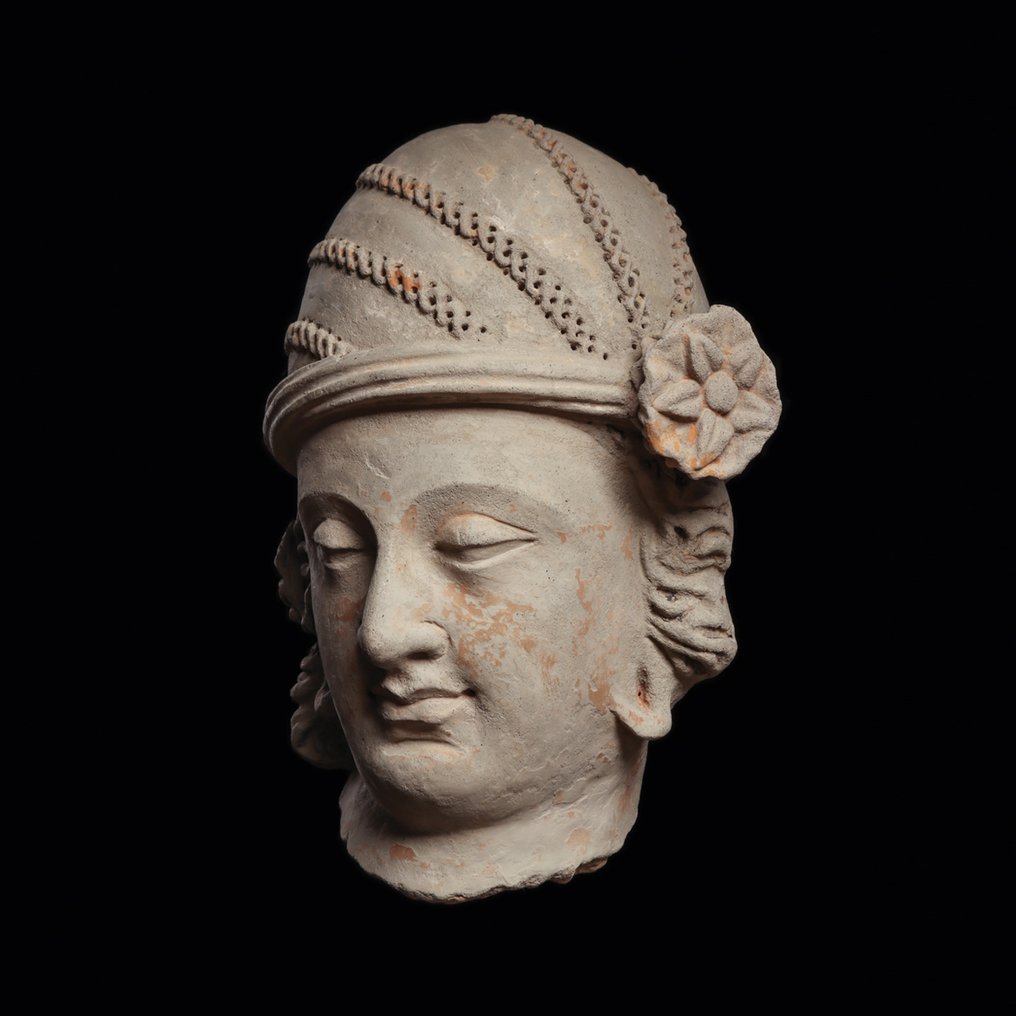
Gandhara Stucco Head of a Bodhisattva. 2nd-4th century AD. 31.5 cm height. Spanish Import License.


14
days
11
hours
52
minutes
15
seconds
Current bid
€ 1
Reserve price not met

Expert
Selected by Ruth Garrido Vila
Directed the Ifergan Collection Museum, specialising in Phoenician and Mediterranean archaeology.
Estimate € 20,000 - € 25,000
6 other people are watching this object
 Bidder 6567 Bidder 6567 | €1 |
|---|
Catawiki Buyer Protection
Your payment’s safe with us until you receive your object.View details
Trustpilot 4.4 | 121980 reviews
Rated Excellent on Trustpilot.
Head of a Bodhisattva, Gandhara, 2nd–4th century AD, in stucco, 31.5 cm high, acquired from Fortuna Fine Arts and a private New York collection; good state of preservation with no restorations.
AI-assisted summary
Description from the seller
Head of a Bodhisattva.
Gandhara, 2nd-4th century AD.
Stucco.
31.5 cm height.
PROVENANCE:
- Fortuna Fine Arts, New York.
- Private collection, New York, USA. Acquired from the above.
CONDITION: Good state of preservation. No restorations.
DESCRIPTION:
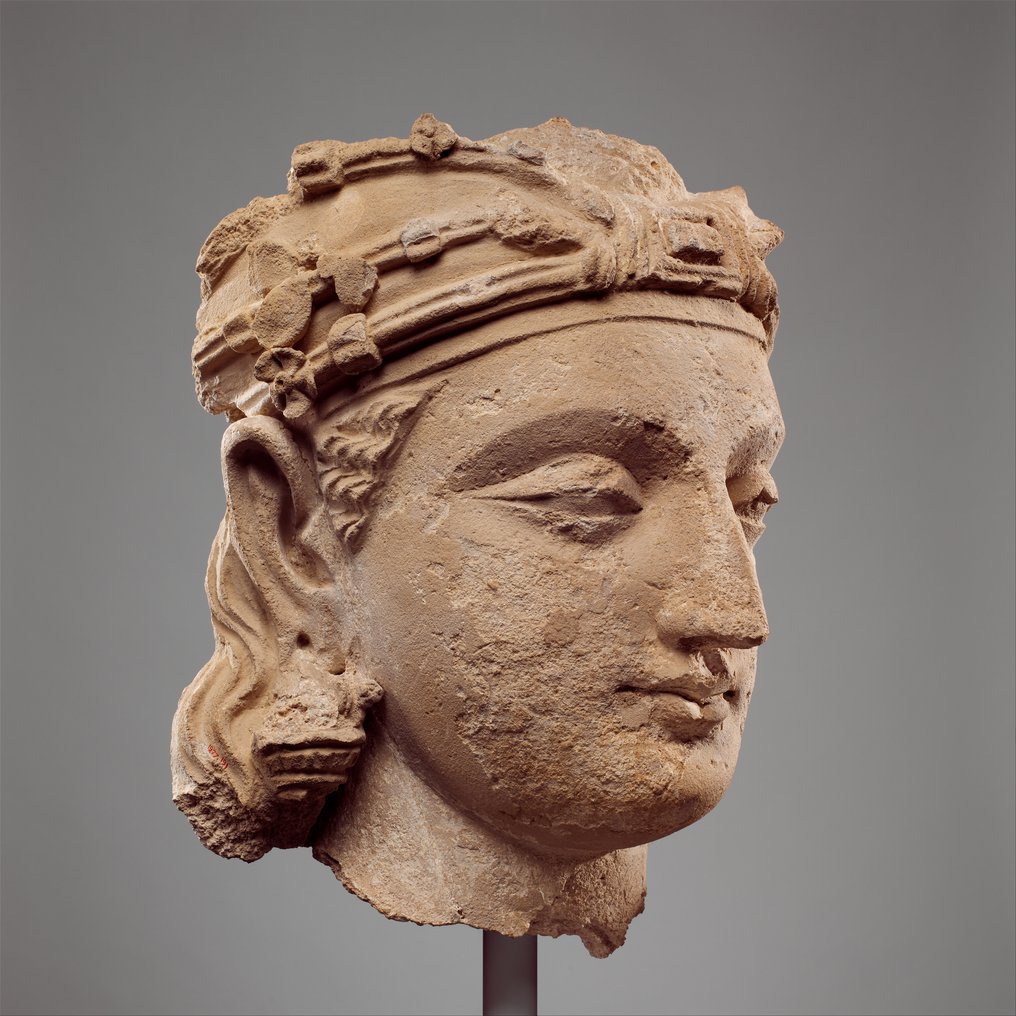
Larger than life-size head, moulded in stucco almost in the round, with the back unfinished, indicating that it would have originally formed part of a high relief. Stucco was, along with stone, the preferred material for the artists of Gandhara, given its great plasticity, as it allowed for a high level of expressiveness and detail. It represents a young man in princely attire, with curly hair falling on either side of his face and a textile headdress decorated with openwork guilloches and a rosette on his left temple. It is the representation of a bodhisattva, a term that in Mahayana Buddhism identifies those who have chosen the path of Enlightenment for the benefit of all living beings. Bodhisattvas are usually represented with the clothes and ornaments of contemporary princes, in this case from the Kushan Empire (fig. 1). His iconography, however, includes the so-called lakshana, symbols that allude to his enlightened nature: the half-closed eyelids represent spiritual concentration and also purity, due to their similarity to the petals of the lotus, and the serene face with a sketched smile is a symbol of the balance and serenity of a perfect being. The elongated earlobes allude to the large earrings worn by members of the upper classes in India contemporary to Sakyamuni (the historical Buddha), and represent the concepts of greatness, nobility and wisdom. This head, originally polychrome, probably originally included more iconographic elements, such as the point between the eyebrows from which emanates the light of wisdom that illuminates all beings (fig. 2).
The iconography is, therefore, clearly Buddhist, but a clear influence of Hellenistic Greek sculpture can be seen both in the sculptural language, of an idealized realism, and in certain conventions such as the elegant inclination of the head and the soft work of the volumes of the face. The details that adorn the headdress are also clearly of Greco-Latin influence, especially the guilloche, an element directly taken from the Roman ornamental repertoire.
The historical region of Gandhara, which corresponds to the south-east of present-day Afghanistan, the centre and north of Pakistan and the north-west of India, was a satrapy of the Achaemenid Persian Empire from the 6th century BC until the conquest of Alexander the Great in 326 BC. However, only two years later it would be annexed to the Maurya Empire, whose emperor Ashoka the Great (304-232 BC) would introduce Buddhism to the area. Around 184 BC, Gandhara returned to Greek hands under King Demetrius, ruler of neighbouring Bactria; from then on, and until the year 10 AD, Hellenistic kings would succeed one another in the region, although Buddhism would continue to be the dominant religion. This Indo-Greek period came to an end with the conquest of Gandhara by the Kushan Empire (1st-3rd century AD), whose rulers nevertheless adopted numerous elements of Hellenistic culture, including the Greek alphabet.
These historical circumstances determined the development of Greco-Buddhist art in Gandhara, a syncretism between Greek culture and Buddhism. The influence of Hellenistic sculpture, which represented the gods in human form, with an idealised realism and a heightened taste for detail, determined the creation of the first representations of the Buddha Gautama. The oldest known devotional images of Buddha were created in Gandhara between the 1st and 3rd centuries AD, and marked the end of the aniconism that had characterised early Buddhist art. Soon not only the historical Buddha, but also the other figures of the Buddhist pantheon, would be represented in human form, creating a whole figurative iconography that would support the expansion of Buddhism throughout East Asia. The Greco-Buddhist art of Gandhara came to an end in the 7th century after two hundred years of rule by the White Huns, of Hindu religion, who exerted significant repression on Buddhist culture, ultimately causing its disappearance in the area.
BIBLIOGRAPHY:
- BANERJEE, G.N. Hellenism in Ancient India. Butterworth & Co. 1920. - BOARDMAN, J. The Diffusion of Classical Art in Antiquity. Princeton University Press. 1994. - HALLADE, M. Gandharan Art of North India and the Graeco Buddhist. Harry N. Abrams. 1968. - MARSHALL, J. The Buddhist Art of Gandhara. Cambridge University Press. 1960. - ODANI, N. Gandharan art and the Kushan dynasty. Kyoto. 1996. - STONEMAN, R. The Greek experience of India. Princeton University Press. 2019.
PARALLELS:
Fig. 1 Head of a bodhisattva. Gandhara, 5th century AD. Stucco, 50.2 cm high. Metropolitan Museum, New York, inv. 1977.191.
Fig. 2 Bodhisattva head. Gandhara, ff. IV-V AD Polychrome stucco, 15.94 cm high. British Museum, London, inv. 1962,0421.2.
Notes:
- The piece includes authenticity certificate.
- The piece includes Spanish Export License (Passport for European Union) - If the piece is destined outside the European Union a substitution of the export permit should be requested, can take between 1-2 weeks maximum.
- The seller guarantees that he acquired this piece according to all national and international laws related to the ownership of cultural property. Provenance statement seen by Catawiki.
Seller's Story
Gallery of Ancient Art - Archeology based in Barcelona with more than fifteen years of experience. Specialized in classical art, Egyptian art, Asian art and pre-Columbian art. It guarantees the authenticity of all its pieces. It participates in the most important art fairs in Spain, such as Feriarte, as well as in fairs abroad, BRAFA, Parcours des Mondes, Cultures Brussels.
All the pieces are sent with an Export Permit issued by the Spanish Ministry of Culture.
We are quick to ship via DHL Express or Direct Art Transport.
Translated by Google TranslateHead of a Bodhisattva.
Gandhara, 2nd-4th century AD.
Stucco.
31.5 cm height.
PROVENANCE:
- Fortuna Fine Arts, New York.
- Private collection, New York, USA. Acquired from the above.
CONDITION: Good state of preservation. No restorations.
DESCRIPTION:
Larger than life-size head, moulded in stucco almost in the round, with the back unfinished, indicating that it would have originally formed part of a high relief. Stucco was, along with stone, the preferred material for the artists of Gandhara, given its great plasticity, as it allowed for a high level of expressiveness and detail. It represents a young man in princely attire, with curly hair falling on either side of his face and a textile headdress decorated with openwork guilloches and a rosette on his left temple. It is the representation of a bodhisattva, a term that in Mahayana Buddhism identifies those who have chosen the path of Enlightenment for the benefit of all living beings. Bodhisattvas are usually represented with the clothes and ornaments of contemporary princes, in this case from the Kushan Empire (fig. 1). His iconography, however, includes the so-called lakshana, symbols that allude to his enlightened nature: the half-closed eyelids represent spiritual concentration and also purity, due to their similarity to the petals of the lotus, and the serene face with a sketched smile is a symbol of the balance and serenity of a perfect being. The elongated earlobes allude to the large earrings worn by members of the upper classes in India contemporary to Sakyamuni (the historical Buddha), and represent the concepts of greatness, nobility and wisdom. This head, originally polychrome, probably originally included more iconographic elements, such as the point between the eyebrows from which emanates the light of wisdom that illuminates all beings (fig. 2).
The iconography is, therefore, clearly Buddhist, but a clear influence of Hellenistic Greek sculpture can be seen both in the sculptural language, of an idealized realism, and in certain conventions such as the elegant inclination of the head and the soft work of the volumes of the face. The details that adorn the headdress are also clearly of Greco-Latin influence, especially the guilloche, an element directly taken from the Roman ornamental repertoire.
The historical region of Gandhara, which corresponds to the south-east of present-day Afghanistan, the centre and north of Pakistan and the north-west of India, was a satrapy of the Achaemenid Persian Empire from the 6th century BC until the conquest of Alexander the Great in 326 BC. However, only two years later it would be annexed to the Maurya Empire, whose emperor Ashoka the Great (304-232 BC) would introduce Buddhism to the area. Around 184 BC, Gandhara returned to Greek hands under King Demetrius, ruler of neighbouring Bactria; from then on, and until the year 10 AD, Hellenistic kings would succeed one another in the region, although Buddhism would continue to be the dominant religion. This Indo-Greek period came to an end with the conquest of Gandhara by the Kushan Empire (1st-3rd century AD), whose rulers nevertheless adopted numerous elements of Hellenistic culture, including the Greek alphabet.
These historical circumstances determined the development of Greco-Buddhist art in Gandhara, a syncretism between Greek culture and Buddhism. The influence of Hellenistic sculpture, which represented the gods in human form, with an idealised realism and a heightened taste for detail, determined the creation of the first representations of the Buddha Gautama. The oldest known devotional images of Buddha were created in Gandhara between the 1st and 3rd centuries AD, and marked the end of the aniconism that had characterised early Buddhist art. Soon not only the historical Buddha, but also the other figures of the Buddhist pantheon, would be represented in human form, creating a whole figurative iconography that would support the expansion of Buddhism throughout East Asia. The Greco-Buddhist art of Gandhara came to an end in the 7th century after two hundred years of rule by the White Huns, of Hindu religion, who exerted significant repression on Buddhist culture, ultimately causing its disappearance in the area.
BIBLIOGRAPHY:
- BANERJEE, G.N. Hellenism in Ancient India. Butterworth & Co. 1920. - BOARDMAN, J. The Diffusion of Classical Art in Antiquity. Princeton University Press. 1994. - HALLADE, M. Gandharan Art of North India and the Graeco Buddhist. Harry N. Abrams. 1968. - MARSHALL, J. The Buddhist Art of Gandhara. Cambridge University Press. 1960. - ODANI, N. Gandharan art and the Kushan dynasty. Kyoto. 1996. - STONEMAN, R. The Greek experience of India. Princeton University Press. 2019.
PARALLELS:
Fig. 1 Head of a bodhisattva. Gandhara, 5th century AD. Stucco, 50.2 cm high. Metropolitan Museum, New York, inv. 1977.191.
Fig. 2 Bodhisattva head. Gandhara, ff. IV-V AD Polychrome stucco, 15.94 cm high. British Museum, London, inv. 1962,0421.2.
Notes:
- The piece includes authenticity certificate.
- The piece includes Spanish Export License (Passport for European Union) - If the piece is destined outside the European Union a substitution of the export permit should be requested, can take between 1-2 weeks maximum.
- The seller guarantees that he acquired this piece according to all national and international laws related to the ownership of cultural property. Provenance statement seen by Catawiki.
Seller's Story
Gallery of Ancient Art - Archeology based in Barcelona with more than fifteen years of experience. Specialized in classical art, Egyptian art, Asian art and pre-Columbian art. It guarantees the authenticity of all its pieces. It participates in the most important art fairs in Spain, such as Feriarte, as well as in fairs abroad, BRAFA, Parcours des Mondes, Cultures Brussels.
All the pieces are sent with an Export Permit issued by the Spanish Ministry of Culture.
We are quick to ship via DHL Express or Direct Art Transport.
Translated by Google TranslateDetails
Culture
Gandhara
Century/ Timeframe
2nd-4th century AD.
Name of object
Head of a Bodhisattva. 2nd-4th century AD. 31.5 cm height. Spanish Import License.
Acquired from
Private collection
Material
Stucco
Condition
Good
Disclaimer
The seller was informed by Catawiki about documentation requirements and guarantees the following: - the object was legally obtained, - the seller has the right to sell and/or export the object, as relevant, - the seller will provide the necessary provenance information and arrange required documentation and permits/licenses, as applicable and as per local laws, - the seller will notify the buyer of any delays in obtaining permits/licenses. By bidding, you acknowledge that import documentation may be required depending on your country of residence and that obtaining permits/licenses may cause delays in the delivery of your object.
The seller was informed by Catawiki about documentation requirements and guarantees the following: - the object was legally obtained, - the seller has the right to sell and/or export the object, as relevant, - the seller will provide the necessary provenance information and arrange required documentation and permits/licenses, as applicable and as per local laws, - the seller will notify the buyer of any delays in obtaining permits/licenses. By bidding, you acknowledge that import documentation may be required depending on your country of residence and that obtaining permits/licenses may cause delays in the delivery of your object.
