No. 99659632

Sold
Roman Empire. Nero (AD 54-68). As Lugdunum, 62-68 - Façade of the Macellum Magnum
Final bid
€ 1,200
2 days ago

Roman Empire. Nero (AD 54-68). As Lugdunum, 62-68 - Façade of the Macellum Magnum

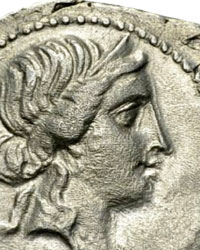
Nero. AD 54-68. Æ Dupondius (27mm, 14.65, 6h). Rome mint. Struck circa AD 64. Radiate head right / Façade of the Macellum Magnum: statue standing facing on base within cylindrical tetrastyle entrance set on tiered base, upper tristyle story surmounted by ornate conical dome; two-story distyle porch on left, two-story tristyle porch on either side. RIC I 184; WCN 203; Brown surfaces, numerous scratches, reverse struck off center VF. The Macellum Magnum was Nero's great provision-market, probably dating from AD 59. This magnificent structure, originally occupying the middle of a square lined with porticoes and shops, was located on the Caelian Hill. It survived in its original state until the late 4th century, when its dilapidated condition necessitated a major reconstruction. During the turbulent 5th century the building again fell into partial ruin and in the latter part of the century it was transformed under Pope Simplicius (468-482) into the church of S. Stefano Rotondo.

No. 99659632

Sold
Roman Empire. Nero (AD 54-68). As Lugdunum, 62-68 - Façade of the Macellum Magnum

Roman Empire. Nero (AD 54-68). As Lugdunum, 62-68 - Façade of the Macellum Magnum

Nero. AD 54-68. Æ Dupondius (27mm, 14.65, 6h). Rome mint. Struck circa AD 64.
Radiate head right / Façade of the Macellum Magnum: statue standing facing on base within cylindrical tetrastyle entrance set on tiered base, upper tristyle story surmounted by ornate conical dome; two-story distyle porch on left, two-story tristyle porch on either side. RIC I 184; WCN 203;
Brown surfaces, numerous scratches, reverse struck off center VF.

The Macellum Magnum was Nero's great provision-market, probably dating from AD 59. This magnificent structure, originally occupying the middle of a square lined with porticoes and shops, was located on the Caelian Hill. It survived in its original state until the late 4th century, when its dilapidated condition necessitated a major reconstruction. During the turbulent 5th century the building again fell into partial ruin and in the latter part of the century it was transformed under Pope Simplicius (468-482) into the church of S. Stefano Rotondo.

Final bid
€ 1,200
Carmen Vera Gutiérrez
Expert
Estimate  € 1,700 - € 1,900

Similar objects

For you in

Ancient Coins

Set a search alert
Set a search alert to get notified when new matches are available.

This object was featured in


How to buy on Catawiki

Learn more about our Buyer Protection

      1. Discover something special

      Browse through thousands of special objects selected by experts. View the photos, details and estimated value of each special object. 

      2. Place the top bid

      Find something you love and place the top bid. You can follow the auction to the end or let our system do the bidding for you. All you have to do is set a bid for the maximum amount you want to pay. 

      3. Make a secure payment

      Pay for your special object and we’ll keep your payment secure until it arrives safe and sound. We use a trusted payment system to handle all transactions. 

Have something similar to sell?

Whether you're new to online auctions or sell professionally, we can help you earn more for your special objects.

Sell your object