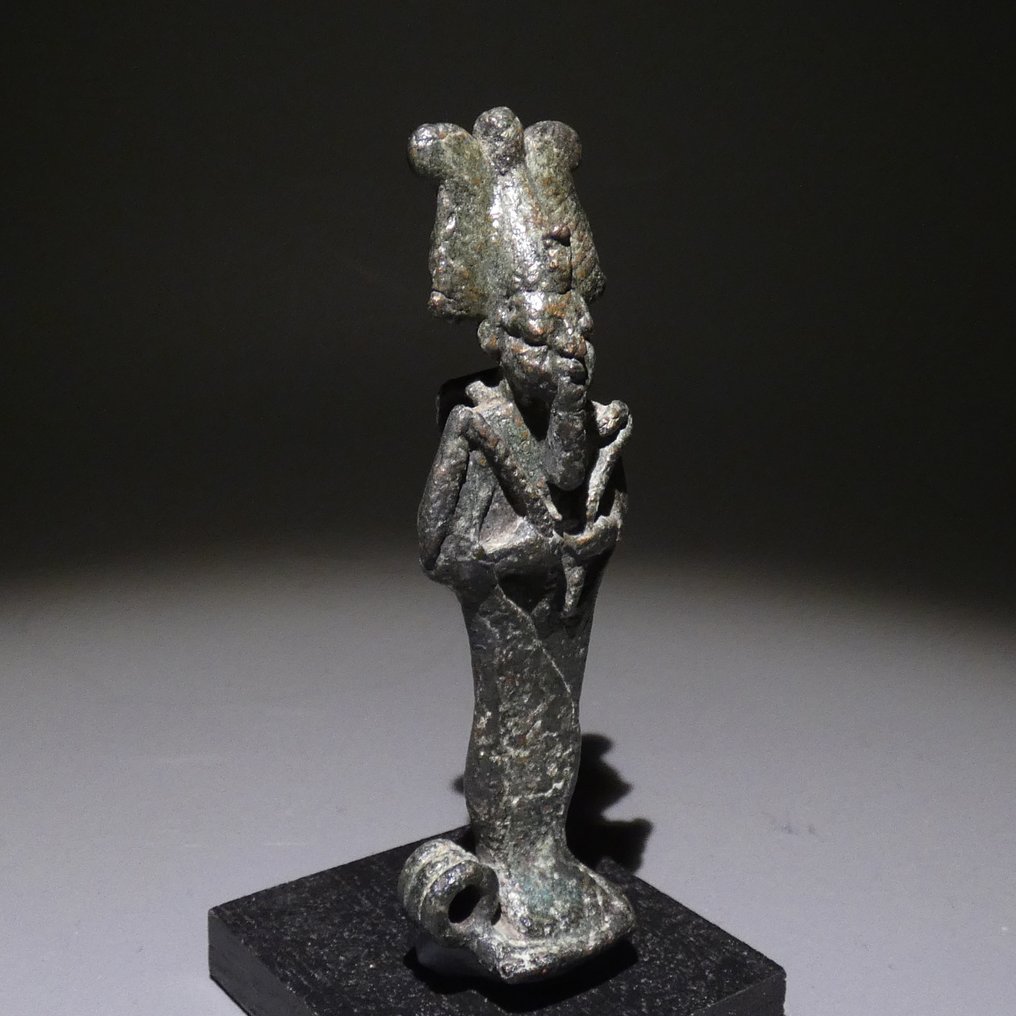
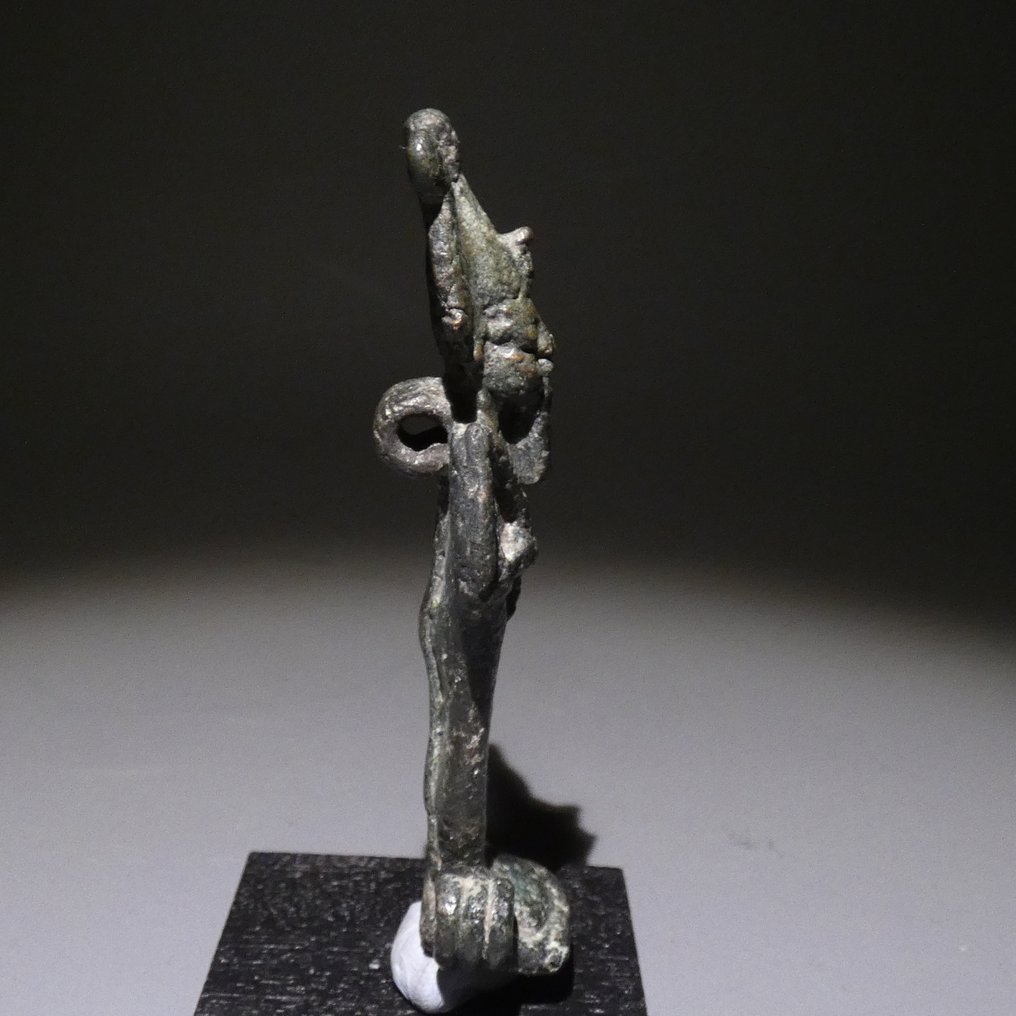
Ancient Egyptian Bronze Osiris God Sculpture. 8 cm H. Late Period, 664 - 332 BC


05
days
18
hours
15
minutes
02
seconds
Current bid
€ 120
Reserve price not met

Expert
Selected by Ruth Garrido Vila
Directed the Ifergan Collection Museum, specialising in Phoenician and Mediterranean archaeology.
Estimate € 4,000 - € 4,900
8 other people are watching this object
 Bidder 5178 Bidder 5178 | €120 | |
|---|---|---|
 Bidder 5043 Bidder 5043 | €110 | |
| Bidder 5178 | €100 | |
Catawiki Buyer Protection
Your payment’s safe with us until you receive your object.View details
Trustpilot 4.4 | 122053 reviews
Rated Excellent on Trustpilot.
Osiris God Sculpture, bronze, 8 cm high, from Ancient Egyptian Late Period (664–332 BC), in good condition.
AI-assisted summary
Description from the seller
God Osiris
- very fine -
Ancient Egypt, Late Period, 664 - 332 BC
Solid Bronze
8 cm height
PROVENANCE:
- Private collection, South of France, before 1980.
CONDITION: Good condition, see photos. Intact.
Osiris, one of the most important gods of ancient Egypt. The origin of Osiris is obscure; he was a local god of Busiris, in Lower Egypt, and may have been a personification of chthonic (underworld) fertility. By about 2400 bce, however, Osiris clearly played a double role: he was both a god of fertility and the embodiment of the dead and resurrected king. This dual role was in turn combined with the Egyptian concept of divine kingship: the king at death became Osiris, god of the underworld; and the dead king’s son, the living king, was identified with Horus, a god of the sky. Osiris and Horus were thus father and son. The goddess Isis was the mother of the king and was thus the mother of Horus and consort of Osiris. The god Seth was considered the murderer of Osiris and adversary of Horus.
According to the form of the myth reported by the Greek author Plutarch, Osiris was slain or drowned by Seth, who tore the corpse into 14 pieces and flung them over Egypt. Eventually, Isis and her sister Nephthys found and buried all the pieces, except the phallus, thereby giving new life to Osiris, who thenceforth remained in the underworld as ruler and judge. His son Horus successfully fought against Seth, avenging Osiris and becoming the new king of Egypt.
Osiris was not only ruler of the dead but also the power that granted all life from the underworld, from sprouting vegetation to the annual flood of the Nile River. From about 2000 bce onward it was believed that every man, not just the deceased kings, became associated with Osiris at death. This identification with Osiris, however, did not imply resurrection, for even Osiris did not rise from the dead. Instead, it signified the renewal of life both in the next world and through one’s descendants on Earth. In this universalized form Osiris’s cult spread throughout Egypt, often joining with the cults of local fertility and underworld deities.
The idea that rebirth in the next life could be gained by following Osiris was maintained through certain cult forms. In the Middle Kingdom (1938–c. 1630 bce) the god’s festivals consisted of processions and nocturnal rites and were celebrated at the temple of Abydos, where Osiris had assimilated the very ancient god of the dead, Khenty-Imentiu. This name, meaning “Foremost of the Westerners,” was adopted by Osiris as an epithet. Because the festivals took place in the open, public participation was permitted, and by the early 2nd millennium bce it had become fashionable to be buried along the processional road at Abydos or to erect a cenotaph there as a representative of the dead.
Osiris festivals symbolically reenacting the god’s fate were celebrated annually in various towns throughout Egypt. A central feature of the festivals during the late period was the construction of the “Osiris garden,” a mold in the shape of Osiris, filled with soil. The mold was moistened with the water of the Nile and sown with grain. Later, the sprouting grain symbolized the vital strength of Osiris.
At Memphis the holy bull, Apis, was linked with Osiris, becoming Osiris-Apis, which eventually became the name of the Hellenistic god Serapis. Greco-Roman authors connected Osiris with the god Dionysus. Osiris was also identified with Soker, an ancient Memphite god of the dead.
The oldest known depiction of Osiris dates to about 2300 bce, but representations of him are rare before the New Kingdom (1539–1075 bce), when he was shown in an archaizing form as a mummy with his arms crossed on his breast, one hand holding a crook, the other a flail. On his head was the atef-crown, composed of the white crown of Upper Egypt and two ostrich feathers.
Seller's Story
IMPORTANT NOTES:
-We are a professional seller.
- All items sold will come with their professional invoice.
- All items sold will come with their own Certificate of Authenticity (warranty document), including the description, image and provenance of the item.
- All items will be shipped via private courier with insurance (DHL express, CORREOS of Spain, or other similar with tracking number).
- All items when shipped (if required) will be declared as antiques over 100 years old and their price valued.
- For shipping outside of EU: Delivery time subject to customs clearance. Liability and Customs Regulations or Import Requirements applicable in the destination country are the sole responsibility of the buyer. We are not responsible for delays caused by customs procedures. Import taxes and vat are not included in the shipping costs. The import tax or VAT payable depends on the country of destination. Payments of any taxes or any disputes with the Customs Authorities are the sole responsibility of the buyer.
- For some of the items offered, for shipment outside the European Union it is necessary to obtain an Export Permit which will detail the payment by the buyer of Export Fees according to Spanish legislation. If it is necessary it will be mentioned in the description of the article, BECAUSE NOT IN ALL THE CASES IT IS LIKE THAT. These fees will be added to the invoice, at the buyer's expense. These export fees are fixed on the final auction price and the tax rate is not applied directly on the total value of the item to be exported, but rather the different percentages by sections are applied to it: Up to 6,000 euros: 5%. From 6,001 to 60,000 euros: 10%.
This export permit application process can take between 1-2 months maximum.
- We guarantee that he acquired this piece according to all national and international laws related to the ownership of cultural property.
Translated by Google TranslateGod Osiris
- very fine -
Ancient Egypt, Late Period, 664 - 332 BC
Solid Bronze
8 cm height
PROVENANCE:
- Private collection, South of France, before 1980.
CONDITION: Good condition, see photos. Intact.
Osiris, one of the most important gods of ancient Egypt. The origin of Osiris is obscure; he was a local god of Busiris, in Lower Egypt, and may have been a personification of chthonic (underworld) fertility. By about 2400 bce, however, Osiris clearly played a double role: he was both a god of fertility and the embodiment of the dead and resurrected king. This dual role was in turn combined with the Egyptian concept of divine kingship: the king at death became Osiris, god of the underworld; and the dead king’s son, the living king, was identified with Horus, a god of the sky. Osiris and Horus were thus father and son. The goddess Isis was the mother of the king and was thus the mother of Horus and consort of Osiris. The god Seth was considered the murderer of Osiris and adversary of Horus.
According to the form of the myth reported by the Greek author Plutarch, Osiris was slain or drowned by Seth, who tore the corpse into 14 pieces and flung them over Egypt. Eventually, Isis and her sister Nephthys found and buried all the pieces, except the phallus, thereby giving new life to Osiris, who thenceforth remained in the underworld as ruler and judge. His son Horus successfully fought against Seth, avenging Osiris and becoming the new king of Egypt.
Osiris was not only ruler of the dead but also the power that granted all life from the underworld, from sprouting vegetation to the annual flood of the Nile River. From about 2000 bce onward it was believed that every man, not just the deceased kings, became associated with Osiris at death. This identification with Osiris, however, did not imply resurrection, for even Osiris did not rise from the dead. Instead, it signified the renewal of life both in the next world and through one’s descendants on Earth. In this universalized form Osiris’s cult spread throughout Egypt, often joining with the cults of local fertility and underworld deities.
The idea that rebirth in the next life could be gained by following Osiris was maintained through certain cult forms. In the Middle Kingdom (1938–c. 1630 bce) the god’s festivals consisted of processions and nocturnal rites and were celebrated at the temple of Abydos, where Osiris had assimilated the very ancient god of the dead, Khenty-Imentiu. This name, meaning “Foremost of the Westerners,” was adopted by Osiris as an epithet. Because the festivals took place in the open, public participation was permitted, and by the early 2nd millennium bce it had become fashionable to be buried along the processional road at Abydos or to erect a cenotaph there as a representative of the dead.
Osiris festivals symbolically reenacting the god’s fate were celebrated annually in various towns throughout Egypt. A central feature of the festivals during the late period was the construction of the “Osiris garden,” a mold in the shape of Osiris, filled with soil. The mold was moistened with the water of the Nile and sown with grain. Later, the sprouting grain symbolized the vital strength of Osiris.
At Memphis the holy bull, Apis, was linked with Osiris, becoming Osiris-Apis, which eventually became the name of the Hellenistic god Serapis. Greco-Roman authors connected Osiris with the god Dionysus. Osiris was also identified with Soker, an ancient Memphite god of the dead.
The oldest known depiction of Osiris dates to about 2300 bce, but representations of him are rare before the New Kingdom (1539–1075 bce), when he was shown in an archaizing form as a mummy with his arms crossed on his breast, one hand holding a crook, the other a flail. On his head was the atef-crown, composed of the white crown of Upper Egypt and two ostrich feathers.
Seller's Story
IMPORTANT NOTES:
-We are a professional seller.
- All items sold will come with their professional invoice.
- All items sold will come with their own Certificate of Authenticity (warranty document), including the description, image and provenance of the item.
- All items will be shipped via private courier with insurance (DHL express, CORREOS of Spain, or other similar with tracking number).
- All items when shipped (if required) will be declared as antiques over 100 years old and their price valued.
- For shipping outside of EU: Delivery time subject to customs clearance. Liability and Customs Regulations or Import Requirements applicable in the destination country are the sole responsibility of the buyer. We are not responsible for delays caused by customs procedures. Import taxes and vat are not included in the shipping costs. The import tax or VAT payable depends on the country of destination. Payments of any taxes or any disputes with the Customs Authorities are the sole responsibility of the buyer.
- For some of the items offered, for shipment outside the European Union it is necessary to obtain an Export Permit which will detail the payment by the buyer of Export Fees according to Spanish legislation. If it is necessary it will be mentioned in the description of the article, BECAUSE NOT IN ALL THE CASES IT IS LIKE THAT. These fees will be added to the invoice, at the buyer's expense. These export fees are fixed on the final auction price and the tax rate is not applied directly on the total value of the item to be exported, but rather the different percentages by sections are applied to it: Up to 6,000 euros: 5%. From 6,001 to 60,000 euros: 10%.
This export permit application process can take between 1-2 months maximum.
- We guarantee that he acquired this piece according to all national and international laws related to the ownership of cultural property.
Translated by Google TranslateDetails
Culture
Ancient Egyptian
Century/ Timeframe
Late Period, 664 - 332 BC
Name of object
Osiris God Sculpture. 8 cm H. Late Period, 664 - 332 BC
Acquired from
Private collection
Year acquired
2023
Material
Bronze
Country acquired from
France
Condition
Good
Previous owner acquired from
Private collection
Previous owner - year acquired
1980
Previous owner - country acquired from
France
I verify that I have obtained this object legally and that I am allowed to sell it
Yes
Disclaimer
The seller was informed by Catawiki about documentation requirements and guarantees the following: - the object was legally obtained, - the seller has the right to sell and/or export the object, as relevant, - the seller will provide the necessary provenance information and arrange required documentation and permits/licenses, as applicable and as per local laws, - the seller will notify the buyer of any delays in obtaining permits/licenses. By bidding, you acknowledge that import documentation may be required depending on your country of residence and that obtaining permits/licenses may cause delays in the delivery of your object.
The seller was informed by Catawiki about documentation requirements and guarantees the following: - the object was legally obtained, - the seller has the right to sell and/or export the object, as relevant, - the seller will provide the necessary provenance information and arrange required documentation and permits/licenses, as applicable and as per local laws, - the seller will notify the buyer of any delays in obtaining permits/licenses. By bidding, you acknowledge that import documentation may be required depending on your country of residence and that obtaining permits/licenses may cause delays in the delivery of your object.
