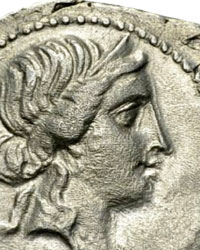
Roman Empire. Faustina I († AD 140/1). Sestertius Rome - Aeternitas

02
days
05
hours
58
minutes
49
seconds
Current bid
€ 119
Reserve price not met

Expert
Selected by Alessandro Fiamingo
Holds a master’s degree in art history and a master’s degree in chemistry. Has over ten years of experience as a conservation scientist at the Vatican Museums.
Estimate € 280 - € 330
8 other people are watching this object
 Bidder 9047 Bidder 9047 | €119 | |
|---|---|---|
 Bidder 0746 Bidder 0746 | €2 |
Catawiki Buyer Protection
Your payment’s safe with us until you receive your object.View details
Trustpilot 4.4 | 122115 reviews
Rated Excellent on Trustpilot.
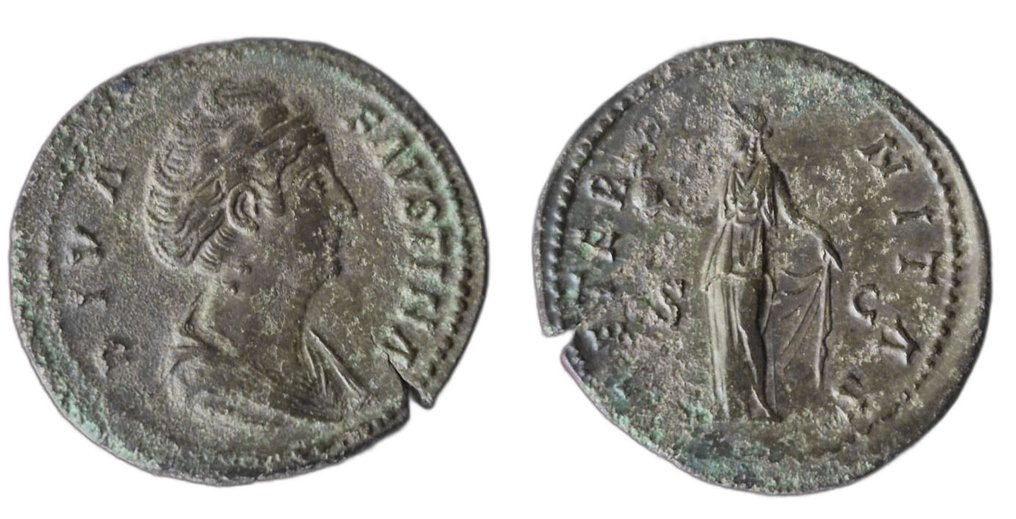
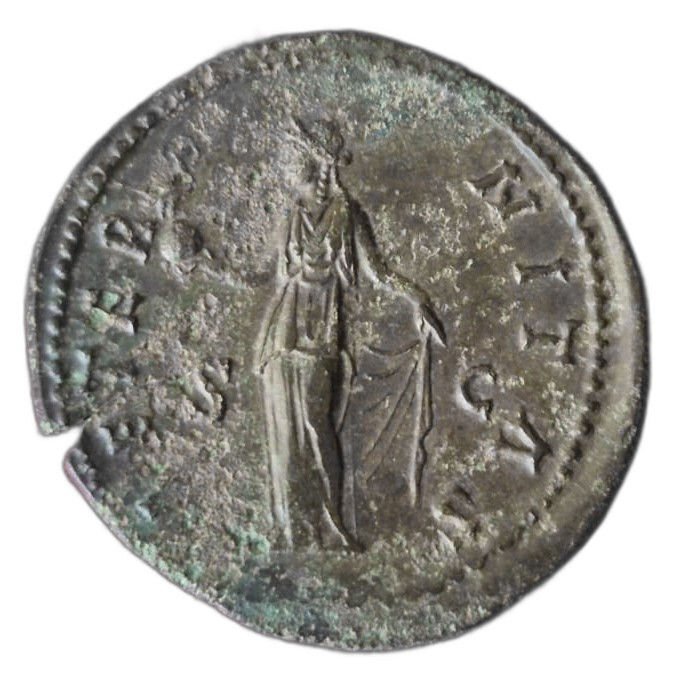
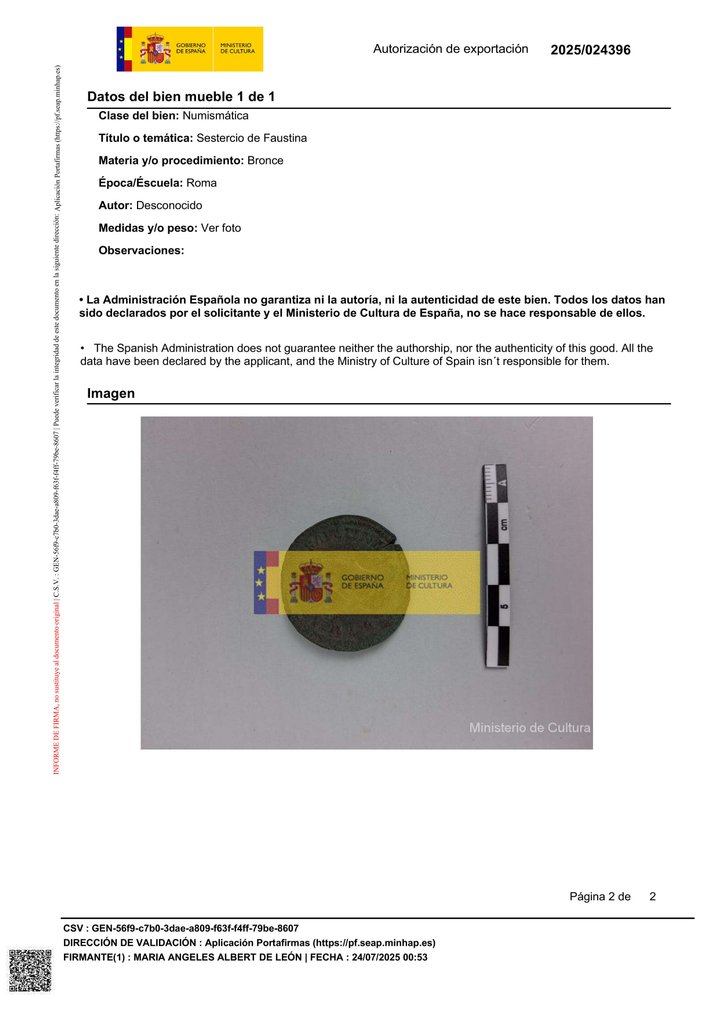
Ungraded Roman Empire bronze Æ sestertius of Faustina I, Rome - Aeternitas, 33 mm and 24.5 g, obverse: DIVA FAVSTINA diademed and draped bust to the right; reverse: AETER-NITAS with S-C, Aeternitas standing left holding a phoenix on a globe, with Certificate of Authenticity and Export Licence included.
AI-assisted summary
Description from the seller
RULER: Diva Faustina Senior
DATE: After 141 A.D
DENOMINATION: Sestertius
MATERIAL: Bronze, AE
SIZE & WEIGHT: 33 mm, 24,5 gr
OBVERSE: DIVA FAVSTINA Diademed and draped bust of Diva Faustina Senior to right.
REVERSE: AETER-NITAS / S - C Aeternitas standing front, head to left, holding phoenix on globe in her right hand and fold of drapery with her left.
REFERENCES: BMC 1490. Cohen 12. RIC 1105.
Comes with Certificate of Authenticity and Export Licence. If you are from outside the European Union, we will have to apply for the export licence again for your country, this takes 3 to 5 weeks and has a cost of 5% of the hammer price, this amount will be added to the final invoice.
Annia Galeria Faustina the Elder, often referred to as Faustina I or Faustina Major, was a Roman empress and the beloved wife of the Emperor Antoninus Pius. Born around 100 CE, she was the daughter of consul and prefect Marcus Annius Verus and Rupilia Faustina, belonging to the Roman upper class. She married Antoninus Pius as a private citizen between 110 and 115 CE. The couple had four children, though only their daughter, Annia Galeria Faustina Minor (Faustina the Younger), survived to see their elevation to the imperial rank. Faustina the Younger would later become empress herself, marrying her maternal cousin, the future Emperor Marcus Aurelius.
Upon her husband's accession as emperor in July 138 CE, Faustina was granted the title of Augusta by the Senate. During her brief time as empress, she was known for her beauty, wisdom, and active involvement in philanthropy. She was particularly celebrated for assisting charities that benefited the poor and for her sponsorship of the education of Roman children, especially girls. The legend PUELLAE FAUSTINIANAE (the Girls of Faustina) on her later coinage likely refers to a foundation she established for the support and education of poor Roman girls.
Faustina died suddenly in late October 140 CE, only two years into her husband's reign. Her death deeply devastated Antoninus Pius, who took extensive and unprecedented measures to honor her memory, which were central to her enduring posthumous legacy as Diva Faustina (the Divine Faustina). The Senate deified her, and Antoninus dedicated the Temple of Faustina (later rededicated as the Temple of Antoninus and Faustina) in the Roman Forum, making her the first Roman empress to have a permanent presence there. Her image appeared widely on statues and coins promoting her cult and symbolizing pietas (loyalty and devotion), ensuring she played a prominent symbolic role throughout her husband’s long principate.
Seller's Story
Your Antiquarian offers ancient art and ancient coins. Our main objective is to offer the highest quality at the best price respecting and strictly complying with the laws of heritage protection and UNESCO heritage norms. Therefore, all the pieces that are published come from private collections in which the provenance can be checked or international auctions. All our antiquities and coins are accompanied by their Certificate of Authenticity. We have a no quibble 90 day return policy. At Your Antiquarian we are committed to helping disadvantaged groups and for this reason a portion of each purchase is donated to charities to help people in need.
Translated by Google TranslateRULER: Diva Faustina Senior
DATE: After 141 A.D
DENOMINATION: Sestertius
MATERIAL: Bronze, AE
SIZE & WEIGHT: 33 mm, 24,5 gr
OBVERSE: DIVA FAVSTINA Diademed and draped bust of Diva Faustina Senior to right.
REVERSE: AETER-NITAS / S - C Aeternitas standing front, head to left, holding phoenix on globe in her right hand and fold of drapery with her left.
REFERENCES: BMC 1490. Cohen 12. RIC 1105.
Comes with Certificate of Authenticity and Export Licence. If you are from outside the European Union, we will have to apply for the export licence again for your country, this takes 3 to 5 weeks and has a cost of 5% of the hammer price, this amount will be added to the final invoice.
Annia Galeria Faustina the Elder, often referred to as Faustina I or Faustina Major, was a Roman empress and the beloved wife of the Emperor Antoninus Pius. Born around 100 CE, she was the daughter of consul and prefect Marcus Annius Verus and Rupilia Faustina, belonging to the Roman upper class. She married Antoninus Pius as a private citizen between 110 and 115 CE. The couple had four children, though only their daughter, Annia Galeria Faustina Minor (Faustina the Younger), survived to see their elevation to the imperial rank. Faustina the Younger would later become empress herself, marrying her maternal cousin, the future Emperor Marcus Aurelius.
Upon her husband's accession as emperor in July 138 CE, Faustina was granted the title of Augusta by the Senate. During her brief time as empress, she was known for her beauty, wisdom, and active involvement in philanthropy. She was particularly celebrated for assisting charities that benefited the poor and for her sponsorship of the education of Roman children, especially girls. The legend PUELLAE FAUSTINIANAE (the Girls of Faustina) on her later coinage likely refers to a foundation she established for the support and education of poor Roman girls.
Faustina died suddenly in late October 140 CE, only two years into her husband's reign. Her death deeply devastated Antoninus Pius, who took extensive and unprecedented measures to honor her memory, which were central to her enduring posthumous legacy as Diva Faustina (the Divine Faustina). The Senate deified her, and Antoninus dedicated the Temple of Faustina (later rededicated as the Temple of Antoninus and Faustina) in the Roman Forum, making her the first Roman empress to have a permanent presence there. Her image appeared widely on statues and coins promoting her cult and symbolizing pietas (loyalty and devotion), ensuring she played a prominent symbolic role throughout her husband’s long principate.
Seller's Story
Your Antiquarian offers ancient art and ancient coins. Our main objective is to offer the highest quality at the best price respecting and strictly complying with the laws of heritage protection and UNESCO heritage norms. Therefore, all the pieces that are published come from private collections in which the provenance can be checked or international auctions. All our antiquities and coins are accompanied by their Certificate of Authenticity. We have a no quibble 90 day return policy. At Your Antiquarian we are committed to helping disadvantaged groups and for this reason a portion of each purchase is donated to charities to help people in need.
Translated by Google TranslateDetails
Era
Before 1400
Culture/region
Roman Empire
Year/Period and Variation
Rome - Aeternitas
Ruler
Faustina I († AD 140/1)
Denomination
Sestertius
Metal
Æ
Condition
Ungraded
Sold by