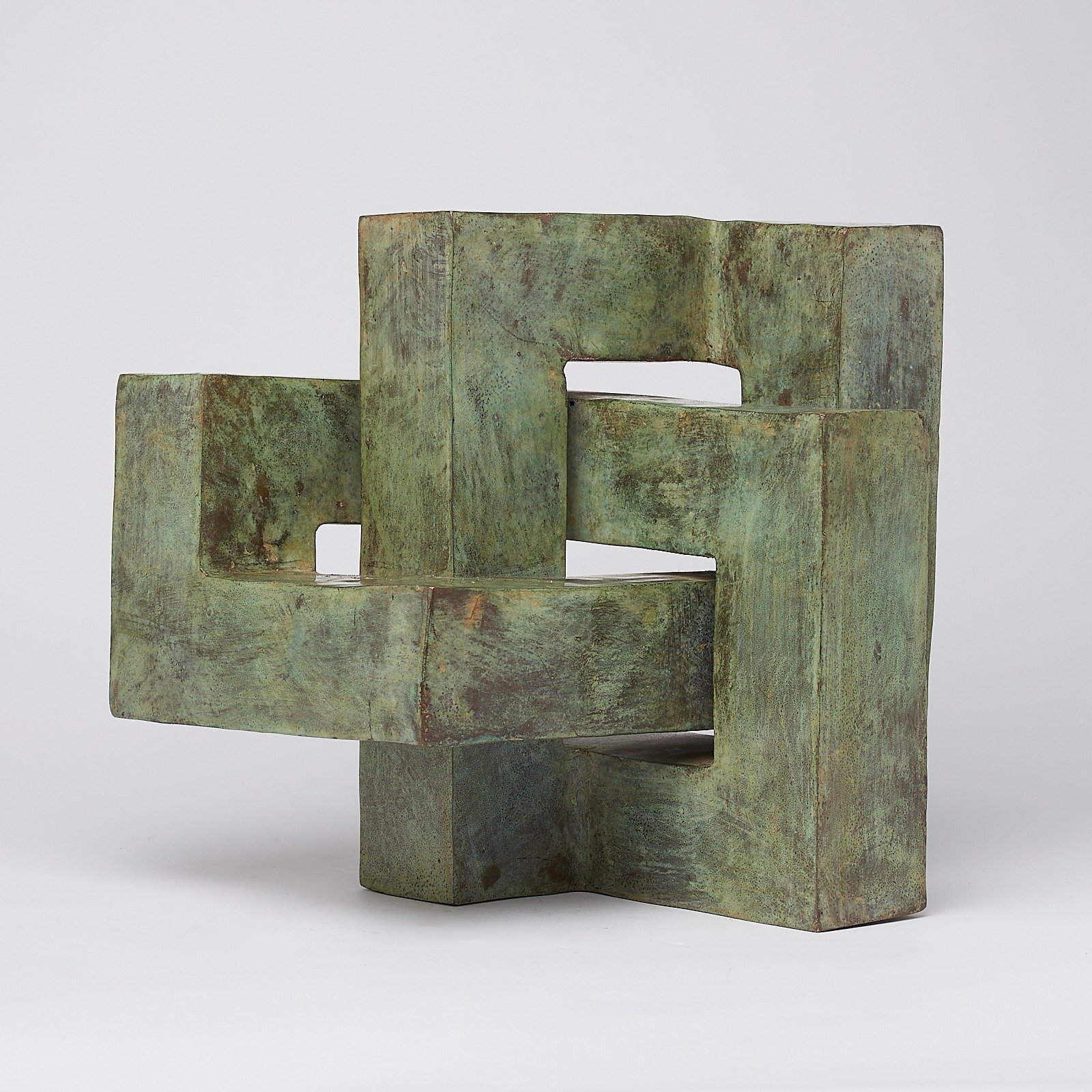
Sextant - Technical instrument - Europe - Late 20th century


08
days
18
hours
51
minutes
18
seconds

7 other people are watching this object
 Bidder 7377 Bidder 7377 | €1 |
|---|
Catawiki Buyer Protection
Your payment’s safe with us until you receive your object.View details
Trustpilot 4.4 | 122028 reviews
Rated Excellent on Trustpilot.
A brass and glass sextant from the late 20th century by Sextant, with dimensions 13 cm high, 12 cm wide and 5 cm deep, and a weight of 0.5 kg.
AI-assisted summary
Description from the seller
Messing sextant, fourth quarter 20th century. A sextant and octant are nautical navigation instruments used to measure the vertical angle between a celestial body and the horizon. If, in addition to the vertical angle, the date and time of day are known (from an almanac), the meridian (the longitude circle) can be calculated (the position east-west). It could also be used to find the distance between two points on land.[1]
The most accurate determination is obtained by shooting the sun during its culmination, at 12:00 solar time, when the sun has reached its highest point. Another method, the pole altitude, is determined by measuring the height of the pole star; for this, the exact time is not important, and the latitude (the position in the north-south direction) of the observer is approximately determined immediately.
Dimensions: Height 13 cm, width 12 cm, and depth 5 cm.
Condition: In nice, good used condition with signs of use. One part is loose without a matching screw.
Messing sextant, fourth quarter 20th century. A sextant and octant are nautical navigation instruments used to measure the vertical angle between a celestial body and the horizon. If, in addition to the vertical angle, the date and time of day are known (from an almanac), the meridian (the longitude circle) can be calculated (the position east-west). It could also be used to find the distance between two points on land.[1]
The most accurate determination is obtained by shooting the sun during its culmination, at 12:00 solar time, when the sun has reached its highest point. Another method, the pole altitude, is determined by measuring the height of the pole star; for this, the exact time is not important, and the latitude (the position in the north-south direction) of the observer is approximately determined immediately.
Dimensions: Height 13 cm, width 12 cm, and depth 5 cm.
Condition: In nice, good used condition with signs of use. One part is loose without a matching screw.
Details
Era
1900-2000
Manufacturer-Brand
Sextant
Weight
0.5 kg
No. of items
1
Country of Origin
Europe
Material
Brass, Glass
Condition
Good condition - used with small signs of aging & blemishes
Height
13 cm
Width
12 cm
Depth
5 cm
Estimated Period
Late 20th century
Sold by