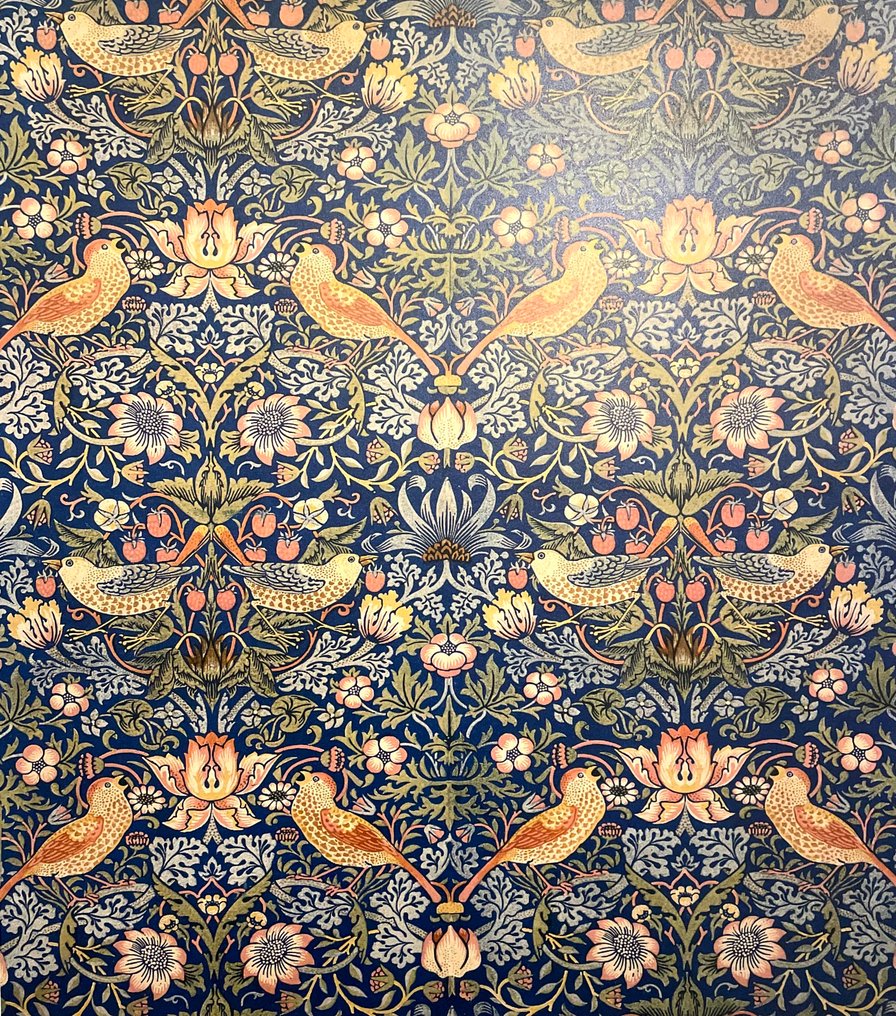
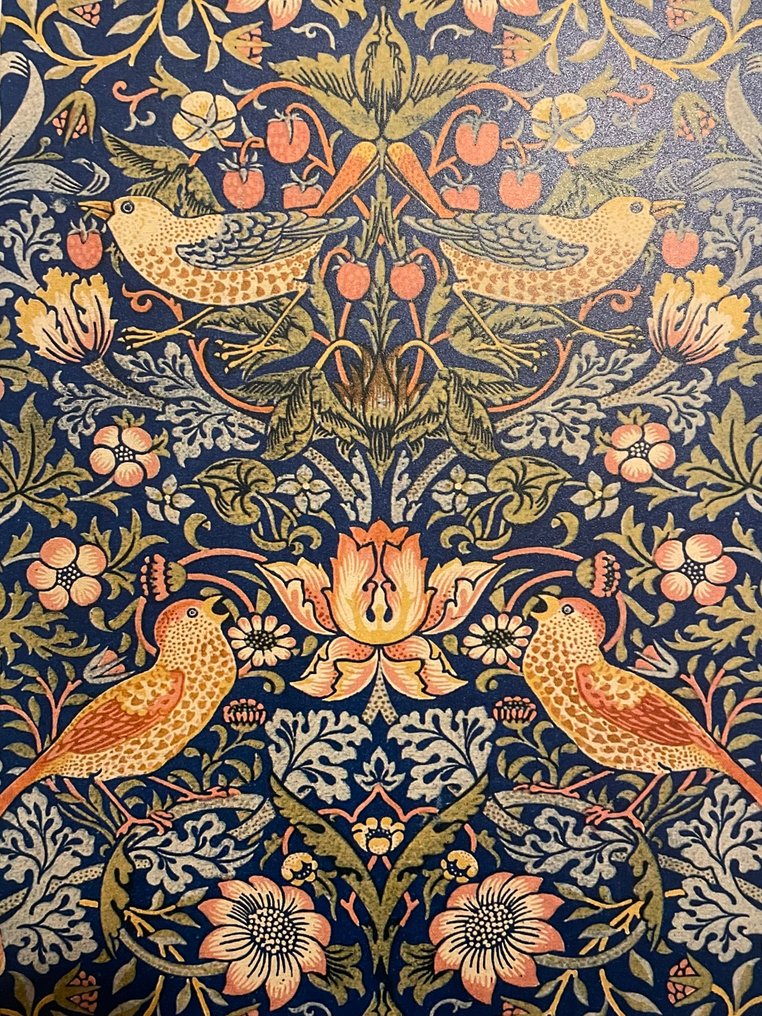
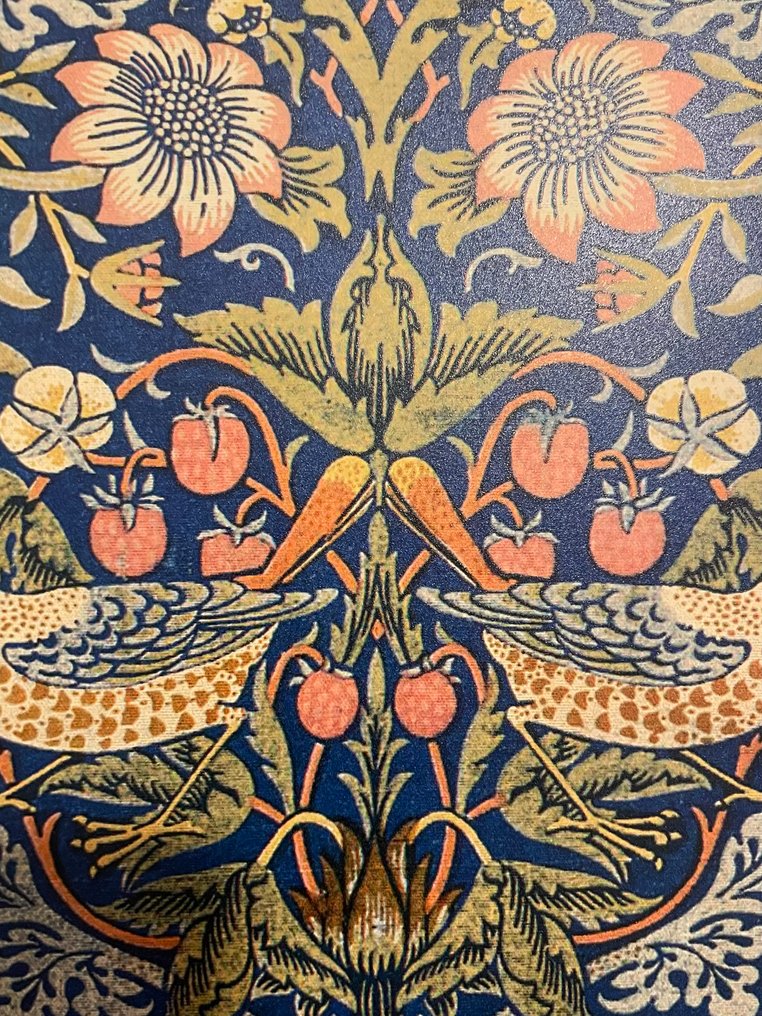
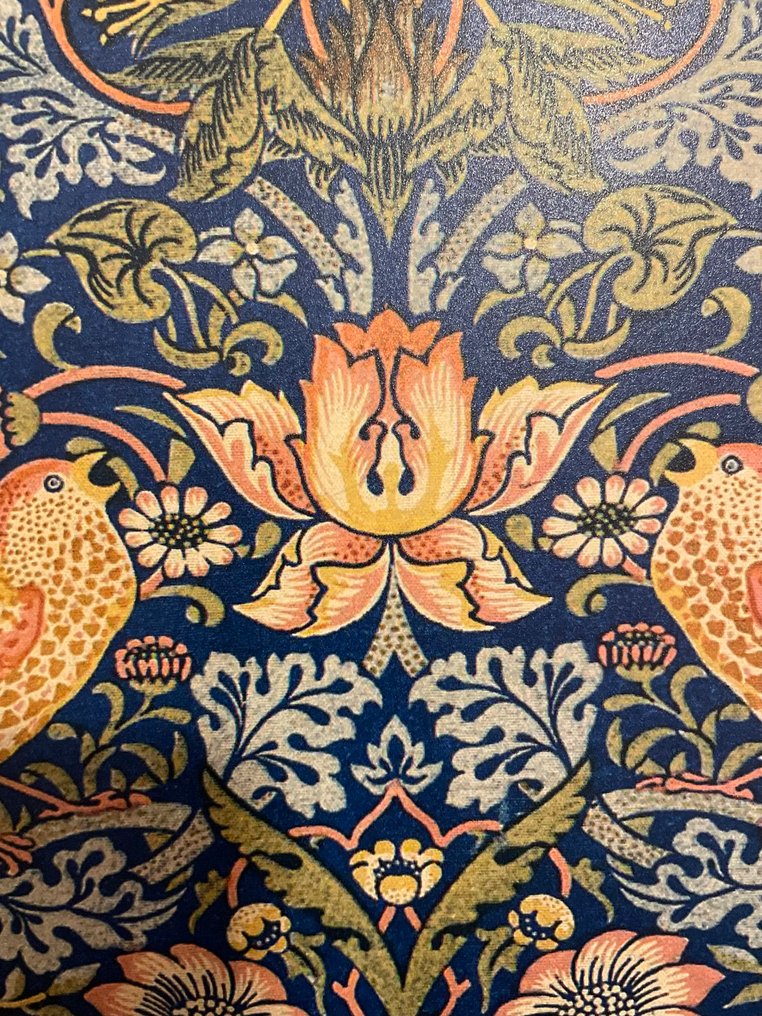
William Morris - Strawberry Thief - Fine art giclée - licensed print

05
days
19
hours
02
minutes
53
seconds
Starting bid
€ 1
Reserve price not met

Expert
Selected by Anna Hue-Roques
Holds bachelor's degrees in Law and Art History with an Ecole du Louvre auctioneer diploma.
Estimate € 180 - € 220
No bids placed
Catawiki Buyer Protection
Your payment’s safe with us until you receive your object.View details
Trustpilot 4.4 | 122053 reviews
Rated Excellent on Trustpilot.
William Morris fine art giclée licensed print titled Strawberry Thief, luxury edition on 250 g/m² matte conservation paper, sheet 60 × 54 cm with motif 50 × 54 cm, in excellent condition and authorized by the William Morris Gallery.
AI-assisted summary
Description from the seller
William Morris Fine Art Giclée (*)
Reproduction of the work 'Strawberry Thief'.
Luxury edition on high-weight matte conservation digital paper (250 g/m²).
Print authorized by the William Morris Gallery.
Sheet dimensions: 60 x 54 cm
Design dimensions: 50 x 54 cm
- Condition: Excellent (this work has never been framed or exhibited, always kept in a professional art folder, so it is offered in immaculate condition).
The artwork will be handled with care and packaged in a reinforced cardboard box. Shipping will be certified with a tracking number (UPS, DPD, DHL, FedEx).
The shipment will also include transport insurance for the final value of the artwork with full reimbursement in case of loss or damage, at no cost to the buyer.
Born in England on March 24, 1834, and died on October 3, 1896; from a well-off family, he was a designer, decorator, painter, and craftsman, but the most significant contributions he made to the Arts & Crafts movement. He was one of its founders and its main ideologist.
In his early years of study, around 1853, he met the writers Edgard Burne-Jones and John Ruskin, who influenced his designs and way of thinking.
Traveling through Belgium and France, where he explores 15th-century art, such as that of Hans Memling and Jan Van Eyck, he admires Gothic cathedrals, establishing these three important artistic inspirations as the foundation of his future work.
William Morris is part of our lives. Many rooms have been decorated with his motifs, and we agree with his political ideas about gender equality, the conservation of national cultural heritage, and natural landscapes. He was a pioneer of the 'green' movement, an advanced talent for his time.
Morris was as conscious of the quality of interior design as he was of the quality of life to be developed within it, viewing them as intimately linked. He advocated for the use of natural materials and encouraged the public to craft artisanal objects. As a convinced socialist, he aspired for workers to enjoy their work and supported free education and an 8-hour workday. He was deeply displeased with the dehumanization that the industrialization process was imposing worldwide.
In 1861, with a group of his talented friends, such as Edward Burne-Jones, Philip Webb, and Dante Gabriel Rossetti, he founded a company dedicated to crafting furniture and artisanal accessories, including their famous papers and also developing all kinds of crafts such as wood bending, watercolors, upholstery, and more.
Morris continued writing throughout his life: poetry, socialist manifestos, and fantastic stories, which are believed to have influenced J. R. R. Tolkien himself.
Seller's Story
EsKobARTE carefully selects artworks and posters from recognized and emerging artists worldwide to offer them here at affordable prices.*** AUTHENTIC WORKS *** We only sell genuine artworks and posters, as well as officially authorized prints.*** WE ARE PROFESSIONALS *** You can bid on your items with complete confidence. Over 1,000 positive reviews from our clients attest to our experience and professionalism on Catawiki.*** PROTECTED, CERTIFIED, AND INSURED SHIPPING *** All our items are carefully packaged in eco-friendly cardboard packaging. We work with the best shipping companies (UPS-DPD-DHL-FEDEX) to ensure the best service and tracking. Additionally, our shipments include insurance against damage or loss at no cost to the buyer.*** IF YOU PURCHASE MORE THAN ONE ITEM, WE COMBINE SHIPPING *** Even if they come from different auctions, you'll only have to pay the shipping cost for a single item.*** ANY QUESTIONS? CONTACT US *** You can use the chat to talk to us; we will be happy to assist you as soon as possible.*** THANK YOU AND GOOD LUCK WITH YOUR BIDS! ***
Translated by Google TranslateWilliam Morris Fine Art Giclée (*)
Reproduction of the work 'Strawberry Thief'.
Luxury edition on high-weight matte conservation digital paper (250 g/m²).
Print authorized by the William Morris Gallery.
Sheet dimensions: 60 x 54 cm
Design dimensions: 50 x 54 cm
- Condition: Excellent (this work has never been framed or exhibited, always kept in a professional art folder, so it is offered in immaculate condition).
The artwork will be handled with care and packaged in a reinforced cardboard box. Shipping will be certified with a tracking number (UPS, DPD, DHL, FedEx).
The shipment will also include transport insurance for the final value of the artwork with full reimbursement in case of loss or damage, at no cost to the buyer.
Born in England on March 24, 1834, and died on October 3, 1896; from a well-off family, he was a designer, decorator, painter, and craftsman, but the most significant contributions he made to the Arts & Crafts movement. He was one of its founders and its main ideologist.
In his early years of study, around 1853, he met the writers Edgard Burne-Jones and John Ruskin, who influenced his designs and way of thinking.
Traveling through Belgium and France, where he explores 15th-century art, such as that of Hans Memling and Jan Van Eyck, he admires Gothic cathedrals, establishing these three important artistic inspirations as the foundation of his future work.
William Morris is part of our lives. Many rooms have been decorated with his motifs, and we agree with his political ideas about gender equality, the conservation of national cultural heritage, and natural landscapes. He was a pioneer of the 'green' movement, an advanced talent for his time.
Morris was as conscious of the quality of interior design as he was of the quality of life to be developed within it, viewing them as intimately linked. He advocated for the use of natural materials and encouraged the public to craft artisanal objects. As a convinced socialist, he aspired for workers to enjoy their work and supported free education and an 8-hour workday. He was deeply displeased with the dehumanization that the industrialization process was imposing worldwide.
In 1861, with a group of his talented friends, such as Edward Burne-Jones, Philip Webb, and Dante Gabriel Rossetti, he founded a company dedicated to crafting furniture and artisanal accessories, including their famous papers and also developing all kinds of crafts such as wood bending, watercolors, upholstery, and more.
Morris continued writing throughout his life: poetry, socialist manifestos, and fantastic stories, which are believed to have influenced J. R. R. Tolkien himself.
Seller's Story
EsKobARTE carefully selects artworks and posters from recognized and emerging artists worldwide to offer them here at affordable prices.*** AUTHENTIC WORKS *** We only sell genuine artworks and posters, as well as officially authorized prints.*** WE ARE PROFESSIONALS *** You can bid on your items with complete confidence. Over 1,000 positive reviews from our clients attest to our experience and professionalism on Catawiki.*** PROTECTED, CERTIFIED, AND INSURED SHIPPING *** All our items are carefully packaged in eco-friendly cardboard packaging. We work with the best shipping companies (UPS-DPD-DHL-FEDEX) to ensure the best service and tracking. Additionally, our shipments include insurance against damage or loss at no cost to the buyer.*** IF YOU PURCHASE MORE THAN ONE ITEM, WE COMBINE SHIPPING *** Even if they come from different auctions, you'll only have to pay the shipping cost for a single item.*** ANY QUESTIONS? CONTACT US *** You can use the chat to talk to us; we will be happy to assist you as soon as possible.*** THANK YOU AND GOOD LUCK WITH YOUR BIDS! ***
Translated by Google TranslateDetails
Era
1900-2000
Designer/Artist
William Morris
Poster title
Strawberry Thief - Fine art giclée - licensed print
Condition
A (excellent - mint condition)
Height
54 cm
Width
60 cm