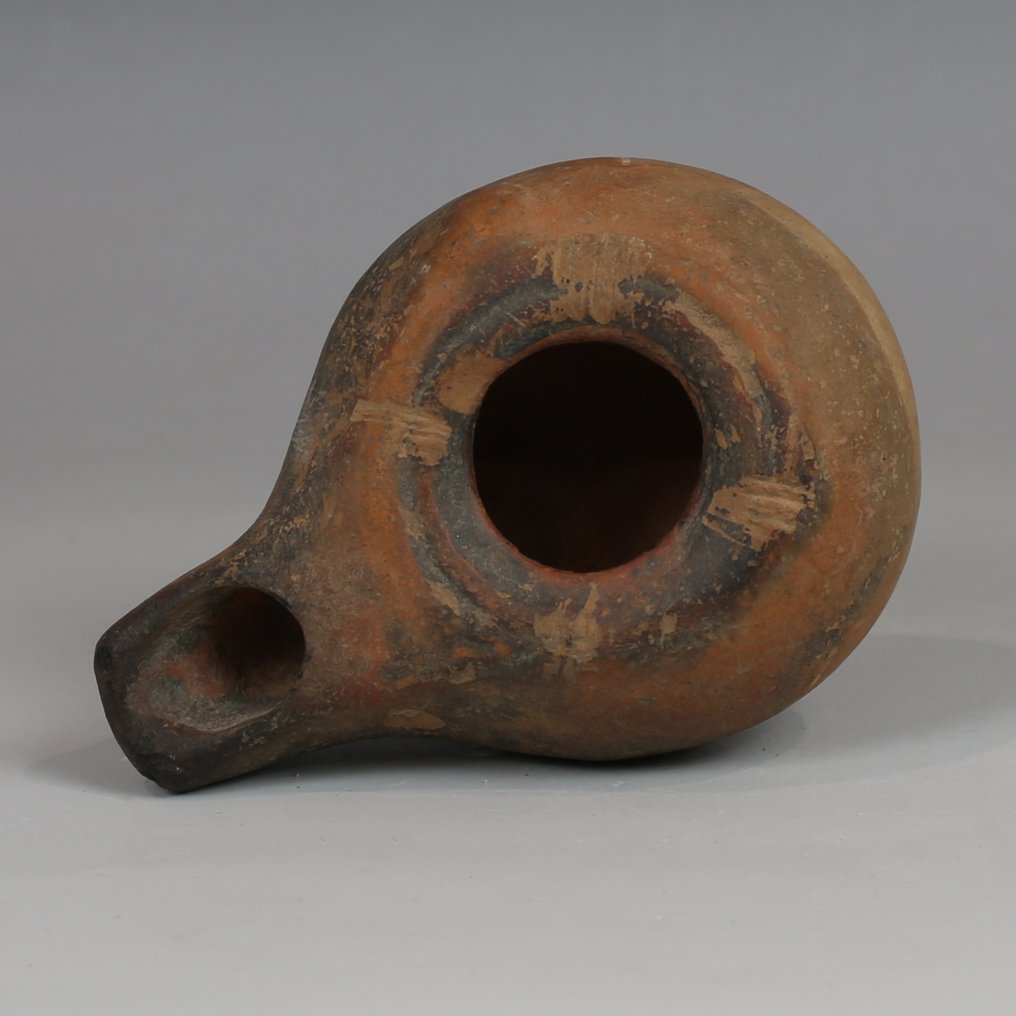
Ógörög Kerémia olajlámpás (Nincs minimálár)


00
napok
05
óra
35
perc
01
másodperc
Jelenlegi licit
€ 96
Nincs minimálár

Szakértő
Ruth Garrido Vila által kiválasztva
Az Ifergan Gyűjtemény Múzeumának vezetője, föníciai régészet szakértője.
Becslés € 330 - € 400
27 másik személy figyeli ezt a tárgyat
 Licitáló 8032 Licitáló 8032 | 96 € | |
|---|---|---|
 Licitáló 4842 Licitáló 4842 | 91 € | |
| Licitáló 4842 | 82 € | |
Catawiki Vevővédelem
A befizetést biztonságban megőrizzük, amíg a termék kézbesítése meg nem történik. Részletek megtekintése
Trustpilot 4.4 | 122028 vélemény
A Trustpilot-on kiváló értékelésű.
Ősi görög agyagolajlámpa, a Kr. e. 4. századból, jó állapotban, holland magángyűjteményből, hitelesítési igazolással és EU exportengedéllyel.
AI-támogatott összefoglaló
Leírás az eladótól
ITEM: Oil lamp
MATERIAL: Pottery
CULTURE: Greek
PERIOD: 4th Century B.C
DIMENSIONS: 37 mm x 60 mm x 85 mm
CONDITION: Good condition
PROVENANCE: Ex Dutch private collection, acquired between 1980 - 1990
Comes with Certificate of Authenticity and European Union export license
If you bid outside European Union and win the item, we must request a new export license to your country and the shipment will delay between 3 - 5 weeks.
Greek oil lamps were essential household items in ancient Greece, providing light and illumination during the evening hours. These lamps were typically made from clay, although examples crafted from bronze or other metals also exist. Greek oil lamps consisted of a shallow, bowl-shaped reservoir for holding olive oil, which served as the fuel source, and a central spout or nozzle through which a wick could be inserted. The design of Greek oil lamps varied across different regions and time periods, with some featuring simple, utilitarian forms while others were elaborately decorated with ornate motifs and patterns.
The use of oil lamps in ancient Greece dates back to the Bronze Age, but they became increasingly widespread and standardized during the Classical and Hellenistic periods. Oil lamps were used in both public and private spaces, including homes, temples, workshops, and public buildings. In addition to providing illumination, oil lamps played a role in religious rituals and ceremonies, where they were used to light sacred spaces, altars, and shrines as offerings to the gods.
Greek oil lamps are valuable artifacts for archaeologists and historians studying ancient Greek daily life, technology, and material culture. The examination of lamp typologies, manufacturing techniques, and decorative styles can provide insights into ancient Greek craftsmanship, artistic expression, and social customs.
Az eladó története
Az Antikvárium ősi művészetet és ősi érméket kínál. Fő célunk, hogy a legjobb minőséget kínáljuk a legjobb áron, tiszteletben tartva és szigorúan betartva az örökségvédelmi törvényeket és az UNESCO örökség normáit. Ezért minden megjelent darab magángyűjteményekből származik, amelyekben ellenőrizhető a származás, vagy nemzetközi aukciókról. Minden régiségünket és érméinket Eredeti Tanúsítvány kíséri. 90 napos visszaküldési szabályzatunk van. Az Ön Antikváriumánál elkötelezettek vagyunk a hátrányos helyzetű csoportok megsegítése mellett, ezért minden vásárlás egy részét jótékonysági szervezeteknek ajánljuk fel, hogy segítsenek a rászoruló embereken.
Fordítás a Google Fordító általITEM: Oil lamp
MATERIAL: Pottery
CULTURE: Greek
PERIOD: 4th Century B.C
DIMENSIONS: 37 mm x 60 mm x 85 mm
CONDITION: Good condition
PROVENANCE: Ex Dutch private collection, acquired between 1980 - 1990
Comes with Certificate of Authenticity and European Union export license
If you bid outside European Union and win the item, we must request a new export license to your country and the shipment will delay between 3 - 5 weeks.
Greek oil lamps were essential household items in ancient Greece, providing light and illumination during the evening hours. These lamps were typically made from clay, although examples crafted from bronze or other metals also exist. Greek oil lamps consisted of a shallow, bowl-shaped reservoir for holding olive oil, which served as the fuel source, and a central spout or nozzle through which a wick could be inserted. The design of Greek oil lamps varied across different regions and time periods, with some featuring simple, utilitarian forms while others were elaborately decorated with ornate motifs and patterns.
The use of oil lamps in ancient Greece dates back to the Bronze Age, but they became increasingly widespread and standardized during the Classical and Hellenistic periods. Oil lamps were used in both public and private spaces, including homes, temples, workshops, and public buildings. In addition to providing illumination, oil lamps played a role in religious rituals and ceremonies, where they were used to light sacred spaces, altars, and shrines as offerings to the gods.
Greek oil lamps are valuable artifacts for archaeologists and historians studying ancient Greek daily life, technology, and material culture. The examination of lamp typologies, manufacturing techniques, and decorative styles can provide insights into ancient Greek craftsmanship, artistic expression, and social customs.
Az eladó története
Az Antikvárium ősi művészetet és ősi érméket kínál. Fő célunk, hogy a legjobb minőséget kínáljuk a legjobb áron, tiszteletben tartva és szigorúan betartva az örökségvédelmi törvényeket és az UNESCO örökség normáit. Ezért minden megjelent darab magángyűjteményekből származik, amelyekben ellenőrizhető a származás, vagy nemzetközi aukciókról. Minden régiségünket és érméinket Eredeti Tanúsítvány kíséri. 90 napos visszaküldési szabályzatunk van. Az Ön Antikváriumánál elkötelezettek vagyunk a hátrányos helyzetű csoportok megsegítése mellett, ezért minden vásárlás egy részét jótékonysági szervezeteknek ajánljuk fel, hogy segítsenek a rászoruló embereken.
Fordítás a Google Fordító általRészletek
Kultúra
Ógörög
Évszázad/ Időszak
4th Century B.C
Name of object
Oil lamp
Származási forrás
Magángyűjtemény
Megszerzés éve
2025
Anyag
Kerémia
Származási ország
Hollandia
Állapot
Jó
Előző tulajdonos – forrás
Régiségpiac
Előző tulajdonos – megszerzés éve
1980
Előző tulajdonos – származási ország
Hollandia
Igazolom, hogy ezt a tárgyat törvényes úton szereztem meg, és jogosult vagyok eladni.
Igen
Eladó
Lemondás
Az eladó tájékoztatást kapott a Catawiki-től a dokumentációs követelményekről, és a következőket garantálja: - a tárgyat jogszerűen szerezték meg, - az eladó jogosult az adott tárgyat eladni és/vagy exportálni, - az eladó biztosítja a szükséges származási információkat, és gondoskodik a szükséges dokumentumokról és engedélyekről/licencekről, amennyiben azok szükségesek és a helyi jogszabályok szerint előírtak. - az eladó értesíti a vevőt az engedélyek/licencek megszerzésének bármilyen késedelméről. A licitálással Ön tudomásul veszi, hogy lakóhelye országától függően importdokumentációra lehet szükség, és hogy az engedélyek/licencek megszerzése késedelmet okozhat a tárgy szállításában.
Az eladó tájékoztatást kapott a Catawiki-től a dokumentációs követelményekről, és a következőket garantálja: - a tárgyat jogszerűen szerezték meg, - az eladó jogosult az adott tárgyat eladni és/vagy exportálni, - az eladó biztosítja a szükséges származási információkat, és gondoskodik a szükséges dokumentumokról és engedélyekről/licencekről, amennyiben azok szükségesek és a helyi jogszabályok szerint előírtak. - az eladó értesíti a vevőt az engedélyek/licencek megszerzésének bármilyen késedelméről. A licitálással Ön tudomásul veszi, hogy lakóhelye országától függően importdokumentációra lehet szükség, és hogy az engedélyek/licencek megszerzése késedelmet okozhat a tárgy szállításában.
