N. 98765342

N. 98765342
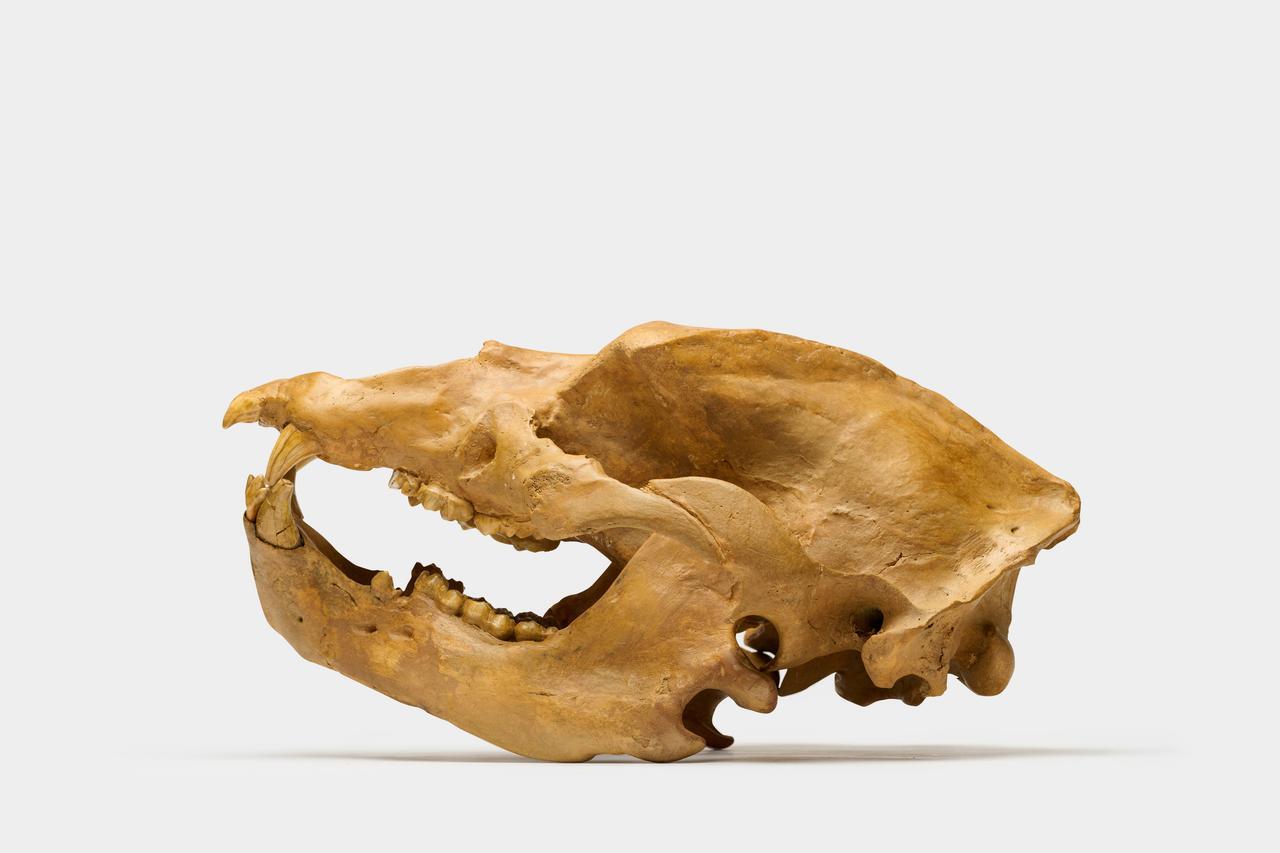
On offer is an extremely rare complete and authentic skeleton of a Eurasian cave lion. This incredible specimen was found in the Siberian Permafrost in the early 21st Century and comes with full provenance. It belonged to the Museo Del Mammut in Barcelona until 2015 when it was sold to the previous owner who redid the mounting and the display. (see attached documents) As the current owner we did some finishing touches and changed the right ulna, which was a replica before but an authentic one now. (not associated) This means ALL the bones are authentic aside from the pelvis, the scapulae, and the outer ends of the lower jaw. There are 7 cervical, 13 thoracic and 7 lumbar vertebrae and the tail consists of 17 caudals. (see bone map) We estimate a total 80% authentic bone ratio for the skeleton. When the restoration was complete the restorer suggested to naturally darken the bones for aestetic reasons.
As far as we know, there is no other complete cave lion skeleton for sale anywhere in the world, so this is truly an incridebly rare piece, a true highlight in your collection.
The cave lion (Panthera spelaea), also known as the Eurasian or European cave lion, was one of the largest predators of the Ice Age. It lived across Europe, northern Asia, and parts of North America during the Pleistocene epoch and was closely related to the modern lion (Panthera leo), though it was a distinct species adapted to cold climates.
Cave lions were slightly larger than today’s African lions, with strong, muscular bodies built for hunting large prey such as bison, reindeer, and young mammoths. Evidence suggests they lived either alone or in small groups rather than in large prides. Despite their name, they did not inhabit caves; their remains were simply preserved there.
Cave paintings from sites like Chauvet Cave in France show lions without manes, suggesting males may have lacked them. Frozen cubs found in Siberian permafrost revealed thick golden fur, confirming their adaptation to cold environments.
The species went extinct about 13,000 years ago, likely due to climate change and the disappearance of their prey at the end of the Ice Age. Today, the cave lion remains a striking symbol of Ice Age wildlife and one of the most iconic predators of prehistoric Europe.
This specimen can be shipped worldwide and fully insured, at buyer's expense. Pick up is preferred, the lion is on display in Antwerp, Belgium.
If the paid fee for shipping is less than the actual shipping cost we will refund you the balance.
Come fare acquisti su Catawiki
1. Scopri oggetti speciali
2. Fai l’offerta più alta
3. Paga in tutta sicurezza