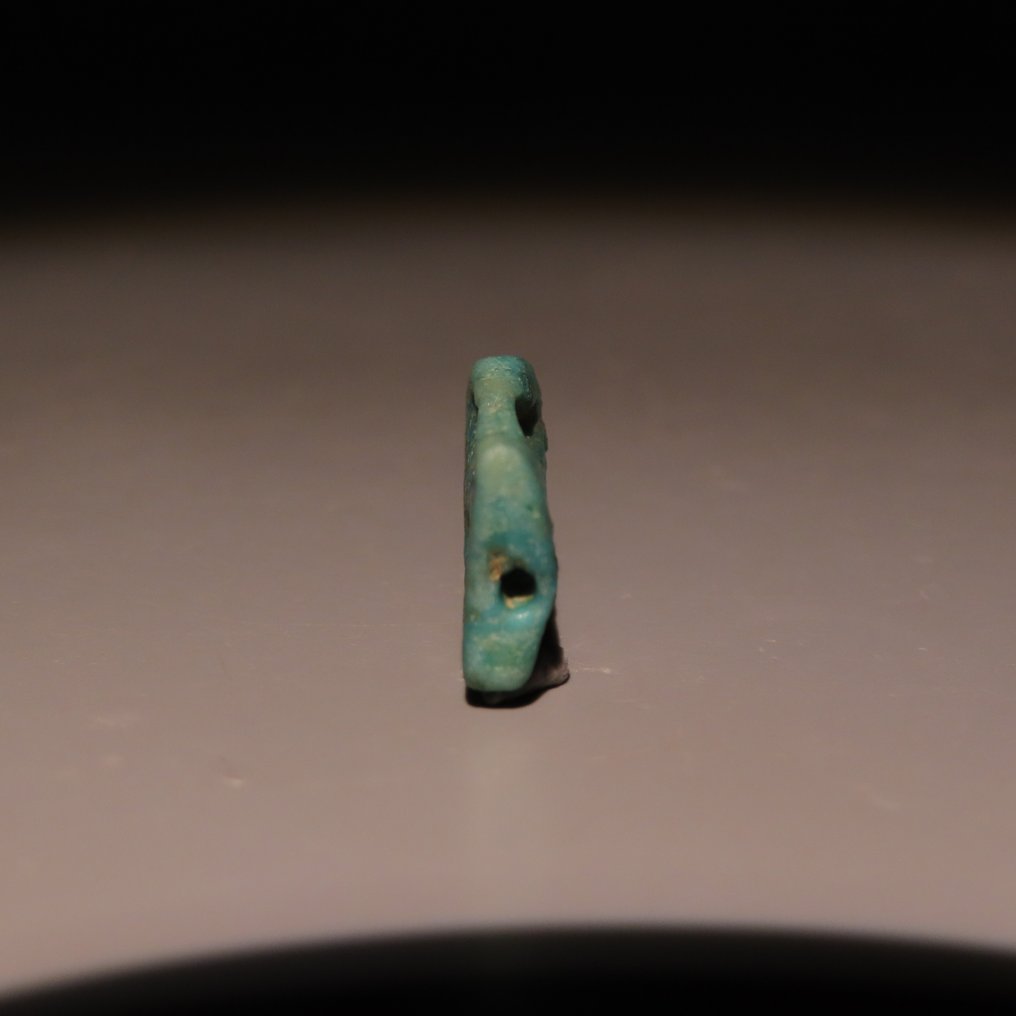
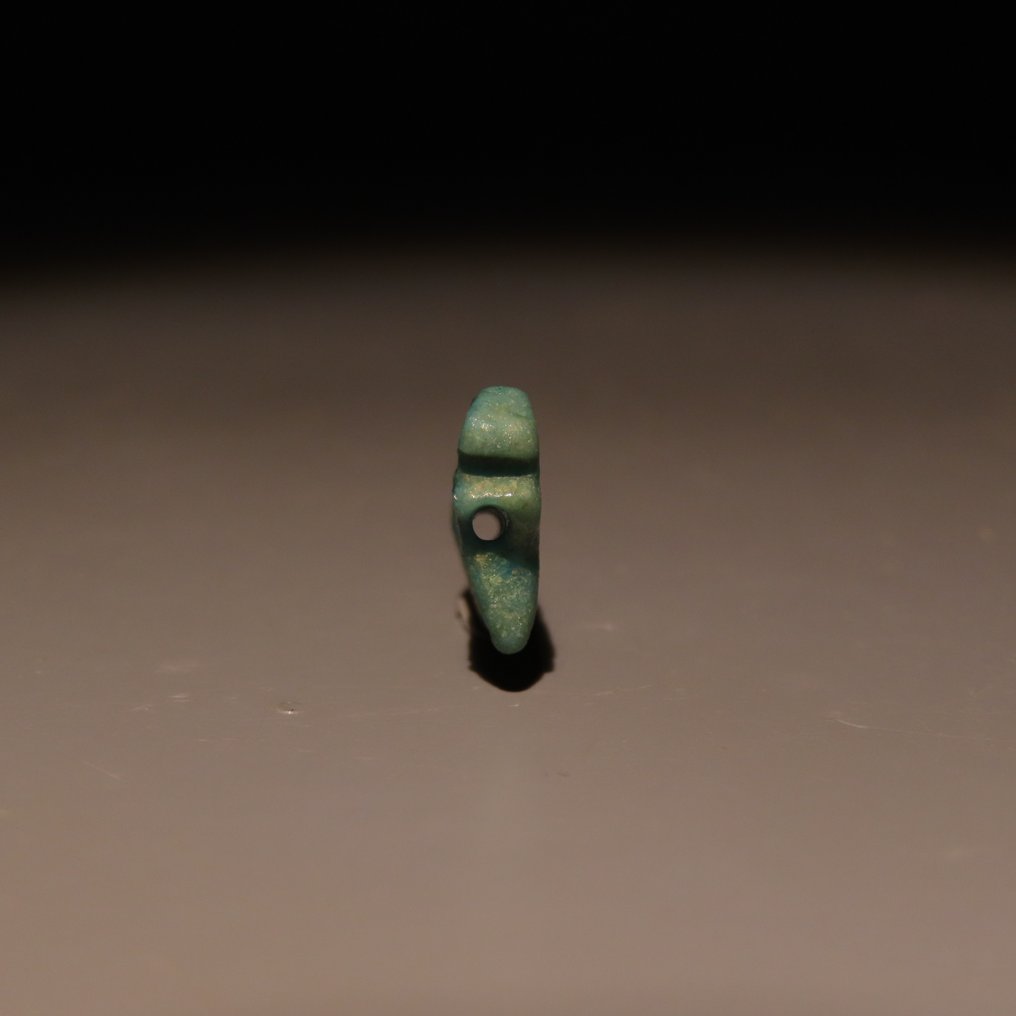
Oud-Egyptisch Faience Udjat Amulet. Late Periode, 664 - 332 v.Chr. Lengte 1,3 cm. (Zonder Minimumprijs)


00
dagen
04
uren
29
minuten
37
seconden
Huidig bod
€ 11
Geen minimumprijs

Expert
Geselecteerd door Ruth Garrido Vila
Was directeur van het Ifergan Collection Museum, gespecialiseerd in Fenicische archeologie.
Geschatte waarde € 330 - € 400
24 andere personen volgen dit object
 Bieder 1370 Bieder 1370 | € 11 | |
|---|---|---|
 Bieder 8907 Bieder 8907 | € 10 | |
| Bieder 1370 | € 9 | |
Catawiki Kopersbescherming
Je betaling is veilig bij ons totdat je het object hebt ontvangen.Bekijk details
Trustpilot 4.4 | 122028 reviews
Beoordeeld als "Uitstekend" op Trustpilot.
Udjat amulet, Late Periode (664–332 v.Chr.), faience, 1,3 cm lang, uit Ancient Egypt, in goede staat.
AI-gegenereerde samenvatting
Beschrijving van de verkoper
Udjat Amulet.
Ancient Egypt, Late Period, 664 - 332 BC.
Faience.
1.3 cm length.
Condition: Good condition.
Provenance: Private collection, France. Acquired at various auction houses from the 1970s to 2010.
Description:
The eye of Horus is an ancient Egyptian symbol of protection, royal power, and good health. The Eye of Horus is similar to the Eye of Ra, which belongs to a different god, Ra, but represents many of the same concepts.
Funerary amulets were often made in the shape of the Eye of Horus. The symbol "was intended to protect the pharaoh [here] in the afterlife" and to ward off evil. Ancient Egyptian and Middle-Eastern sailors would frequently paint the symbol on the bows of their vessels to ensure safe sea travel.
Amulets in Ancient Egypt were both decorative and practical, as they were considered as having apotropaic powers to protect or bestow power upon the wearer. Not only worn by the living, amulets have been found inside the wrappings of mummies, as they were used to prepare the deceased for the afterlife.
Amulets held different meanings, depending on their type or form. Small amulets depicting gods and goddesses seem to have induced the protective powers of the deity. On the other hand, small representations of anatomical features or creatures suggest that the wearer required protection over a specific body part, or that he/she desired the skills of a particular animal. Amulets depicting animals were very common in the Old Kingdom Period, whilst representations of deities gained popularity in the Middle Kingdom.
Notes:
- The piece includes authenticity certificate.
- The piece includes Spanish Export License (Passport for European Union) - If the piece is destined outside the European Union a substitution of the export permit should be requested, can take between 1-2 weeks maximum.
- The seller guarantees that he acquired this piece according to all national and international laws related to the ownership of cultural property. Provenance statement seen by Catawiki.
De verkoper stelt zich voor
Gallery of Ancient Art - Archeologie gevestigd in Barcelona met meer dan vijftien jaar ervaring. Gespecialiseerd in klassieke kunst, Egyptische kunst, Aziatische kunst en precolumbiaanse kunst. Het garandeert de authenticiteit van al zijn stukken. Het neemt deel aan de belangrijkste kunstbeurzen in Spanje, zoals Feriaarte, maar ook aan beurzen in het buitenland, BRAFA, Parcours des Mondes, Cultures Brussels.
Alle stukken worden verzonden met een exportvergunning die is afgegeven door het Spaanse Ministerie van Cultuur.
Wij verzenden snel via DHL Express of Direct Art Transport.
Vertaald door Google TranslateUdjat Amulet.
Ancient Egypt, Late Period, 664 - 332 BC.
Faience.
1.3 cm length.
Condition: Good condition.
Provenance: Private collection, France. Acquired at various auction houses from the 1970s to 2010.
Description:
The eye of Horus is an ancient Egyptian symbol of protection, royal power, and good health. The Eye of Horus is similar to the Eye of Ra, which belongs to a different god, Ra, but represents many of the same concepts.
Funerary amulets were often made in the shape of the Eye of Horus. The symbol "was intended to protect the pharaoh [here] in the afterlife" and to ward off evil. Ancient Egyptian and Middle-Eastern sailors would frequently paint the symbol on the bows of their vessels to ensure safe sea travel.
Amulets in Ancient Egypt were both decorative and practical, as they were considered as having apotropaic powers to protect or bestow power upon the wearer. Not only worn by the living, amulets have been found inside the wrappings of mummies, as they were used to prepare the deceased for the afterlife.
Amulets held different meanings, depending on their type or form. Small amulets depicting gods and goddesses seem to have induced the protective powers of the deity. On the other hand, small representations of anatomical features or creatures suggest that the wearer required protection over a specific body part, or that he/she desired the skills of a particular animal. Amulets depicting animals were very common in the Old Kingdom Period, whilst representations of deities gained popularity in the Middle Kingdom.
Notes:
- The piece includes authenticity certificate.
- The piece includes Spanish Export License (Passport for European Union) - If the piece is destined outside the European Union a substitution of the export permit should be requested, can take between 1-2 weeks maximum.
- The seller guarantees that he acquired this piece according to all national and international laws related to the ownership of cultural property. Provenance statement seen by Catawiki.
De verkoper stelt zich voor
Gallery of Ancient Art - Archeologie gevestigd in Barcelona met meer dan vijftien jaar ervaring. Gespecialiseerd in klassieke kunst, Egyptische kunst, Aziatische kunst en precolumbiaanse kunst. Het garandeert de authenticiteit van al zijn stukken. Het neemt deel aan de belangrijkste kunstbeurzen in Spanje, zoals Feriaarte, maar ook aan beurzen in het buitenland, BRAFA, Parcours des Mondes, Cultures Brussels.
Alle stukken worden verzonden met een exportvergunning die is afgegeven door het Spaanse Ministerie van Cultuur.
Wij verzenden snel via DHL Express of Direct Art Transport.
Vertaald door Google TranslateDetails
Cultuur
Oud-Egyptisch
Eeuw / Periode
Late Period, 664 - 332 BC
Name of object
Udjat Amulet. Late Period, 664 - 332 BC. 1.3 cm length.
Verkregen van
Veilinghuis
Jaar van verkrijging
2025
Materiaal
Faience
Land van verkrijging
Frankrijk
Staat
Goed
Vorige eigenaar verkregen van
Privécollectie
Vorige eigenaar - jaar van verkrijging
1970
Vorige eigenaar - land van verkrijging
Frankrijk
Ik verklaar dat ik dit object op legale wijze heb verkregen en dat ik bevoegd ben om het te verkopen
Ja
Verkocht door
Disclaimer
De verkoper is door Catawiki geïnformeerd over de documentatievereisten en garandeert het volgende: - het object is op legale wijze verkregen, - de verkoper is gerechtigd om het object te verkopen en/of te exporteren, indien van toepassing, - de verkoper zal de nodige informatie over de herkomst aanleveren en, indien van toepassing en in overeenstemming met de lokale wetgeving, de vereiste documentatie en vergunningen regelen, - de verkoper zal de koper op de hoogte stellen van eventuele vertragingen bij het verkrijgen van de benodigde vergunningen. Door een bod uit te brengen, erken je dat voor de import mogelijk documentatie vereist is, afhankelijk van het land waar je woont, en dat het verkrijgen van vergunningen kan leiden tot vertraging in de levering van je object.
De verkoper is door Catawiki geïnformeerd over de documentatievereisten en garandeert het volgende: - het object is op legale wijze verkregen, - de verkoper is gerechtigd om het object te verkopen en/of te exporteren, indien van toepassing, - de verkoper zal de nodige informatie over de herkomst aanleveren en, indien van toepassing en in overeenstemming met de lokale wetgeving, de vereiste documentatie en vergunningen regelen, - de verkoper zal de koper op de hoogte stellen van eventuele vertragingen bij het verkrijgen van de benodigde vergunningen. Door een bod uit te brengen, erken je dat voor de import mogelijk documentatie vereist is, afhankelijk van het land waar je woont, en dat het verkrijgen van vergunningen kan leiden tot vertraging in de levering van je object.
