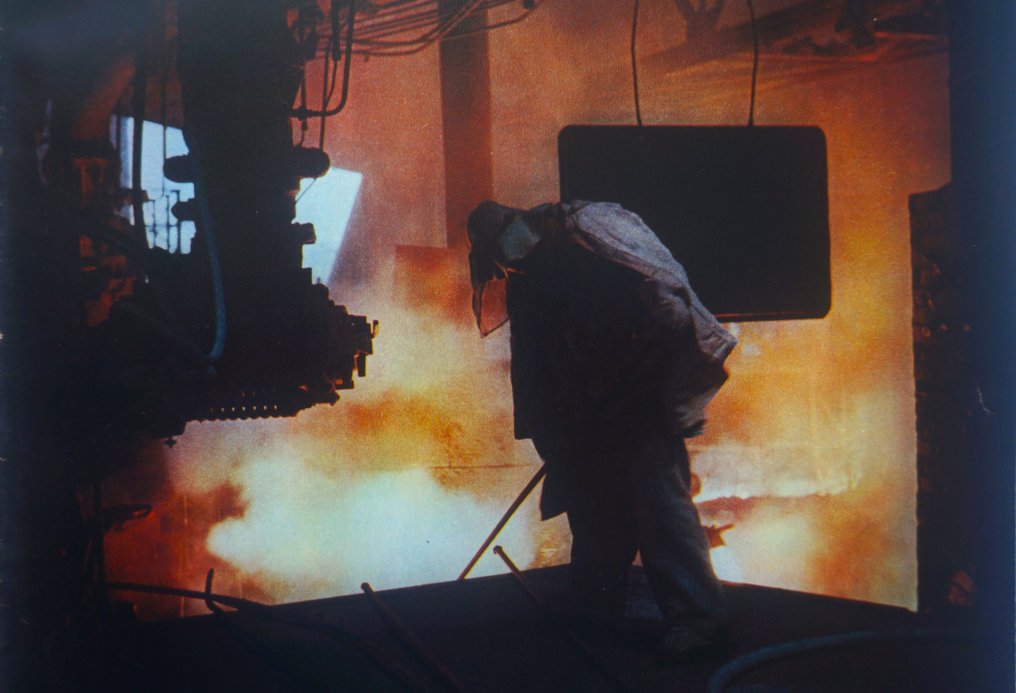
Frantisek Krasl / Ivan Kubícek - Ostrava Barevná (Colourful Ostrava) - 1963


12
dager
07
timer
17
minutter
30
sekunder
Startbud
€ 1
Ingen reservasjonspris

Ekspert
Valgt av Sebastian Hau
Grunnla og ledet to franske bokmesser; nesten 20 års erfaring med moderne bøker.
Estimat € 150 - € 230
Ingen bud er lagt inn
Catawiki kjøperbeskyttelse
Betalingen din er trygg hos oss helt til du mottar objektet ditt.Vis detaljer
Trustpilot 4.4 | 122028 anmeldelser
Vurdert utmerket på Trustpilot.
Frantisek Krasl og Ivan Kubícek, forfattere, presenterer Ostrava Barevná (Colourful Ostrava) i 1st Edition Thus, publisert i 1963.
KI-assistert oppsummering
Beskrivelse fra selgeren
This lush book is an intriguing blend of a corporate industrial photobook combined with a Communist propaganda publication that showcases the drama and spectacle of heavy industry.
Documenting the industrial activities of the Ostrava Region of Czechia during the Communist regime in early 1960s, it shows how the production process was integrated into the fabric of urban life within Ostrava, known as Steel City, with the Vítkovice steel foundry being one of the most important sites of heavy industry in Central Europe.
Using lavish colour photographs, this book is divided into three basic themes: Coal, Steel Production and the City. The first section documents the coal mining operations undertaken by OKD who ran the mines until the late 1990s. Here, we are shown images of sooty miners tunneling beneath the earth in darkness, depicted as heroic figures battling nature in order to increase production.
The next section, Steel, looks at the heavy industry beloved by all Communist regimes that they used as a simple benchmark to measure their success. Nationalised after World War 2 and renamed after Klement Gottwald (the first Communist leader of Czechoslovakia) the Vítkovice Steel Works, located near the city was one of the most important heavy industrial sites in Central Europe. Like Magnitogorsk in the USSR Nowa Huta in Poland and Eisenhuttenstadt in East Germany, the Communist regime delighted in sites where heavy industry was located directly alongside residential areas where the workers lived. Images in this section showcase the drama of steel production with rivers of molten metal supervised by heroic workers who have tamed the elemental forces of nature.
The final section, City, looks at the amenities and living conditions for those who worked in Coal and Steel production, showcasing the clean public spaces, educational facilities and efficient public transport that the regime and company claimed made life better for those who worked in the area.
This important propaganda book is included in Manfred Heiting, Czech and Slovak Photo Publications 1918-1989, pages 334-335
Condition:
A very rare book that combines the attributes of an industrial photobook with a state propaganda publication. Unusual in any condition. Dust jacket torn and worn in many places (see photos). Bump to corner and slight creasing to page edges. Official gift inscription on blank front page. Binding slightly shaken in places but fine. Please examine listing photos carefully.
This lush book is an intriguing blend of a corporate industrial photobook combined with a Communist propaganda publication that showcases the drama and spectacle of heavy industry.
Documenting the industrial activities of the Ostrava Region of Czechia during the Communist regime in early 1960s, it shows how the production process was integrated into the fabric of urban life within Ostrava, known as Steel City, with the Vítkovice steel foundry being one of the most important sites of heavy industry in Central Europe.
Using lavish colour photographs, this book is divided into three basic themes: Coal, Steel Production and the City. The first section documents the coal mining operations undertaken by OKD who ran the mines until the late 1990s. Here, we are shown images of sooty miners tunneling beneath the earth in darkness, depicted as heroic figures battling nature in order to increase production.
The next section, Steel, looks at the heavy industry beloved by all Communist regimes that they used as a simple benchmark to measure their success. Nationalised after World War 2 and renamed after Klement Gottwald (the first Communist leader of Czechoslovakia) the Vítkovice Steel Works, located near the city was one of the most important heavy industrial sites in Central Europe. Like Magnitogorsk in the USSR Nowa Huta in Poland and Eisenhuttenstadt in East Germany, the Communist regime delighted in sites where heavy industry was located directly alongside residential areas where the workers lived. Images in this section showcase the drama of steel production with rivers of molten metal supervised by heroic workers who have tamed the elemental forces of nature.
The final section, City, looks at the amenities and living conditions for those who worked in Coal and Steel production, showcasing the clean public spaces, educational facilities and efficient public transport that the regime and company claimed made life better for those who worked in the area.
This important propaganda book is included in Manfred Heiting, Czech and Slovak Photo Publications 1918-1989, pages 334-335
Condition:
A very rare book that combines the attributes of an industrial photobook with a state propaganda publication. Unusual in any condition. Dust jacket torn and worn in many places (see photos). Bump to corner and slight creasing to page edges. Official gift inscription on blank front page. Binding slightly shaken in places but fine. Please examine listing photos carefully.
Detaljer
Antall bøker
1
Subjekt
Europa, Fotografi, Grafisk design
Boktittel
Ostrava Barevná (Colourful Ostrava)
Forfatter/ Illustrator
Frantisek Krasl / Ivan Kubícek
Tilstand
Veldig god
Publication year oldest item
1963
Height
28 cm
Utgave
Første utgave i dette formatet
Width
23,5 cm
Språk
Czech, Engelsk, Russisk
Originalspråk
Ja
Forlegger
Krajské Nakl.
Binding
Innbundet
Antall sider
96
Solgt av