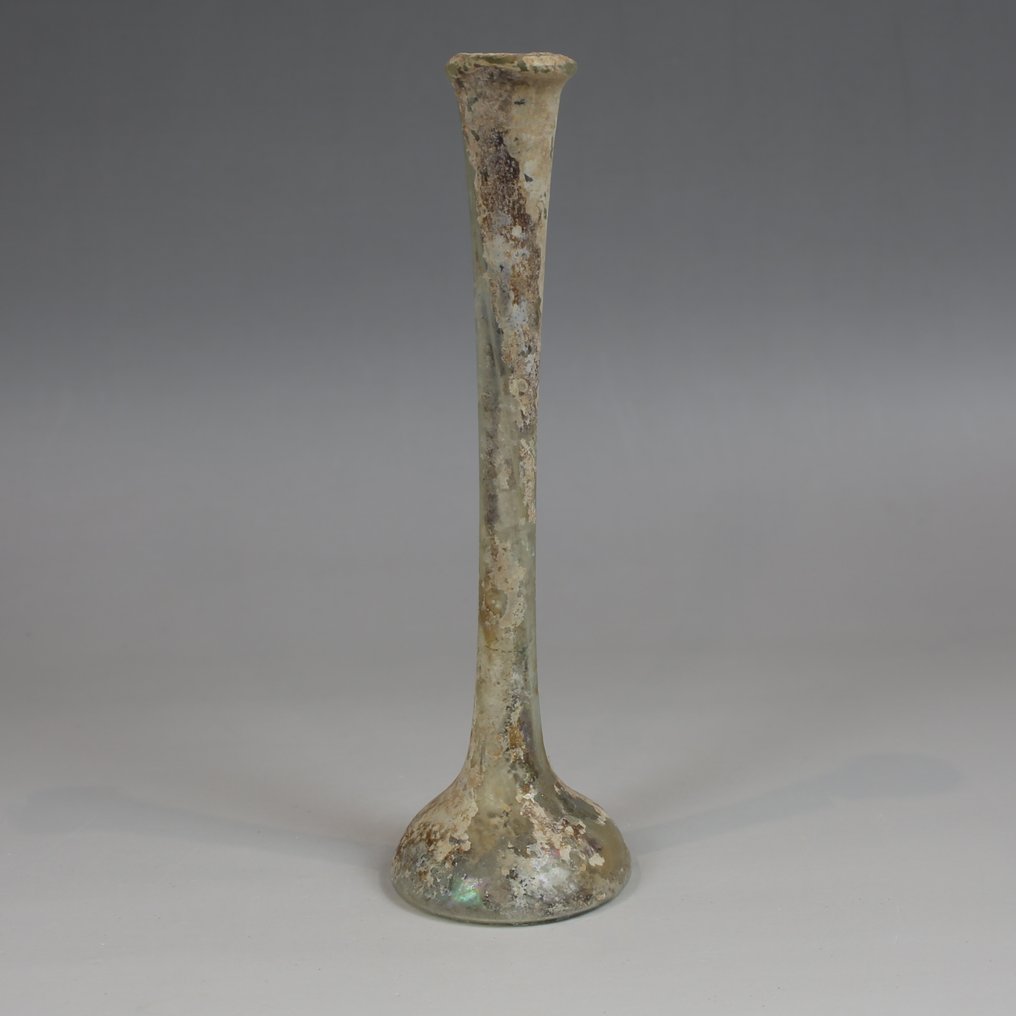
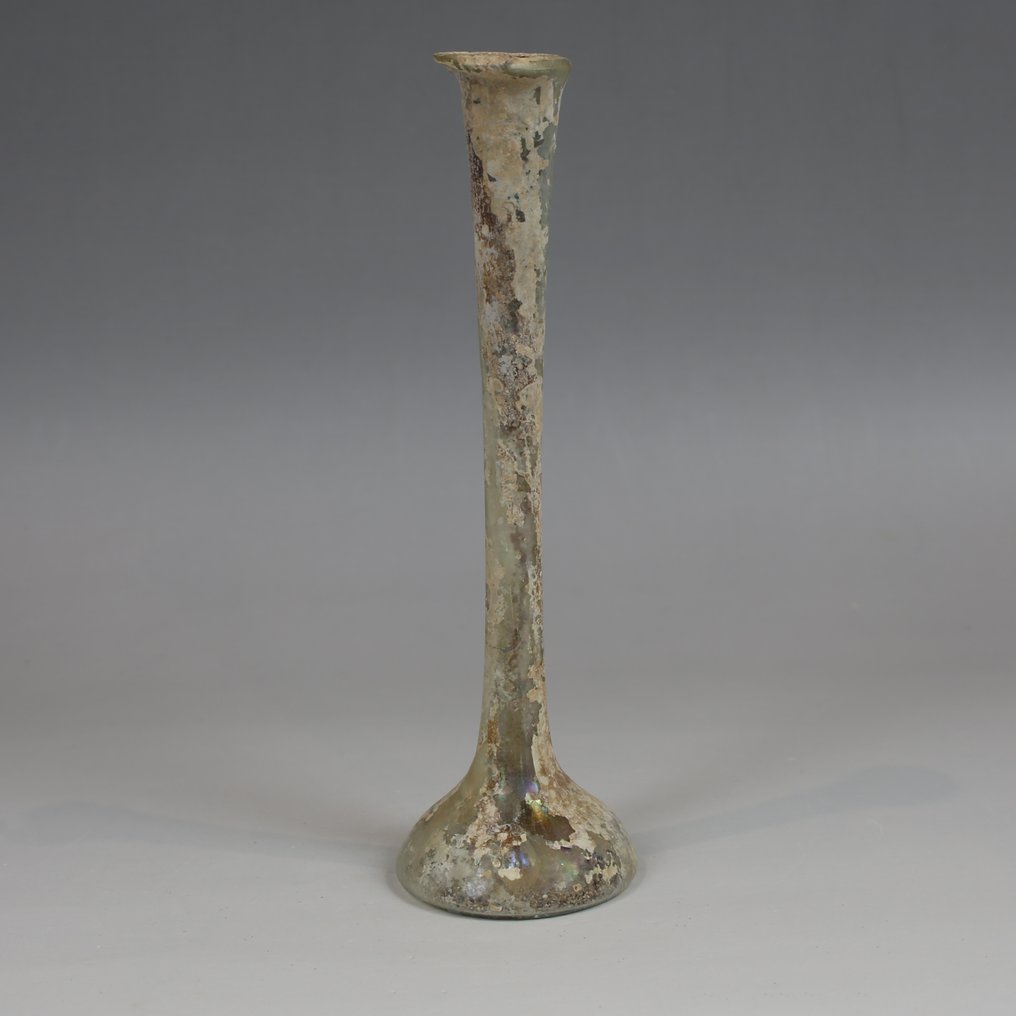
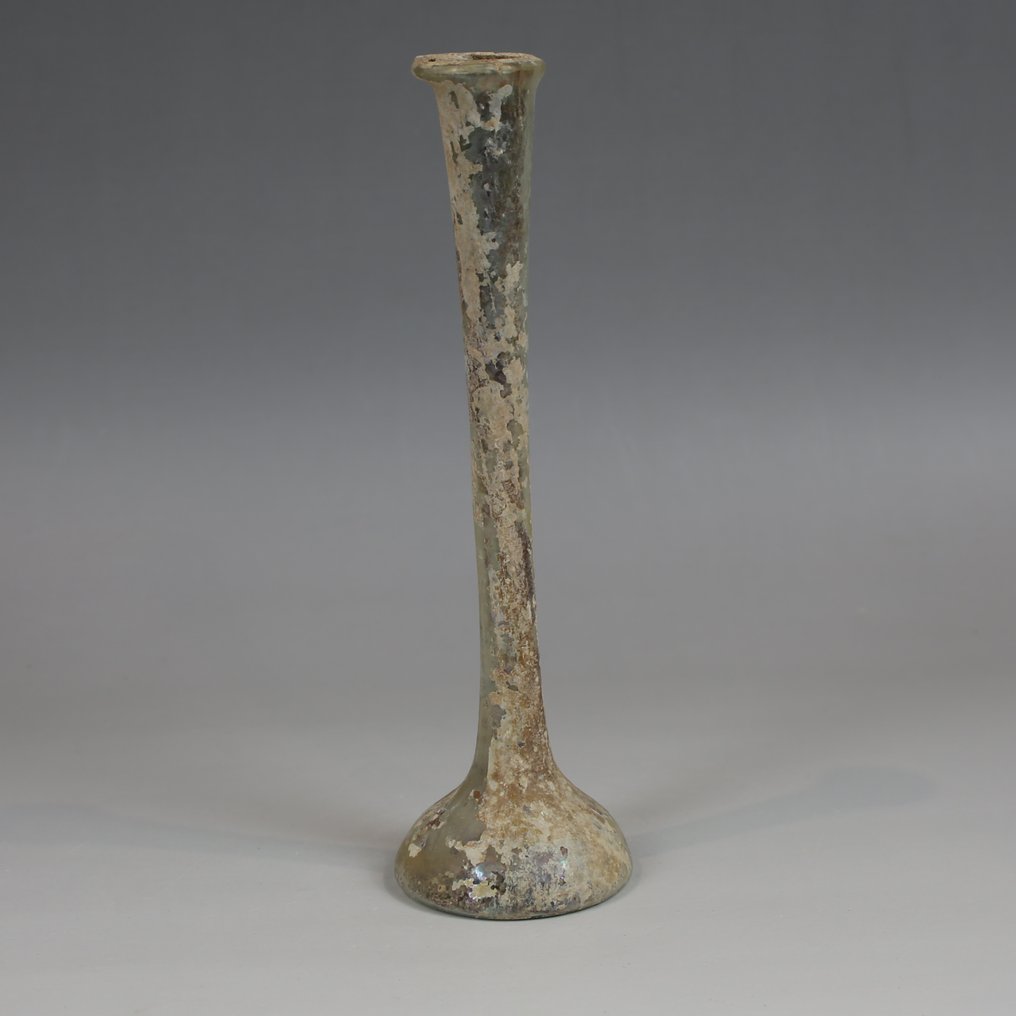
Romerska antiken Glas Flask.
00
dagar
06
timmar
39
minuter
42
sekunder
Aktuellt bud
€ 65
Reservationspriset är ej uppnått

Expert
Utvalt av Ruth Garrido Vila
Ledde Ifergan Collection Museum med specialisering på fenicisk arkeologi.
Uppskattat pris € 200 - € 250
20 andra personer tittar på detta objekt
 Budgivare 6782 Budgivare 6782 | 65 € | |
|---|---|---|
 Budgivare 9123 Budgivare 9123 | 60 € |
Catawikis köparskydd
Din betalning är säker hos oss tills du får ditt objekt.Se detaljer
Trustpilot 4.4 | 122028 omdömen
Betygsatt utmärkt på Trustpilot.
Romersk glasflaska, 146 mm × 45 mm, från 1:a–3:e seklet e.Kr., i gott skick, från en tysk privat samling.
AI-assisterad sammanfattning
Beskrivning från säljaren
ITEM: Flask
MATERIAL: Glass
CULTURE: Roman
PERIOD: 1st - 3rd Century A.D
DIMENSIONS: 146 mm x 45 mm
CONDITION: Good condition
PROVENANCE: Ex German private collection, acquired before 2000s
Roman flasks were versatile and functional vessels used primarily for storing and transporting liquids such as oils, perfumes, and medicinal concoctions. These flasks, which were typically made from glass or ceramic, varied in size and shape, reflecting their diverse uses and the craftsmanship of the period. Glass flasks were particularly valued for their ability to contain and preserve aromatic oils and perfumes, which were essential in daily Roman life for personal grooming and religious rituals. Ceramic flasks, on the other hand, were often used for more practical purposes, such as storing cooking oils or vinegar.
The design of Roman flasks often included features that facilitated their use and storage. Many flasks had narrow necks to minimize spillage and maintain the quality of their contents. Some were equipped with handles or spouts to make pouring easier, while others had stoppers or lids to seal the contents securely. The artistic quality of these vessels varied from simple, utilitarian designs to more elaborate forms decorated with patterns or inscriptions. Inscriptions on flasks sometimes indicated the type of liquid contained or the name of the owner, adding a personalized touch to these everyday objects.
Roman flasks also provide valuable insights into trade and cultural exchanges within the Roman Empire. Glass production techniques, including the use of molds and blowing methods, were advanced during the Roman period, and Roman glassware was widely traded across the empire. The distribution of Roman flasks throughout various provinces reflects the extensive trade networks and the integration of different cultures within the empire. Additionally, the variety in flask designs and materials reveals the adaptability of Roman artisans to different regional tastes and technological innovations.
Comes with Certificate of Authenticity and Export license
If you bid outside the European Union and win the item, we will have to apply for an export licence for your country and shipping will take 3 to 5 weeks.
Säljarens berättelse
Din antikvarie erbjuder gammal konst och antika mynt. Vårt huvudmål är att erbjuda högsta kvalitet till bästa pris med respekt för och strikt efterlevnad av lagarna för skydd av kulturarv och UNESCO:s kulturarvsnormer. Därför kommer alla pjäser som publiceras från privata samlingar där proveniensen kan kontrolleras eller internationella auktioner. Alla våra antikviteter och mynt åtföljs av deras äkthetsintyg. Vi har en 90 dagars returpolicy utan problem. På Your Antiquarian är vi engagerade i att hjälpa missgynnade grupper och av denna anledning doneras en del av varje köp till välgörenhetsorganisationer för att hjälpa människor i nöd.
Översatt av Google ÖversättITEM: Flask
MATERIAL: Glass
CULTURE: Roman
PERIOD: 1st - 3rd Century A.D
DIMENSIONS: 146 mm x 45 mm
CONDITION: Good condition
PROVENANCE: Ex German private collection, acquired before 2000s
Roman flasks were versatile and functional vessels used primarily for storing and transporting liquids such as oils, perfumes, and medicinal concoctions. These flasks, which were typically made from glass or ceramic, varied in size and shape, reflecting their diverse uses and the craftsmanship of the period. Glass flasks were particularly valued for their ability to contain and preserve aromatic oils and perfumes, which were essential in daily Roman life for personal grooming and religious rituals. Ceramic flasks, on the other hand, were often used for more practical purposes, such as storing cooking oils or vinegar.
The design of Roman flasks often included features that facilitated their use and storage. Many flasks had narrow necks to minimize spillage and maintain the quality of their contents. Some were equipped with handles or spouts to make pouring easier, while others had stoppers or lids to seal the contents securely. The artistic quality of these vessels varied from simple, utilitarian designs to more elaborate forms decorated with patterns or inscriptions. Inscriptions on flasks sometimes indicated the type of liquid contained or the name of the owner, adding a personalized touch to these everyday objects.
Roman flasks also provide valuable insights into trade and cultural exchanges within the Roman Empire. Glass production techniques, including the use of molds and blowing methods, were advanced during the Roman period, and Roman glassware was widely traded across the empire. The distribution of Roman flasks throughout various provinces reflects the extensive trade networks and the integration of different cultures within the empire. Additionally, the variety in flask designs and materials reveals the adaptability of Roman artisans to different regional tastes and technological innovations.
Comes with Certificate of Authenticity and Export license
If you bid outside the European Union and win the item, we will have to apply for an export licence for your country and shipping will take 3 to 5 weeks.
Säljarens berättelse
Din antikvarie erbjuder gammal konst och antika mynt. Vårt huvudmål är att erbjuda högsta kvalitet till bästa pris med respekt för och strikt efterlevnad av lagarna för skydd av kulturarv och UNESCO:s kulturarvsnormer. Därför kommer alla pjäser som publiceras från privata samlingar där proveniensen kan kontrolleras eller internationella auktioner. Alla våra antikviteter och mynt åtföljs av deras äkthetsintyg. Vi har en 90 dagars returpolicy utan problem. På Your Antiquarian är vi engagerade i att hjälpa missgynnade grupper och av denna anledning doneras en del av varje köp till välgörenhetsorganisationer för att hjälpa människor i nöd.
Översatt av Google ÖversättUppgifter
Kultur
Romerska antiken
Århundrade/ Tidsram
1st - 3rd Century A.D
Name of object
Flask.
Förvärvat från
Privat samling
År för förvärv
2025
Material
Glas
Land där objektet förvärvades
Tyskland
Skick
Gott
Tidigare ägare - förvärvat från
Antikmarknad
Tidigare ägare – år för förvärv
2000
Tidigare ägare – land där objektet förvärvades
Tyskland
Jag intygar att jag har erhållit detta objekt på laglig väg och att jag har rätt att sälja det
Ja
Såldes av
Ansvarsfriskrivning
Säljaren har informerats av Catawiki om dokumentationskrav och garanterar följande: - föremålet har förvärvats på laglig väg, - säljaren har rätt att sälja och/eller exportera objektet, beroende på vad som är tillämpligt, - säljaren kommer att tillhandahålla nödvändig information om proveniens och ordna nödvändig dokumentation och tillstånd/licenser, i förekommande fall och enligt lokala lagar, - säljaren kommer att meddela köparen om eventuella förseningar i erhållandet av tillstånd/licenser. Genom att lägga bud bekräftar du att importdokumentation kan komma att krävas beroende på vilket land du bor i och att erhållande av tillstånd/licenser kan orsaka förseningar i leveransen av ditt objekt.
Säljaren har informerats av Catawiki om dokumentationskrav och garanterar följande: - föremålet har förvärvats på laglig väg, - säljaren har rätt att sälja och/eller exportera objektet, beroende på vad som är tillämpligt, - säljaren kommer att tillhandahålla nödvändig information om proveniens och ordna nödvändig dokumentation och tillstånd/licenser, i förekommande fall och enligt lokala lagar, - säljaren kommer att meddela köparen om eventuella förseningar i erhållandet av tillstånd/licenser. Genom att lägga bud bekräftar du att importdokumentation kan komma att krävas beroende på vilket land du bor i och att erhållande av tillstånd/licenser kan orsaka förseningar i leveransen av ditt objekt.
