We carefully select original archaeological objects to maintain high-quality and legal standards. We only accept authentic artefacts that meet strict cultural heritage regulations and are valued at minimum €100. Our experts verify provenance and condition to ensure bidders find unique, historically significant objects.
Follow these guidelines to maximise your chances of a successful sale.
What we accept
We’re looking for genuine artefacts or replicas properly described, that appeal to serious collectors. To be accepted, your object must:
- Be collectable and decorative original archaeological objects, including complete and fragmentary man-made items, structures, and ancient burials
- Be from any cultural origin (e.g. Prehistoric, Roman, Egyptian, Greek, Near & Middle East, Pre-Columbian, Medieval) and dated before:
- 1200 A.D. (Asian origin)
- 1500 A.D. (all other cultural origins)
- Be in display worthy condition or professionally restored, retaining the original appearance
- Be from countries that comply with:
- the 1970 UNESCO Convention
- export and cultural heritage laws of the country of origin and the seller’s location
- national licensing requirements (e.g. France, Italy, Germany always require export licences)
- Meet the minimum expected value of €100
(You can combine objects in one submission to meet this threshold*) - Be accompanied by detailed provenance information, including the following bullet points:
Culture
- Specify the cultural origin (e.g. Asian, European, Other)
Century / Timeframe
- Indicate the period or date range (e.g. 1600–1850 AD)
Acquired From
- State where the object was obtained (e.g. antique market, private collection)
Year Acquired
- Provide the year you acquired the object
Country Acquired From
- Indicate the country where the object was acquired
Previous Owner – Acquired From
- Specify where the previous owner obtained the object
Previous Owner – Year Acquired
- Provide the year the previous owner acquired the object
Previous Owner – Country Acquired From
- Indicate the country where the previous owner acquired the object
Legal Verification
- Confirm that the object was obtained legally and that you are allowed to sell it (Yes / No)
Subject / Depiction (optional)
- Describe the subject or depicted figure, if applicable (e.g. Anu, Aya, Geb)
Material (optional)
- Specify the material(s) used (e.g. iron)
Condition
- Describe the condition of the object (e.g. excellent, good, fair)
For sellers outside of Europe or the EU: please use the following document:
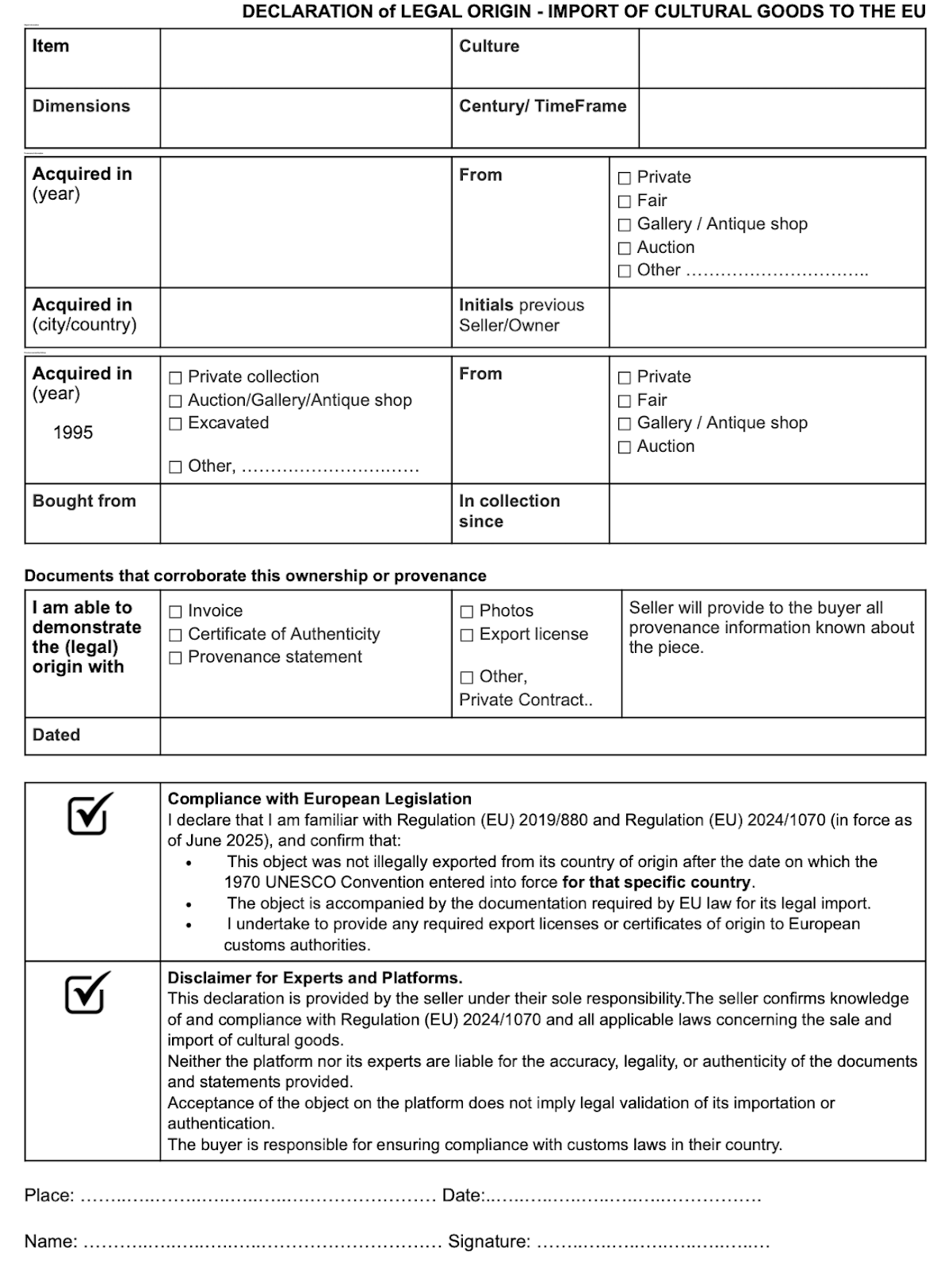
Note: Some artefacts are accepted only as part of grouped submissions:
- Common silver/gold fragments, flint tools, bronze/iron arrowheads, basic fibulae or rings, if offered in large enough quantities (e.g. 10+, 50+ depending on type)
- Simple or common damaged objects (e.g. rings, bracelets) offered in commercial sets
What increases your chances of selling the object:
- Clear legal provenance supported by documents or declarations
- High-quality and well-preserved pieces (intact or professionally restored)
- Objects with museum, collection, or literature references
📌 Examples of accepted objects: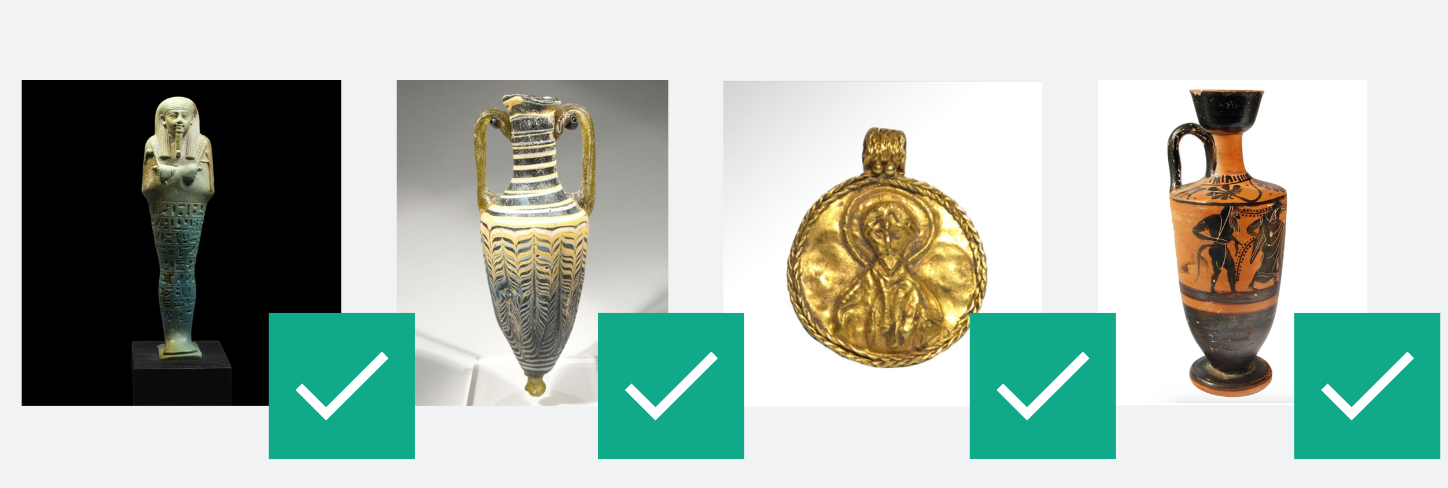
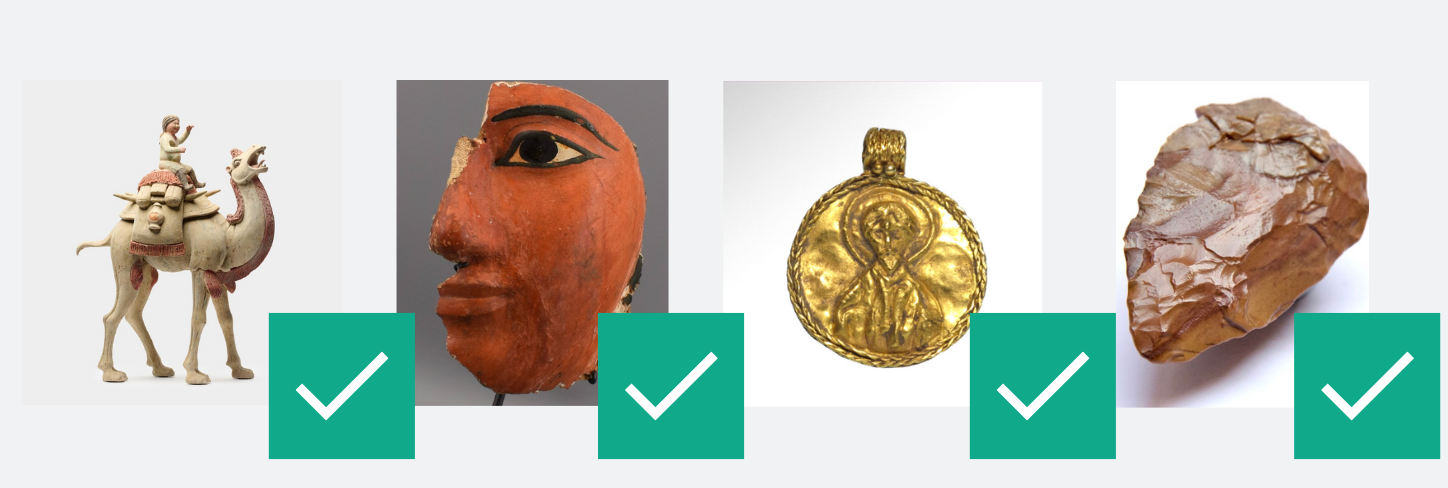
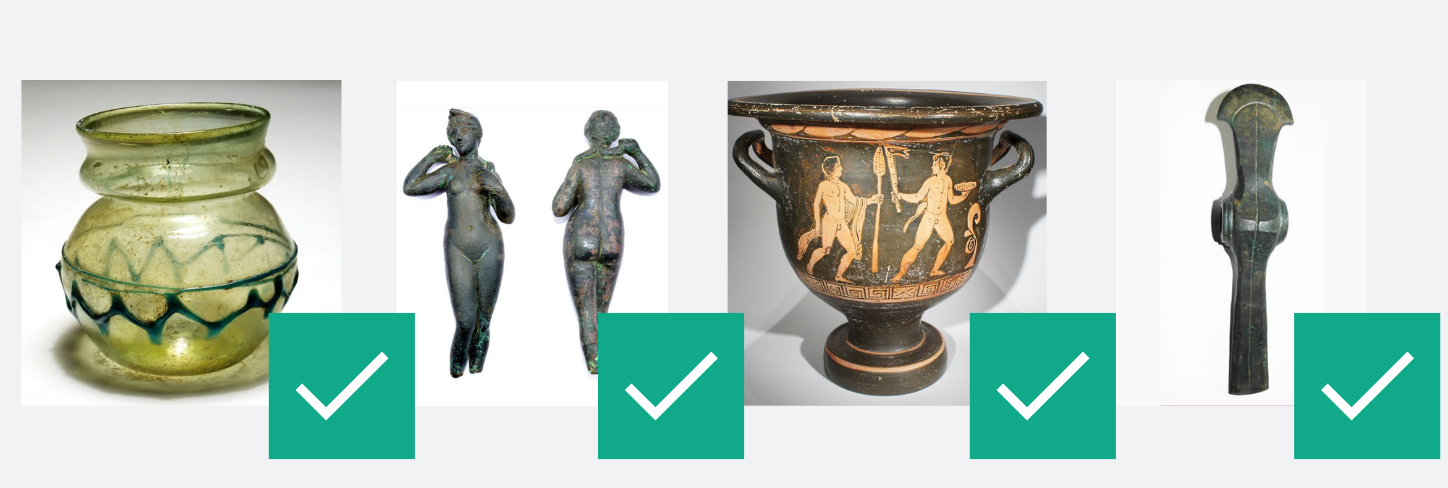
What we do not accept
To keep our auctions high-quality and trustworthy, we do not accept:
- Objects made of human remains
- Recently exported objects from source countries without proper documentation
- Fragments that are too small or insignificant, unless submitted as part of a grouped lot
- Mixed submissions of unrelated archaeological debris
- Are unprofessionally restored, altered, or composed of mismatched fragments
- Heavily eroded or lacking stylistic identity objects
- Objects that do not meet legal import/export conditions or cultural protection laws
Note: Catawiki will report suspected illegally sourced items to the Dutch Cultural Heritage Inspectorate.
📌 Examples of rejected objects:

Getting your submission ready
1. Fill in all the details and write a clear description
When you submit an object, you’ll see fields to guide you in providing the right information, such as type of object, number of objects, culture, material, century/timeframe, country of origin, condition, dimensions (cm), required export licence, etc. These fields ensure your listing is clear, searchable, and easy for bidders to understand.
Please also use the object description field to share:
- Unique features or notable history of the object
- What is included/not included
- If the object has any flaws
- Provenance details stating ownership history, country of acquisition, and documentation
- Include this sentence in your object description: “The supplier warrants that they obtained this lot in a legal manner. The seller guarantees that they are entitled to sell/export this lot and will arrange any necessary permits.”
Tip: The more detail you provide, the easier it is for bidders to understand the value of your object – and the more likely it is to sell.
📌 Example statement to include in the object description:
Provenance: Purchased by the current owner in 2015 in France from J.L. (private collection). Previously owned by M.C. (UK), collected in the 1950s.
The seller was informed by Catawiki about documentation requirements and guarantees the following:
- the object was legally obtained,
- the seller has the right to sell and/or export the object, as relevant,
- the seller will provide the necessary provenance information and arrange required documentation and permits/licenses, as applicable and as per local laws,
- the seller will notify the buyer of any delays in obtaining permits/licenses.
By bidding, you acknowledge that import documentation may be required depending on your country of residence and that obtaining permits/licenses may cause delays in the delivery of your object.
2. Great photos matter
Photos are the first thing bidders see – so make them count! We recommend including 8 high-quality images that clearly show the condition and details of your object. This helps bidders make informed decisions and increases your chances of a successful sale.
Your photos should include:
For all submissions:
- All sides: front, back, top, bottom, sides
- Close-ups of decorative details, inscriptions, cracks, repairs, restoration lines
- Material surface and patina
- Documents and provenance paperwork (if applicable)
For grouped submissions:
- Group photos and individual shots
Tip: Ensure the photos show nothing else but the object(s) you want to put up for auction. Avoid photos with people, selfies, or screenshots. Use a neutral background (white or black), avoid low-quality or stock images, and aim for natural lighting. Find here more tips on how to take professional photos.
📌 Examples of good vs. bad photos: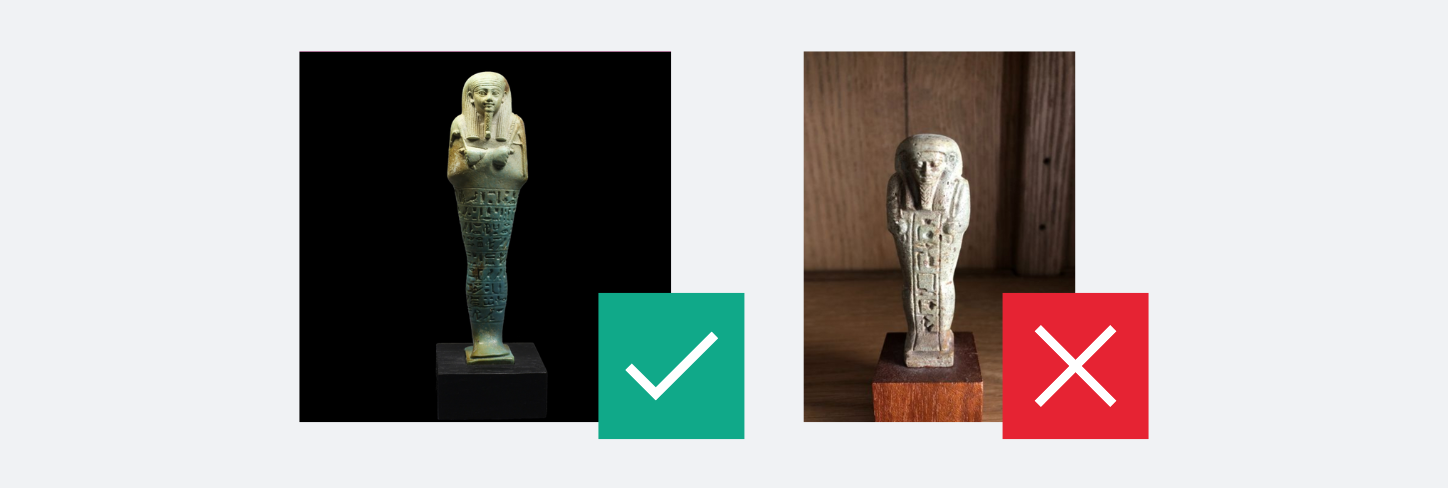

3. Additional proof of authenticity, provenance and legal compliance
We pay extra attention to ensure authenticity and legal compliance of archaeological objects to protect bidders and ensure a trustworthy marketplace.
You may be requested to provide:
✔ A complete and filled out information about the Provenance (legal origin) of the object or work of art
✔ Additional supporting documents where available (e.g. invoice, dealer certificate, past auction listing)
✔ Relevant national licensing requirements
For Pre-Columbian objects:
✔ You must provide either an export licence, invoice or proof that the object was collected before the country joined the UNESCO convention.
For Gold Jewellery:
We need a XRay Fluorescense Test (XRF-test) for approving this gold piece so we are sure it is authentic. Without that test we can only accept it for our Replica Jewellery Auction properly described as REPLICA in the title.
For high-value objects (€10,000+):
✔ An Art Loss Register certificate may be required to confirm the object has not been registered as lost, stolen, disputed, or forged. You can request this through www.artloss.com
For sellers outside of the EU:
✔ If necessary you/the seller will need to provide either an export licence or importer statement as per recent EU Import regulations for Cultural Heritage.
Requirements for import & export of cultural objects
Selling archaeological objects involves legal responsibilities. Sellers must ensure all items are lawfully sourced and legally transferable across borders.
As a seller, you are responsible for:
- Confirming whether you are allowed to sell/export the item from your country
- Checking whether the item is permitted to be imported by the buyer’s country
- Applying for any required export licence
- Sharing the status of licences or shipping restrictions with the buyer
📌 Reminder: many EU countries (France, Germany, Italy, Spain) require an export licence for all cultural property, even when shipping within the EU.
Shipping tips:
- Always include provenance documentation in the shipment
- Provide a clear and accurate description of the object and its origin
- Never ship an object until all required permits or approvals are in place
International legal framework for trading antiquities
Catawiki adheres to strict cultural protection laws, including:
- The 1970 UNESCO Convention on the prohibition of illicit import/export of cultural property
- The Hague Convention (1954) and its protocols
- EU Directives and Regulations regarding export and return of unlawfully removed items
- The ICOM Red Lists for at-risk cultural goods from conflict zones (e.g. Syria, Iraq)
- The Washington Principles and Terezin Declaration for Nazi-era looted art
Important restrictions:
- Cultural objects from Iraq must be proven to have been exported before 6 August 1990
- Cultural objects from Syria must be proven to have been exported before 15 March 2011
Objects that do not meet these requirements will be rejected. If we suspect an item may be illegally sourced, it will be reported to the Dutch Cultural Heritage Inspectorate.
Neither the platform nor its experts are liable for the accuracy, legality, or authenticity of the objects, works of art or documents and statements provided.
The Seller is liable for the accuracy, legality, or authenticity of the objects, works of art or documents and statements provided
Acceptance of the object on the platform does not imply legal validation of its importation or authentication.
The buyer is responsible for ensuring compliance with customs laws in their country.
Ready to sell? List your archaeological artefacts today
Selling with us is free – commission is only applied if your object sells.
Follow these guidelines to maximize your chances of success.
Register as a seller and submit your object for auction now.