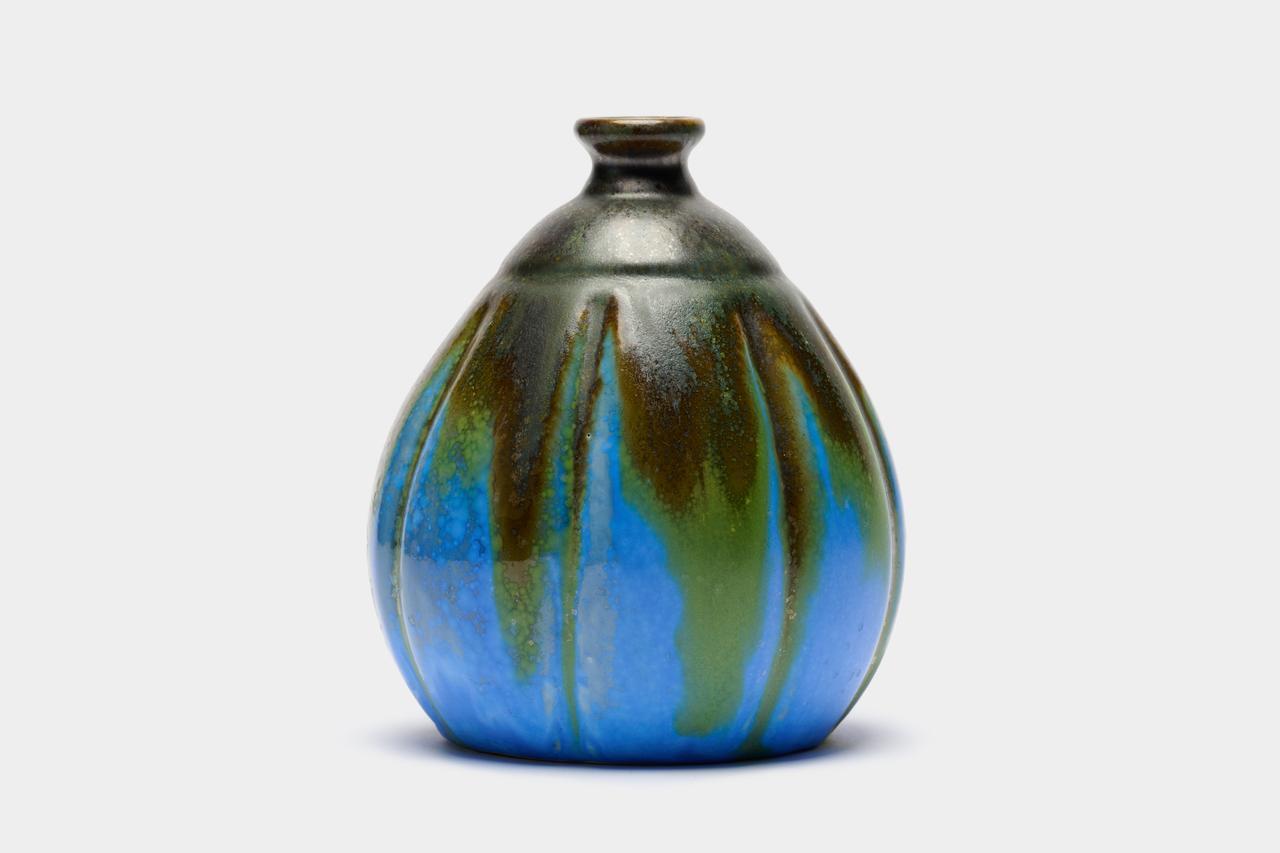
Royal Copenhagen - Váza - Kerámia


Kezdőlicit
€ 1
Adja hozzá kedvenceihez, hogy értersítést kapjon az árverés kezdetekor!

Szakértő
Michel Karis által kiválasztva
Művészettörténész, széles körű tapasztalattal számos aukciósházban antikvitások terén.
Becslés € 170 - € 200
Catawiki Vevővédelem
A befizetést biztonságban megőrizzük, amíg a termék kézbesítése meg nem történik. Részletek megtekintése
Trustpilot 4.4 | 142876 vélemény
A Trustpilot-on kiváló értékelésű.
Leírás az eladótól
In excellent condition Royal Copenhagen vase.
Period 1894 - 1900
18 cm high
11 cm deep
Weight: 490 g
Diameter opening at top: 4 cm
Base flat: 5 cm
Royal Copenhagen at a glance
Manufacturer: Royal Porcelain Factory, Copenhagen, Denmark
Founded: 1775
Country: Denmark
Known for: Hand-painted porcelain, figurines, animals, birds, tableware and decorative pieces
Recognizable by: Three blue waves, royal crown and painters' mark
Collection areas: Figurines, animals, birds, vases, tableware, patterns and decorative porcelain
Pieces of Royal Copenhagen are often recognizable by the combination of the factory mark, model number, decoration number and painters’ mark.
However, identifying a piece is only the first step. Rarity, subject, designer, condition, provenance and current demand from collectors can all influence value.
What is Royal Copenhagen?
Royal Copenhagen is the common name for the Danish Royal Porcelain Factory, established in Copenhagen in 1775 under royal patronage.
The famous three blue waves of the factory were used as a trademark from the outset. According to Royal Copenhagen, the three waves represent three important waterways of Denmark: the Sound (Sont), the Great Belt, and the Little Belt.
The royal connection is also reflected by the crown on Royal Copenhagen marks.
Throughout its long history, the factory has produced an extraordinary range of porcelain, from functional tableware to highly detailed figurines.
A short history of Royal Copenhagen
The Royal Porcelain Factory was founded in 1775 in Copenhagen.
From the early years, the factory earned a reputation for high-quality porcelain and very skilled decoration. The three blue waves became the characteristic factory mark, while the royal crown reflected the factory's ties to the Danish monarchy.
The factory's history includes countless periods of changing tastes, techniques and artistic influences. Consequently, Royal Copenhagen porcelain can look remarkably different depending on when it was produced and which artist or designer was responsible for the piece.
The factory also developed an extensive repertoire of patterns, figures and decorative forms.
For collectors, this long history is especially important, because the age and production period of a piece can help determine its identity and desirability.
How to recognize Royal Copenhagen porcelain?
One of the most important things to examine when identifying Royal Copenhagen porcelain is the bottom of the piece.
Royal Copenhagen states that their porcelain bears factory marks, including the three blue waves, the royal mark and the painters' mark. The company also provides a historical overview of marks on the bottom to help determine when pieces were produced.
You may encounter several marks on the bottom of a piece, including:
The three blue waves
The three blue waves are the most recognizable symbol of Royal Copenhagen.
They have been connected to the company since the factory's founding and remain one of the defining features of Royal Copenhagen porcelain.
The royal crown
The crown represents the royal origin of the factory.
The appearance of the crown has changed over time, which means the mark can provide useful clues when researching the age of a piece. Royal Copenhagen notes that the crown was originally painted by hand before the company began stamping it under glaze in the 1870s.
The painters' mark
Royal Copenhagen porcelain was traditionally hand-painted, and each painter had their own mark.
These marks can sometimes help identify the person responsible for decorating a particular piece. Royal Copenhagen describes the painters' mark as akin to a personal handwriting that reflects the craftsperson's work.
Model numbers
A model number is another particularly useful feature.
Royal Copenhagen produced thousands of different models, and the number can help determine exactly what a figurine, vase or other object is.
For collectors and auctioneers, identifying the model can be far more helpful than simply describing something as a "Royal Copenhagen figurine".
1.813
Marks and stamps of Royal Copenhagen
The mark of Royal Copenhagen is one of the most important aspects when collecting and identifying this porcelain.
There is, however, much more to learn about the marks of Royal Copenhagen than just the three blue waves.
The factory's stamps have changed over the course of history, and the combination of marks can give clues about the period in which an object was produced. Royal Copenhagen itself keeps a historical overview of its stamps.
Other information that may be found on the bottom includes:
Factory marks
The royal crown
Three blue waves
Painter's marks
Model numbers
Decoration numbers
Other production or identification marks
Our guide to marks and stamps of Royal Copenhagen goes deeper into these marks, including how you can use them to date and identify Royal Copenhagen porcelain.
Model numbers and decoration numbers of Royal Copenhagen
Model numbers from Royal Copenhagen are particularly valuable when researching individual pieces.
A model number can identify the exact form or figure, while a decoration number may refer to the pattern or decoration applied.
For example, there were the following pieces seen in a recent auction by Potteries Auctions:
Mare with foal no. 4698
Shetland pony no. 4611
Grebe with ducklings no. 3194
Grebe no. 3263
French bulldog no. 1457
Setter with a pheasant no. 1533
Woman feeding a calf no. 779
Boy with a calf no. 772
Amager girls reading no. 1395
Amager girl mending socks no. 1314
Finding a model number can thus be one of the fastest ways to move from a general identification to a specific piece.
When researching a Royal Copenhagen item, photograph not only the front and sides but also the bottom. The information on the base can be just as important as the appearance of the porcelain itself.
Vases of Royal Copenhagen
Royal Copenhagen is not only known for figurines.
The factory also produced a huge variety of porcelain vases, many of which were beautifully painted with floral and botanical motifs.
Recent lots at Potteries Auctions included vases decorated with:
Wildflowers
Butterflies
Bracken
Winter flower
Blue hydrangea
Swallows
Other floral and botanical motifs
Vases can be particularly interesting because decoration, shape, model number and painter all contribute to their appeal.
Royal Copenhagen patterns
Royal Copenhagen has produced many famous patterns and decorative styles over the years.
Some are instantly recognizable, while others are much more specialized.
The best-known designs include classic blue-and-white patterns, as well as highly detailed floral and botanical decorations.
Among the patterns and styles collectors may encounter are:
Blue-pinted plain
Blue-pinted half-lace
Blue-pinted full lace
Flora Danica
Blue flower
Musselmalet
Floral and botanical decorations
Figurative and naturalistic decorations
Different patterns can appeal to very different collectors, and popularity is not necessarily correlated with age.
Designers and artists of Royal Copenhagen
The designers and artists associated with Royal Copenhagen form an important part of the brand's collecting history.
Individual artists created distinctive figures, and the designer's name can sometimes provide valuable information about the appeal of a particular piece.
An example is Jeanne Grut, who designed countless animal figures for Royal Copenhagen.
The two horses sold by Potteries Auctions – Mare with foal no. 4698 and Shetland pony no. 4611 – were both designed by Grut and fetched £150.
Other designers and artists associated with Royal Copenhagen include Ada Bonfils and Sterett Kelsey, whose work was also seen in our recent auction.
As with model numbers and marks, the artist should be considered in conjunction with the subject, condition and rarity, not as an isolated value indicator.
What is Royal Copenhagen worth?
There is no single value for Royal Copenhagen porcelain.
A small vase can sell for a relatively modest amount, while a rare or sought-after figure can bring significantly higher bids.
Factors that can affect the value of Royal Copenhagen include:
1. Model
The exact model can make a considerable difference.
2. Rarity
Difficult-to-find pieces can attract collectors aiming to complete a collection.
3. Subject
Certain figures, animals, birds and decorative subjects may be more appealing than others.
4. Designer
The identity and reputation of the artist or designer can influence collectors' interest.
5. Condition
Chips, cracks, restorations, damage and missing parts can substantially affect value.
6. Age
Old does not automatically mean more valuable, but production period can be important in assessing a piece's value.
7. Provenance
Documented history or interesting provenance can sometimes increase appeal.
8. Current demand from collectors
Ultimately, auction prices reflect what buyers are willing to pay at a given time.
How do you appraise Royal Copenhagen porcelain?
If you have inherited Royal Copenhagen porcelain, bought pieces from an antique shop or discovered a collection you want to sell, identifying the individual pieces is the best initial step.
Note:
The hallmark — Photograph the entire bottom.
The model number — This can be one of the most useful data.
The decoration or pattern number — Record any extra numbers.
The painter's mark — Watch for small marks or signatures.
The condition — Carefully check for damage, cracks, repairs and restorations.
The dimensions — Height and width can help distinguish similar models.
The provenance — Keep all documents or information about the piece's origin.
A professional appraiser can then take these factors into account, along with market knowledge and previous auction results.
Read our soon-to-be-published Royal Copenhagen Value Guide for a more detailed overview of the factors influencing value and examples of achieved prices.
Is Royal Copenhagen porcelain a good investment?
Royal Copenhagen is highly sought after by collectors, but it is important not to assume that every piece will rise in value simply because it is old or bears the Royal Copenhagen brand.
The market is driven by collector demand.
Some patterns and models are widely available, while others are much harder to find. The condition of the piece also plays a significant role.
Therefore, the most useful question is usually not simply:
"How old is my Royal Copenhagen?"
but:
"Exactly which piece do I have, how rare is it and what are collectors currently willing to pay for it?"
Frequently asked questions about Royal Copenhagen
Is Royal Copenhagen valuable?
Some Royal Copenhagen pieces are valuable, while others are relatively common. Value depends on factors such as model, rarity, condition, designer, subject and current demand from collectors.
How can I tell if my Royal Copenhagen is authentic?
Start by examining the bottom for the three blue waves, the crown, the painter's mark and other identifying information from Royal Copenhagen. Marks should, however, be considered in conjunction with the piece itself and other identifying features.
What do the three waves on Royal Copenhagen mean?
The three blue waves are the factory's famous trademark and represent three important Danish waterways: the Sound, the Great Belt and the Little Belt.
Where is the model number on Royal Copenhagen?
The model number is generally at the bottom of the piece, although exact markings and placement can vary.
Are old Royal Copenhagen pieces valuable?
Not necessarily. Age is only one factor. A relatively modern but sought-after model can sometimes attract more interest than an older, more common piece.
Which Royal Copenhagen figurines are the most valuable?
There is no definitive list, as auction prices vary depending on rarity, condition, subject, designer and market demand. Extremely rare or sought-after figurines can attract a lot of competition.
Should I sell Royal Copenhagen as a collection or individually?
That depends on what you have. Pairs, related figurines, and collections can sometimes appeal to specialized collectors, while particularly sought-after individual pieces may do better offered separately.
A specialized auctioneer can advise on the most appropriate approach.
Royal Copenhagen at Potteries Auctions
Potteries Auctions has specialist experience in ceramics, porcelain and collectibles, and Royal Copenhagen is one of the many manufacturers and makers represented in our Fine Art and specialist auctions.
Recent results from Royal Copenhagen at Potteries Auctions show the variety of material that can come to market—from finely modeled animals and birds to character figures and decorative vases.
If you own Royal Copenhagen porcelain and want professional advice on identification, value or sale, contact Potteries Auctions for an appraisal.
Request a free auction appraisal for your Royal Copenhagen
Potteries Auctions
Menu
The Complete Guide to Royal Copenhagen Porcelain
11 AUGUST 2026
DAVE SPENCE
Legendarische collecties en stukken
* Flora Danica: This dinnerware, originally ordered in 1790 as a gift for Empress Catherine the Great of Russia, is widely regarded as the world's most exclusive dinnerware. Each piece features precise, hand-painted botanical illustrations of Danish plants from a historical encyclopedia, finished with 24-karat gold and intricately hand-cut lacework. Individual top pieces, such as large oval dishes with lace edges, typically cost more than $9,000.
In excellent condition Royal Copenhagen vase.
Period 1894 - 1900
18 cm high
11 cm deep
Weight: 490 g
Diameter opening at top: 4 cm
Base flat: 5 cm
Royal Copenhagen at a glance
Manufacturer: Royal Porcelain Factory, Copenhagen, Denmark
Founded: 1775
Country: Denmark
Known for: Hand-painted porcelain, figurines, animals, birds, tableware and decorative pieces
Recognizable by: Three blue waves, royal crown and painters' mark
Collection areas: Figurines, animals, birds, vases, tableware, patterns and decorative porcelain
Pieces of Royal Copenhagen are often recognizable by the combination of the factory mark, model number, decoration number and painters’ mark.
However, identifying a piece is only the first step. Rarity, subject, designer, condition, provenance and current demand from collectors can all influence value.
What is Royal Copenhagen?
Royal Copenhagen is the common name for the Danish Royal Porcelain Factory, established in Copenhagen in 1775 under royal patronage.
The famous three blue waves of the factory were used as a trademark from the outset. According to Royal Copenhagen, the three waves represent three important waterways of Denmark: the Sound (Sont), the Great Belt, and the Little Belt.
The royal connection is also reflected by the crown on Royal Copenhagen marks.
Throughout its long history, the factory has produced an extraordinary range of porcelain, from functional tableware to highly detailed figurines.
A short history of Royal Copenhagen
The Royal Porcelain Factory was founded in 1775 in Copenhagen.
From the early years, the factory earned a reputation for high-quality porcelain and very skilled decoration. The three blue waves became the characteristic factory mark, while the royal crown reflected the factory's ties to the Danish monarchy.
The factory's history includes countless periods of changing tastes, techniques and artistic influences. Consequently, Royal Copenhagen porcelain can look remarkably different depending on when it was produced and which artist or designer was responsible for the piece.
The factory also developed an extensive repertoire of patterns, figures and decorative forms.
For collectors, this long history is especially important, because the age and production period of a piece can help determine its identity and desirability.
How to recognize Royal Copenhagen porcelain?
One of the most important things to examine when identifying Royal Copenhagen porcelain is the bottom of the piece.
Royal Copenhagen states that their porcelain bears factory marks, including the three blue waves, the royal mark and the painters' mark. The company also provides a historical overview of marks on the bottom to help determine when pieces were produced.
You may encounter several marks on the bottom of a piece, including:
The three blue waves
The three blue waves are the most recognizable symbol of Royal Copenhagen.
They have been connected to the company since the factory's founding and remain one of the defining features of Royal Copenhagen porcelain.
The royal crown
The crown represents the royal origin of the factory.
The appearance of the crown has changed over time, which means the mark can provide useful clues when researching the age of a piece. Royal Copenhagen notes that the crown was originally painted by hand before the company began stamping it under glaze in the 1870s.
The painters' mark
Royal Copenhagen porcelain was traditionally hand-painted, and each painter had their own mark.
These marks can sometimes help identify the person responsible for decorating a particular piece. Royal Copenhagen describes the painters' mark as akin to a personal handwriting that reflects the craftsperson's work.
Model numbers
A model number is another particularly useful feature.
Royal Copenhagen produced thousands of different models, and the number can help determine exactly what a figurine, vase or other object is.
For collectors and auctioneers, identifying the model can be far more helpful than simply describing something as a "Royal Copenhagen figurine".
1.813
Marks and stamps of Royal Copenhagen
The mark of Royal Copenhagen is one of the most important aspects when collecting and identifying this porcelain.
There is, however, much more to learn about the marks of Royal Copenhagen than just the three blue waves.
The factory's stamps have changed over the course of history, and the combination of marks can give clues about the period in which an object was produced. Royal Copenhagen itself keeps a historical overview of its stamps.
Other information that may be found on the bottom includes:
Factory marks
The royal crown
Three blue waves
Painter's marks
Model numbers
Decoration numbers
Other production or identification marks
Our guide to marks and stamps of Royal Copenhagen goes deeper into these marks, including how you can use them to date and identify Royal Copenhagen porcelain.
Model numbers and decoration numbers of Royal Copenhagen
Model numbers from Royal Copenhagen are particularly valuable when researching individual pieces.
A model number can identify the exact form or figure, while a decoration number may refer to the pattern or decoration applied.
For example, there were the following pieces seen in a recent auction by Potteries Auctions:
Mare with foal no. 4698
Shetland pony no. 4611
Grebe with ducklings no. 3194
Grebe no. 3263
French bulldog no. 1457
Setter with a pheasant no. 1533
Woman feeding a calf no. 779
Boy with a calf no. 772
Amager girls reading no. 1395
Amager girl mending socks no. 1314
Finding a model number can thus be one of the fastest ways to move from a general identification to a specific piece.
When researching a Royal Copenhagen item, photograph not only the front and sides but also the bottom. The information on the base can be just as important as the appearance of the porcelain itself.
Vases of Royal Copenhagen
Royal Copenhagen is not only known for figurines.
The factory also produced a huge variety of porcelain vases, many of which were beautifully painted with floral and botanical motifs.
Recent lots at Potteries Auctions included vases decorated with:
Wildflowers
Butterflies
Bracken
Winter flower
Blue hydrangea
Swallows
Other floral and botanical motifs
Vases can be particularly interesting because decoration, shape, model number and painter all contribute to their appeal.
Royal Copenhagen patterns
Royal Copenhagen has produced many famous patterns and decorative styles over the years.
Some are instantly recognizable, while others are much more specialized.
The best-known designs include classic blue-and-white patterns, as well as highly detailed floral and botanical decorations.
Among the patterns and styles collectors may encounter are:
Blue-pinted plain
Blue-pinted half-lace
Blue-pinted full lace
Flora Danica
Blue flower
Musselmalet
Floral and botanical decorations
Figurative and naturalistic decorations
Different patterns can appeal to very different collectors, and popularity is not necessarily correlated with age.
Designers and artists of Royal Copenhagen
The designers and artists associated with Royal Copenhagen form an important part of the brand's collecting history.
Individual artists created distinctive figures, and the designer's name can sometimes provide valuable information about the appeal of a particular piece.
An example is Jeanne Grut, who designed countless animal figures for Royal Copenhagen.
The two horses sold by Potteries Auctions – Mare with foal no. 4698 and Shetland pony no. 4611 – were both designed by Grut and fetched £150.
Other designers and artists associated with Royal Copenhagen include Ada Bonfils and Sterett Kelsey, whose work was also seen in our recent auction.
As with model numbers and marks, the artist should be considered in conjunction with the subject, condition and rarity, not as an isolated value indicator.
What is Royal Copenhagen worth?
There is no single value for Royal Copenhagen porcelain.
A small vase can sell for a relatively modest amount, while a rare or sought-after figure can bring significantly higher bids.
Factors that can affect the value of Royal Copenhagen include:
1. Model
The exact model can make a considerable difference.
2. Rarity
Difficult-to-find pieces can attract collectors aiming to complete a collection.
3. Subject
Certain figures, animals, birds and decorative subjects may be more appealing than others.
4. Designer
The identity and reputation of the artist or designer can influence collectors' interest.
5. Condition
Chips, cracks, restorations, damage and missing parts can substantially affect value.
6. Age
Old does not automatically mean more valuable, but production period can be important in assessing a piece's value.
7. Provenance
Documented history or interesting provenance can sometimes increase appeal.
8. Current demand from collectors
Ultimately, auction prices reflect what buyers are willing to pay at a given time.
How do you appraise Royal Copenhagen porcelain?
If you have inherited Royal Copenhagen porcelain, bought pieces from an antique shop or discovered a collection you want to sell, identifying the individual pieces is the best initial step.
Note:
The hallmark — Photograph the entire bottom.
The model number — This can be one of the most useful data.
The decoration or pattern number — Record any extra numbers.
The painter's mark — Watch for small marks or signatures.
The condition — Carefully check for damage, cracks, repairs and restorations.
The dimensions — Height and width can help distinguish similar models.
The provenance — Keep all documents or information about the piece's origin.
A professional appraiser can then take these factors into account, along with market knowledge and previous auction results.
Read our soon-to-be-published Royal Copenhagen Value Guide for a more detailed overview of the factors influencing value and examples of achieved prices.
Is Royal Copenhagen porcelain a good investment?
Royal Copenhagen is highly sought after by collectors, but it is important not to assume that every piece will rise in value simply because it is old or bears the Royal Copenhagen brand.
The market is driven by collector demand.
Some patterns and models are widely available, while others are much harder to find. The condition of the piece also plays a significant role.
Therefore, the most useful question is usually not simply:
"How old is my Royal Copenhagen?"
but:
"Exactly which piece do I have, how rare is it and what are collectors currently willing to pay for it?"
Frequently asked questions about Royal Copenhagen
Is Royal Copenhagen valuable?
Some Royal Copenhagen pieces are valuable, while others are relatively common. Value depends on factors such as model, rarity, condition, designer, subject and current demand from collectors.
How can I tell if my Royal Copenhagen is authentic?
Start by examining the bottom for the three blue waves, the crown, the painter's mark and other identifying information from Royal Copenhagen. Marks should, however, be considered in conjunction with the piece itself and other identifying features.
What do the three waves on Royal Copenhagen mean?
The three blue waves are the factory's famous trademark and represent three important Danish waterways: the Sound, the Great Belt and the Little Belt.
Where is the model number on Royal Copenhagen?
The model number is generally at the bottom of the piece, although exact markings and placement can vary.
Are old Royal Copenhagen pieces valuable?
Not necessarily. Age is only one factor. A relatively modern but sought-after model can sometimes attract more interest than an older, more common piece.
Which Royal Copenhagen figurines are the most valuable?
There is no definitive list, as auction prices vary depending on rarity, condition, subject, designer and market demand. Extremely rare or sought-after figurines can attract a lot of competition.
Should I sell Royal Copenhagen as a collection or individually?
That depends on what you have. Pairs, related figurines, and collections can sometimes appeal to specialized collectors, while particularly sought-after individual pieces may do better offered separately.
A specialized auctioneer can advise on the most appropriate approach.
Royal Copenhagen at Potteries Auctions
Potteries Auctions has specialist experience in ceramics, porcelain and collectibles, and Royal Copenhagen is one of the many manufacturers and makers represented in our Fine Art and specialist auctions.
Recent results from Royal Copenhagen at Potteries Auctions show the variety of material that can come to market—from finely modeled animals and birds to character figures and decorative vases.
If you own Royal Copenhagen porcelain and want professional advice on identification, value or sale, contact Potteries Auctions for an appraisal.
Request a free auction appraisal for your Royal Copenhagen
Potteries Auctions
Menu
The Complete Guide to Royal Copenhagen Porcelain
11 AUGUST 2026
DAVE SPENCE
Legendarische collecties en stukken
* Flora Danica: This dinnerware, originally ordered in 1790 as a gift for Empress Catherine the Great of Russia, is widely regarded as the world's most exclusive dinnerware. Each piece features precise, hand-painted botanical illustrations of Danish plants from a historical encyclopedia, finished with 24-karat gold and intricately hand-cut lacework. Individual top pieces, such as large oval dishes with lace edges, typically cost more than $9,000.
Részletek
Korszak
1400-1900
Súly
490 g
Ország
Dánia
Anyag
Kerámia
Gyártó/Márka
Royal Copenhagen
Állapot
Kiváló állapotban - alig használt, minimális kopás- és viseletnyomokkal
Height
18 cm
Width
11 cm
Depth
11 cm
Diameter
11 cm
Becsült időszak
1850-1900
Eladó