We maintain stringent selection criteria to ensure the highest quality and authenticity standards for Classical & Modern Art auctions. To support successful sales and meet collector expectations, please adhere to the following submission guidelines.
What we accept
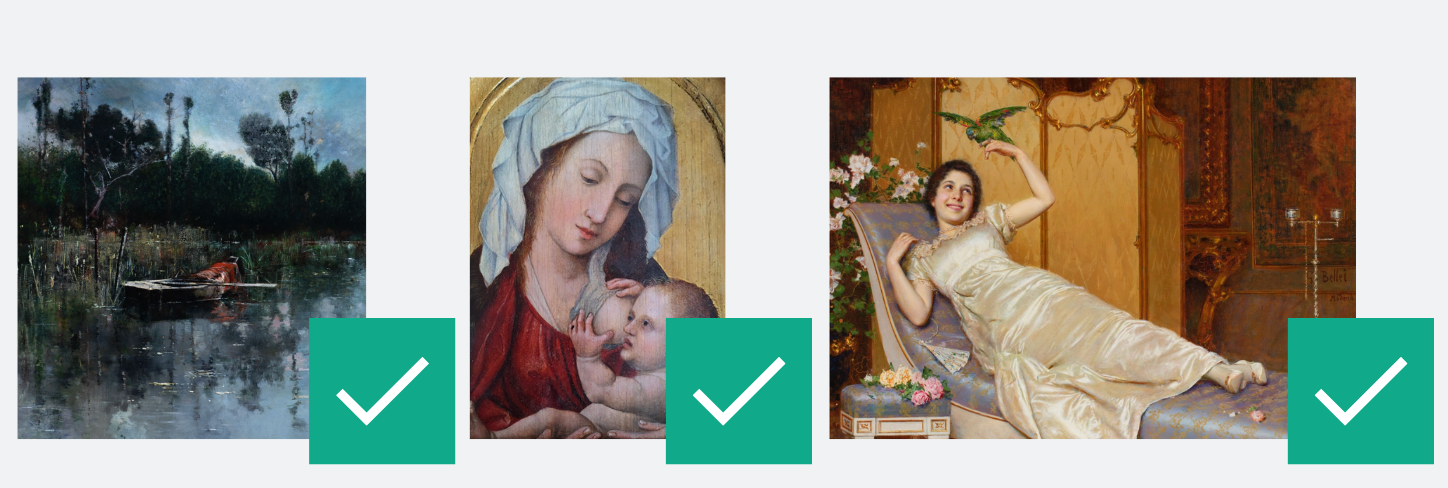
We seek authentic, high-quality artworks originating from the 15th century up to 1945, as well as more recent pieces clearly reflecting a classical aesthetic. Submissions must strictly conform to these categories:
- Paintings
- Works on Paper (including signed watercolours and drawings valued above €200)
To accept your artwork for auction, we have to believe it will sell for:
- €100–€300: “Art for All” auctions
- €300 to €1000: Classical & Modern Galleries auctions
- €1000 and above: Premium auctions
Additionally, shipping costs must be proportional to the artwork’s value, measurements and weight.
📌 Examples of accepted objects:
What we do not accept
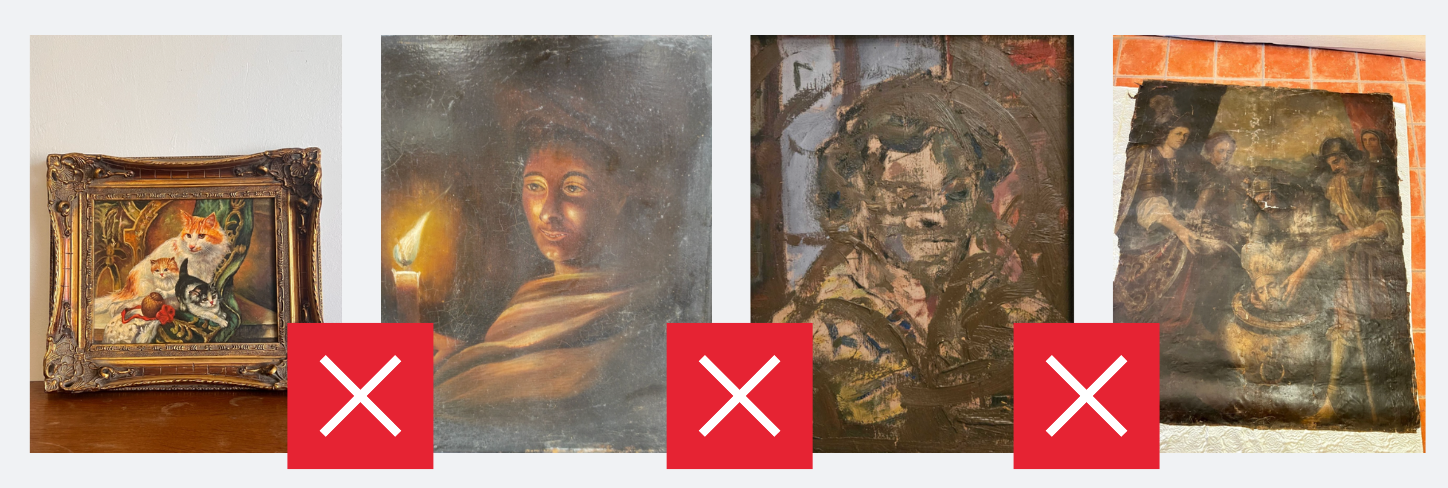
To maintain market integrity, the following are categorically excluded:
Artworks lacking sufficient authenticity documentation
Works with uncertain, illegitimate or unverifiable provenance
Items damaged, in poor condition, or excessively restored
Artworks infringing upon intellectual property rights
Content deemed inappropriate or offensive
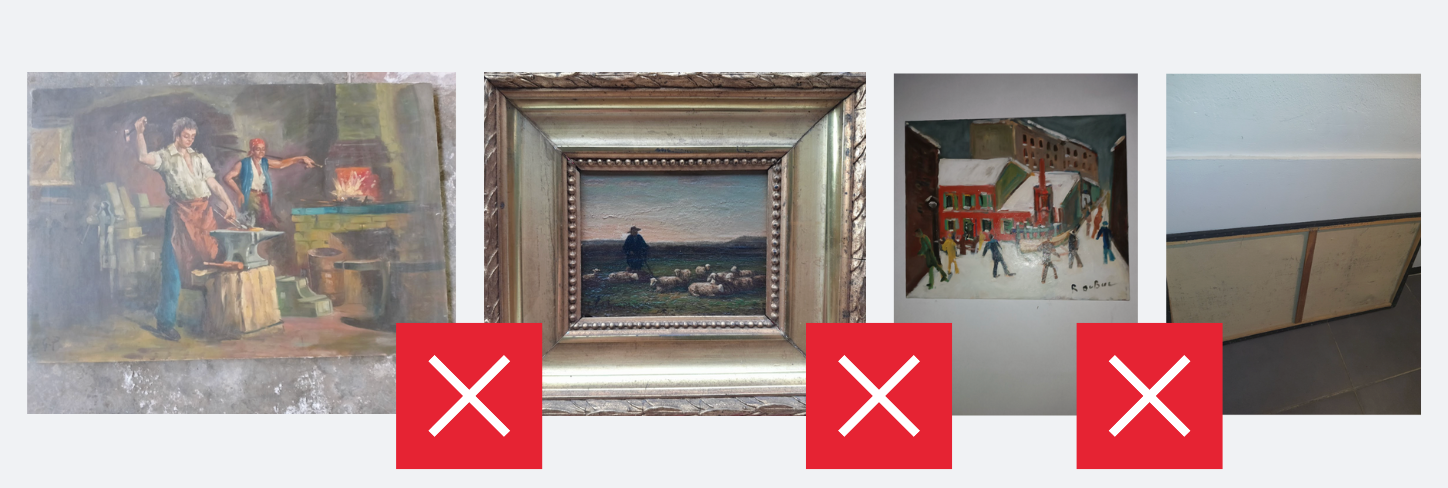
Submissions featuring low-quality, blurred, or digitally altered images
Artworks lacking verifiable provenance or authenticity documentation.
Works with uncertain authorship or attribution not backed by expert opinion or recognised literature
📌 Examples of excluded objects:
Getting your submission ready
1. Fill in all the details and write a clear description:
When you submit an object, you’ll see fields to guide you in providing the right information, e.g. artist name, title, period, condition, etc. These fields ensure your listing is clear, searchable, and easy for bidders to understand.
Please also use the object description field to share detailed and accurate information that enhances buyer confidence and promotes successful outcomes. This includes:
- Background information and history of the artist
- Further details on materials and techniques
- Comprehensive provenance and acquisition history
- Exhibition history and relevant catalogue references, where applicable
- Condition specifics, including past restorations or visible defects
- Clearly stated shipping methods and insurance provisions
When describing the authorship of a work, use these standardized terms for clear, unambiguous attribution:
- [Artist Name]: Artwork confidently attributed, signed, or stamped by the artist.
- Attributed to [Artist Name]: Strong evidence suggests authorship; absolute certainty is lacking.
- Workshop of [Artist Name]: Artwork produced under direct supervision or in the artist's workshop.
- Circle of [Artist Name]: Authored by someone closely associated with the artist, during or within 50 years of the artist’s lifetime.
- Use “School” followed by specific cultural attribution and century when artist attribution is unknown (e.g., Italian School, 17th century).
Works described using these terms without supporting proof may be declined or redirected.
Tip: The more detail you provide, the easier it is for bidders to understand the value of your object – and the more likely it is to sell. Find here more tips on how to write a clear, accurate description.
📌 Examples of a well-written description:
“Exhibitions: 1906: Gallery Heinemann 1911: Collections by Ines Wetzel and Alfred Oppenheim, Kunstsalon Schames 1912: Schneider's art salon in Frankfurt Frankfurt Art Association 1999: Alfred Oppenheim (1869–1921) – jeweler, painter, collector. Hanau Historical Museum – Philippsruhe Castle 2014: The other modernity, art and artists in the countries on the Rhine 1900 to 1922, Museum Giersch
Literature: Thieme/Becker "Allgemeines Lexikon der bildenden Künstler..", Leipzig, 1999; Salomon Wininger: Große jüdische National-Biographie. Band 4. Czernowitz, 1930,.
Inscription: signed with monogram and dated 1907, lower left; on the back of the stretcher and canvas – two artist‘s inscriptions in German: "Gärtnerei "Duet" (Isle Adam)" and on canvas – the same inscription dating 1907.
Technique: oil on canvas. Impressionism style frame.
Measurements: unframed w 21 1/2" x h 16 1/2" (54,5 x 42 cm), framed w 27 3/4" x h 22 7/8" (70,5 x 58 cm)
Condition: in very good condition”.
2. Dimensions: be specific
To avoid confusion about artworks size, please specify all measurements clearly
| Field | What to include | Example |
| Sheet or canvas size (H x W) | Total surface of paper, board or canvas | 60 x 45 cm |
| Framed dimensions (H x W x D) | If framed, include external size and depth | 64 x 49 x 3 cm |
| Orientation | Horizontal/vertical | Horizontal |
3. Great photos matter
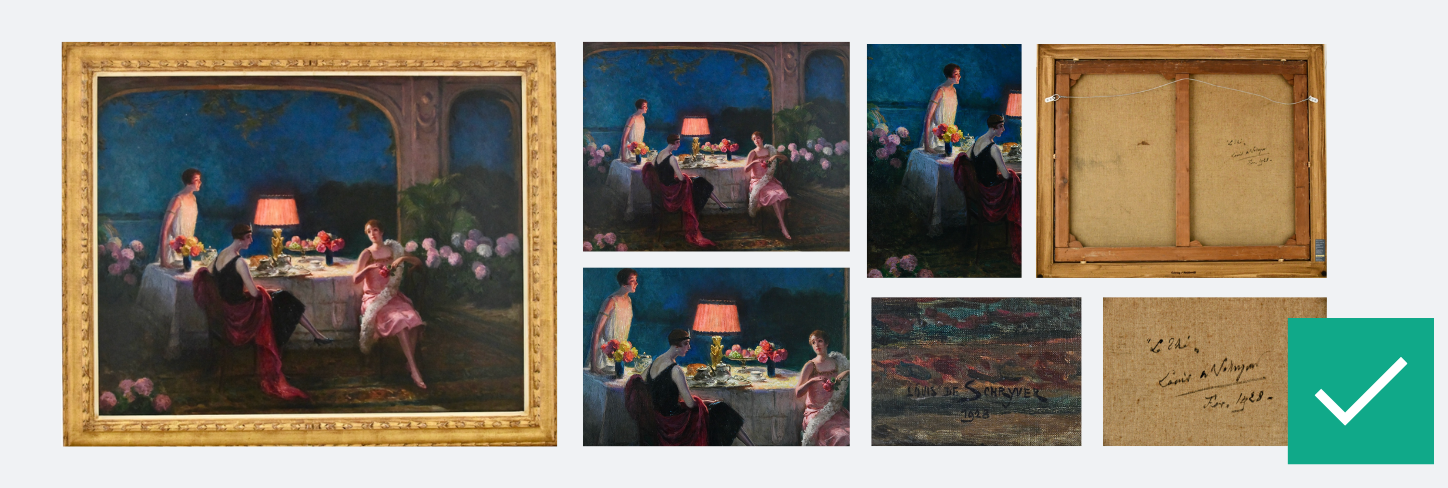
High-quality images significantly enhance buyer engagement. Provide at least 5 clear photographs showcasing:
- Complete views of artwork (with and without frame).
- Reverse side, including labels and marks.
- Close-up details: signatures, inscriptions, flaws, and other relevant specifics.
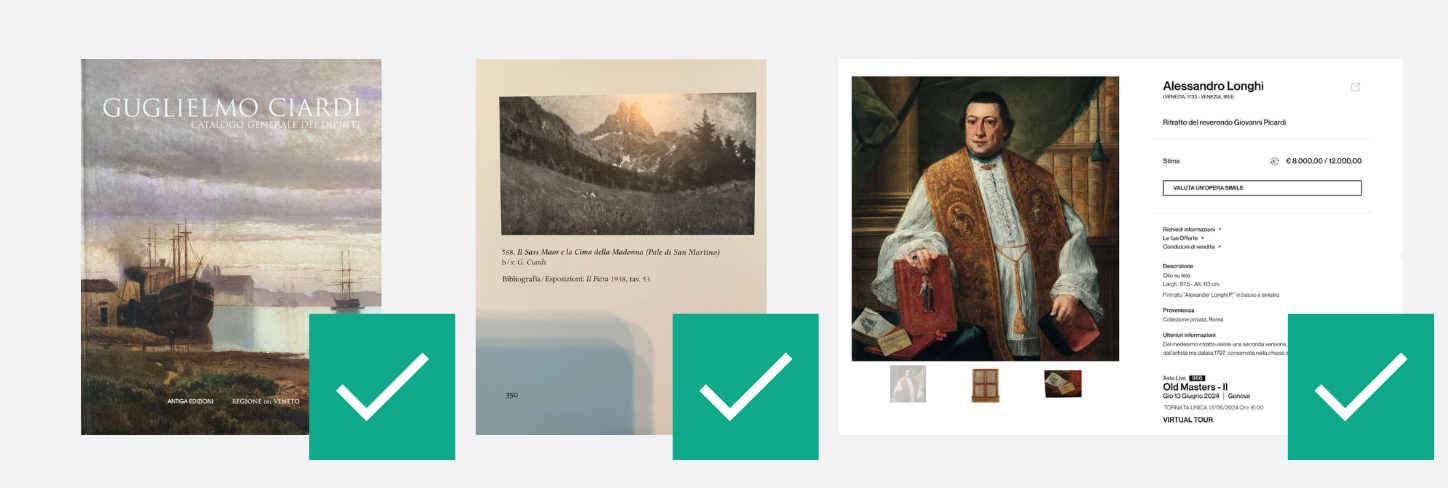
- Extra: any accompanying authenticity or provenance documentation.
Tip: Use a plain light-coloured background, ensure the artwork is well-lit and in focus, and avoid flash or colour filters. Find here more tips on how to take professional photos.
📌 Examples of good vs. bad photos:
4. Additional proof of authenticity
To protect market integrity, additional authentication is required for all high-value, attributed, or pre-1945 artworks.
Acceptable forms include:
- Certificates of Authenticity (COA) issued by recognized experts, artist estates, or established galleries.
- Original gallery or auction purchase invoices.
- Inclusion in a published catalogue raisonné or artist archive.
- Documented provenance and prior ownership records.
Important:
- Provenance documentation is required for certain artworks — specifically high-value works or those with significant attributions.
- COAs must include issuer name, signature, and date.
- Self-issued certificates are not accepted.
- Upload photos of all supporting documentation (COAs, invoices, provenance records).
Note: Each submission will be thoroughly reviewed by our experts, with authenticity determined individually.
📌 Examples of proof of authenticity:
5. Condition — describe honestly and in detail
Provide an accurate description of the artwork’s current state. Mention even minor imperfections so buyers know what to expect.
Please include:
- Surface characteristics (texture, craquelure, paint strokes, or paper waviness)
- Color tone variations (e.g., due to lighting or ageing)
- Any restorations, repairs, or alterations to the original form (such as cropping or folding the canvas, or re-varnishing)
- Signature position and medium (front/back, pencil/paint)
Tip: Add close-up photos of texture and of any flaw/s or mark/s you mention. This prevents post-sale condition misunderstandings.
Ready to sell? List your exceptional classical and modern artworks today
Selling with us is free – commission is only applied if your object sells.
Follow these guidelines to maximize your chances of success.
Register as a seller and submit your artworks for auction now.