We carefully select vintage computers, laptops, mobile devices, and related accessories to maintain high-quality and authenticity standards. We only accept authentic collectables valued at €50 or more. Our experts review every submission to ensure bidders find rare and valuable pieces that appeal to passionate collectors.
Follow these guidelines to increase your chances of a successful sale.
What we accept
We’re looking for authentic, high-quality computer collectables that appeal to collectors and enthusiasts. To be accepted, your object must:
- Fall within our accepted categories:
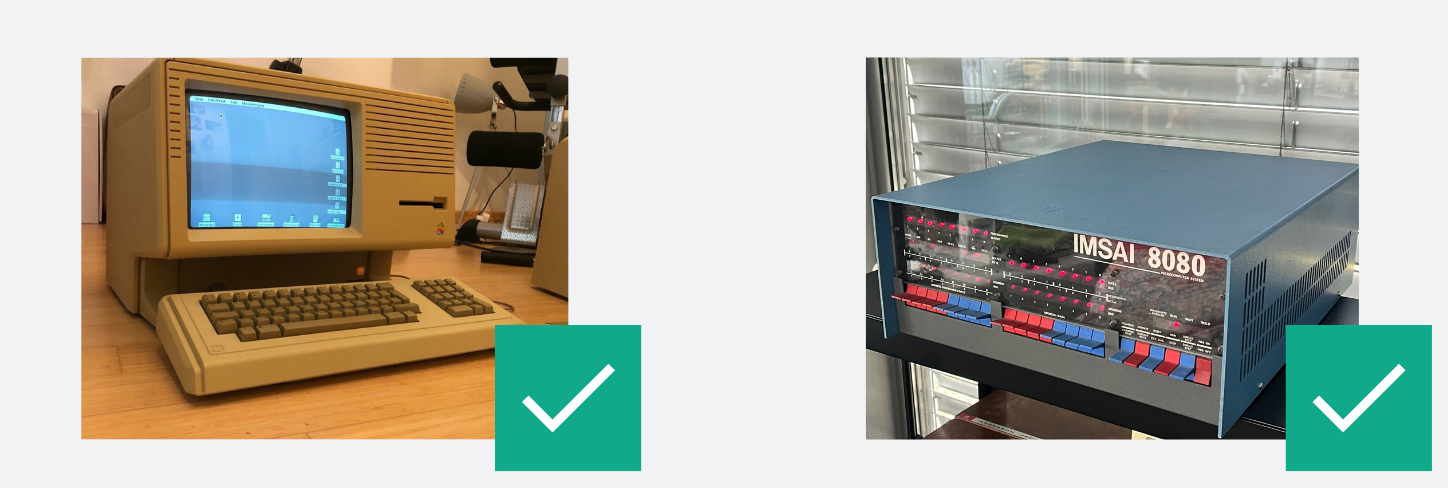
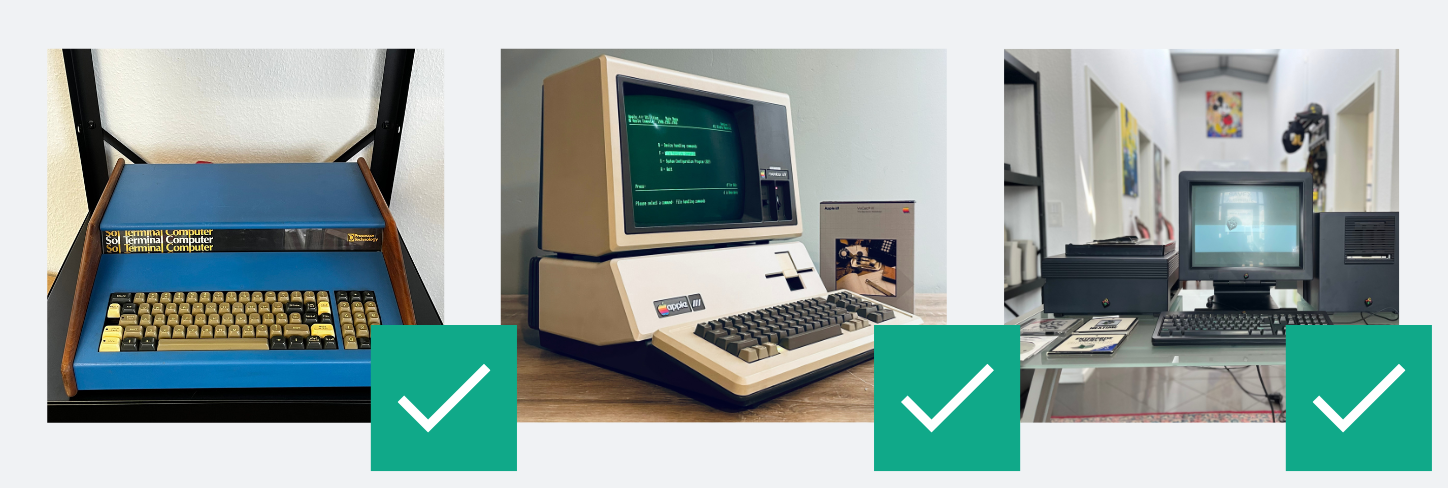
- Desktop computers
- Laptops
- Calculators
- Electronic typewriters
- Handheld mobile phones
- Tablets, iPods, MP3 players
- Electronic chess sets
- Apple accessories like numeric keyboards or Lisa mice
- Be from a reputable brand, in good condition and fully working (if made within the last 25 years)
- Be at least:
- 10 years old for computers and laptops
- 8 years old for mobile phones and tablets
- Meet the minimum expected value of €50
(You can combine objects in one submission to meet this threshold)
What increases your chances of approval:
- Reputable brands such as Acer, Alienware, Ambra, Amiga, Apple, Asus, AST, Atari Corporation, Commodore, Compaq, Dell, Digital (DEC), Fujitsu, Gateway 2000, HP, IBM, Laser (V-Tech), Magnavox, Micron, MSI, NCR (AT&T), Northgate, Packard Bell USA, Quantex, Sharp, Sony, Tandy, Texas Instruments, Toshiba, Tulip Computers (Compudata), and Zenith Data Systems (USA).
📌 Examples of accepted objects:
What we do not accept
To keep our auctions trustworthy and attractive to buyers, we do not accept:
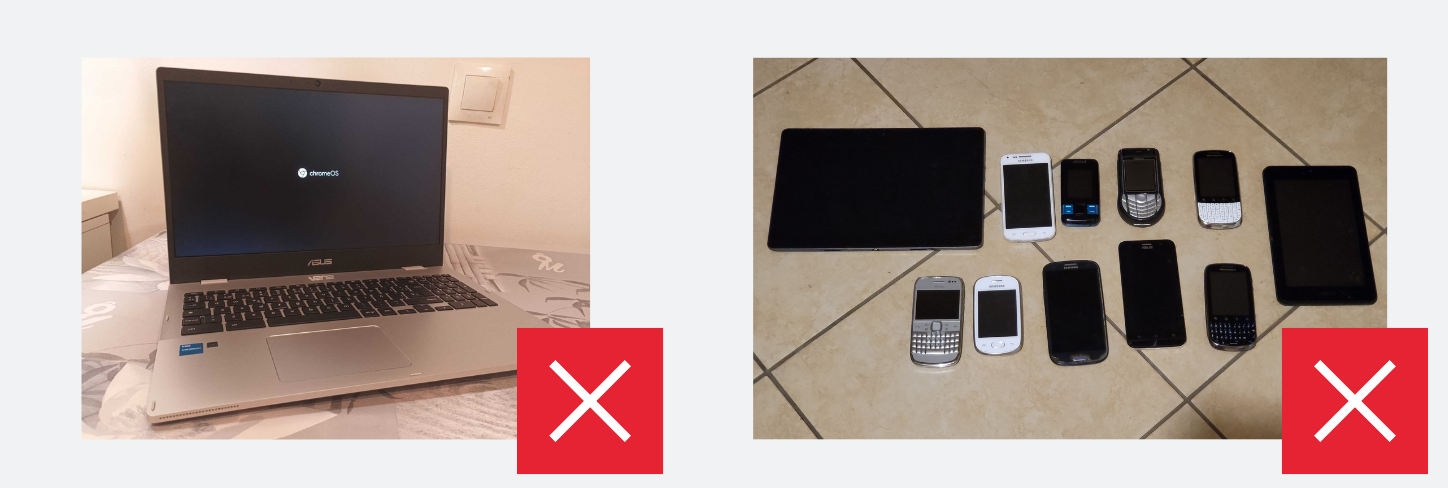
- Non-functioning objects (unless 25+ years old and rare)
- Broken or visibly damaged objects
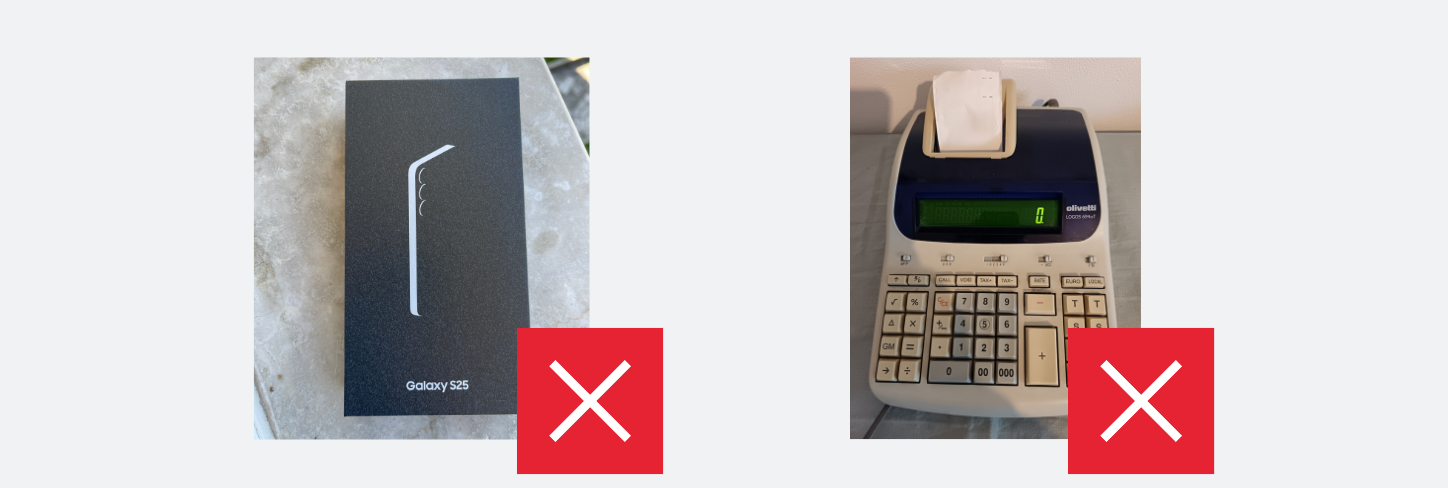
- Spare parts, chargers, phone or handheld cases
📌 Examples of rejected objects:
Getting your submission ready
1. Fill in all the details and write a clear description
When you submit an object, you’ll see fields to guide you in providing the right information, such as: brand and model/type, object type, year, condition, dimensions, etc. These fields ensure your listing is clear, searchable, and easy for bidders to understand.
Note: To determine condition, we use the following grading system:
- Mint – New and sealed, unused
- Near mint – Used but no visible signs of wear
- Very good – Working, with minor signs of use
- Good – Working, with visible signs of use
- Fair – Working, but with major wear or cosmetic damage
- Poor – Not working and/or heavily damaged (only accepted for collectables 25+ years old)
Please also use the object description field to share:
- Unique features or notable history of the object
- What is included/not included (e.g. packaging). For objects like sets or albums clearly state if they are partial or complete.
- Where the object came from/how it was obtained
- If the object has any flaws
Tip: The more detail you provide, the easier it is for bidders to understand the value of your object – and the more likely it is to sell. Find here more tips on how to write a clear, accurate description.
📌 Example of a well-written description:
“This original Apple Lisa 2/5 computer with a ProFile Hard Disk (1983) is a rare gem for collectors and computing enthusiasts alike. With its iconic design and historical significance, this home computer is a must-have for anyone who appreciates the evolution of technology and design!
This lot consists of three highly collectable items:
1. The ultra rare Apple Lisa 2/5 complete with the Lisa keyboard and Apple M001 mouse. This example has been extensively restored, cleaned and tested by vintage computer professionals in the Netherlands to ensure it is in good working order. The Lisa 2/5 boots perfectly and shows the start screen. You can then load Lisa Office System with floppy discs (not included). In terms of appearance, the Lisa is in 'newish condition'. Hardly any discolouration. Only minor scratches and no cracks to the delicate ABS (plastic) case.
Original Apple production figures show that only around 25.000-35.000 Lisa's were produced, mostly the (last revision) model Lisa 2/10 (Macintosh XL). It is believed worldwide merely 500-1.000 Lisa 2/5's survived in true working order.
Available January 1984 - December 1984
$3,995 base model price, up to $5,995 with options added
5MHz Motorola 68000 CPU
512Kb RAM, expandable to 2MB RAM
External Apple ProFile 5MB hard drive
Internal Sony 400Kb 3.5-inch MicroFloppy drive
4-bit real-time clock (supporting dates from 1981 to 1995)
2. The Apple ProFile 5 MB Hard Disk, which was normally sold with a Lisa 2/5. The ProFile could be connected to the built-in parallel port of the Lisa, or to a port on an optional dual-port parallel interface card. Up to three such interface cards could be installed, so in principle up to seven ProFile drives could be used on a Lisa. The 5 MB ProFile was Apple's first hard drive, and was introduced in September 1981 at a price of US$3,499. This ProFile shows a red indicator lamp but is not in working order (as are 99% of all vintage >40 year old hard drives).
3. A Zarges 470K Expedition Grade full aluminium transportbox. This box protects Lisa 2/5 against dust, humidity and UV-radiation. This is very sturdy box (made in Germany) which is ideal for (international) transport and storage of vulnerable and sensitive items. After auction this box will be used to carefully pack and send Lisa 2/5 with it's peripherals and be entirely wrapped in bubble plastic.
=> Seller will take maximum care to deliver the item in working and undamaged order. Because of the delicacy of these vintage electronics I can't however guarantee and take responsibility for the transport process.
=> Attached are a large number of clear photos of the lot. These photos form part of the lot description. Take a good look at them to avoid disappointments.
This model is a true piece of computing history, and its vintage status adds to its appeal. Don't miss the chance to own a piece of the past with this Apple Lisa 2/5 computer.
APPLE LISA 2/5 - background
Though the original documentation only refers to it as "The Lisa", Apple officially stated that the name was an acronym for "Locally Integrated Software Architecture". Decades later, Jobs told his biographer Walter Isaacson "Obviously it was named for my daughter."
The project began in 1978 as an effort to create a more modern version of the then-conventional design epitomized by the Apple II. At Xerox's Palo Alto Research Center (PARC), research had already been underway for several years to create a new humanized way to organize the computer screen, which became known as the desktop metaphor. Steve Jobs visited PARC in 1979 and was absorbed and excited by the revolutionary mouse-driven GUI of the Alto. By late 1979, Jobs successfully negotiated a sale of Apple stock to Xerox, in exchange for his Lisa team receiving two demonstrations of ongoing research projects at PARC. When the Apple team saw the demonstration of the Alto computer, they were able to see in action the basic elements of what constituted a workable GUI. The Lisa team put a great deal of work into making the graphical interface a mainstream commercial product.
The Lisa was a major project at Apple, which reportedly spent more than $50 million on its development. More than 90 people participated in the design, plus more in the sales and marketing effort, to launch the machine. BYTE magazine credited Wayne Rosing with being the most important person in the development of the computer's hardware until the machine went into production, at which point he became the technical lead for the entire Lisa project. The hardware development team was headed by Robert Paratore. The industrial design, product design, and mechanical packaging were headed by Bill Dresselhaus, the Principal Product Designer of Lisa, with his team of internal product designers and contract product designers from the firm that eventually became IDEO. Bruce Daniels was in charge of applications development, and Larry Tesler was in charge of system software. The user interface was designed in six months, after which the hardware, operating system, and applications were all created in parallel.
In 1982, after Steve Jobs was forced out of the Lisa project, he appropriated the existing Macintosh project, which Jef Raskin had conceived in 1979 and led to develop a text-based appliance computer. Jobs redefined Macintosh as a cheaper and more usable Lisa, leading the project in parallel and in secret, and substantially motivated to compete with the Lisa team.
Lisa was launched on January 19, 1983. Its low sales were quickly surpassed by the January 1984 launch of the Macintosh. Newer versions of the Lisa were introduced that addressed its faults and lowered its price considerably, but it failed to achieve sales comparable to the much less expensive Mac. The Macintosh project assimilated a lot more Lisa staff. The final revision, the Lisa 2/10, was modified and sold as the Macintosh XL”.
2. Great photos matter
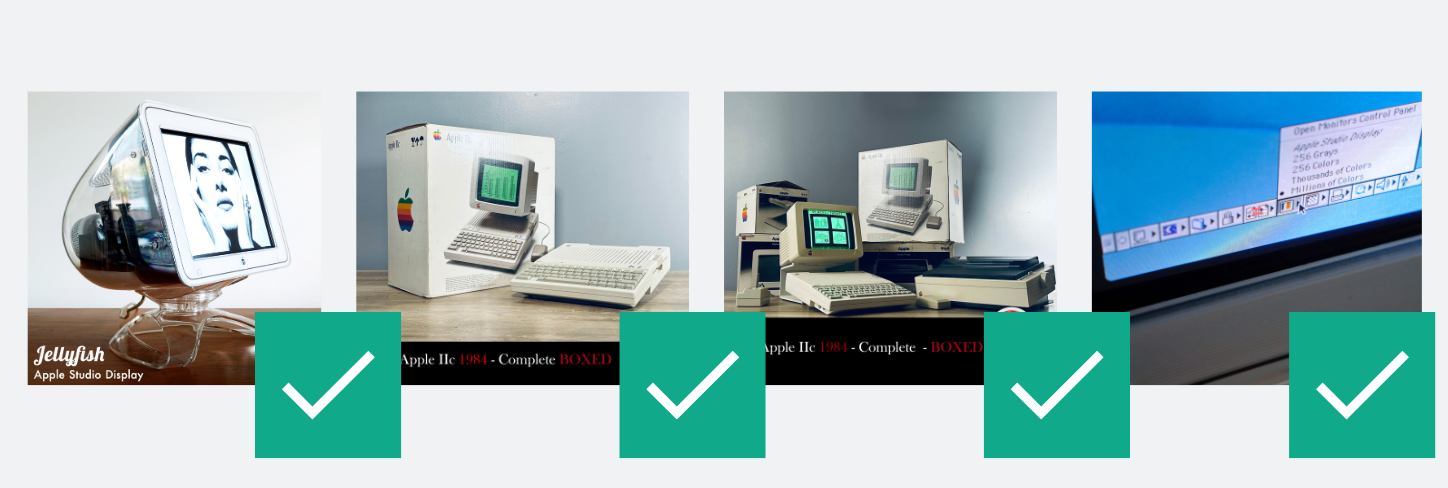
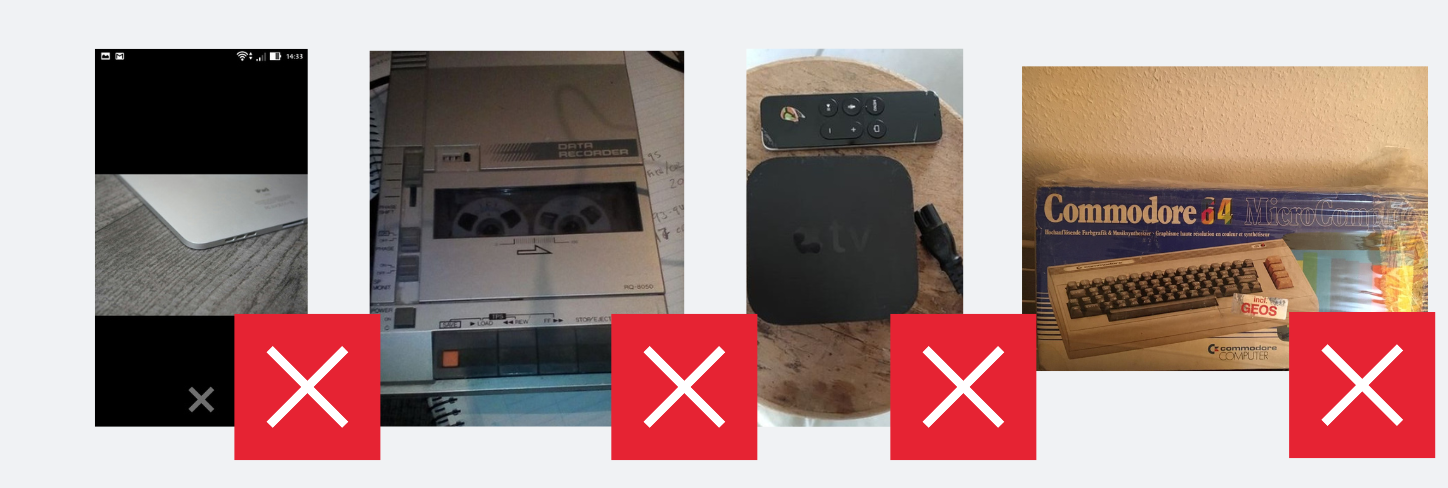
Photos are the first thing bidders see – so make them count! We recommend including at least 5 high-quality images that clearly show the condition and details of your object. This helps bidders make informed decisions and increases your chances of a successful sale.
Your photos should include:
For all submissions:
- A 360° view of the object
- Close-ups of important details (model markings, labels, ports, etc.)
- Any accessories, cables, or packaging included
- Any visible flaws, wear or damage
For grouped submissions:
- Overview image including all items, as well as photos of each item individually
Tip: Avoid photos with people, selfies, or screenshots. Use a neutral background (white or black), avoid low-quality or stock images, and aim for natural lighting. Find here more tips on how to take professional photos.
📌 Examples of good vs. bad photos:
Ready to sell? List your computer collectables equipment today
Selling with us is free – commission is only applied if your object sells.
Follow these guidelines to maximise your chances of success.
Register as a seller and submit your object for auction now.