We carefully select video games, consoles, and related collectables to ensure high-quality and authenticity. Every object is reviewed by our experts before auction and must be of sufficient collectable interest and value.
Follow these guidelines to increase your chances of a successful sale.
What we accept
We’re looking for authentic, high-quality video games and related objects that appeal to collectors and enthusiasts. To be accepted, your object must:
- Fall within our accepted categories:
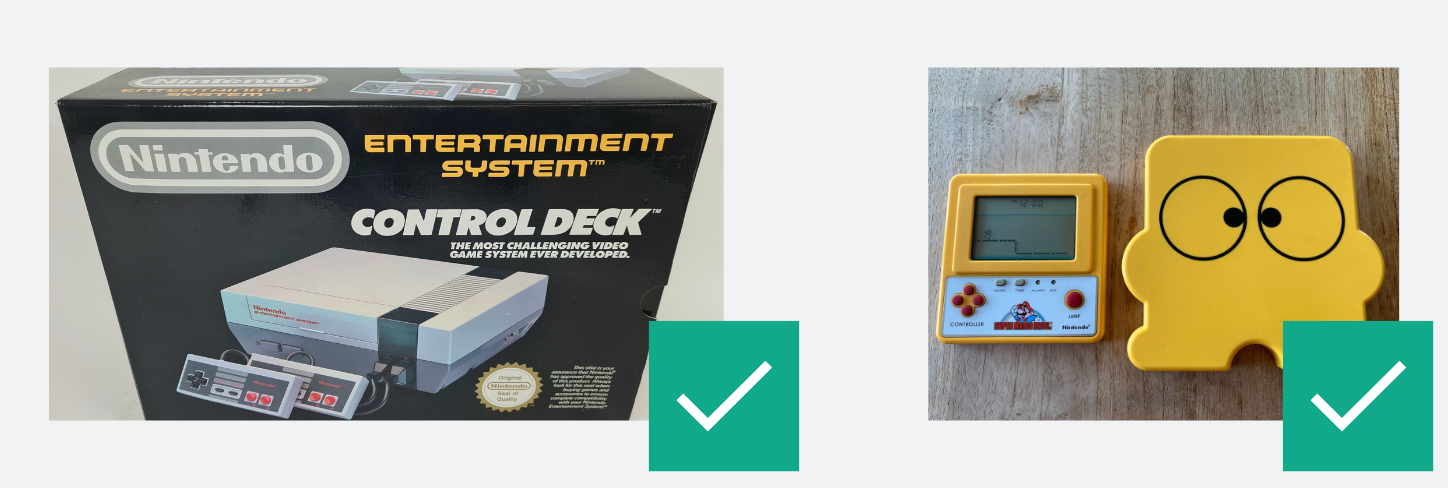
- Original consoles (boxed preferred; unboxed must include cables and controller)
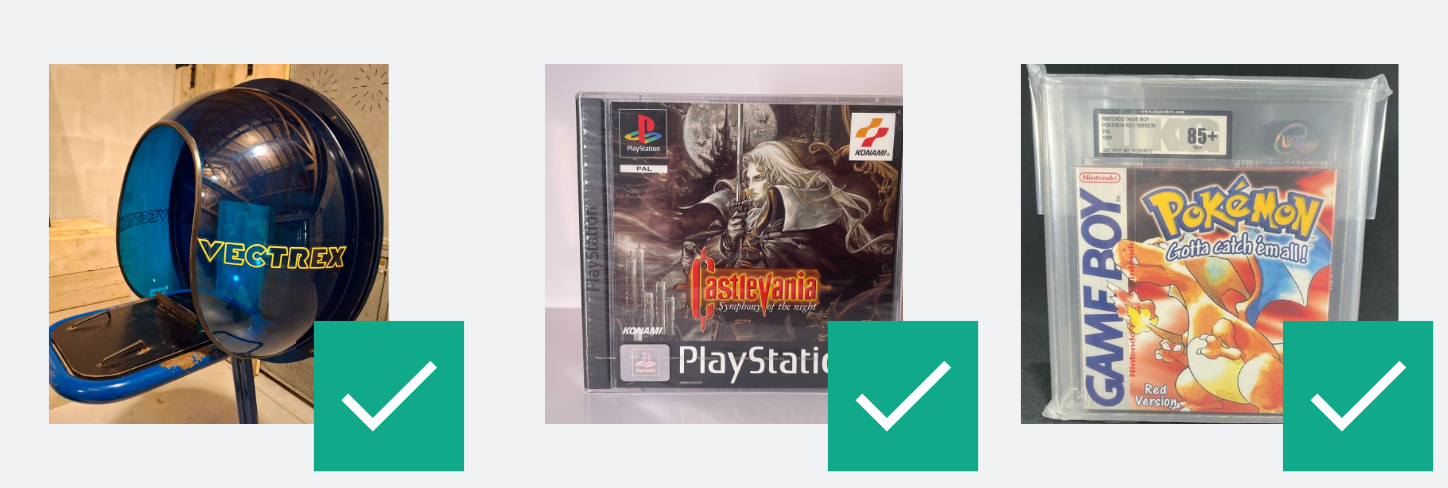
- Original game collections
- Sealed limited edition PC games
- Licensed merchandise (e.g. figures, posters)
- Be of collectable value, complete (e.g. boxed games, consoles with cables and controller) and in working condition
- Meet the minimum expected value of €50
(You can combine objects in one submission to meet this threshold)
What increases your chances of approval:
- Reputable brands such as Amstrad, Apple, Atari, Bandai, Coleco, Commodore, Fairchild, Intellivision (Mattel), Magnavox, Microsoft, NEC, Nintendo, Nokia, Philips, Sega, SNK, Sony, VTech, ZX Spectrum (Sinclair)
📌 Examples of accepted objects:
What we do not accept
To keep our auctions trustworthy and attractive to buyers, we do not accept:
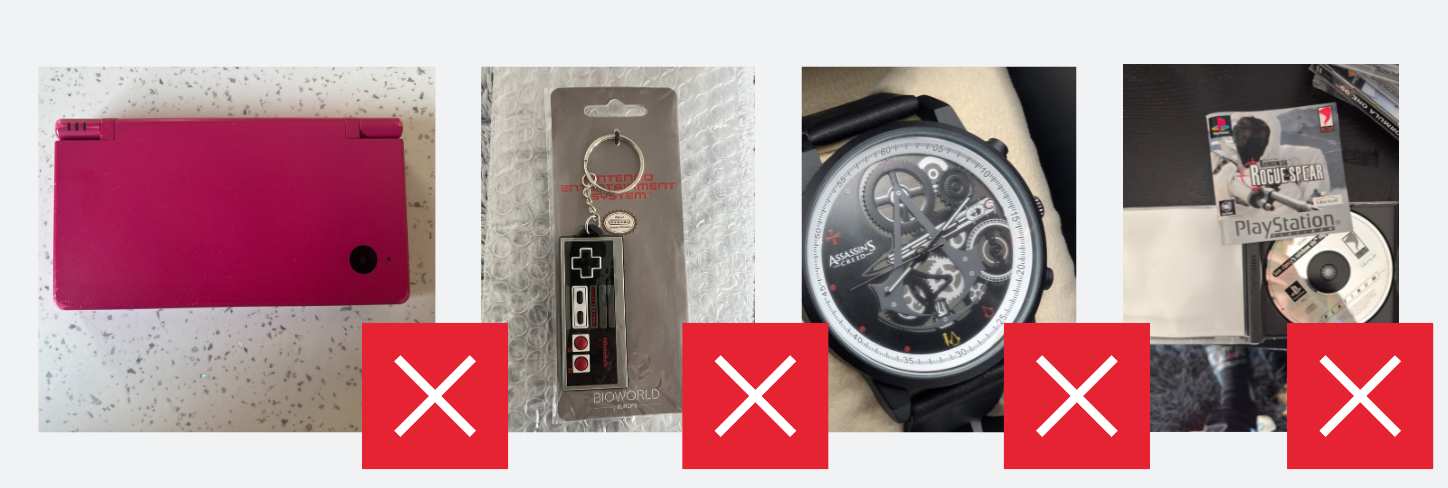
- Loose discs without a case
- Damaged discs
- Copied or non-original games
- Large bulk submissions of low-value games (e.g. FIFA, PES)
📌 Examples of rejected objects:
Getting your submission ready
1. Fill in all the details and write a clear description
When you submit an object, you’ll see fields to guide you in providing the right information, such as: object type, number of consoles/games, brand, platform, year of manufacture, packaging, dimensions, condition, etc. These fields ensure your listing is clear, searchable, and easy for bidders to understand.
Note: To determine condition, we use the following grading system:
- Mint – New, sealed, unused
- Near mint – Used, fully working, no visible wear
- Very good – Minor signs of use, working perfectly
- Good – Visible wear, still functional
- Fair – Heavy wear or damage but operational
- Poor – Broken or incomplete (only accepted for consoles 25+ years old)
Please also use the object description field to share:
- Unique features or notable history of the object
- What is included/not included (e.g. packaging).
- Where the object came from/how it was obtained
- If the object has any flaws
Tip: The more detail you provide, the easier it is for bidders to understand the value of your object – and the more likely it is to sell. Find here more tips on how to write a clear, accurate description.
📌 Examples of a well-written description:
“Selling a rare collection (private) of games from Nintendo Game & Watch. Games are in perfect, scratch-free, unused and tested - working condition.
History:
The Game & Watch brand (Japanese: ゲーム&ウオッチ Gēmu & Uotchi; called Tricotronic in West Germany and Austria, abbreviated as G&W) is a series of handheld electronic games developed, manufactured, released, and marketed by Nintendo from 1980 to 1991. Created by game designer Gunpei Yokoi, the product derived its name from it featuring a single game as well as a clock on an LCD screen. The models from 1981 onwards featured an alarm in addition.
The units are based on a 4-bit CPU from the Sharp SM5xx family that include a small ROM and RAM area and an LCD screen driver circuit.
Details:
Mickey and Donald 1982 - No box
Safebuster 1988 - No box
MickeyMouse 1981 - No box
Game Watch Tetris 1991 - Original Box - Papers
Donkey Kong 2 1981 - Original Box - Papers
Bombs Away Panorama 1982 - No box
Squish 1986 - No box, just papers
Fire Attack 1982 - No box
Mario Bros Dual Screen 1986 - No box
Popeye Panorama 1983 - No box”
2. Great photos matter
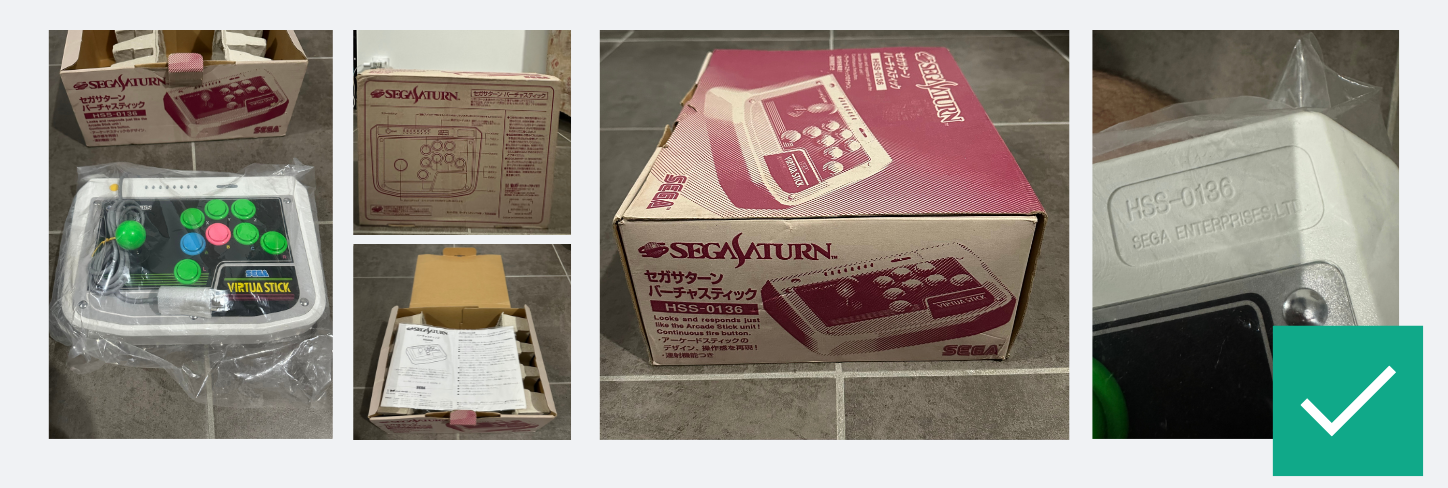
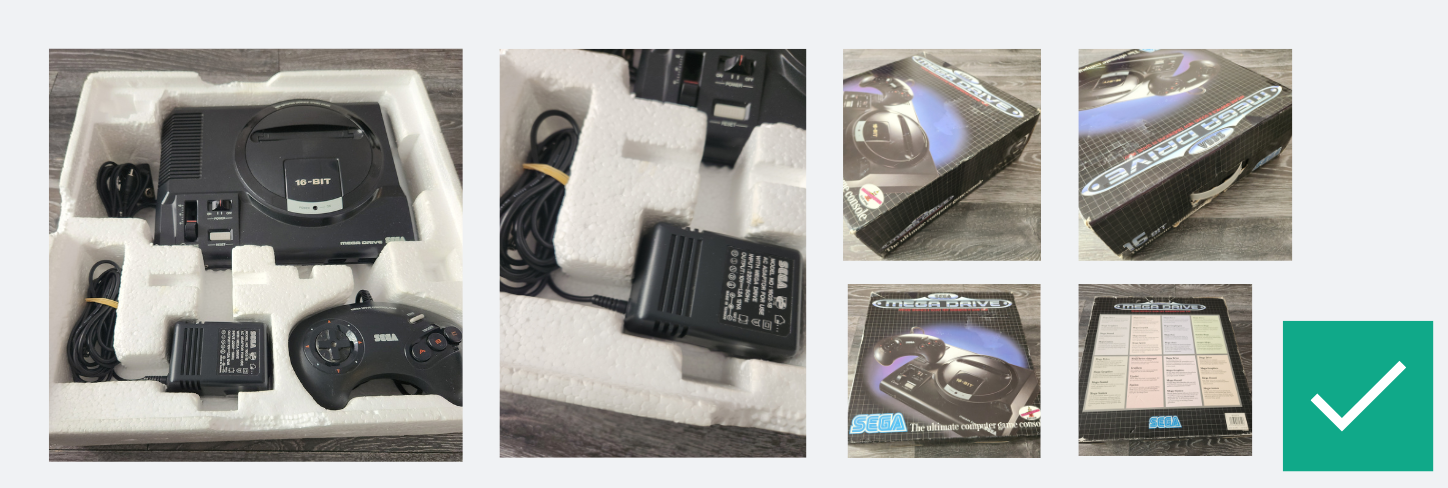
Photos are the first thing bidders see – so make them count! We recommend including at least 5 high-quality images that clearly show the condition and details of your object. This helps bidders make informed decisions and increases your chances of a successful sale.
Your photos should include:
For all submissions:
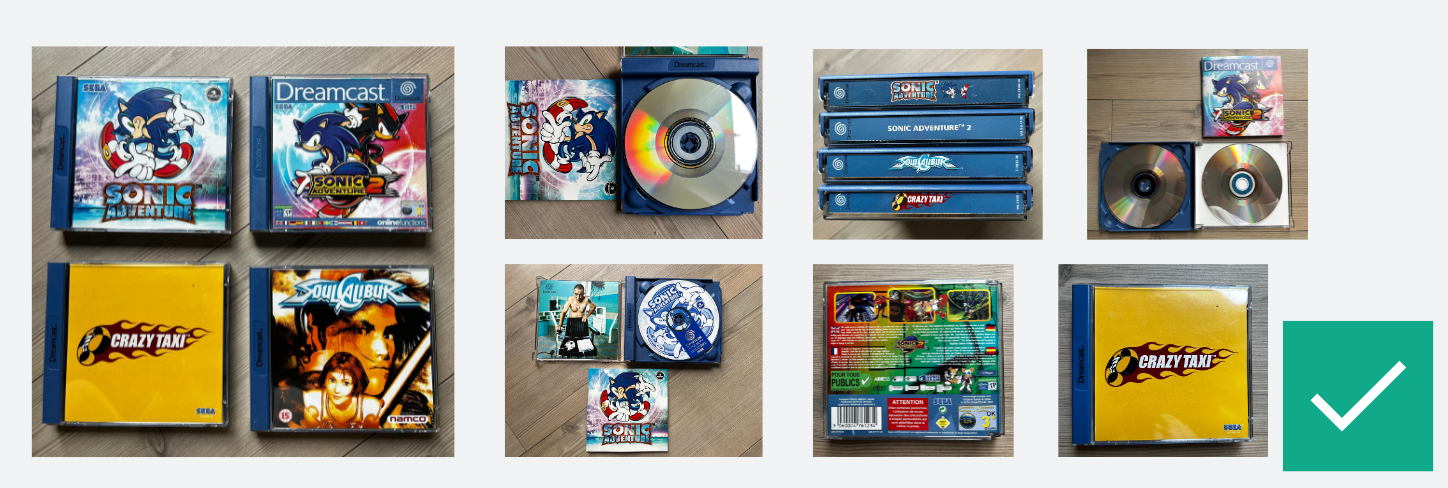
- A 360° view of the object
- Close-ups of key details: labels, platform ID, original packaging
- Accessories included (e.g. cables, controllers, manuals)
- Any damage, wear, or restoration
For grouped submissions:
- Overview image including all objects, as well as photos of each one individually
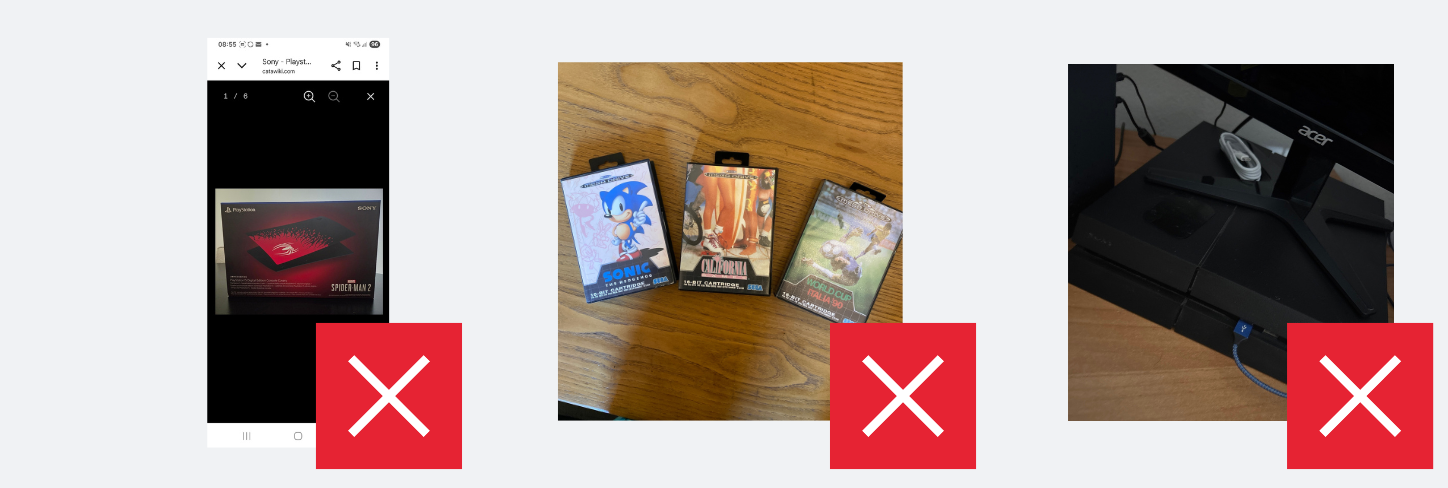
Tip: Avoid photos with people, selfies, or screenshots. Use a neutral background (white or black), avoid low-quality or stock images, and aim for natural lighting. Find here more tips on how to take professional photos.
📌 Examples of good vs. bad photos:
Ready to sell? List your video game collectables equipment today
Selling with us is free – commission is only applied if your object sells.
Follow these guidelines to maximise your chances of success.
Register as a seller and submit your games or consoles for auction now.