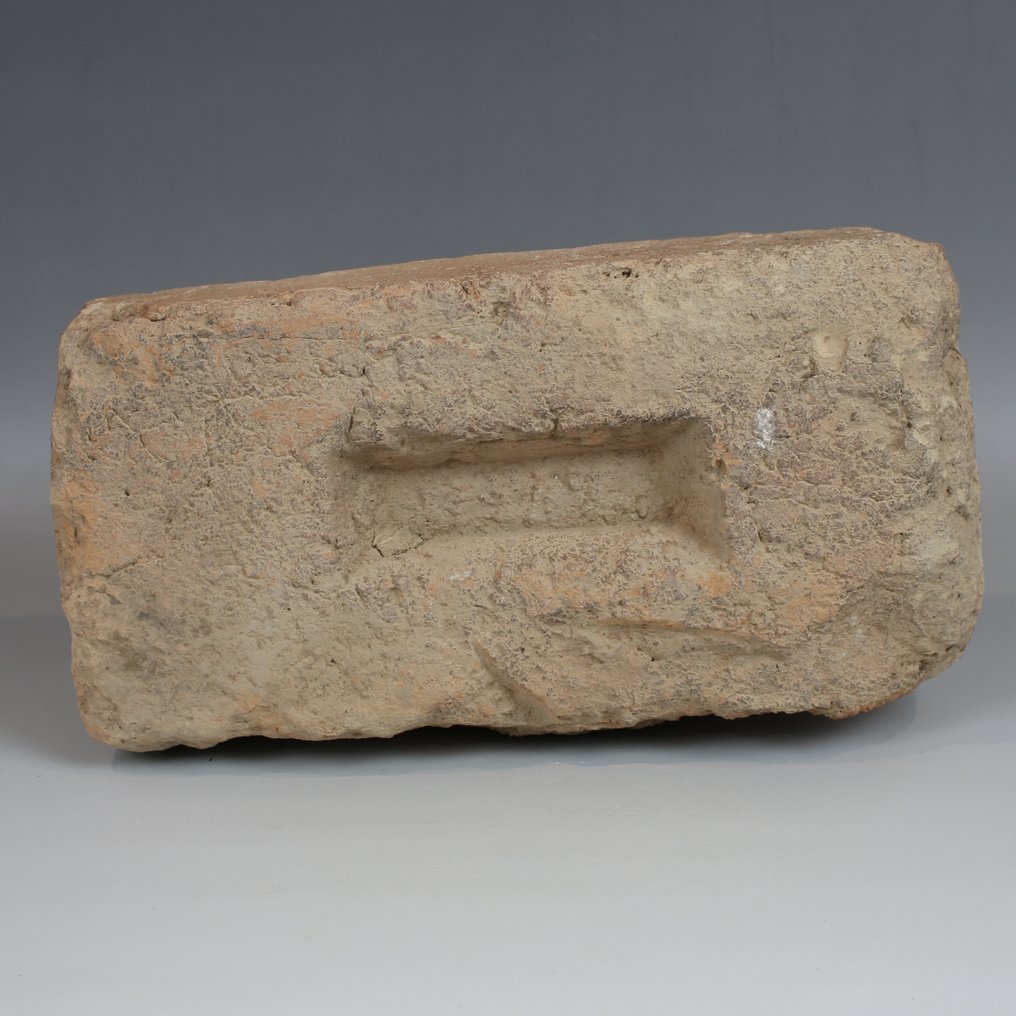
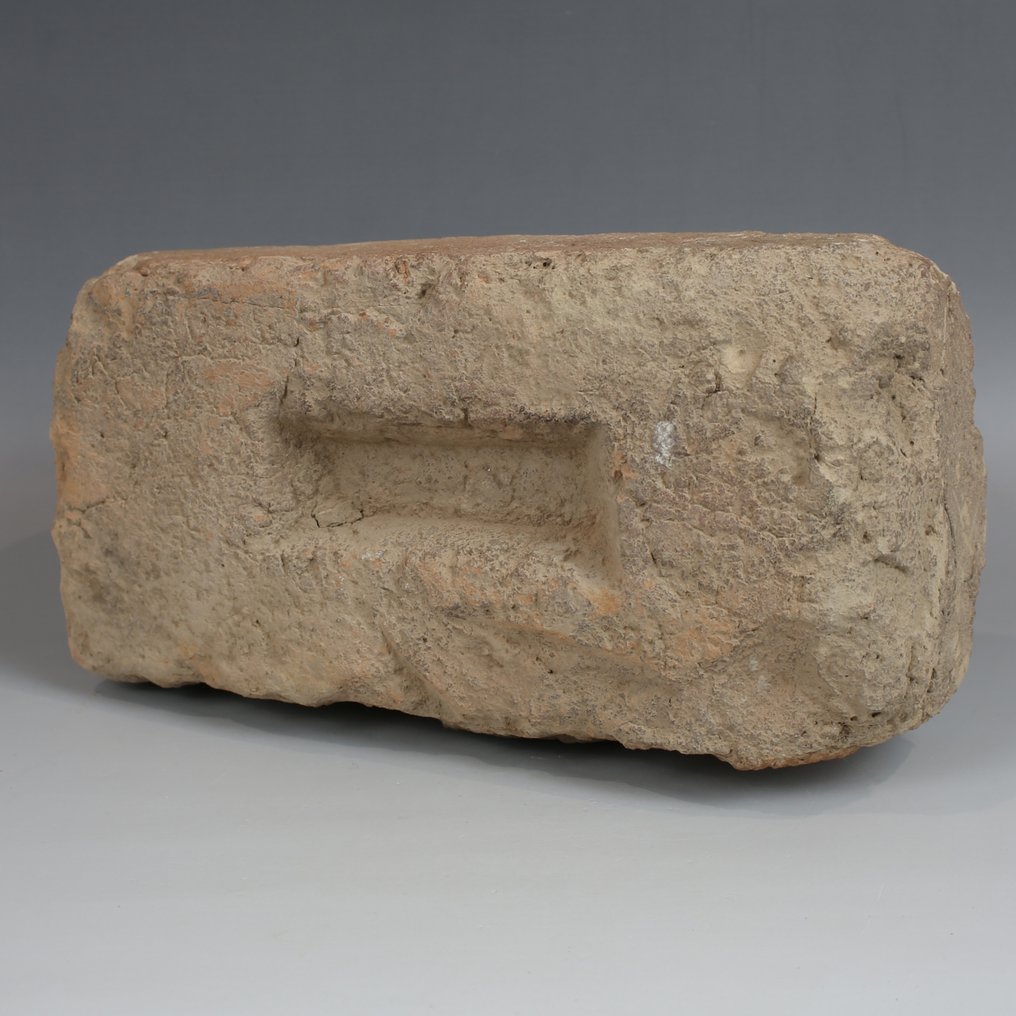
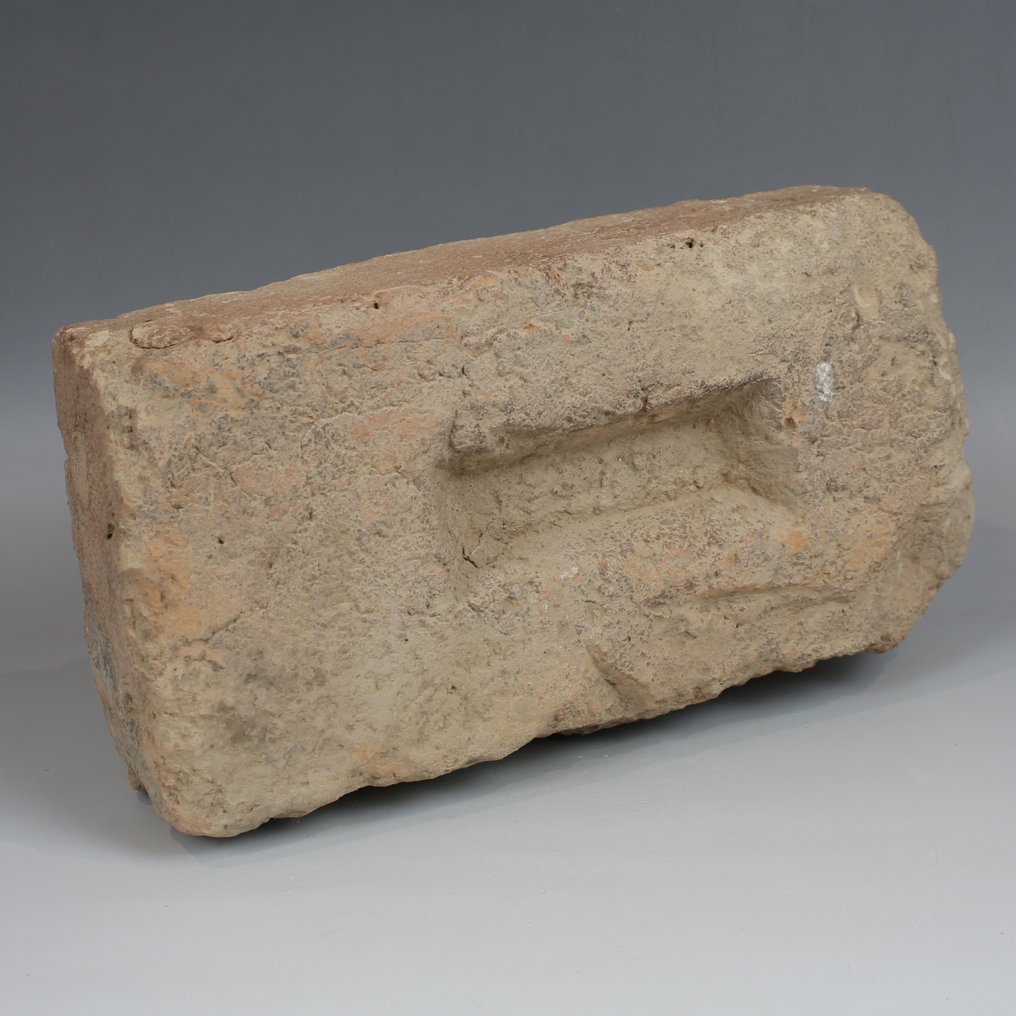
Mezopotámiai Kerémia alapozó tégla (Nincs minimálár)


02
napok
12
óra
44
perc
18
másodperc
Jelenlegi licit
€ 4
Nincs minimálár

Szakértő
Ruth Garrido Vila által kiválasztva
Az Ifergan Gyűjtemény Múzeumának vezetője, föníciai régészet szakértője.
Becslés € 330 - € 400
26 másik személy figyeli ezt a tárgyat
 Licitáló 5288 Licitáló 5288 | 4 € | |
|---|---|---|
 Licitáló 1482 Licitáló 1482 | 3 € | |
 Licitáló 3729 Licitáló 3729 | 2 € | |
Catawiki Vevővédelem
A befizetést biztonságban megőrizzük, amíg a termék kézbesítése meg nem történik. Részletek megtekintése
Trustpilot 4.4 | 121798 vélemény
A Trustpilot-on kiváló értékelésű.
Mezopotám kultúrából származó alaptégla, a Kr. e. 3. évezred és 2. évezred közötti időszakból, kerámiából; méretek 120 mm × 225 mm × 72 mm; jó állapotban; 2025-ben egy német magángyűjteményből került megszerzésre, tanúsítvánnyal és EU-expor licenccel.
AI-támogatott összefoglaló
Leírás az eladótól
ITEM: Foundation brick
MATERIAL: Pottery
CULTURE: Mesopotamian
PERIOD: 3rd - 2nd millenium B.C
DIMENSIONS: 120 mm x 225 mm x 72 mm
CONDITION: Good condition. Includes scanned document from Artonline (see last picture)
PROVENANCE: Ex German private collection, F.B., acquired in Artonline, France, 2022. Ex German private collection, Lux, 2019.
Comes with Certificate of Authenticity and European Union export license
If you bid outside European Union and win the item, we must request a new export license to your country and the shipment will delay between 3 - 5 weeks.
The Mesopotamian foundation brick, often found in temples and palaces, served as a crucial votive and documentary object in ancient Near Eastern construction practices. Rather than just being a structural component, these special bricks or foundation deposits were ritually placed beneath the structure's foundations—particularly at corners, doorways, or perimeters. This practice was deeply intertwined with the ideology of kingship and the divine world. By embedding inscribed bricks or figures (sometimes in clay boxes) into the earth, the king sought to secure the favor and protection of the gods for the new building and to symbolically anchor the structure to the sacred ground
What distinguishes a Mesopotamian foundation brick is the presence of an inscription, typically written in Sumerian or Akkadian cuneiform. These texts invariably record the name and titles of the ruling monarch, the name of the deity the temple was dedicated to, and details about the building project, such as the construction or restoration of the temple. For example, bricks from the Ur III period often bear the name of King Ur-Nammu, celebrating his building works and his title "King of Sumer and Akkad." These inscriptions functioned as a perpetual record of the king's piety and power, ensuring his name would be remembered by the gods and by future rulers who might uncover the deposit during subsequent building phases.
Foundation bricks were a small, but ritually significant, part of the wider Mesopotamian architectural tradition which relied heavily on brick construction, as stone was scarce in the region. Most buildings used sun-dried mud bricks, which led to a cycle of decay, leveling, and rebuilding on the same site over centuries, resulting in raised mounds known as tells. Foundation deposits—which included both inscribed bricks and figures (like foundation pegs depicting the king carrying a basket of earth)—were integral to this cycle. They connected the ruler, the structure, and the divine mandate, proclaiming that the king was obedient to the gods' architectural wishes, thus guaranteeing the community's prosperity and the building's spiritual integrity.
Az eladó története
Az Antikvárium ősi művészetet és ősi érméket kínál. Fő célunk, hogy a legjobb minőséget kínáljuk a legjobb áron, tiszteletben tartva és szigorúan betartva az örökségvédelmi törvényeket és az UNESCO örökség normáit. Ezért minden megjelent darab magángyűjteményekből származik, amelyekben ellenőrizhető a származás, vagy nemzetközi aukciókról. Minden régiségünket és érméinket Eredeti Tanúsítvány kíséri. 90 napos visszaküldési szabályzatunk van. Az Ön Antikváriumánál elkötelezettek vagyunk a hátrányos helyzetű csoportok megsegítése mellett, ezért minden vásárlás egy részét jótékonysági szervezeteknek ajánljuk fel, hogy segítsenek a rászoruló embereken.
Fordítás a Google Fordító általITEM: Foundation brick
MATERIAL: Pottery
CULTURE: Mesopotamian
PERIOD: 3rd - 2nd millenium B.C
DIMENSIONS: 120 mm x 225 mm x 72 mm
CONDITION: Good condition. Includes scanned document from Artonline (see last picture)
PROVENANCE: Ex German private collection, F.B., acquired in Artonline, France, 2022. Ex German private collection, Lux, 2019.
Comes with Certificate of Authenticity and European Union export license
If you bid outside European Union and win the item, we must request a new export license to your country and the shipment will delay between 3 - 5 weeks.
The Mesopotamian foundation brick, often found in temples and palaces, served as a crucial votive and documentary object in ancient Near Eastern construction practices. Rather than just being a structural component, these special bricks or foundation deposits were ritually placed beneath the structure's foundations—particularly at corners, doorways, or perimeters. This practice was deeply intertwined with the ideology of kingship and the divine world. By embedding inscribed bricks or figures (sometimes in clay boxes) into the earth, the king sought to secure the favor and protection of the gods for the new building and to symbolically anchor the structure to the sacred ground
What distinguishes a Mesopotamian foundation brick is the presence of an inscription, typically written in Sumerian or Akkadian cuneiform. These texts invariably record the name and titles of the ruling monarch, the name of the deity the temple was dedicated to, and details about the building project, such as the construction or restoration of the temple. For example, bricks from the Ur III period often bear the name of King Ur-Nammu, celebrating his building works and his title "King of Sumer and Akkad." These inscriptions functioned as a perpetual record of the king's piety and power, ensuring his name would be remembered by the gods and by future rulers who might uncover the deposit during subsequent building phases.
Foundation bricks were a small, but ritually significant, part of the wider Mesopotamian architectural tradition which relied heavily on brick construction, as stone was scarce in the region. Most buildings used sun-dried mud bricks, which led to a cycle of decay, leveling, and rebuilding on the same site over centuries, resulting in raised mounds known as tells. Foundation deposits—which included both inscribed bricks and figures (like foundation pegs depicting the king carrying a basket of earth)—were integral to this cycle. They connected the ruler, the structure, and the divine mandate, proclaiming that the king was obedient to the gods' architectural wishes, thus guaranteeing the community's prosperity and the building's spiritual integrity.
Az eladó története
Az Antikvárium ősi művészetet és ősi érméket kínál. Fő célunk, hogy a legjobb minőséget kínáljuk a legjobb áron, tiszteletben tartva és szigorúan betartva az örökségvédelmi törvényeket és az UNESCO örökség normáit. Ezért minden megjelent darab magángyűjteményekből származik, amelyekben ellenőrizhető a származás, vagy nemzetközi aukciókról. Minden régiségünket és érméinket Eredeti Tanúsítvány kíséri. 90 napos visszaküldési szabályzatunk van. Az Ön Antikváriumánál elkötelezettek vagyunk a hátrányos helyzetű csoportok megsegítése mellett, ezért minden vásárlás egy részét jótékonysági szervezeteknek ajánljuk fel, hogy segítsenek a rászoruló embereken.
Fordítás a Google Fordító általRészletek
Kultúra
Mezopotámiai
Évszázad/ Időszak
3rd - 2nd millenium B.C
Name of object
Foundation brick
Származási forrás
Magángyűjtemény
Megszerzés éve
2025
Anyag
Kerémia
Származási ország
Németország
Állapot
Jó
Előző tulajdonos – forrás
Galéria / Régiségkereskedő
Előző tulajdonos – megszerzés éve
2022
Előző tulajdonos – származási ország
Franciaország
Igazolom, hogy ezt a tárgyat törvényes úton szereztem meg, és jogosult vagyok eladni.
Igen
Eladó
Lemondás
Az eladó tájékoztatást kapott a Catawiki-től a dokumentációs követelményekről, és a következőket garantálja: - a tárgyat jogszerűen szerezték meg, - az eladó jogosult az adott tárgyat eladni és/vagy exportálni, - az eladó biztosítja a szükséges származási információkat, és gondoskodik a szükséges dokumentumokról és engedélyekről/licencekről, amennyiben azok szükségesek és a helyi jogszabályok szerint előírtak. - az eladó értesíti a vevőt az engedélyek/licencek megszerzésének bármilyen késedelméről. A licitálással Ön tudomásul veszi, hogy lakóhelye országától függően importdokumentációra lehet szükség, és hogy az engedélyek/licencek megszerzése késedelmet okozhat a tárgy szállításában.
Az eladó tájékoztatást kapott a Catawiki-től a dokumentációs követelményekről, és a következőket garantálja: - a tárgyat jogszerűen szerezték meg, - az eladó jogosult az adott tárgyat eladni és/vagy exportálni, - az eladó biztosítja a szükséges származási információkat, és gondoskodik a szükséges dokumentumokról és engedélyekről/licencekről, amennyiben azok szükségesek és a helyi jogszabályok szerint előírtak. - az eladó értesíti a vevőt az engedélyek/licencek megszerzésének bármilyen késedelméről. A licitálással Ön tudomásul veszi, hogy lakóhelye országától függően importdokumentációra lehet szükség, és hogy az engedélyek/licencek megszerzése késedelmet okozhat a tárgy szállításában.
