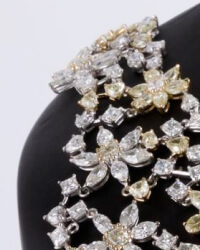
エタニティリング - 14 kt. Yellow gold, ロジウムメッキ - 4.13ct. tw. Diamond (Lab-grown)


02
days
03
hours
15
minutes
49
seconds
Current bid
€ 470
Reserve price not met

 | €470 | |
|---|---|---|
| €450 | |
 | €45 | |
Catawiki Buyer Protection
Your payment’s safe with us until you receive your object.View details
Trustpilot 4.4 | 138658 reviews
Rated Excellent on Trustpilot.
14 kt yellow gold ring with 16 round brilliant-cut lab-grown diamonds totaling 4.13 ct, color E–F and VS1, IGI certified (certificate 21J3924026), weighing 3.77 g and sized EU 54 (US 6¾), rhodium plated finish.
AI-assisted summary
Description from the seller
永遠のエタニティリングを発見: エレガンスとサステナビリティの融合
製品概要:
私たちの指輪は14Kイエローゴールド製で、総計4.13カラットのラウンドブリリアントカットダイヤモンドを16点セットしています。この上品なリングはスタイルと責任あるラグジュアリーを兼ね備え、サステナブルなエレガンスを愛する方に最適です。
サステナビリティと倫理:
このリングにはラボグロウンダイヤモンドを使用しています。ACアムステルダムの環境に配慮した選択で、環境に優しいジュエリーに貢献します。ラボグロウンダイヤモンドは天然ダイヤモンドと同じ輝きを持ちながら、より小さな生態学的足跡で済みます。
真正性保証:
genuine 14 kt gold from genuine materials and certified under Dutch hallmarking laws. The diamond comes with an IGI certificate from the International Gemological Institute from Antwerp – a guarantee of quality, color, and cut.
Seller's Story
At AC Amsterdam, we take great pride in offering only the highest quality jewelry.
All our products are officially hallmarked and verified by the Dutch Assay Office, ensuring full authenticity and trust. Every diamond is certified by IGI, guaranteeing transparency and accuracy in quality. We exclusively work with manufacturers accredited by the Responsible Jewellery Council (RJC), who stand for fair, ethical, and sustainable practices.
Our mission is to combine beauty with responsibility, so you can wear our jewelry with confidence and peace of mind.
Translated by Google Translate永遠のエタニティリングを発見: エレガンスとサステナビリティの融合
製品概要:
私たちの指輪は14Kイエローゴールド製で、総計4.13カラットのラウンドブリリアントカットダイヤモンドを16点セットしています。この上品なリングはスタイルと責任あるラグジュアリーを兼ね備え、サステナブルなエレガンスを愛する方に最適です。
サステナビリティと倫理:
このリングにはラボグロウンダイヤモンドを使用しています。ACアムステルダムの環境に配慮した選択で、環境に優しいジュエリーに貢献します。ラボグロウンダイヤモンドは天然ダイヤモンドと同じ輝きを持ちながら、より小さな生態学的足跡で済みます。
真正性保証:
genuine 14 kt gold from genuine materials and certified under Dutch hallmarking laws. The diamond comes with an IGI certificate from the International Gemological Institute from Antwerp – a guarantee of quality, color, and cut.
Seller's Story
At AC Amsterdam, we take great pride in offering only the highest quality jewelry.
All our products are officially hallmarked and verified by the Dutch Assay Office, ensuring full authenticity and trust. Every diamond is certified by IGI, guaranteeing transparency and accuracy in quality. We exclusively work with manufacturers accredited by the Responsible Jewellery Council (RJC), who stand for fair, ethical, and sustainable practices.
Our mission is to combine beauty with responsibility, so you can wear our jewelry with confidence and peace of mind.
Translated by Google TranslateDetails
時代
After 2000
無料サイズ直し可
いいえ'
Total carat weight of all stones
4.13
鑑定書
International Gemological Institute (IGI)
鑑定書番号
21J3924026
Diamond type of main stone
Lab-grown
メインストーンのダイヤモンドカラーグレード
E, F
金属
Rhodium plated, Yellow gold
純度
14 kt.
ブランドジュエリー
いいえ'
Number of diamonds main stone
16
メインストーン
Diamond
メインストーンの総カラット重量
4.13
メインストーンのダイヤモンドクラリティグレード
VS1
総重量
3.77 g
コンディション
New
原産国
Netherlands
性別
Women
メインストーンのシェイプ
Round
Cutting style of main stone
Brilliant cut
リングサイズ
54 (EU) / 14 (IT) / 6 ¾ (US)
Sold by
Disclaimer
Catawiki always aims to offer you the best possible buying experience. Our experts virtually review and select every object in line with our submission guidelines. While we strive to provide a detailed description and photographs of each jewellery object, discrepancies or inaccuracies may occur. It is your responsibility to review all of the information provided about an object, including the condition and description, before placing an order. Sellers are responsible for the information, pictures and description provided, including the quality, quantity and nature of the jewellery supplied. A small imperfection that cannot be seen in the photo but is included in the description is not a non-conformity. What are lab-grown diamonds? Lab-grown diamonds are diamonds produced by scientists using technology that recreates the conditions under which diamonds form deep in the earth. A lab-grown diamond is chemically, physically, and optically identical to diamonds that formed naturally - the only factor that makes them different from a natural diamond is that they originate from a lab. For that reason, lab-grown diamonds cannot be considered ‘rare’ or ‘unique’ and as such they represent a more affordable option when compared to natural diamonds and are valued at a considerably lower price per carat. Due to their availability and evolving market dynamics, lab-grown diamonds may not retain value over time and typically do not carry much resale value. A Laboratory Report is not a guarantee, valuation or appraisal regarding the articles described therein. A Laboratory Report contains only the characteristics of an article described after it has been graded, tested, examined, and analysed using the techniques and equipment used at the time of the examination from that specific Gemological Laboratory. The results of any other examination performed on the article may differ depending when, how, by whom and with which grading standard the article is examined. In addition, any changes and improvements in techniques and equipment that may have occurred which may enable the examiner to detect, among other things, the use of processes for altering the characteristics of an article which use was previously undetectable, does not automatically mean the object does not conform to its description.
Catawiki always aims to offer you the best possible buying experience. Our experts virtually review and select every object in line with our submission guidelines. While we strive to provide a detailed description and photographs of each jewellery object, discrepancies or inaccuracies may occur. It is your responsibility to review all of the information provided about an object, including the condition and description, before placing an order. Sellers are responsible for the information, pictures and description provided, including the quality, quantity and nature of the jewellery supplied. A small imperfection that cannot be seen in the photo but is included in the description is not a non-conformity. What are lab-grown diamonds? Lab-grown diamonds are diamonds produced by scientists using technology that recreates the conditions under which diamonds form deep in the earth. A lab-grown diamond is chemically, physically, and optically identical to diamonds that formed naturally - the only factor that makes them different from a natural diamond is that they originate from a lab. For that reason, lab-grown diamonds cannot be considered ‘rare’ or ‘unique’ and as such they represent a more affordable option when compared to natural diamonds and are valued at a considerably lower price per carat. Due to their availability and evolving market dynamics, lab-grown diamonds may not retain value over time and typically do not carry much resale value. A Laboratory Report is not a guarantee, valuation or appraisal regarding the articles described therein. A Laboratory Report contains only the characteristics of an article described after it has been graded, tested, examined, and analysed using the techniques and equipment used at the time of the examination from that specific Gemological Laboratory. The results of any other examination performed on the article may differ depending when, how, by whom and with which grading standard the article is examined. In addition, any changes and improvements in techniques and equipment that may have occurred which may enable the examiner to detect, among other things, the use of processes for altering the characteristics of an article which use was previously undetectable, does not automatically mean the object does not conform to its description.