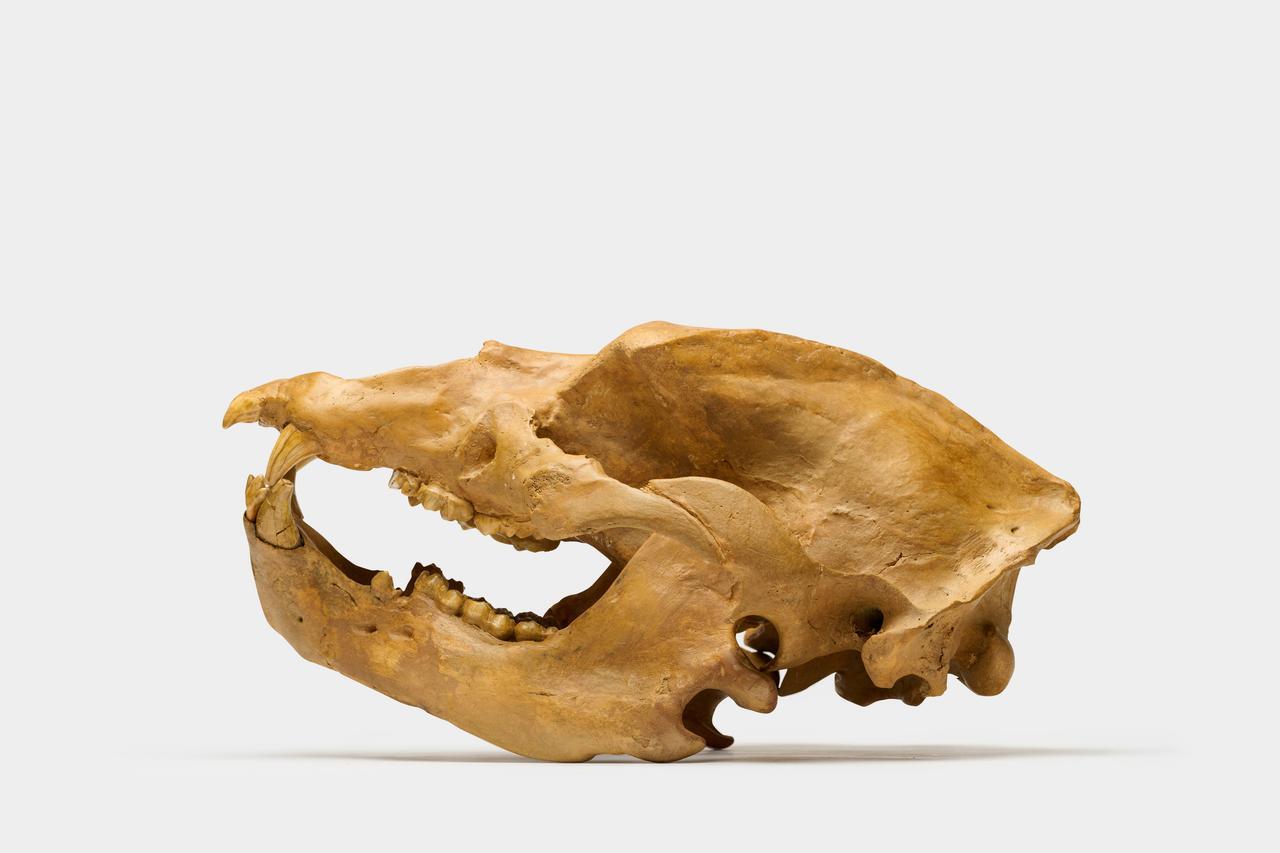
美しく保存された トリケラトプス・ホリダス(三本角の恐竜)の歯 - 見える咀嚼痕 - 化石歯 (No reserve price)


Starting bid
€ 1
Add to your favourites to get an alert when the auction starts.

Catawiki Buyer Protection
Your payment’s safe with us until you receive your object.View details
Trustpilot 4.4 | 141188 reviews
Rated Excellent on Trustpilot.
Description from the seller
Scientific name: Triceratops horridus, Marsh 1889 (ceratopsid three-horned Dinosaur) - Tooth
Location: Weston Co., Wyoming (USA). Private land.
Geological Formation: Lance Creek Formation
Age: Late Cretaceous, Maastrichtian stage (~68-66 Million Years)
Size: 1,2 x 1 cm
REF.: #J670
DESCRIPTION:
Outstanding nicely preserved tooth with nicely preserved enamel and well developed feeding wear.
Triceratops horridus from the Lance Formation refers to fossils of the iconic three-horned dinosaur found in the Late Cretaceous rocks of Wyoming and surrounding areas, often characterized by its longer snout and brow horns compared to T. prorsus, representing a common, earlier form in the dinosaur's evolutionary lineage before the later prorsus emerged just before the K-Pg extinction.
These fossils, including teeth, horns, and bone fragments, are key to understanding Triceratops evolution, with horridus showing features like a short nasal horn and forward-angled brow horns, distinct from its descendant.
Key Information:
Triceratops horridus: One of the two recognized species of Triceratops, known for its distinctive "three-horned face," herbivorous diet, and large frill used for defense or display.
Lance Formation (L Fm.): A geological unit in the western United States (Wyoming, Montana, Dakotas) famous for its rich Late Cretaceous fossils, including many Triceratops specimens, dating to around 66 million years ago.
Physical Characteristics: T. horridus typically has a more elongated snout and brow horns that point forward and slightly outward, distinguishing it from T. prorsus, which has a shorter face and more upright brow horns.
Evolution: T. horridus is considered an ancestral species, evolving into T. prorsus in a linear fashion (anagenesis) just before the non-avian dinosaurs died out.
Significance:
Fossils from the Lance Fm. provide critical evidence of Triceratops' appearance, behavior (e.g., feeding, social behavior), and its final evolutionary stages.
In essence, "Triceratops horridus Lance Fm" describes fossils of the classic Triceratops found in a specific, fossil-rich geological layer from the end of the dinosaur age, representing a significant species in the genus's lineage.
All of our fossils come with a Certificate of Authenticity. Every week, the issued Certificates of Authenticity are updated in our database verification system on our website. If you find that your certificate has not yet been updated, please contact us and we will update it immediately. Display box included.
Seller's Story
Jurassic Dreams is the world's largest online dinosaur fossils store, unrivaled as the most reputable source for authentic fossil specimens. We are the only leading online fossils store owned by an accredited geologist and paleontology expert. In addition, we have extraordinary authentic meteorites specimens from all over the universe.
With dozens of different specimens in stock... our customers come back time and again. Because, simply put, our lifetime guarantee is unbeatable.
My name is Juan A. Poblador and I have a strong academic background in Paleontology and Geology from the University of Madrid and University of Alicante. I have participated in fossil excavation projects in several locations mainly in Europe and Africa for over 10 years. Writing scientifically accurate descriptions of every specimen is one of the tasks that consume most of my time. Obviously, recognizing fake and restored fossils is second nature to me. So you can be sure that every fossil in this website has been carefully screened and inspected by me.
I have served collectors and fossil enthusiasts over the years. I have also supplied museums and institutions. I combine the study and research of significant specimens with exhibiting and selling the many other finds, which helps fund the new expeditions.
Additionally, I have a small team of support staff for logistics. I've personally trained them to handle and pack the fossils properly so that they can be shipped within 24 hours and arrive at your door in one piece.
Last but not least, I'm fortunate to have a great network of other seasoned paleontologists with whom I discuss the rarest items, new discoveries, and exploration trips to remote quarries... If I don't know something, the paleontological community really helps out.
I like to manage Jurassic Dreams as a well curated online exhibition of museum grade pieces. I'm a collector myself and I love to share the knowledge with other fellow collectors. That's why I will respond to any email when you have any doubt or when you buy, and you'll have a personalized fossil selection experience.
Jurassic Dreams a proud member of the Association of Applied Paleontological Sciences (AAPS) and abide by its Code of Ethics. The Association of Applied Paleontological Sciences conforms to the recommendations of The National Academy of Sciences Report on Paleontological Collecting and standard business practices and ethics.
In addition, we are the certified member #5681 of the International Meteorite Collectors Association (IMCA) and a certified member of GMA (Global Meteorite Association) G0043. IMCA and GMA are the most prestigious associations helping meteorite collectors in their search for Authentic Meteorites for their collections and assisting others in helping to learn more about meteorites.
A physical certificate of authenticity is provided free of charge with every fossil we sell. This is our lifetime guarantee. The certificate, individually prepared for each fossil by Juan A. Poblador, an expert paleontologist, contains an accurate scientific description, and the certificate's validity can be verified online at all times. In addition, a 100% money-back guarantee is provided.
Scientific name: Triceratops horridus, Marsh 1889 (ceratopsid three-horned Dinosaur) - Tooth
Location: Weston Co., Wyoming (USA). Private land.
Geological Formation: Lance Creek Formation
Age: Late Cretaceous, Maastrichtian stage (~68-66 Million Years)
Size: 1,2 x 1 cm
REF.: #J670
DESCRIPTION:
Outstanding nicely preserved tooth with nicely preserved enamel and well developed feeding wear.
Triceratops horridus from the Lance Formation refers to fossils of the iconic three-horned dinosaur found in the Late Cretaceous rocks of Wyoming and surrounding areas, often characterized by its longer snout and brow horns compared to T. prorsus, representing a common, earlier form in the dinosaur's evolutionary lineage before the later prorsus emerged just before the K-Pg extinction.
These fossils, including teeth, horns, and bone fragments, are key to understanding Triceratops evolution, with horridus showing features like a short nasal horn and forward-angled brow horns, distinct from its descendant.
Key Information:
Triceratops horridus: One of the two recognized species of Triceratops, known for its distinctive "three-horned face," herbivorous diet, and large frill used for defense or display.
Lance Formation (L Fm.): A geological unit in the western United States (Wyoming, Montana, Dakotas) famous for its rich Late Cretaceous fossils, including many Triceratops specimens, dating to around 66 million years ago.
Physical Characteristics: T. horridus typically has a more elongated snout and brow horns that point forward and slightly outward, distinguishing it from T. prorsus, which has a shorter face and more upright brow horns.
Evolution: T. horridus is considered an ancestral species, evolving into T. prorsus in a linear fashion (anagenesis) just before the non-avian dinosaurs died out.
Significance:
Fossils from the Lance Fm. provide critical evidence of Triceratops' appearance, behavior (e.g., feeding, social behavior), and its final evolutionary stages.
In essence, "Triceratops horridus Lance Fm" describes fossils of the classic Triceratops found in a specific, fossil-rich geological layer from the end of the dinosaur age, representing a significant species in the genus's lineage.
All of our fossils come with a Certificate of Authenticity. Every week, the issued Certificates of Authenticity are updated in our database verification system on our website. If you find that your certificate has not yet been updated, please contact us and we will update it immediately. Display box included.
Seller's Story
Jurassic Dreams is the world's largest online dinosaur fossils store, unrivaled as the most reputable source for authentic fossil specimens. We are the only leading online fossils store owned by an accredited geologist and paleontology expert. In addition, we have extraordinary authentic meteorites specimens from all over the universe.
With dozens of different specimens in stock... our customers come back time and again. Because, simply put, our lifetime guarantee is unbeatable.
My name is Juan A. Poblador and I have a strong academic background in Paleontology and Geology from the University of Madrid and University of Alicante. I have participated in fossil excavation projects in several locations mainly in Europe and Africa for over 10 years. Writing scientifically accurate descriptions of every specimen is one of the tasks that consume most of my time. Obviously, recognizing fake and restored fossils is second nature to me. So you can be sure that every fossil in this website has been carefully screened and inspected by me.
I have served collectors and fossil enthusiasts over the years. I have also supplied museums and institutions. I combine the study and research of significant specimens with exhibiting and selling the many other finds, which helps fund the new expeditions.
Additionally, I have a small team of support staff for logistics. I've personally trained them to handle and pack the fossils properly so that they can be shipped within 24 hours and arrive at your door in one piece.
Last but not least, I'm fortunate to have a great network of other seasoned paleontologists with whom I discuss the rarest items, new discoveries, and exploration trips to remote quarries... If I don't know something, the paleontological community really helps out.
I like to manage Jurassic Dreams as a well curated online exhibition of museum grade pieces. I'm a collector myself and I love to share the knowledge with other fellow collectors. That's why I will respond to any email when you have any doubt or when you buy, and you'll have a personalized fossil selection experience.
Jurassic Dreams a proud member of the Association of Applied Paleontological Sciences (AAPS) and abide by its Code of Ethics. The Association of Applied Paleontological Sciences conforms to the recommendations of The National Academy of Sciences Report on Paleontological Collecting and standard business practices and ethics.
In addition, we are the certified member #5681 of the International Meteorite Collectors Association (IMCA) and a certified member of GMA (Global Meteorite Association) G0043. IMCA and GMA are the most prestigious associations helping meteorite collectors in their search for Authentic Meteorites for their collections and assisting others in helping to learn more about meteorites.
A physical certificate of authenticity is provided free of charge with every fossil we sell. This is our lifetime guarantee. The certificate, individually prepared for each fossil by Juan A. Poblador, an expert paleontologist, contains an accurate scientific description, and the certificate's validity can be verified online at all times. In addition, a 100% money-back guarantee is provided.
Details
標本
Nicely Preserved Triceratops horridus three-horned Dinosaur Tooth - Visible Feeding Wear
地質年代
Late Cretaceous, Maastrichtian stage (~68-66 Million Years)
コンディション
Natural
Authenticity
Original/official
Sold by