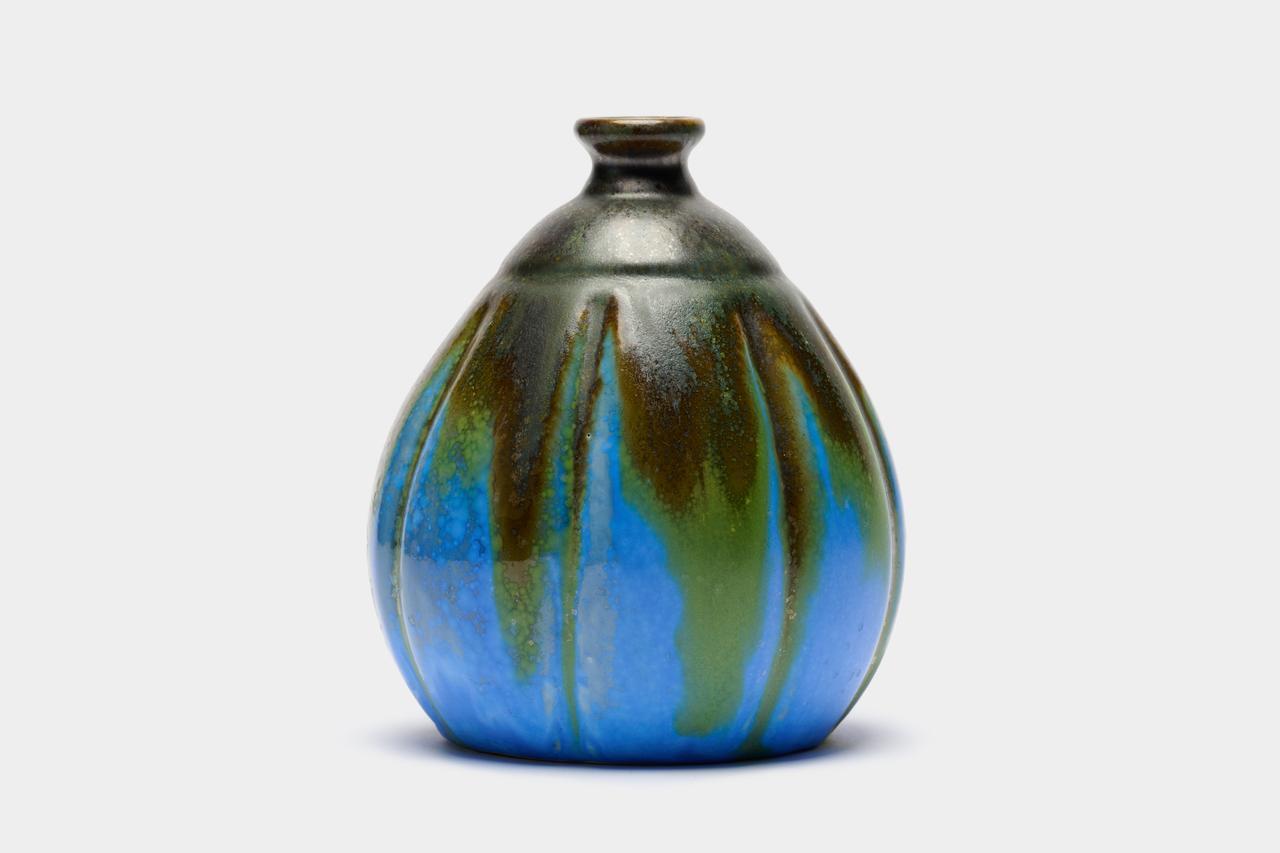
Jarrón Tango Art Déco - 花瓶 - Glass


Starting bid
€ 1
Add to your favourites to get an alert when the auction starts.

Catawiki Buyer Protection
Your payment’s safe with us until you receive your object.View details
Trustpilot 4.4 | 141582 reviews
Rated Excellent on Trustpilot.
Description from the seller
アート・デコ時代のボヘミアン・アートグラスの Tango 花瓶。約1920~1930年。Lötz/Loetz Ausführung 166 の装飾的言語にインスパイアされた作品です。
この花瓶はアートデコ期の Tango 花瓶で、ボヘミアン・アートグラスで作られ、光と喜びを放ちます。視覚的には、この作品の表現装飾は Lötz/Loetz Ausführung 166 の作曲言語を思わせます:単色のボディ、吹き付けたガラス糸、そしてボディ上に直接取り付けられた独立したガラス玉。
Tango Glass は、色の強いガラス塊と、装飾的要素(縁、糸、ボタン、 cabujones)を用いてコントラストを作り出し、作品がまだ白熱し塑性状態にある間に魅力的な色彩対比を生み出すことが特徴です。
DESCRIPTION:
花瓶は吹き型成形で手作りされており、当時の技術と一致する空気の種の存在からそれが窺えます。
その際立った特徴は、広く開いたフレア状のシルエットと、約14 cm の大胆な口径を持つ広い開口部で、短く優雅に絞られた neck の上に開きます。そこから、ボディは逆さまの涙滴の形状へと展開し、塊状で底部が低く、安定感があり、彫刻的な存在感を強く与えます。
作品は、黄色のガラスの強さと青い装飾要素の対比によって生まれ、取り付けられたガラスの帯と浮き出た cabujones の連続によって容量を視覚的に構築します。これらの要素は、吹き抜けた形の流動性に対して際立つ幾何学的リズムを生み出します。
PONTIL & ATTRIBUCIÓN
ベースには元の破断 pontil の痕跡(露出の rough pontil mark)が保存されており、職人の製造工程の特徴的な痕跡であり、この作品は輪郭が不規則で粗い質感を示す pontil が完全には研磨されていないことを示しています。
この作品は Welz、Kralik、Rückl、Rindskopf などボヘミアの製造業者の生産圏に位置づけられる可能性がありますが、署名や識別マークが欠如している重要な部分があるため、特定の帰属を断定するのは厳密でも正直でもありません。pontil の性質だけで帰属を確定することもできません。同じ製造所内でも粗い pontil と磨かれた pontil の両方を見つけることができます。
この時期に生産されたガラスの多くは、記録、型帳、工業文書の喪失、特定の製造所の身元に関する現在の知識不足のため、現時点で特定の製造業者に信頼性をもって帰属することができません。
DATACIÓN: 戦間期の circa 1920–1930。
DIMENSIONES:
高さ: 20 cm
口径: 13.5 cm
ボディの最大直径: 16 cm
ベース直径: 9 cm
ESTADO:
Excellent(非常に良好)。亀裂や欠けはなし。定着のパティーナと、年期を感じさせる僅かな摩擦の痕跡のみが見られます。
NOTAS ADICIONALES:
** 写真は説明の一部です。
** 最終的な寸法と重量は、安全な梱包の構成に対応しており、この作品の輸送中の適切な保護を確保するために不可欠です。
::::::::::::::::::::::::::::::::: ENGLISH :::::::::::::::::::::::::::::::::
Art Deco Tango vase in Bohemian art glass. ca. 1920–1930. Inspired by the decorative language of Lötz/Loetz Ausführung 166.
I present this Tango vase from the Art Deco period, made of Bohemian art glass that radiates light and joy. Visually, the applied decoration of this piece recalls the compositional language of Lötz/Loetz Ausführung 166: monochrome body, applied glass thread and independent glass cabochons applied directly onto the body.
Tango Glass is characterized by the use of intensely colored glass masses and chromatic contrasts produced by means of applied decorative elements—rims, threads, buttons or cabochons—while the piece is still incandescent, in a plastic state.
DESCRIPTION:
The vase is handcrafted by blowing, as evidenced by the presence of air seeds consistent with the technology of the period.
It stands out for its bold and full flared silhouette, with a wide mouth of approximately 14 cm that opens audaciously over a short and elegantly narrowed neck. From there, the body develops into a suggestive inverted teardrop shape, massive and with a low base, giving it a stable and distinctly sculptural presence.
The piece lives from the contrast between the intensity of the yellow glass and the blue decorative elements, which visually structure the volume through a horizontal band of applied glass and a succession of raised cabochons. These elements provide a marked geometric rhythm to the fluidity of the blown form.
PONTIL & ATTRIBUTION
The base preserves the original fracture pontil mark (rough pontil mark), a characteristic vestige of the artisanal manufacturing process that this piece preserves, showing an irregular outline and rough texture, characteristic of a not completely polished pontil.
The piece could be situated within the production sphere of Bohemian manufacturers such as Welz, Kralik, Rückl or Rindskopf; however, it would not be rigorous or honest to make a specific attribution, since an important part of this production lacks a signature or identifying mark. Nor does the nature of the pontil alone allow an attribution to be established, since within the same manufactory pieces with both rough and polished pontils can be found.
Much of the glass produced during this period cannot currently be reliably attributed to a specific manufacturer, due to the loss of records, pattern books and industrial documentation, as well as the current lack of knowledge regarding the identity of certain glassworks.
DATING: Circa 1920–1930 (Interwar Period).
DIMENSIONS:
Height: 20 cm
Mouth diameter: 13.5 cm
Maximum body diameter: 16 cm
Base diameter: 9 cm
CONDITION:
Excellent, with no cracks or chips. It presents only a patina from historical settling and slight signs of historical friction consistent with its age.
ADDITIONAL NOTES:
• The photographs form part of the description.
• The final measurements and weight indicated correspond to the configuration of secure packaging, which is essential to ensure the proper protection of this piece during transport.
アート・デコ時代のボヘミアン・アートグラスの Tango 花瓶。約1920~1930年。Lötz/Loetz Ausführung 166 の装飾的言語にインスパイアされた作品です。
この花瓶はアートデコ期の Tango 花瓶で、ボヘミアン・アートグラスで作られ、光と喜びを放ちます。視覚的には、この作品の表現装飾は Lötz/Loetz Ausführung 166 の作曲言語を思わせます:単色のボディ、吹き付けたガラス糸、そしてボディ上に直接取り付けられた独立したガラス玉。
Tango Glass は、色の強いガラス塊と、装飾的要素(縁、糸、ボタン、 cabujones)を用いてコントラストを作り出し、作品がまだ白熱し塑性状態にある間に魅力的な色彩対比を生み出すことが特徴です。
DESCRIPTION:
花瓶は吹き型成形で手作りされており、当時の技術と一致する空気の種の存在からそれが窺えます。
その際立った特徴は、広く開いたフレア状のシルエットと、約14 cm の大胆な口径を持つ広い開口部で、短く優雅に絞られた neck の上に開きます。そこから、ボディは逆さまの涙滴の形状へと展開し、塊状で底部が低く、安定感があり、彫刻的な存在感を強く与えます。
作品は、黄色のガラスの強さと青い装飾要素の対比によって生まれ、取り付けられたガラスの帯と浮き出た cabujones の連続によって容量を視覚的に構築します。これらの要素は、吹き抜けた形の流動性に対して際立つ幾何学的リズムを生み出します。
PONTIL & ATTRIBUCIÓN
ベースには元の破断 pontil の痕跡(露出の rough pontil mark)が保存されており、職人の製造工程の特徴的な痕跡であり、この作品は輪郭が不規則で粗い質感を示す pontil が完全には研磨されていないことを示しています。
この作品は Welz、Kralik、Rückl、Rindskopf などボヘミアの製造業者の生産圏に位置づけられる可能性がありますが、署名や識別マークが欠如している重要な部分があるため、特定の帰属を断定するのは厳密でも正直でもありません。pontil の性質だけで帰属を確定することもできません。同じ製造所内でも粗い pontil と磨かれた pontil の両方を見つけることができます。
この時期に生産されたガラスの多くは、記録、型帳、工業文書の喪失、特定の製造所の身元に関する現在の知識不足のため、現時点で特定の製造業者に信頼性をもって帰属することができません。
DATACIÓN: 戦間期の circa 1920–1930。
DIMENSIONES:
高さ: 20 cm
口径: 13.5 cm
ボディの最大直径: 16 cm
ベース直径: 9 cm
ESTADO:
Excellent(非常に良好)。亀裂や欠けはなし。定着のパティーナと、年期を感じさせる僅かな摩擦の痕跡のみが見られます。
NOTAS ADICIONALES:
** 写真は説明の一部です。
** 最終的な寸法と重量は、安全な梱包の構成に対応しており、この作品の輸送中の適切な保護を確保するために不可欠です。
::::::::::::::::::::::::::::::::: ENGLISH :::::::::::::::::::::::::::::::::
Art Deco Tango vase in Bohemian art glass. ca. 1920–1930. Inspired by the decorative language of Lötz/Loetz Ausführung 166.
I present this Tango vase from the Art Deco period, made of Bohemian art glass that radiates light and joy. Visually, the applied decoration of this piece recalls the compositional language of Lötz/Loetz Ausführung 166: monochrome body, applied glass thread and independent glass cabochons applied directly onto the body.
Tango Glass is characterized by the use of intensely colored glass masses and chromatic contrasts produced by means of applied decorative elements—rims, threads, buttons or cabochons—while the piece is still incandescent, in a plastic state.
DESCRIPTION:
The vase is handcrafted by blowing, as evidenced by the presence of air seeds consistent with the technology of the period.
It stands out for its bold and full flared silhouette, with a wide mouth of approximately 14 cm that opens audaciously over a short and elegantly narrowed neck. From there, the body develops into a suggestive inverted teardrop shape, massive and with a low base, giving it a stable and distinctly sculptural presence.
The piece lives from the contrast between the intensity of the yellow glass and the blue decorative elements, which visually structure the volume through a horizontal band of applied glass and a succession of raised cabochons. These elements provide a marked geometric rhythm to the fluidity of the blown form.
PONTIL & ATTRIBUTION
The base preserves the original fracture pontil mark (rough pontil mark), a characteristic vestige of the artisanal manufacturing process that this piece preserves, showing an irregular outline and rough texture, characteristic of a not completely polished pontil.
The piece could be situated within the production sphere of Bohemian manufacturers such as Welz, Kralik, Rückl or Rindskopf; however, it would not be rigorous or honest to make a specific attribution, since an important part of this production lacks a signature or identifying mark. Nor does the nature of the pontil alone allow an attribution to be established, since within the same manufactory pieces with both rough and polished pontils can be found.
Much of the glass produced during this period cannot currently be reliably attributed to a specific manufacturer, due to the loss of records, pattern books and industrial documentation, as well as the current lack of knowledge regarding the identity of certain glassworks.
DATING: Circa 1920–1930 (Interwar Period).
DIMENSIONS:
Height: 20 cm
Mouth diameter: 13.5 cm
Maximum body diameter: 16 cm
Base diameter: 9 cm
CONDITION:
Excellent, with no cracks or chips. It presents only a patina from historical settling and slight signs of historical friction consistent with its age.
ADDITIONAL NOTES:
• The photographs form part of the description.
• The final measurements and weight indicated correspond to the configuration of secure packaging, which is essential to ensure the proper protection of this piece during transport.
Details
時代
1900-2000
特定の地域産地
Bohemia
アイテム数
1
原産国
Czechia
デザイナー/アーティスト/作家
Jarrón Tango Art Déco
素材
Glass
スタイル
Art Deco
カラー
Blue, Yellow
コンディション
Excellent condition: barely used with minimal signs of wear
高さ
20 cm
幅
16 cm
奥行き
20 cm
推定年代
1920-1930
Sold by