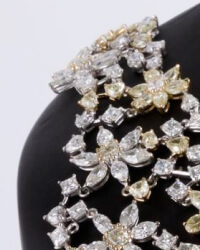
リング - 18 kt. Yellow gold - 8.01ct. tw. Diamond (Lab-grown) - Diamond


01
day
05
hours
55
minutes
18
seconds
Current bid
€ 1
Reserve price not met

 | €1 |
|---|
Catawiki Buyer Protection
Your payment’s safe with us until you receive your object.View details
Trustpilot 4.4 | 141835 reviews
Rated Excellent on Trustpilot.
18 kt yellow gold women’s ring featuring a single lab-grown radiant diamond of 7.02 ct (F, VS1) with 34 surrounding lab-grown diamonds (0.99 ct) for a total of 8.01 ct, total weight 4.3 g, ring size EU 55 / IT 15 / US 7.25, IGI report LG764649673, country of origin Unknown, condition New.
AI-assisted summary
Description from the seller
LG764649673
商品説明
ベルギーの職人技のエレガンスを体験してください — すべてのジュエリーは私たち自身がデザインし制作しており、どれも本当に唯一無二です。
すべてのジュエリーはホールマーク入りで、正確に作られており、上品なパッケージ箱に入れてお届けします。
迅速な対応と発送を誇りに思っており、すべてのクライアントが品をすぐに美しく受け取れるよう努めています。
⸻
ご注意
• 入札前にすべての採寸をよくご確認ください。
• サイズ直しのご依頼は購入直後に行ってください。追加料金は50€です。
• 各商品にはベルギーの金ホールマークが付しています。
• 関税および輸入手数料は購入者のご負担です。
• すべての写真は実物を表示しています。入札前に carefully 内容をご確認ください。
• 落札者がキャンセルした場合、発送費と返品の輸入費用は落札者の責任となります。
広告用にAI生成の画像が使用されることがありますが、多くは実物であり、実際着用時の状況を高い精度で示しています。
Seller's Story
Based in Antwerp, Belgium, we are first-hand creators of high-fine jewelry with lab-grown diamonds. With over 30 years of experience in gold and diamonds, every piece is designed and crafted by us in Belgium with exceptional care and precision.
Lab-grown diamonds are identical to natural diamonds in beauty and quality — the only difference is their origin. Being created above ground makes them more accessible and therefore more affordable, without any compromise.
Trusted top sellers known for unique designs, fast shipping, and outstanding service.
Customer support is available six days a week. We are offline on Saturdays and respond to all messages first thing on Sunday.
LG764649673
商品説明
ベルギーの職人技のエレガンスを体験してください — すべてのジュエリーは私たち自身がデザインし制作しており、どれも本当に唯一無二です。
すべてのジュエリーはホールマーク入りで、正確に作られており、上品なパッケージ箱に入れてお届けします。
迅速な対応と発送を誇りに思っており、すべてのクライアントが品をすぐに美しく受け取れるよう努めています。
⸻
ご注意
• 入札前にすべての採寸をよくご確認ください。
• サイズ直しのご依頼は購入直後に行ってください。追加料金は50€です。
• 各商品にはベルギーの金ホールマークが付しています。
• 関税および輸入手数料は購入者のご負担です。
• すべての写真は実物を表示しています。入札前に carefully 内容をご確認ください。
• 落札者がキャンセルした場合、発送費と返品の輸入費用は落札者の責任となります。
広告用にAI生成の画像が使用されることがありますが、多くは実物であり、実際着用時の状況を高い精度で示しています。
Seller's Story
Based in Antwerp, Belgium, we are first-hand creators of high-fine jewelry with lab-grown diamonds. With over 30 years of experience in gold and diamonds, every piece is designed and crafted by us in Belgium with exceptional care and precision.
Lab-grown diamonds are identical to natural diamonds in beauty and quality — the only difference is their origin. Being created above ground makes them more accessible and therefore more affordable, without any compromise.
Trusted top sellers known for unique designs, fast shipping, and outstanding service.
Customer support is available six days a week. We are offline on Saturdays and respond to all messages first thing on Sunday.
Details
時代
After 2000
サイドストーンのシェイプ
Mixed shape
無料サイズ直し可
いいえ'
Total carat weight of all stones
8.01
鑑定書
International Gemological Institute (IGI)
鑑定書番号
LG764649673
Diamond type of main stone
Lab-grown
Diamond type of surrounding stones
Lab-grown
メインストーンのダイヤモンドカラーグレード
F
サイドストーンのカッティングスタイル
Brilliant cut
純度
18 kt.
ブランドジュエリー
いいえ'
Number of diamonds surrounding stones
34
Number of diamonds main stone
1
金属
Yellow gold
サイドストーンの総カラット重量
0.99
メインストーンの総カラット重量
7.02
メインストーン
Diamond
メインストーンのダイヤモンドクラリティグレード
VS1
サイドストーン
Diamond
総重量
4.3 g
コンディション
New
原産国
Unknown
性別
Women
メインストーンのシェイプ
Radiant
Cutting style of main stone
Modified brilliant cut
リングサイズ
55 (EU) / 15 (IT) / 7 ¼ (US)
Sold by
Disclaimer
Catawiki always aims to offer you the best possible buying experience. Our experts virtually review and select every object in line with our submission guidelines. While we strive to provide a detailed description and photographs of each jewellery object, discrepancies or inaccuracies may occur. It is your responsibility to review all of the information provided about an object, including the condition and description, before placing an order. Sellers are responsible for the information, pictures and description provided, including the quality, quantity and nature of the jewellery supplied. A small imperfection that cannot be seen in the photo but is included in the description is not a non-conformity. What are lab-grown diamonds? Lab-grown diamonds are diamonds produced by scientists using technology that recreates the conditions under which diamonds form deep in the earth. A lab-grown diamond is chemically, physically, and optically identical to diamonds that formed naturally - the only factor that makes them different from a natural diamond is that they originate from a lab. For that reason, lab-grown diamonds cannot be considered ‘rare’ or ‘unique’ and as such they represent a more affordable option when compared to natural diamonds and are valued at a considerably lower price per carat. Due to their availability and evolving market dynamics, lab-grown diamonds may not retain value over time and typically do not carry much resale value. A Laboratory Report is not a guarantee, valuation or appraisal regarding the articles described therein. A Laboratory Report contains only the characteristics of an article described after it has been graded, tested, examined, and analysed using the techniques and equipment used at the time of the examination from that specific Gemological Laboratory. The results of any other examination performed on the article may differ depending when, how, by whom and with which grading standard the article is examined. In addition, any changes and improvements in techniques and equipment that may have occurred which may enable the examiner to detect, among other things, the use of processes for altering the characteristics of an article which use was previously undetectable, does not automatically mean the object does not conform to its description.
Catawiki always aims to offer you the best possible buying experience. Our experts virtually review and select every object in line with our submission guidelines. While we strive to provide a detailed description and photographs of each jewellery object, discrepancies or inaccuracies may occur. It is your responsibility to review all of the information provided about an object, including the condition and description, before placing an order. Sellers are responsible for the information, pictures and description provided, including the quality, quantity and nature of the jewellery supplied. A small imperfection that cannot be seen in the photo but is included in the description is not a non-conformity. What are lab-grown diamonds? Lab-grown diamonds are diamonds produced by scientists using technology that recreates the conditions under which diamonds form deep in the earth. A lab-grown diamond is chemically, physically, and optically identical to diamonds that formed naturally - the only factor that makes them different from a natural diamond is that they originate from a lab. For that reason, lab-grown diamonds cannot be considered ‘rare’ or ‘unique’ and as such they represent a more affordable option when compared to natural diamonds and are valued at a considerably lower price per carat. Due to their availability and evolving market dynamics, lab-grown diamonds may not retain value over time and typically do not carry much resale value. A Laboratory Report is not a guarantee, valuation or appraisal regarding the articles described therein. A Laboratory Report contains only the characteristics of an article described after it has been graded, tested, examined, and analysed using the techniques and equipment used at the time of the examination from that specific Gemological Laboratory. The results of any other examination performed on the article may differ depending when, how, by whom and with which grading standard the article is examined. In addition, any changes and improvements in techniques and equipment that may have occurred which may enable the examiner to detect, among other things, the use of processes for altering the characteristics of an article which use was previously undetectable, does not automatically mean the object does not conform to its description.