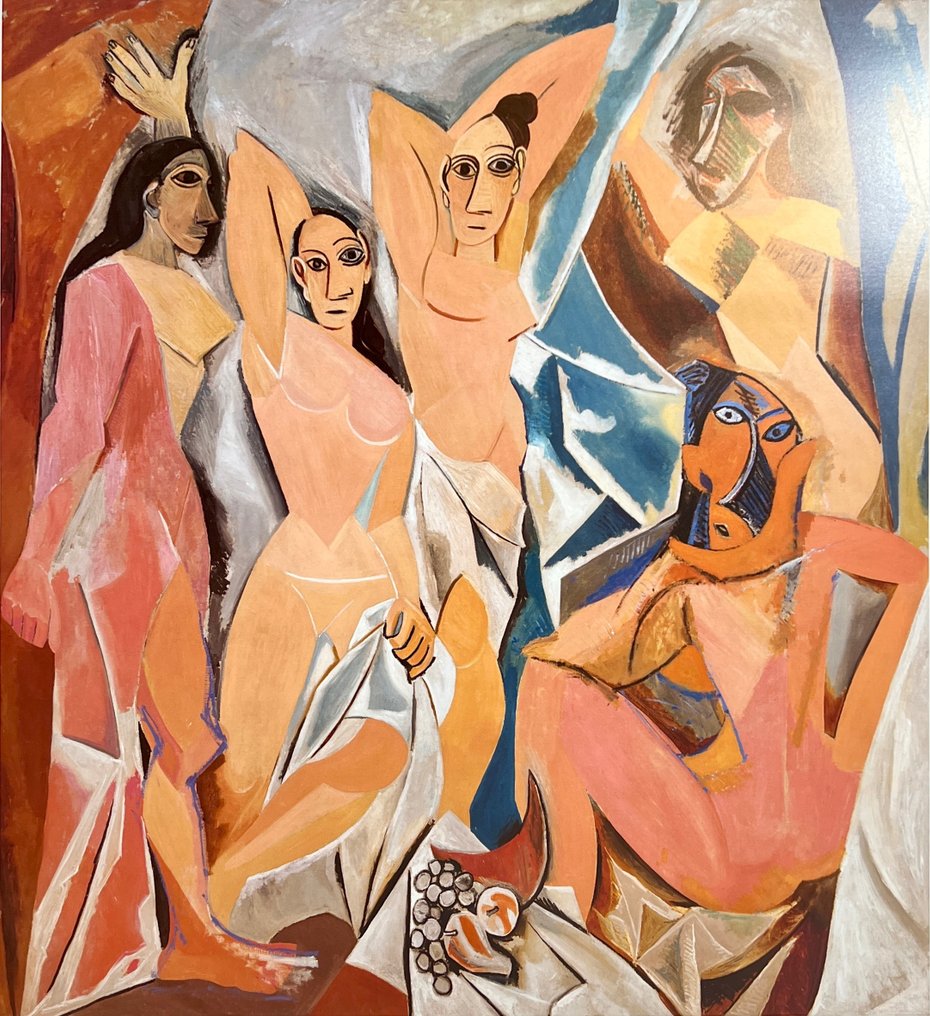
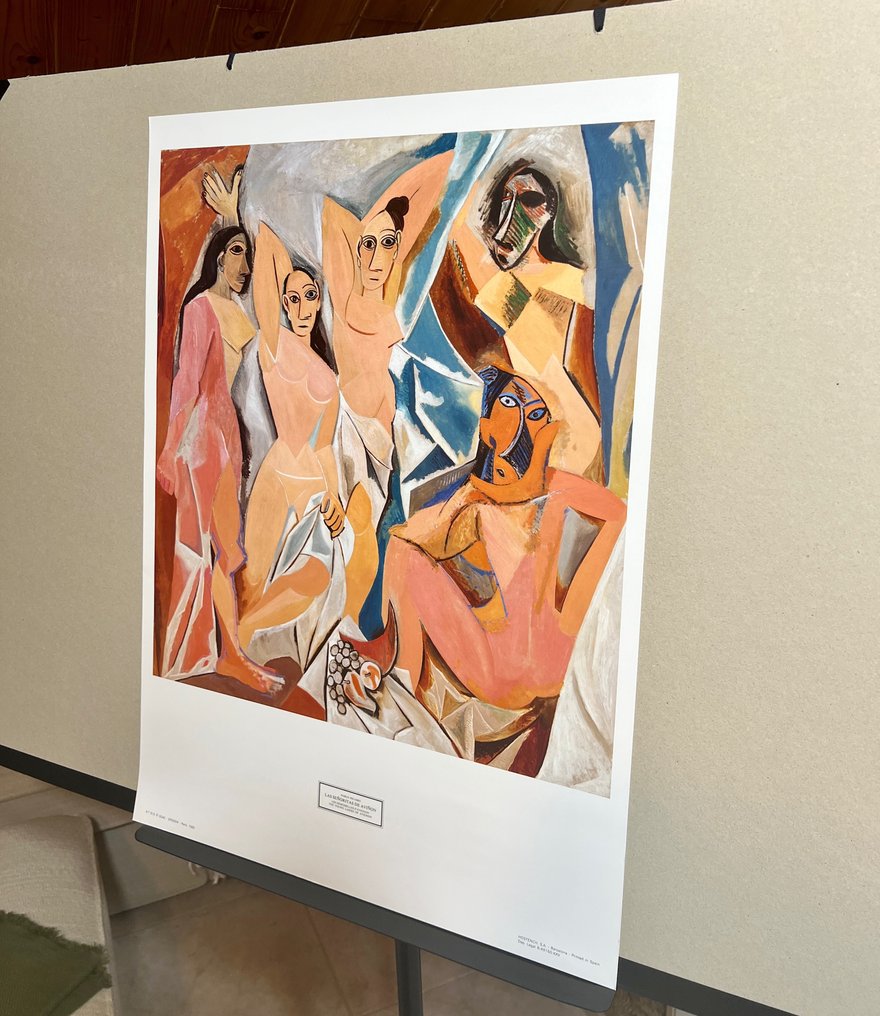
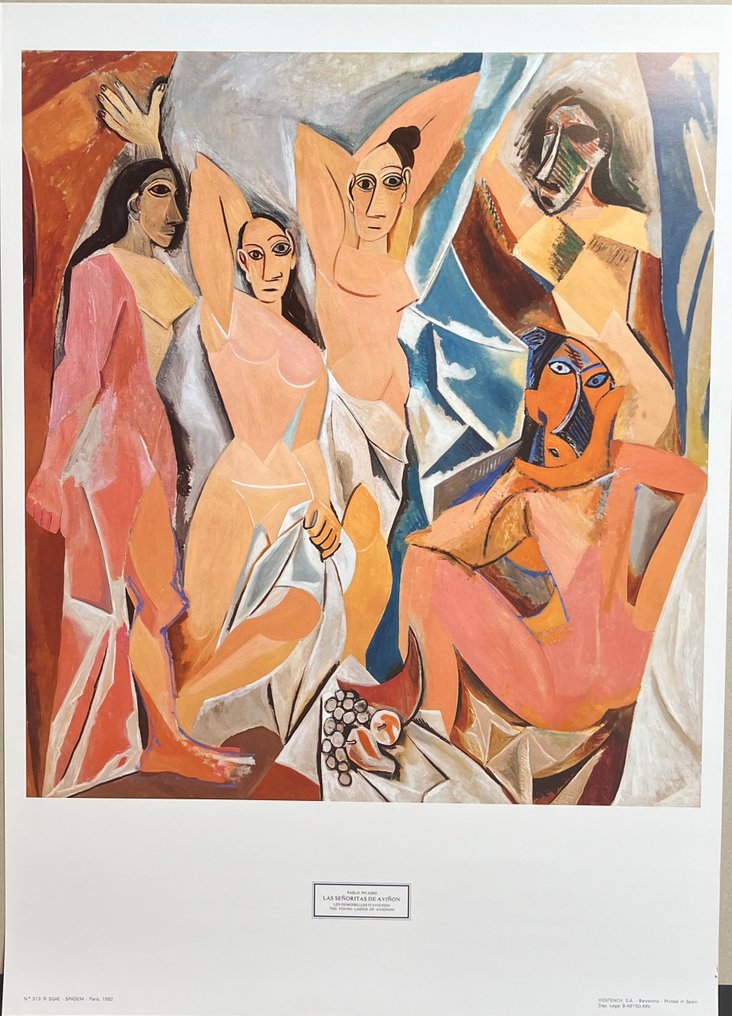
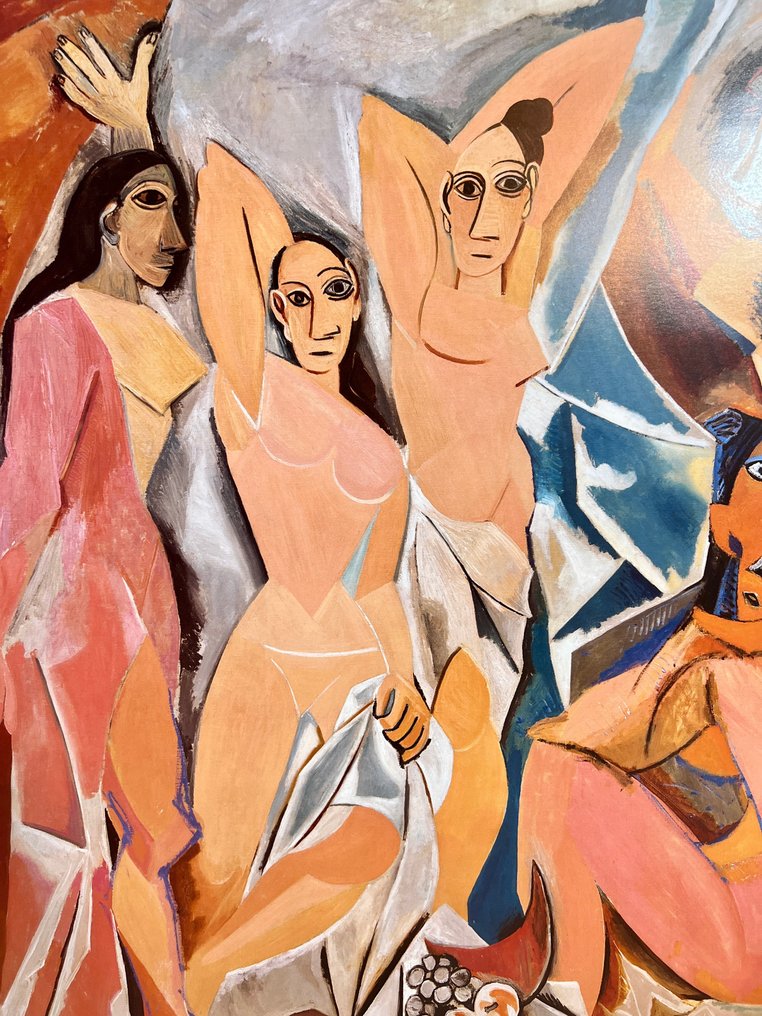
Pablo Picasso (after) - Las señoritas de Aviñon - 1980s

06
days
07
hours
14
minutes
34
seconds

No bids placed
Catawiki Buyer Protection
Your payment’s safe with us until you receive your object.View details
Trustpilot 4.4 | 143038 reviews
Rated Excellent on Trustpilot.
Description from the seller
Author: パブロ・ピカソ
Title: アヴィニョンの娘たち
Date of painting 1907
Size: 70 x 50 cm
Fine art offset print made on thick 240g, high-quality paper. Displays a vivid and sharp image.
Copyright: Nº 313 SGAE - SPADEM. Paris 1982. Printed in Barcelona
New to frame.
Shipping in a rigid tube via certified express mail.
It is possible to collect more than one object, from the same auction, in the same shipment.
Les Demoiselles d’Avignon, was painted in 1907 and can be considered the first Cubist painting. A year later, Cubism would develop into a legendary movement under the guide of Picasso and Georges Braque.
Picasso had always referred to it as Le Bordel d'Avignon, but art critic Andre Salmon, who managed its first exhibition, renamed it Les Demoiselles d'Avignon to reduce its outrageous effect on general society. Picasso never liked Salmon's title, and as a compromise would have preferred “Las chicas de Avignon” instead.
The work, part of the permanent collection of the Museum of Modern Art, portrays five nude female prostitutes in a brothel on Carrer d'Avinyó, a street in Barcelona, Spain.
Author: パブロ・ピカソ
Title: アヴィニョンの娘たち
Date of painting 1907
Size: 70 x 50 cm
Fine art offset print made on thick 240g, high-quality paper. Displays a vivid and sharp image.
Copyright: Nº 313 SGAE - SPADEM. Paris 1982. Printed in Barcelona
New to frame.
Shipping in a rigid tube via certified express mail.
It is possible to collect more than one object, from the same auction, in the same shipment.
Les Demoiselles d’Avignon, was painted in 1907 and can be considered the first Cubist painting. A year later, Cubism would develop into a legendary movement under the guide of Picasso and Georges Braque.
Picasso had always referred to it as Le Bordel d'Avignon, but art critic Andre Salmon, who managed its first exhibition, renamed it Les Demoiselles d'Avignon to reduce its outrageous effect on general society. Picasso never liked Salmon's title, and as a compromise would have preferred “Las chicas de Avignon” instead.
The work, part of the permanent collection of the Museum of Modern Art, portrays five nude female prostitutes in a brothel on Carrer d'Avinyó, a street in Barcelona, Spain.
Details
時代
1900-2000
デザイナー/アーティスト
Pablo Picasso (after)
ポスタータイトル
Las señoritas de Aviñon
主題
Cubism
推定年代
1980s
原産国
Spain
コンディション
A (excellent - mint condition)
アイテム数
1
高さ
70 cm
幅
50 cm