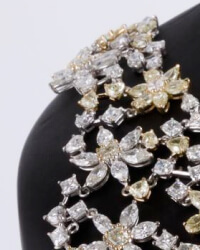
ブレスレット - 14 kt. White gold - 9.21ct. tw. Diamond (Lab-grown) - 交互の丸いブレスレット


01
day
08
hours
43
minutes
34
seconds
Current bid
€ 3
Reserve price not met

 | €3 | |
|---|---|---|
 | €2 | |
| €1 |
Catawiki Buyer Protection
Your payment’s safe with us until you receive your object.View details
Trustpilot 4.4 | 145879 reviews
Rated Excellent on Trustpilot.
This 14-carat white-gold bracelet features 35 round brilliant-cut, lab-grown diamonds totalling 9.21 carats, graded E–F in colour and VVS–VS in clarity, with IGI report 65J6851326.
AI-assisted summary
Description from the seller
ジュエリー仕様の内訳
貴金属: 14Kホワイトゴールド(金含有量58.3%)
総重量: 11.68g(ゴールドの取り付け部とダイヤモンドを含む)
ダイヤモンド数: 35点
ダイヤモンドの形状・カット: ラウンド・ブリリアント
総カラット重量(TCW): 9.21ct 総計(1石あたり約0.26ct)
ダイヤモンドカラー範囲: E–F(無色グレード、非常に明るい白色)
ダイヤモンドクラリティ範囲: VVS–VS(Very Very Slightly Included 〜 Very Slightly Included、肉眼で清浄、10倍拡大で卓越した透明度)
主な刻印と書類
HUID (L9WSD9): インド標準局(BIS)によって発行された金属の真偽・純度を追跡するユニークな英数字のホールマーク識別番号。
IGI認証番号 (65J6851326): 国際宝石学研究所(IGI)からのユニークな報告識別子。65J6851326をIGIのレポート検証ポータルで入力して、完全な等級報告を直接確認できます。
購入者向けの重要情報:
1. 税関・輸入手数料:
○ お住まいの国によって追加の関税・輸入手数料が課されることがあります。これらの費用は買い手の責任で負担されます。
○ 石の価格にはVATは含まれていません。税率は国の法令によって決まります。
○ VATの支払い方法? 配達時に宅配業者へVATを直接お支払いください。
2. 国別情報:
○ フランス&ポルトガル: 現地の税関ブローカーを通じて取り扱われた場合のみ、輸入されたルースダイヤモンド(宝石)を税関が通関します。ブローカーフィーは Lot の価格に含まれておらず、別途支払いが必要です。
○ ベルギー: ベルギーへルースダイヤモンドを輸入するには、ライセンスを取得し、Diamond Officeに登録している必要があります。
2. 落札者によるキャンセル/取り消し:
○ 返品の場合、VAT・送料・関税は返金されません。返品時に発生するすべての費用は買い手の責任となります。
Seller's Story
C. Dineshでは、想像を超えるダイヤモンドの提供を信条としています。私たちは、長いコレクションの中で特に注目のプレミアムなオールド・マイン・カットの最新在庫をお届けできることを嬉しく思います。アンティークおよびヴィンテージカットの充実したコレクションのハイライトです。
0.30 ct から 25.00 ct までの1石をお探しの場合や、完璧なレイアウトとペアをお求めの場合も、要望を満たす在庫を揃えています。私たちは、独自の比率とデザインに特化したカスタムカット「Make to Order」プログラムも専門としており、特にお客様のニーズに合わせて対応します。
Translated by Google Translateジュエリー仕様の内訳
貴金属: 14Kホワイトゴールド(金含有量58.3%)
総重量: 11.68g(ゴールドの取り付け部とダイヤモンドを含む)
ダイヤモンド数: 35点
ダイヤモンドの形状・カット: ラウンド・ブリリアント
総カラット重量(TCW): 9.21ct 総計(1石あたり約0.26ct)
ダイヤモンドカラー範囲: E–F(無色グレード、非常に明るい白色)
ダイヤモンドクラリティ範囲: VVS–VS(Very Very Slightly Included 〜 Very Slightly Included、肉眼で清浄、10倍拡大で卓越した透明度)
主な刻印と書類
HUID (L9WSD9): インド標準局(BIS)によって発行された金属の真偽・純度を追跡するユニークな英数字のホールマーク識別番号。
IGI認証番号 (65J6851326): 国際宝石学研究所(IGI)からのユニークな報告識別子。65J6851326をIGIのレポート検証ポータルで入力して、完全な等級報告を直接確認できます。
購入者向けの重要情報:
1. 税関・輸入手数料:
○ お住まいの国によって追加の関税・輸入手数料が課されることがあります。これらの費用は買い手の責任で負担されます。
○ 石の価格にはVATは含まれていません。税率は国の法令によって決まります。
○ VATの支払い方法? 配達時に宅配業者へVATを直接お支払いください。
2. 国別情報:
○ フランス&ポルトガル: 現地の税関ブローカーを通じて取り扱われた場合のみ、輸入されたルースダイヤモンド(宝石)を税関が通関します。ブローカーフィーは Lot の価格に含まれておらず、別途支払いが必要です。
○ ベルギー: ベルギーへルースダイヤモンドを輸入するには、ライセンスを取得し、Diamond Officeに登録している必要があります。
2. 落札者によるキャンセル/取り消し:
○ 返品の場合、VAT・送料・関税は返金されません。返品時に発生するすべての費用は買い手の責任となります。
Seller's Story
C. Dineshでは、想像を超えるダイヤモンドの提供を信条としています。私たちは、長いコレクションの中で特に注目のプレミアムなオールド・マイン・カットの最新在庫をお届けできることを嬉しく思います。アンティークおよびヴィンテージカットの充実したコレクションのハイライトです。
0.30 ct から 25.00 ct までの1石をお探しの場合や、完璧なレイアウトとペアをお求めの場合も、要望を満たす在庫を揃えています。私たちは、独自の比率とデザインに特化したカスタムカット「Make to Order」プログラムも専門としており、特にお客様のニーズに合わせて対応します。
Translated by Google TranslateDetails
時代
2000年以降
Total carat weight of all stones
9.21
鑑定書
国際宝石学会(IGI)
鑑定書番号
65J6851326
メインストーンのダイヤモンドの種類
人工
メインストーンのダイヤモンドカラーグレード
E, F
金属
ホワイトゴールド
純度
14金
ブランドジュエリー
いいえ'
Number of diamonds main stone
35
メインストーン
ダイヤモンド
メインストーンの総カラット重量
9.21
メインストーンのダイヤモンドクラリティグレード
VS1, VS2, VVS1, VVS2
総重量
11.68 g
コンディション
新品
原産国
インド
性別
女性
タイトル補足情報
Alternating Round Bracele
メインストーンのシェイプ
ラウンド
メインストーンのカッティングスタイル
ブリリアントカット
内周
7 in
Sold by
Disclaimer
Catawiki always aims to offer you the best possible buying experience. Our experts virtually review and select every object in line with our submission guidelines. While we strive to provide a detailed description and photographs of each jewellery object, discrepancies or inaccuracies may occur. It is your responsibility to review all of the information provided about an object, including the condition and description, before placing an order. Sellers are responsible for the information, pictures and description provided, including the quality, quantity and nature of the jewellery supplied. A small imperfection that cannot be seen in the photo but is included in the description is not a non-conformity. What are lab-grown diamonds? Lab-grown diamonds are diamonds produced by scientists using technology that recreates the conditions under which diamonds form deep in the earth. A lab-grown diamond is chemically, physically, and optically identical to diamonds that formed naturally - the only factor that makes them different from a natural diamond is that they originate from a lab. For that reason, lab-grown diamonds cannot be considered ‘rare’ or ‘unique’ and as such they represent a more affordable option when compared to natural diamonds and are valued at a considerably lower price per carat. Due to their availability and evolving market dynamics, lab-grown diamonds may not retain value over time and typically do not carry much resale value. A Laboratory Report is not a guarantee, valuation or appraisal regarding the articles described therein. A Laboratory Report contains only the characteristics of an article described after it has been graded, tested, examined, and analysed using the techniques and equipment used at the time of the examination from that specific Gemological Laboratory. The results of any other examination performed on the article may differ depending when, how, by whom and with which grading standard the article is examined. In addition, any changes and improvements in techniques and equipment that may have occurred which may enable the examiner to detect, among other things, the use of processes for altering the characteristics of an article which use was previously undetectable, does not automatically mean the object does not conform to its description.
Catawiki always aims to offer you the best possible buying experience. Our experts virtually review and select every object in line with our submission guidelines. While we strive to provide a detailed description and photographs of each jewellery object, discrepancies or inaccuracies may occur. It is your responsibility to review all of the information provided about an object, including the condition and description, before placing an order. Sellers are responsible for the information, pictures and description provided, including the quality, quantity and nature of the jewellery supplied. A small imperfection that cannot be seen in the photo but is included in the description is not a non-conformity. What are lab-grown diamonds? Lab-grown diamonds are diamonds produced by scientists using technology that recreates the conditions under which diamonds form deep in the earth. A lab-grown diamond is chemically, physically, and optically identical to diamonds that formed naturally - the only factor that makes them different from a natural diamond is that they originate from a lab. For that reason, lab-grown diamonds cannot be considered ‘rare’ or ‘unique’ and as such they represent a more affordable option when compared to natural diamonds and are valued at a considerably lower price per carat. Due to their availability and evolving market dynamics, lab-grown diamonds may not retain value over time and typically do not carry much resale value. A Laboratory Report is not a guarantee, valuation or appraisal regarding the articles described therein. A Laboratory Report contains only the characteristics of an article described after it has been graded, tested, examined, and analysed using the techniques and equipment used at the time of the examination from that specific Gemological Laboratory. The results of any other examination performed on the article may differ depending when, how, by whom and with which grading standard the article is examined. In addition, any changes and improvements in techniques and equipment that may have occurred which may enable the examiner to detect, among other things, the use of processes for altering the characteristics of an article which use was previously undetectable, does not automatically mean the object does not conform to its description.