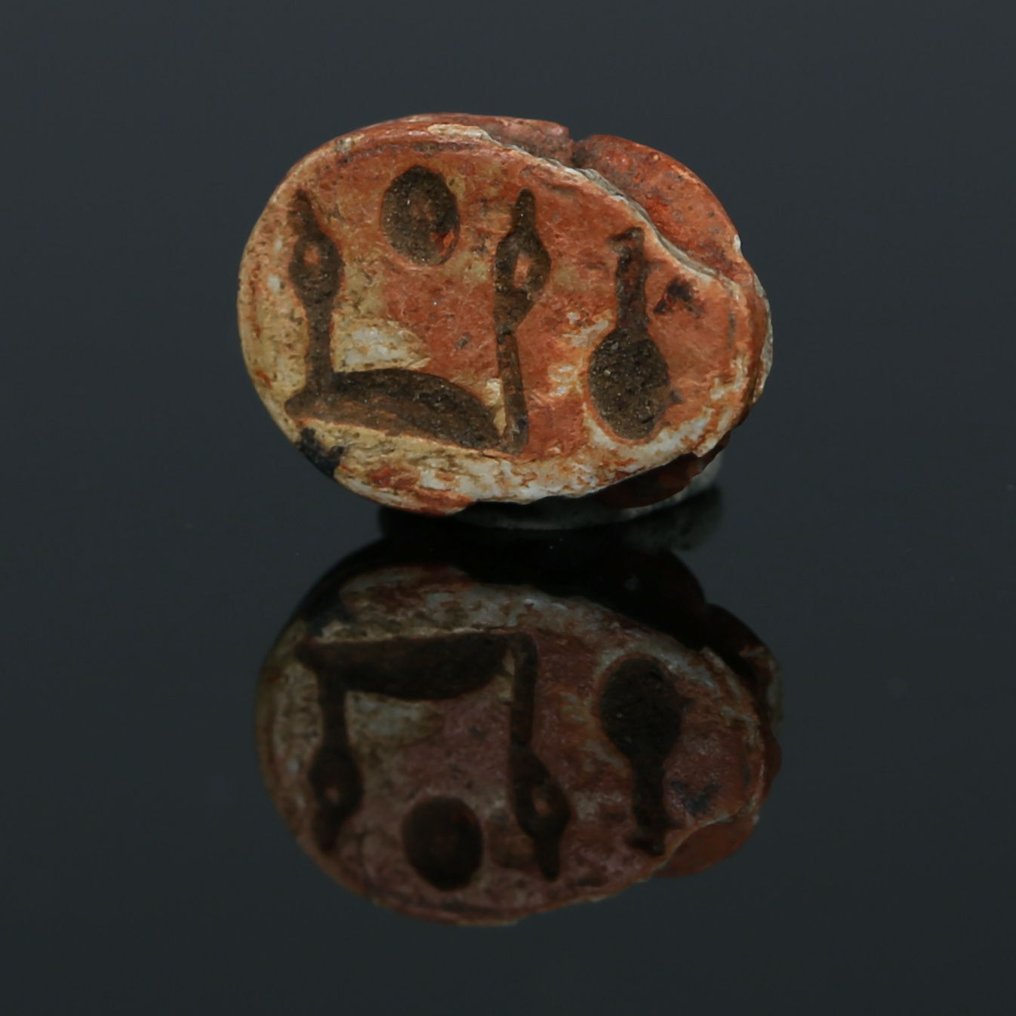
古埃及,第三中间期 滑石 尼弗卡雷的甲虫,来自博物馆。西班牙出口许可证。




03
天
16
小时
32
分钟
35
秒

15名其他人正在关注此物品
 竞买人 3948 竞买人 3948 | €52 | |
|---|---|---|
| 竞买人 3948 | €46 | |
| 竞买人 3948 | €41 | |
Catawiki买家保障
在您收到物品之前,您的付款将在我们这里受到安全保管。查看详细信息
Trustpilot 4.4分 | 128679条评论
在Trustpilot上被评为优秀。
Neferkare 职骶甲蝣,来自第三中期、25王朝(公元前713–公元前698年)的真正 steatite 脸板蝎,尺寸为7 mm×11 mm,状况良好,来源自 Ex Museum,附有真实性证书与出口许可。
AI辅助摘要
卖家的描述
ITEM: 内费尔卡雷圣甲虫
MATERIAL: 皂石
CULTURE: 埃及
PERIOD: 第三中期,25王朝,公元前713 - 698年
DIMENSIONS: 7 mm x 11 mm
CONDITION: 品相良好
PROVENANCE: 来自德国 Arbeitsgruppe für Biblische Archäologie 博物馆展览品(Deaccession)
Comes with Certificate of Authenticity and Export license
If you bid outside the european union and win the item, we will have to apply for an export licence for your country and shipping will take 3 to 5 weeks.
The Scarab of Pharaoh Shabako, identified by his prenomen (throne name) Neferkare, serves as an important artifact connecting the Kushite rulers of the 25th Dynasty to the ancient traditions of Egyptian kingship. Shabako, who reigned approximately from 713–698 B.C., was a Nubian pharaoh who successfully consolidated Kushite control over the whole of Egypt, reviving many old Egyptian customs and commissioning extensive building works. The appearance of his royal name, Neferkare ("Beautiful is the Soul of Re"), on a scarab is significant because the scarab beetle itself was a potent symbol of the sun god Khepri, representing rebirth, regeneration, and the daily cycle of the sun. By inscribing his name onto this powerful amulet, Shabako not only reinforced his divine authority but also firmly positioned himself as a legitimate successor to the pharaohs of Egypt's glorious past, even adopting the prenomen of the Sixth Dynasty ruler Pepi II.
Shabako’s royal-name scarabs were typically crafted from materials like hematite, blue faience, or glazed steatite and were small, worn as protective amulets, personal seals, or integrated into jewelry. These scarabs played a crucial dual role: they served a practical administrative function as seals, confirming royal decree or ownership, and an apotropaic, ritual function, providing protection and guaranteeing the pharaoh's success and eternal existence. Notably, the 25th Dynasty revived the tradition of creating large, commemorative scarabs—a practice originally associated with the powerful New Kingdom pharaoh Amenhotep III. These larger pieces were often used to advertise major royal achievements, such as military victories, thereby functioning as important political and diplomatic propaganda across the empire.
The legacy of the Neferkare Shabako scarab lies in its ability to embody the political and cultural agenda of the 25th Dynasty. As Kushites, these rulers needed to visibly demonstrate their piety and commitment to Egyptian state religion to secure the support of the influential Egyptian clergy and populace. By producing numerous artifacts like the royal-name scarabs, often mimicking classical Egyptian styles while maintaining their distinct Kushite identity, Shabako cemented the legitimacy of his rule over both the Delta and the Thebais. These ubiquitous small objects, recovered widely across Egypt and the Levant, confirm the extent of his consolidated control and his successful adoption of the millennia-old symbols of Egyptian royal power and divine protection.
#CollectorsFairMarch2026
卖家故事
您的古董商提供古代艺术品和古钱币。我们的主要目标是以最优惠的价格提供最高的质量,尊重并严格遵守遗产保护法和联合国教科文组织遗产规范。因此,出版的作品全部来自可查出处的私人收藏或国际拍卖。我们所有的古物和硬币都附有真品证书。我们有 90 天无条件退货政策。在 Your Antiquarian,我们致力于帮助弱势群体,因此每次购买的产品都会捐赠一部分给慈善机构,以帮助有需要的人。
使用Google翻译翻译ITEM: 内费尔卡雷圣甲虫
MATERIAL: 皂石
CULTURE: 埃及
PERIOD: 第三中期,25王朝,公元前713 - 698年
DIMENSIONS: 7 mm x 11 mm
CONDITION: 品相良好
PROVENANCE: 来自德国 Arbeitsgruppe für Biblische Archäologie 博物馆展览品(Deaccession)
Comes with Certificate of Authenticity and Export license
If you bid outside the european union and win the item, we will have to apply for an export licence for your country and shipping will take 3 to 5 weeks.
The Scarab of Pharaoh Shabako, identified by his prenomen (throne name) Neferkare, serves as an important artifact connecting the Kushite rulers of the 25th Dynasty to the ancient traditions of Egyptian kingship. Shabako, who reigned approximately from 713–698 B.C., was a Nubian pharaoh who successfully consolidated Kushite control over the whole of Egypt, reviving many old Egyptian customs and commissioning extensive building works. The appearance of his royal name, Neferkare ("Beautiful is the Soul of Re"), on a scarab is significant because the scarab beetle itself was a potent symbol of the sun god Khepri, representing rebirth, regeneration, and the daily cycle of the sun. By inscribing his name onto this powerful amulet, Shabako not only reinforced his divine authority but also firmly positioned himself as a legitimate successor to the pharaohs of Egypt's glorious past, even adopting the prenomen of the Sixth Dynasty ruler Pepi II.
Shabako’s royal-name scarabs were typically crafted from materials like hematite, blue faience, or glazed steatite and were small, worn as protective amulets, personal seals, or integrated into jewelry. These scarabs played a crucial dual role: they served a practical administrative function as seals, confirming royal decree or ownership, and an apotropaic, ritual function, providing protection and guaranteeing the pharaoh's success and eternal existence. Notably, the 25th Dynasty revived the tradition of creating large, commemorative scarabs—a practice originally associated with the powerful New Kingdom pharaoh Amenhotep III. These larger pieces were often used to advertise major royal achievements, such as military victories, thereby functioning as important political and diplomatic propaganda across the empire.
The legacy of the Neferkare Shabako scarab lies in its ability to embody the political and cultural agenda of the 25th Dynasty. As Kushites, these rulers needed to visibly demonstrate their piety and commitment to Egyptian state religion to secure the support of the influential Egyptian clergy and populace. By producing numerous artifacts like the royal-name scarabs, often mimicking classical Egyptian styles while maintaining their distinct Kushite identity, Shabako cemented the legitimacy of his rule over both the Delta and the Thebais. These ubiquitous small objects, recovered widely across Egypt and the Levant, confirm the extent of his consolidated control and his successful adoption of the millennia-old symbols of Egyptian royal power and divine protection.
#CollectorsFairMarch2026
卖家故事
您的古董商提供古代艺术品和古钱币。我们的主要目标是以最优惠的价格提供最高的质量,尊重并严格遵守遗产保护法和联合国教科文组织遗产规范。因此,出版的作品全部来自可查出处的私人收藏或国际拍卖。我们所有的古物和硬币都附有真品证书。我们有 90 天无条件退货政策。在 Your Antiquarian,我们致力于帮助弱势群体,因此每次购买的产品都会捐赠一部分给慈善机构,以帮助有需要的人。
使用Google翻译翻译详细资料
文化
古埃及,第三中间期
世纪/时段
25th Dynasty, 713 - 698 B.C
Name of object
Scarab of Neferkare, Ex MUSEUM. Spanish Export License.
获得来源
私人收藏
获得年份
2025
材质
滑石
获得国家
德国
状态
好
前任拥有者获得来源
古董市场
前任拥有者获得年份
1990
前任拥有者获得国家
德国
我确认我合法获得此物品,并且我有权将它出售
是的
真伪
原始的/正式的
免责声明
卖家已就文件要求收到了Catawiki的通知并保证以下内容: - 该物品是合法获得的, - 卖家有权出售和/或出口该物品(如适用), - 卖家将提供必要的出处或来源地信息,并根据当地法律安排所需的文件和许可证/执照, - 如果在获取许可证/执照方面出现任何延误,卖家将通知买家。 出价竞投,表明您知晓根据您居住的国家和地区可能会被需要提供进口文件,以及获得许可证/执照可能会导致物品交付的延迟。
卖家已就文件要求收到了Catawiki的通知并保证以下内容: - 该物品是合法获得的, - 卖家有权出售和/或出口该物品(如适用), - 卖家将提供必要的出处或来源地信息,并根据当地法律安排所需的文件和许可证/执照, - 如果在获取许可证/执照方面出现任何延误,卖家将通知买家。 出价竞投,表明您知晓根据您居住的国家和地区可能会被需要提供进口文件,以及获得许可证/执照可能会导致物品交付的延迟。
