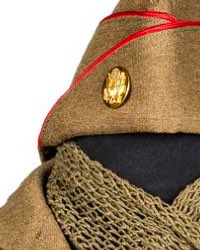
美国第28步兵师 Bloody Bucket - A类夹克 - 带作战步兵徽章 / 受伤 - 军装 - 1942


03
天
09
小时
39
分钟
43
秒

28名其他人正在关注此物品
 竞买人 8838 竞买人 8838 | €150 | |
|---|---|---|
 竞买人 1667 竞买人 1667 | €20 |
Catawiki买家保障
在您收到物品之前,您的付款将在我们这里受到安全保管。查看详细信息
Trustpilot 4.4分 | 128581条评论
在Trustpilot上被评为优秀。
1942年原装美军 Class A 外套,隶属于28th Infantry Division“Bloody Bucket”的一名列兵,带银质战斗步兵徽章,状况良好。
AI辅助摘要
卖家的描述
Nice 100% original Class A Jacket of a private who served with the 28th Infantry ''bloody bucket'' Infantry Division. This unit is famous for its combat during the liberation of France, Germany / Hürtgenwald, Bulge and more (see below). The Class A jacket is in nicely worn condition. He earned a WW2 combat infantry badge (sterling marked), purple heart ribbon, European campaign medal, an american campaign medal, ww2 victory medal. The Class A jacket has a beautiful age patina and is not a depot piece. It is marked with a laundry number in the collar which is neatly written in the jacket, and also the initials, this could be investigated. I have not done any research on him. Merits further research!
A very nice and 100% original class a jacket of a famous Infantry unit that saw heavy combat during WW2!
See also our other interesting WW2 items!
History of the 28th Infantry Division
The 28th Infantry Division pushed east towards the French capital of Paris through the Bocage, its roads littered with abandoned tanks and bloated, stinking corpses of men and animals. In little more than a month after landing at the Normandy beachhead, as part of the Allied invasion of Normandy, the men of the 28th entered Paris and were given the honor of marching down the Champs-Elysées on 29 August 1944 in the hastily arranged Liberation of Paris.
After enjoying a brief respite, absorbing replacements of men and equipment, the division, now commanded by Brigadier General Norman Cota, formerly the Assistant Division Commander (ADC) of the 29th Infantry Division, headed to the German defensive Westwall.
A small night patrol of the 109th Infantry began the division's protracted struggle on the Siegfried Line on the dragon's teeth infested Westwall. The patrol crossed the Our River by bridge from Weiswampach, Luxembourg into Sevenig (Our), Germany, making it the first of the Allied armies to reach German soil.[24] The 28th suffered extremely heavy casualties that autumn in the costly and ill-conceived Battle of Hürtgen Forest (19 September to 16 December 1944); the divisional history conceded "the division accomplished little" in the battle.[25] The campaign was the longest continuous battle the U.S. Army fought in World War II. Finally, a tenuous line along the Our River and Sauer River was held at the end of November, only to be abruptly broken by two panzer divisions, three infantry divisions and one parachute division (including the 352nd Infantry Division and the 5th Parachute Division) in an infantry-tank attack on the "Ridge Road" just west of the Our River on 16 December.[26]
The Ardennes Offensive was launched along the entire divisional front by the 5th Panzer Army led by General der Panzertruppe Hasso von Manteuffel.[27] The 28th, which had sustained heavy casualties in the First Army drive to the Roer, fought doggedly in place using all available personnel and threw off the enemy timetable before withdrawing to Neufchâteau on 22 December for reorganization, as its units had been badly mauled.[28]
At the end of November 1944 a German "pocket" of resistance formed in the French Alsace region centered in the city of Colmar. The Colmar Pocket consisted of a strength of eight German divisions and a brigade of Panzer tanks. Combined forces of French and American armies were initially unsuccessful in closing this pocket.[29]
Battle plans were soon made and, on 19 January, the 28th went into action on the northwestern section of the pocket in the Kaysersberg Valley supporting the beleaguered 3rd Infantry Division, which had been holding there since late November 1944. Despite the bitterly cold conditions, the Allies prevailed. German intelligence knew nothing about the 10th and 28th presence in their sector until they attacked. The 28th advanced westward and pressed steadily toward the city of Colmar. In less than 10 days they reduced the pocket by half and Adolf Hitler gave the order in the early morning of 29 January for a partial retreat of his troops in the northern sector of the pocket. By 2 February, the 28th had cleared Colmar's surrounding areas and the French 5th Armored Division led the way into the town.[31] On 9 February, the final organized German troops in Alsace were pushed back across the Rhine.
The 109th Infantry Regiment received the French Croix de guerre from Charles de Gaulle.[32]
The division was on the front line for 196 days of combat. Francis J. Clark was awarded the Medal of Honor; and 29 Distinguished Service Crosses; 1 DSM; 435 Silver Stars; 27 Legion of Merit; SM - 21; Bronze Star Medal 2,312; AM - 100 were awarded.[33] The division returned to the United States on 2 August 1945 and was inactivated there on 13 December 1945.
卖家故事
我们专注于销售专业的军事规定、专业书籍以及其他军事用品,拥有超过20年的丰富经验。凭借精心挑选的产品系列,我们为收藏家、历史学家、国防专业人士和军事历史爱好者提供服务。我们的产品提供可靠且真实的资料,质量上乘。我们秉持专业、可靠的原则,热爱军事遗产。
使用Google翻译翻译Nice 100% original Class A Jacket of a private who served with the 28th Infantry ''bloody bucket'' Infantry Division. This unit is famous for its combat during the liberation of France, Germany / Hürtgenwald, Bulge and more (see below). The Class A jacket is in nicely worn condition. He earned a WW2 combat infantry badge (sterling marked), purple heart ribbon, European campaign medal, an american campaign medal, ww2 victory medal. The Class A jacket has a beautiful age patina and is not a depot piece. It is marked with a laundry number in the collar which is neatly written in the jacket, and also the initials, this could be investigated. I have not done any research on him. Merits further research!
A very nice and 100% original class a jacket of a famous Infantry unit that saw heavy combat during WW2!
See also our other interesting WW2 items!
History of the 28th Infantry Division
The 28th Infantry Division pushed east towards the French capital of Paris through the Bocage, its roads littered with abandoned tanks and bloated, stinking corpses of men and animals. In little more than a month after landing at the Normandy beachhead, as part of the Allied invasion of Normandy, the men of the 28th entered Paris and were given the honor of marching down the Champs-Elysées on 29 August 1944 in the hastily arranged Liberation of Paris.
After enjoying a brief respite, absorbing replacements of men and equipment, the division, now commanded by Brigadier General Norman Cota, formerly the Assistant Division Commander (ADC) of the 29th Infantry Division, headed to the German defensive Westwall.
A small night patrol of the 109th Infantry began the division's protracted struggle on the Siegfried Line on the dragon's teeth infested Westwall. The patrol crossed the Our River by bridge from Weiswampach, Luxembourg into Sevenig (Our), Germany, making it the first of the Allied armies to reach German soil.[24] The 28th suffered extremely heavy casualties that autumn in the costly and ill-conceived Battle of Hürtgen Forest (19 September to 16 December 1944); the divisional history conceded "the division accomplished little" in the battle.[25] The campaign was the longest continuous battle the U.S. Army fought in World War II. Finally, a tenuous line along the Our River and Sauer River was held at the end of November, only to be abruptly broken by two panzer divisions, three infantry divisions and one parachute division (including the 352nd Infantry Division and the 5th Parachute Division) in an infantry-tank attack on the "Ridge Road" just west of the Our River on 16 December.[26]
The Ardennes Offensive was launched along the entire divisional front by the 5th Panzer Army led by General der Panzertruppe Hasso von Manteuffel.[27] The 28th, which had sustained heavy casualties in the First Army drive to the Roer, fought doggedly in place using all available personnel and threw off the enemy timetable before withdrawing to Neufchâteau on 22 December for reorganization, as its units had been badly mauled.[28]
At the end of November 1944 a German "pocket" of resistance formed in the French Alsace region centered in the city of Colmar. The Colmar Pocket consisted of a strength of eight German divisions and a brigade of Panzer tanks. Combined forces of French and American armies were initially unsuccessful in closing this pocket.[29]
Battle plans were soon made and, on 19 January, the 28th went into action on the northwestern section of the pocket in the Kaysersberg Valley supporting the beleaguered 3rd Infantry Division, which had been holding there since late November 1944. Despite the bitterly cold conditions, the Allies prevailed. German intelligence knew nothing about the 10th and 28th presence in their sector until they attacked. The 28th advanced westward and pressed steadily toward the city of Colmar. In less than 10 days they reduced the pocket by half and Adolf Hitler gave the order in the early morning of 29 January for a partial retreat of his troops in the northern sector of the pocket. By 2 February, the 28th had cleared Colmar's surrounding areas and the French 5th Armored Division led the way into the town.[31] On 9 February, the final organized German troops in Alsace were pushed back across the Rhine.
The 109th Infantry Regiment received the French Croix de guerre from Charles de Gaulle.[32]
The division was on the front line for 196 days of combat. Francis J. Clark was awarded the Medal of Honor; and 29 Distinguished Service Crosses; 1 DSM; 435 Silver Stars; 27 Legion of Merit; SM - 21; Bronze Star Medal 2,312; AM - 100 were awarded.[33] The division returned to the United States on 2 August 1945 and was inactivated there on 13 December 1945.
卖家故事
我们专注于销售专业的军事规定、专业书籍以及其他军事用品,拥有超过20年的丰富经验。凭借精心挑选的产品系列,我们为收藏家、历史学家、国防专业人士和军事历史爱好者提供服务。我们的产品提供可靠且真实的资料,质量上乘。我们秉持专业、可靠的原则,热爱军事遗产。
使用Google翻译翻译详细资料
时代
1900-2000
物品件数
1
军队单位
US 28th Infantry Division Bloody Bucket - Class A jacket - with Combat Infantry Badge / wounded
制造年份
1942
状态
良好状态
真伪
原始的/正式的
经认证
不是