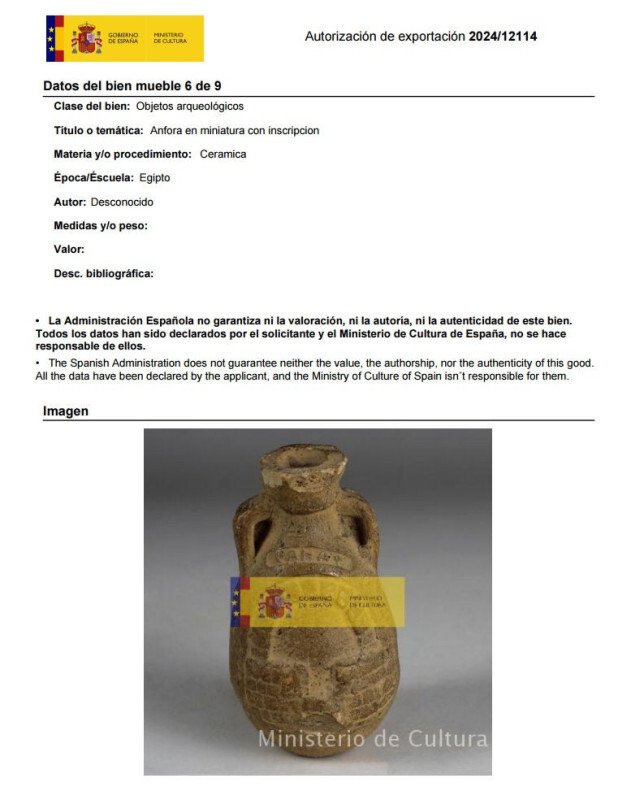
古埃及,希腊-罗马时期 Terracotta 带有烘焙炉的烧瓶,瓶上方刻有“PANAT”。西班牙出口许可证


06
天
04
小时
34
分钟
33
秒

没有出价记录
Catawiki买家保障
在您收到物品之前,您的付款将在我们这里受到安全保管。查看详细信息
Trustpilot 4.4分 | 130595条评论
在Trustpilot上被评为优秀。
埃及希腊化时期的陶土 Flask,具有烤炉图案和 PANAT 字样,时代为公元前2世纪至1世纪,尺寸为69 mm × 37 mm,状况良好,来自私人收藏并含有 Authenticity 证明与出口许可证。
AI辅助摘要
卖家的描述
ITEM: Flask with baker's oven and inscription above 'PANAT'
MATERIAL: Pottery
CULTURE: Egyptian
PERIOD: 2nd - 1st Century B.C
DIMENSIONS: 69 mm x 37 mm
CONDITION: Good condition
PROVENANCE: Ex U.S Gallery, Ex American private collection, acquired before 2000s
Miniature amphoras from the Egyptian Hellenistic period (c. 4th–1st century BCE) were small ceramic vessels that often served as votive offerings, perfume containers, or symbolic representations of larger transport amphoras. These miniature vessels reflect the blending of Greek and Egyptian artistic traditions following Alexander the Great’s conquest and the establishment of the Ptolemaic dynasty. Unlike their full-sized counterparts used for storing wine, oil, or grain, these tiny amphoras were more decorative or ritualistic in function. Their production and distribution across Egypt, particularly in Alexandria and other key trade centers, highlight their role in both domestic and religious contexts.
One intriguing variation of these miniature amphoras features iconography depicting a baker’s oven, a motif associated with sustenance, prosperity, and daily life. The presence of such imagery suggests that these vessels may have been dedicated to deities linked to nourishment and abundance, such as Demeter, the Greek goddess of grain and agriculture, or Isis, who was revered for her protective and nurturing aspects. Bakers and grain merchants may have used these amphoras as offerings in temples or shrines, seeking divine favor for their trade. The imagery of ovens, often stylized in relief or painted onto the vessels, serves as a rare glimpse into the importance of bread production in the Hellenistic economy of Egypt.
Archaeological finds of these miniature amphoras in both temple sites and domestic settings indicate their widespread cultural significance. Some were discovered in funerary contexts, suggesting that they may have played a role in ensuring the deceased’s sustenance in the afterlife. Others were found in association with workshops or market areas, reinforcing their connection to trade and daily commerce. Today, these delicate artifacts, housed in museum collections, provide valuable insights into the intersection of Greek and Egyptian artistic traditions and the economic and religious life of Hellenistic Egypt.
Comes with Certificate of Authenticity and Export license
If you bid outside the European Union and win the item, we will have to apply for an export licence for your country and shipping will take 3 to 5 weeks.
#CollectorsFairMarch2026
卖家故事
您的古董商提供古代艺术品和古钱币。我们的主要目标是以最优惠的价格提供最高的质量,尊重并严格遵守遗产保护法和联合国教科文组织遗产规范。因此,出版的作品全部来自可查出处的私人收藏或国际拍卖。我们所有的古物和硬币都附有真品证书。我们有 90 天无条件退货政策。在 Your Antiquarian,我们致力于帮助弱势群体,因此每次购买的产品都会捐赠一部分给慈善机构,以帮助有需要的人。
使用Google翻译翻译ITEM: Flask with baker's oven and inscription above 'PANAT'
MATERIAL: Pottery
CULTURE: Egyptian
PERIOD: 2nd - 1st Century B.C
DIMENSIONS: 69 mm x 37 mm
CONDITION: Good condition
PROVENANCE: Ex U.S Gallery, Ex American private collection, acquired before 2000s
Miniature amphoras from the Egyptian Hellenistic period (c. 4th–1st century BCE) were small ceramic vessels that often served as votive offerings, perfume containers, or symbolic representations of larger transport amphoras. These miniature vessels reflect the blending of Greek and Egyptian artistic traditions following Alexander the Great’s conquest and the establishment of the Ptolemaic dynasty. Unlike their full-sized counterparts used for storing wine, oil, or grain, these tiny amphoras were more decorative or ritualistic in function. Their production and distribution across Egypt, particularly in Alexandria and other key trade centers, highlight their role in both domestic and religious contexts.
One intriguing variation of these miniature amphoras features iconography depicting a baker’s oven, a motif associated with sustenance, prosperity, and daily life. The presence of such imagery suggests that these vessels may have been dedicated to deities linked to nourishment and abundance, such as Demeter, the Greek goddess of grain and agriculture, or Isis, who was revered for her protective and nurturing aspects. Bakers and grain merchants may have used these amphoras as offerings in temples or shrines, seeking divine favor for their trade. The imagery of ovens, often stylized in relief or painted onto the vessels, serves as a rare glimpse into the importance of bread production in the Hellenistic economy of Egypt.
Archaeological finds of these miniature amphoras in both temple sites and domestic settings indicate their widespread cultural significance. Some were discovered in funerary contexts, suggesting that they may have played a role in ensuring the deceased’s sustenance in the afterlife. Others were found in association with workshops or market areas, reinforcing their connection to trade and daily commerce. Today, these delicate artifacts, housed in museum collections, provide valuable insights into the intersection of Greek and Egyptian artistic traditions and the economic and religious life of Hellenistic Egypt.
Comes with Certificate of Authenticity and Export license
If you bid outside the European Union and win the item, we will have to apply for an export licence for your country and shipping will take 3 to 5 weeks.
#CollectorsFairMarch2026
卖家故事
您的古董商提供古代艺术品和古钱币。我们的主要目标是以最优惠的价格提供最高的质量,尊重并严格遵守遗产保护法和联合国教科文组织遗产规范。因此,出版的作品全部来自可查出处的私人收藏或国际拍卖。我们所有的古物和硬币都附有真品证书。我们有 90 天无条件退货政策。在 Your Antiquarian,我们致力于帮助弱势群体,因此每次购买的产品都会捐赠一部分给慈善机构,以帮助有需要的人。
使用Google翻译翻译详细资料
文化
古埃及,希腊-罗马时期
世纪/时段
2nd - 1st Century B.C
Name of object
Flask with baker's oven and inscription above 'PANAT'. Spanish Export License
获得来源
私人收藏
获得年份
2024
材质
Terracotta
获得国家
美国
状态
好
前任拥有者获得来源
古董市场
前任拥有者获得年份
2000
前任拥有者获得国家
美国
我确认我合法获得此物品,并且我有权将它出售
是的
真伪
原始的/正式的
免责声明
卖家已就文件要求收到了Catawiki的通知并保证以下内容: - 该物品是合法获得的, - 卖家有权出售和/或出口该物品(如适用), - 卖家将提供必要的出处或来源地信息,并根据当地法律安排所需的文件和许可证/执照, - 如果在获取许可证/执照方面出现任何延误,卖家将通知买家。 出价竞投,表明您知晓根据您居住的国家和地区可能会被需要提供进口文件,以及获得许可证/执照可能会导致物品交付的延迟。
卖家已就文件要求收到了Catawiki的通知并保证以下内容: - 该物品是合法获得的, - 卖家有权出售和/或出口该物品(如适用), - 卖家将提供必要的出处或来源地信息,并根据当地法律安排所需的文件和许可证/执照, - 如果在获取许可证/执照方面出现任何延误,卖家将通知买家。 出价竞投,表明您知晓根据您居住的国家和地区可能会被需要提供进口文件,以及获得许可证/执照可能会导致物品交付的延迟。
