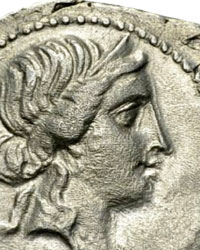
吕基亚同盟. 奥古斯都 (公元前27 -公元 14). Drachm


08
天
00
小时
27
分钟
38
秒

没有出价记录
Catawiki买家保障
在您收到物品之前,您的付款将在我们这里受到安全保管。查看详细信息
Trustpilot 4.4分 | 133888条评论
在Trustpilot上被评为优秀。
莱西亚联盟奥古斯都银德拉克玛(公元前27年–公元14年),正面为M-A,配竖琴与三脚架,背面为右侧裸头,Λ-Υ,重量3.51 g,直径18 mm,轴向12h,未认证。
AI辅助摘要
卖家的描述
★ IMPRESSIVE PORTRAIT ★
LYCIAN LEAGUE. Augustus.(27 BC-AD 14). Drachm.
Rev : Λ-Υ.
Bare head right.
Obv : M-A.
lyre; tripod in right field.
RPC I 3308.
Condition : The coin is in good condition, with visible surface scratches but no significant wear. It has a light gray patina that gives it a soft, matte appearance, which highlights the design without obscuring any of the details.Extremely fine.
Material : Silver.
Axis : 12h
Weight : 3.51 gr
Diameter : 18 mm
The lyre is a stringed instrument widely used in ancient times, particularly significant in Greek and Roman cultures, and often played by poets, bards, and during religious ceremonies. In Greek mythology, the lyre was said to be invented by the god Hermes. He crafted the instrument using a tortoise shell and ox sinew, then gifted it to the god Apollo. Apollo played the lyre alongside the Muses, who were the inspirations for poetry and music, affecting both gods and mortals alike. As a result, the lyre became a symbol of music, poetry, and the arts.
The lyre was a small, portable instrument. It usually had several strings, and its strings could be plucked by hand or with a plectrum. The lyre often had a U-shaped frame with strings stretched across the two sides. The number of strings varied by time and region, but it generally had between five and seven strings. Its sound was soft and soothing, making it suitable for personal performances and musical gatherings in small groups.
The lyre had a wide range of uses. In ancient Greece, educated individuals were expected to learn how to play the lyre as part of their musical education. The instrument was particularly favored by bards who recited Homer’s epics and lyric poetry. In religious ceremonies, the lyre was frequently used to accompany hymns and songs offered to the gods. It was also commonly played during social gatherings, banquets, and feasts.
During the Roman era, the lyre continued to be an important instrument. The Romans admired Greek culture, and this admiration extended to Greek music. Roman poets and bards adopted the Greek lyre to perform their literary works. The lyre also became part of Roman entertainment culture, with performers often playing it at gatherings.
The significance of the lyre in ancient times was not only musical but also symbolic and mythological. Orpheus, a famous mythological figure known for enchanting both gods and creatures of the underworld with his music, played the lyre to perform these miraculous feats. The lyre also gave its name to the Lyra constellation in the sky, which according to myth, was placed in the heavens after Orpheus’s death when his lyre was said to have been immortalized as a starry symbol.
In conclusion, the lyre played a crucial role in the artistic and cultural framework of the ancient world. Its deep roots in mythology, as well as its presence in everyday social life, made the lyre an indispensable symbol of the ancient era. This instrument was not only an expression of music but also a representation of the human soul and cultural heritage.
★ IMPRESSIVE PORTRAIT ★
LYCIAN LEAGUE. Augustus.(27 BC-AD 14). Drachm.
Rev : Λ-Υ.
Bare head right.
Obv : M-A.
lyre; tripod in right field.
RPC I 3308.
Condition : The coin is in good condition, with visible surface scratches but no significant wear. It has a light gray patina that gives it a soft, matte appearance, which highlights the design without obscuring any of the details.Extremely fine.
Material : Silver.
Axis : 12h
Weight : 3.51 gr
Diameter : 18 mm
The lyre is a stringed instrument widely used in ancient times, particularly significant in Greek and Roman cultures, and often played by poets, bards, and during religious ceremonies. In Greek mythology, the lyre was said to be invented by the god Hermes. He crafted the instrument using a tortoise shell and ox sinew, then gifted it to the god Apollo. Apollo played the lyre alongside the Muses, who were the inspirations for poetry and music, affecting both gods and mortals alike. As a result, the lyre became a symbol of music, poetry, and the arts.
The lyre was a small, portable instrument. It usually had several strings, and its strings could be plucked by hand or with a plectrum. The lyre often had a U-shaped frame with strings stretched across the two sides. The number of strings varied by time and region, but it generally had between five and seven strings. Its sound was soft and soothing, making it suitable for personal performances and musical gatherings in small groups.
The lyre had a wide range of uses. In ancient Greece, educated individuals were expected to learn how to play the lyre as part of their musical education. The instrument was particularly favored by bards who recited Homer’s epics and lyric poetry. In religious ceremonies, the lyre was frequently used to accompany hymns and songs offered to the gods. It was also commonly played during social gatherings, banquets, and feasts.
During the Roman era, the lyre continued to be an important instrument. The Romans admired Greek culture, and this admiration extended to Greek music. Roman poets and bards adopted the Greek lyre to perform their literary works. The lyre also became part of Roman entertainment culture, with performers often playing it at gatherings.
The significance of the lyre in ancient times was not only musical but also symbolic and mythological. Orpheus, a famous mythological figure known for enchanting both gods and creatures of the underworld with his music, played the lyre to perform these miraculous feats. The lyre also gave its name to the Lyra constellation in the sky, which according to myth, was placed in the heavens after Orpheus’s death when his lyre was said to have been immortalized as a starry symbol.
In conclusion, the lyre played a crucial role in the artistic and cultural framework of the ancient world. Its deep roots in mythology, as well as its presence in everyday social life, made the lyre an indispensable symbol of the ancient era. This instrument was not only an expression of music but also a representation of the human soul and cultural heritage.
详细资料
时代
1400年之前
文化/地区
Lycian League
统治者
奥古斯都 (公元前27 -公元 14)
面额
Drachm
金属
AR
状态
未评级
重量
2 kg
物品件数
1
描述/主题
History