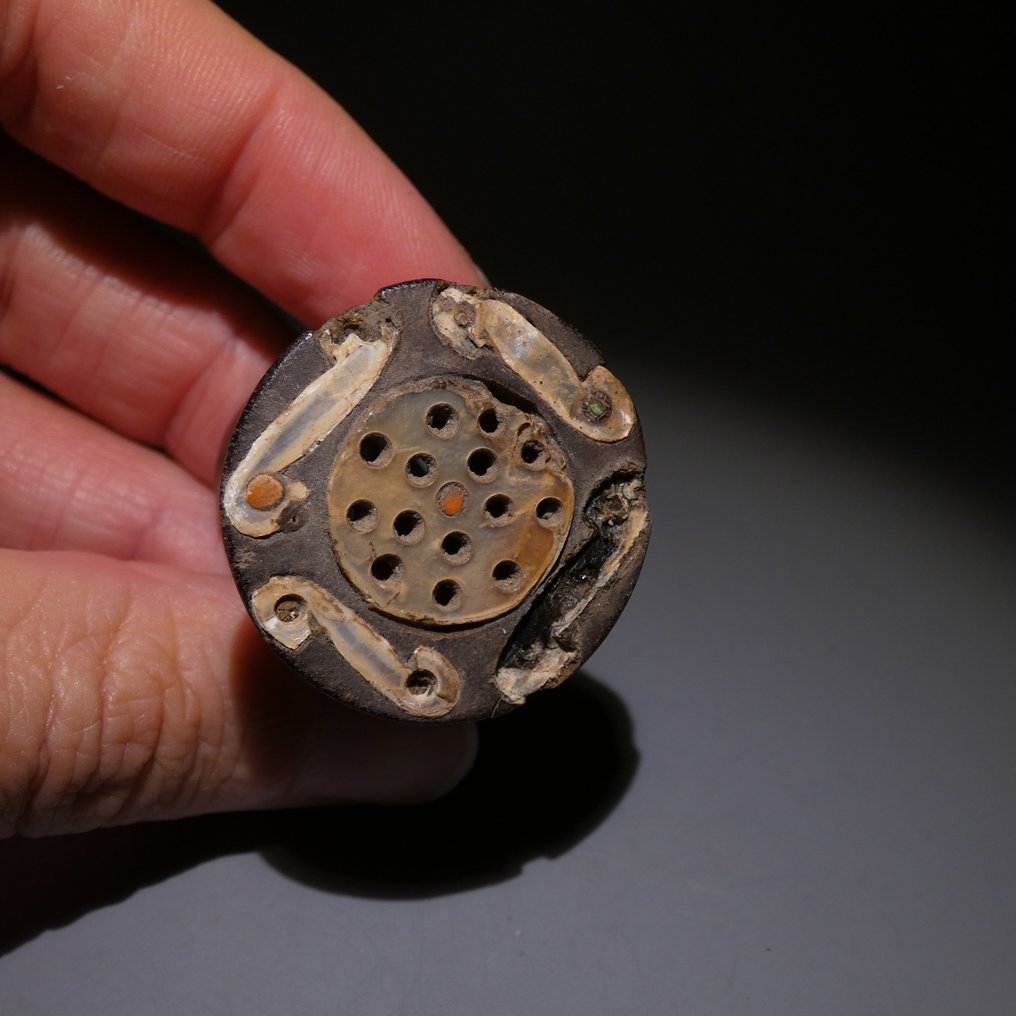
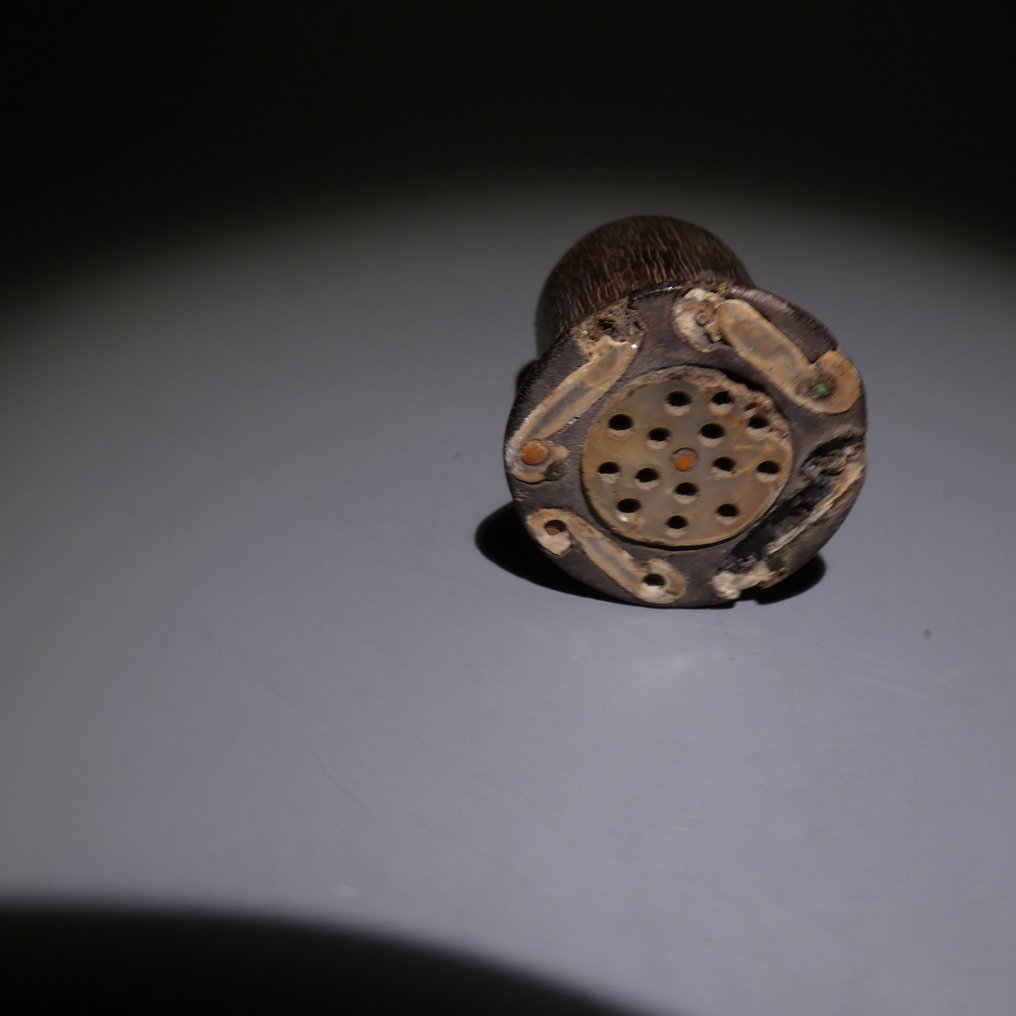
Huari,秘鲁 木, 珠母, Tamba - 耳环。直径 3.1 cm。公元 700–1200。西班牙进口许可证。



01
天
08
小时
51
分钟
19
秒

没有出价记录
Catawiki买家保障
在您收到物品之前,您的付款将在我们这里受到安全保管。查看详细信息
Trustpilot 4.4分 | 134841条评论
在Trustpilot上被评为优秀。
Huari Tamba 耳环,直径3.1厘米,年代约公元700–1200年,木质与母贝制成,2024年从巴黎私人收藏获得,具西班牙进口许可;原件,状况良好。
AI辅助摘要
卖家的描述
Tamba - 耳环
- nice color -
Huari, Perú, 700 - 1200 AD
木材与母贝。
DIMENSIONS: 3.1 x 3.1 cm
PROVENANCE:
- Private collection, Paris, France, since 1970.
- Thence by descent, until 2024 to public auction.
- Spanish import/export license.
CONDITION: Good condition, see photos.
The capital of the Huari / Wari Empire was located in the highlands of Southern Peru, near the modern-day city of Ayacucho. At its height, the empire stretched from the territory between Cajamarca in the north and Arequipa in the south, and from the Andean highlands to the Pacific coast, incorporating a variety of different landscapes and making it one of the largest Andean states in history.
Wari ceramic crafts display influences from three different styles. Many of their designs are similar to those of Tiwanaku and Pukara, such as the figure of the winged shaman or the Sceptered Figure, while what is perhaps their most notable ceramic vessel—the twin-necked bottle—is evocative of the Nazca culture. Wari ceramics are polychrome, with a highly polished surface. Some large, elaborately decorated polychrome pieces were probably used for ceremonial purposes and display the high technical expertise achieved by Wari craftsmen in terms of large-scale production. The culture also produced high quality textiles that featured the use of polychromatic yarns, brocade and double weave, as well as in the use of feathers for ornamentation.
It is believed that the Wari state was a secular society with highly developed warrior castes, rather than a theocratic state in which priests held political power. However, the culture did maintain a religious structure that it imposed on the peoples it conquered, along with its economic and political customs. The Wari probably worshipped gods similar to those of the Tiwanaku people, as the same general array of iconography is found in the arts of these two cultures.
The seller guarantees that he acquired this piece according to all national and international laws related to the ownership of cultural property. Provenance statement seen by Catawiki. The piece includes authenticity certificate. The seller will take care that any necessary permits will be arranged.
卖家故事
重要提示:
-我们是专业卖家。
- 所有出售的商品均附有专业发票。
- 所有出售的商品都将附有自己的真品证书(保修文件),包括商品的描述、图像和出处。
- 所有物品将通过带有保险的私人快递(DHL 快递、西班牙 CORREOS 或其他类似的带有追踪号码的快递)运送。
- 所有物品在发货时(如果需要)将被声明为具有 100 年以上历史的古董,并对其价格进行估价。
- 对于欧盟以外的运输:交货时间以清关为准。目的地国家/地区适用的责任和海关法规或进口要求由买方全权负责。我们对海关手续造成的延误不承担任何责任。进口税和增值税不包含在运费中。应付的进口税或增值税取决于目的地国家。任何税款的支付或与海关当局的任何争议均由买方自行承担。
- 对于所提供的某些商品,如果要运送到欧盟以外的地区,则需要获得出口许可证,该许可证将详细说明买方根据西班牙立法支付的出口费用。如果有必要,它将在文章的描述中提及,因为并非在所有情况下都是这样。这些费用将添加到发票中,费用由买方承担。这些出口费用根据最终拍卖价格确定,税率并不直接适用于出口商品的总价值,而是按部分应用不同的百分比: 6,000 欧元以下:5%。 6,001 欧元至 60,000 欧元:10%。
此出口许可证申请过程最多可能需要 1-2 个月。
- 我们保证他根据与文化财产所有权相关的所有国家和国际法律获得了这件作品。
使用Google翻译翻译Tamba - 耳环
- nice color -
Huari, Perú, 700 - 1200 AD
木材与母贝。
DIMENSIONS: 3.1 x 3.1 cm
PROVENANCE:
- Private collection, Paris, France, since 1970.
- Thence by descent, until 2024 to public auction.
- Spanish import/export license.
CONDITION: Good condition, see photos.
The capital of the Huari / Wari Empire was located in the highlands of Southern Peru, near the modern-day city of Ayacucho. At its height, the empire stretched from the territory between Cajamarca in the north and Arequipa in the south, and from the Andean highlands to the Pacific coast, incorporating a variety of different landscapes and making it one of the largest Andean states in history.
Wari ceramic crafts display influences from three different styles. Many of their designs are similar to those of Tiwanaku and Pukara, such as the figure of the winged shaman or the Sceptered Figure, while what is perhaps their most notable ceramic vessel—the twin-necked bottle—is evocative of the Nazca culture. Wari ceramics are polychrome, with a highly polished surface. Some large, elaborately decorated polychrome pieces were probably used for ceremonial purposes and display the high technical expertise achieved by Wari craftsmen in terms of large-scale production. The culture also produced high quality textiles that featured the use of polychromatic yarns, brocade and double weave, as well as in the use of feathers for ornamentation.
It is believed that the Wari state was a secular society with highly developed warrior castes, rather than a theocratic state in which priests held political power. However, the culture did maintain a religious structure that it imposed on the peoples it conquered, along with its economic and political customs. The Wari probably worshipped gods similar to those of the Tiwanaku people, as the same general array of iconography is found in the arts of these two cultures.
The seller guarantees that he acquired this piece according to all national and international laws related to the ownership of cultural property. Provenance statement seen by Catawiki. The piece includes authenticity certificate. The seller will take care that any necessary permits will be arranged.
卖家故事
重要提示:
-我们是专业卖家。
- 所有出售的商品均附有专业发票。
- 所有出售的商品都将附有自己的真品证书(保修文件),包括商品的描述、图像和出处。
- 所有物品将通过带有保险的私人快递(DHL 快递、西班牙 CORREOS 或其他类似的带有追踪号码的快递)运送。
- 所有物品在发货时(如果需要)将被声明为具有 100 年以上历史的古董,并对其价格进行估价。
- 对于欧盟以外的运输:交货时间以清关为准。目的地国家/地区适用的责任和海关法规或进口要求由买方全权负责。我们对海关手续造成的延误不承担任何责任。进口税和增值税不包含在运费中。应付的进口税或增值税取决于目的地国家。任何税款的支付或与海关当局的任何争议均由买方自行承担。
- 对于所提供的某些商品,如果要运送到欧盟以外的地区,则需要获得出口许可证,该许可证将详细说明买方根据西班牙立法支付的出口费用。如果有必要,它将在文章的描述中提及,因为并非在所有情况下都是这样。这些费用将添加到发票中,费用由买方承担。这些出口费用根据最终拍卖价格确定,税率并不直接适用于出口商品的总价值,而是按部分应用不同的百分比: 6,000 欧元以下:5%。 6,001 欧元至 60,000 欧元:10%。
此出口许可证申请过程最多可能需要 1-2 个月。
- 我们保证他根据与文化财产所有权相关的所有国家和国际法律获得了这件作品。
使用Google翻译翻译详细资料
文化
Huari, Peru
世纪/时段
700 - 1200 AD
Name of object
Tamba - Earring. 3.1 cm D. 700 - 1200 AD. Spanish Import license.
获得来源
私人收藏
获得年份
2024
材质
mother-of-pearl,, 木
获得国家
法国
状态
好
前任拥有者获得来源
私人收藏
前任拥有者获得年份
1970
前任拥有者获得国家
法国
我确认我合法获得此物品,并且我有权将它出售
是的
真伪
原始的/正式的
免责声明
卖家已就文件要求收到了Catawiki的通知并保证以下内容: - 该物品是合法获得的, - 卖家有权出售和/或出口该物品(如适用), - 卖家将提供必要的出处或来源地信息,并根据当地法律安排所需的文件和许可证/执照, - 如果在获取许可证/执照方面出现任何延误,卖家将通知买家。 出价竞投,表明您知晓根据您居住的国家和地区可能会被需要提供进口文件,以及获得许可证/执照可能会导致物品交付的延迟。
卖家已就文件要求收到了Catawiki的通知并保证以下内容: - 该物品是合法获得的, - 卖家有权出售和/或出口该物品(如适用), - 卖家将提供必要的出处或来源地信息,并根据当地法律安排所需的文件和许可证/执照, - 如果在获取许可证/执照方面出现任何延误,卖家将通知买家。 出价竞投,表明您知晓根据您居住的国家和地区可能会被需要提供进口文件,以及获得许可证/执照可能会导致物品交付的延迟。
