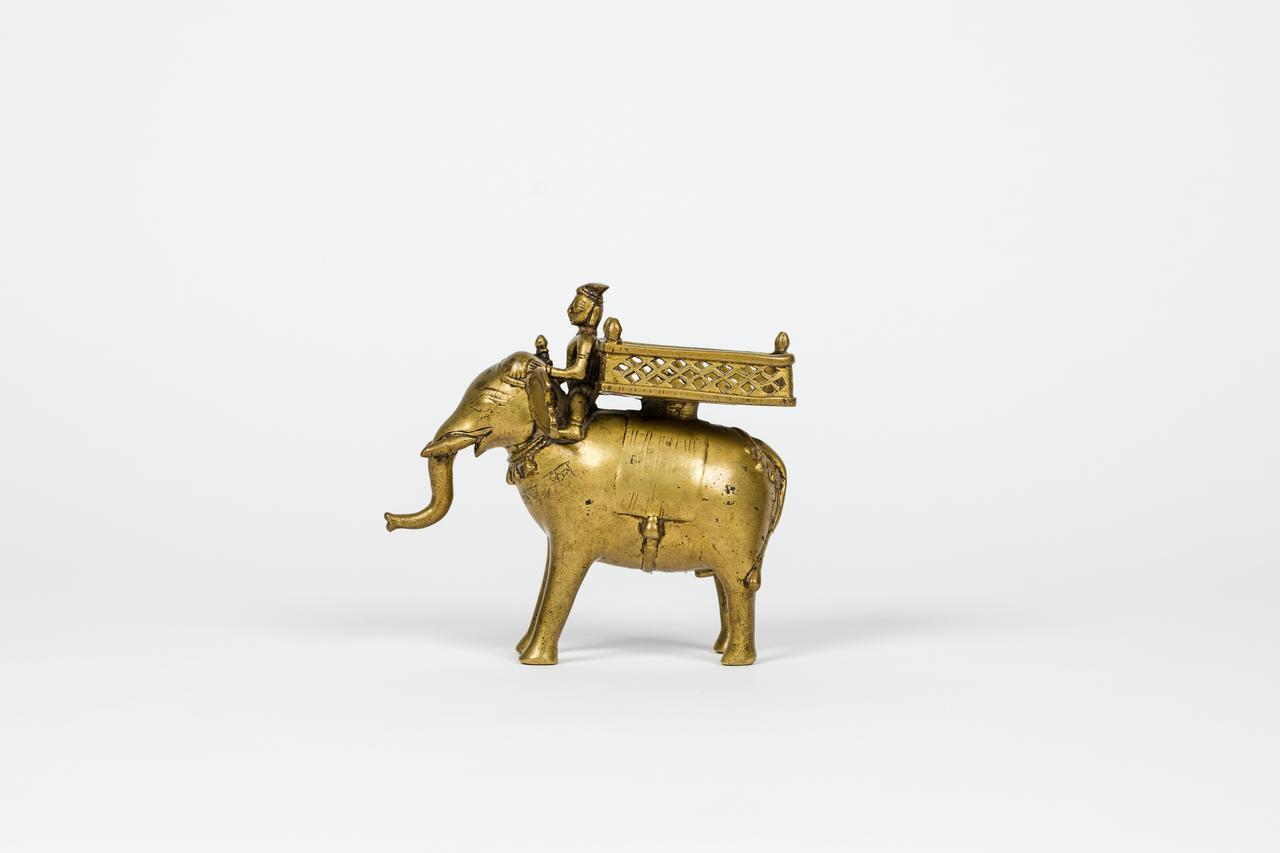
黄铜色 - 印度 - 20世纪


03
天
18
小时
38
分钟
51
秒

 | €1 |
|---|
Catawiki买家保障
在您收到物品之前,您的付款将在我们这里受到安全保管。查看详细信息
Trustpilot 4.4分 | 141835条评论
在Trustpilot上被评为优秀。
印度青铜耆那崇拜神龛,高度40厘米,宽度43厘米,深度5.5厘米,中央静坐的耆那尊者周围环绕27尊耆那尊者及两尊站立的耆那尊者,底座以象、老虎和执毡耙者为饰,状况良好,来源于画廊/古董商。
AI辅助摘要
卖家的描述
This large and unusual Jain altarpiece comprises a frame with a central seated Jina in a meditative posture surrounded by 27 other Jinas all seated uniformally and cast with srivastsa symbols on their chests, two standing Jinas in the kayotsarga meditative pose, and various attendants. The arrangement of the Jinas is very geometric, and other than a canopy over the central Jina, the frame is simple and serves to emphasise rather than distract from the Jinas. All the Jinas provide clear silhouettes on account of the voids that surround each one.
The lower plinth is decorated with elephants, tigers and fly whisk bearers.
The array suggests that all the Jinas have gathered to hear a sermon from the central figure. Alternatively, the unusually large number of Jinas in such a stylised setting suggests the endless nature of Jainism and the wisdom of the Jinas.
Altarpieces and plaques with larger numbers of Jinas are associated with the later period, hence a dating of 17th-18th century.
This large and unusual Jain altarpiece comprises a frame with a central seated Jina in a meditative posture surrounded by 27 other Jinas all seated uniformally and cast with srivastsa symbols on their chests, two standing Jinas in the kayotsarga meditative pose, and various attendants. The arrangement of the Jinas is very geometric, and other than a canopy over the central Jina, the frame is simple and serves to emphasise rather than distract from the Jinas. All the Jinas provide clear silhouettes on account of the voids that surround each one.
The lower plinth is decorated with elephants, tigers and fly whisk bearers.
The array suggests that all the Jinas have gathered to hear a sermon from the central figure. Alternatively, the unusually large number of Jinas in such a stylised setting suggests the endless nature of Jainism and the wisdom of the Jinas.
Altarpieces and plaques with larger numbers of Jinas are associated with the later period, hence a dating of 17th-18th century.
详细资料
王朝风格/时期
20世纪
项目件数
1
原产国
印度
材质
黄铜色
Height
40 cm
Width
43 cm
Depth
5,5 cm
Condition
良好状态
起源
画廊/古董商