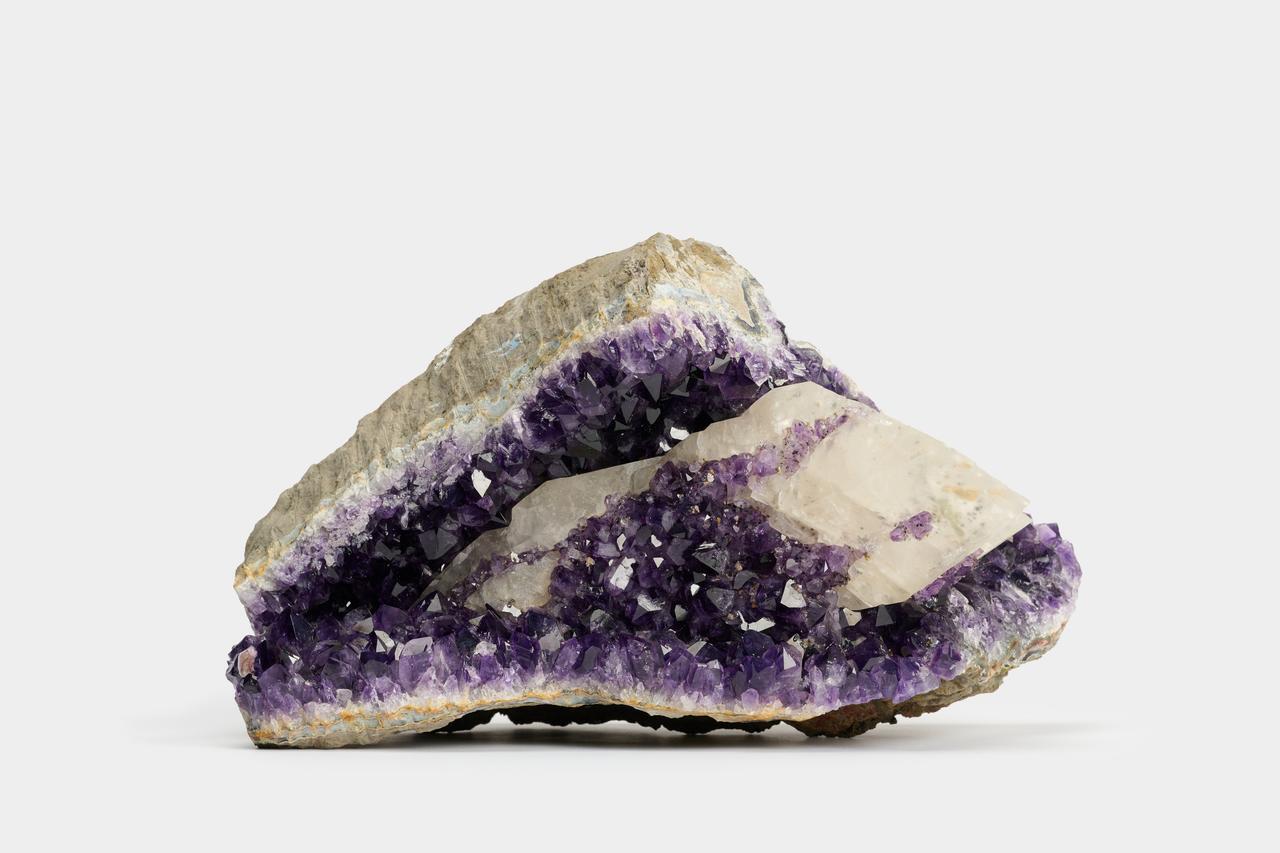
辉钼矿 — ALLEMONT, ISÈRE, FRANCE 水晶- 128 g


01
天
18
小时
20
分钟
10
秒

 | €2 | |
|---|---|---|
 | €1 |
Catawiki买家保障
在您收到物品之前,您的付款将在我们这里受到安全保管。查看详细信息
Trustpilot 4.4分 | 139572条评论
在Trustpilot上被评为优秀。
来自法国伊泽尔省阿勒蒙(Allemont)地区的晶体状辉钼矿标本,重量128 g。
AI辅助摘要
卖家的描述
Remarkable historical mineral specimen presenting lamellar molybdenite crystals inclused in a compact quartz matrix, accompanied by oxidation products and fine micaceous phases.
Molybdenite appears here in the form of crystals and lamellar gray-silver aggregates with metallic luster, contrasting with the clear quartz matrix. Small brownish to yellowish masses, probably related to weathering and limonitization processes, punctuate the surface and enrich the appearance of the piece.
The specimen is associated with an old collection, with a historical label referencing the French Alps, in the Allemond area (Isère). This provenance is particularly interesting in the context of historical Alpine mineralogy, as Allemond is a classic locality of the former French mineralogy.
The similarity of this association — lamellar molybdenite in compact quartz with oxidation products — to specimens known from this region is remarkable. A precise attribution to a vein or a particular mine remains to be confirmed.
Specimen data
Primary mineral: Molybdenite
Matrix: Compact quartz
Associated minerals: micaceous phases and oxidation/limonitization products
Historical provenance: French Alps, Allemond sector, Isère
Dimensions: 100 × 70 × 40 mm
Weight: 128 g
Collection era: old collection, attributed to late 18th / first half of the 19th century
Presentation: natural specimen, sold without stand
Collector interest
Beyond its mineralogy, this piece has particular historical interest due to its association with an antique French collection and a classic alpine locality.
The combination of metallic molybdenite, massive quartz, and alteration products, as well as the antique provenance indicated on the label, makes it especially suitable for a historical mineral collection, a cabinet of curiosities, or a collection devoted to French minerals.
A piece with strong mineralogical and historical presence, evoking the tradition of Alpine mineralogy cabinets of the 18th and 19th centuries.
Remarkable historical mineral specimen presenting lamellar molybdenite crystals inclused in a compact quartz matrix, accompanied by oxidation products and fine micaceous phases.
Molybdenite appears here in the form of crystals and lamellar gray-silver aggregates with metallic luster, contrasting with the clear quartz matrix. Small brownish to yellowish masses, probably related to weathering and limonitization processes, punctuate the surface and enrich the appearance of the piece.
The specimen is associated with an old collection, with a historical label referencing the French Alps, in the Allemond area (Isère). This provenance is particularly interesting in the context of historical Alpine mineralogy, as Allemond is a classic locality of the former French mineralogy.
The similarity of this association — lamellar molybdenite in compact quartz with oxidation products — to specimens known from this region is remarkable. A precise attribution to a vein or a particular mine remains to be confirmed.
Specimen data
Primary mineral: Molybdenite
Matrix: Compact quartz
Associated minerals: micaceous phases and oxidation/limonitization products
Historical provenance: French Alps, Allemond sector, Isère
Dimensions: 100 × 70 × 40 mm
Weight: 128 g
Collection era: old collection, attributed to late 18th / first half of the 19th century
Presentation: natural specimen, sold without stand
Collector interest
Beyond its mineralogy, this piece has particular historical interest due to its association with an antique French collection and a classic alpine locality.
The combination of metallic molybdenite, massive quartz, and alteration products, as well as the antique provenance indicated on the label, makes it especially suitable for a historical mineral collection, a cabinet of curiosities, or a collection devoted to French minerals.
A piece with strong mineralogical and historical presence, evoking the tradition of Alpine mineralogy cabinets of the 18th and 19th centuries.
详细资料
主要矿物
Molybdenite — Allemont, Isère, France
矿物形式
水晶
重量
128 g
国家
法国