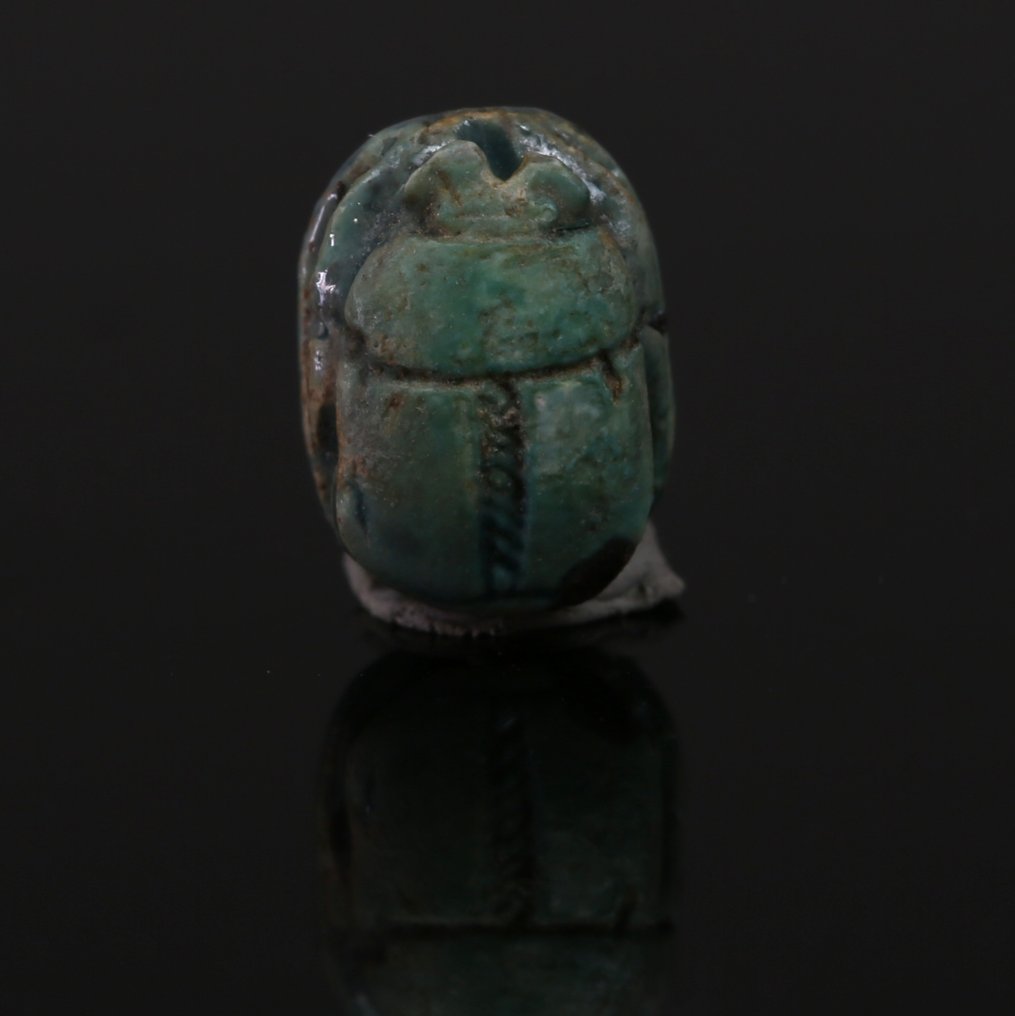
古埃及,阿玛纳时期 Faience 圣甲虫,阿蒙霍特普三世在位时期,Ex MUSEUM


05
天
06
小时
06
分钟
05
秒

 | €60 | |
|---|---|---|
| €55 | |
| €50 | |
Catawiki买家保障
在您收到物品之前,您的付款将在我们这里受到安全保管。查看详细信息
Trustpilot 4.4分 | 140076条评论
在Trustpilot上被评为优秀。
来自德国私人收藏的法螭ッフ? 费安斯(faience)卵石雕牌,阿马纳拉时期(公元前1391–1353年)埃及阿曼霍特普三世在位,尺寸6 × 10毫米,状况良好,附真实性证书与出口许可。
AI辅助摘要
卖家的描述
ITEM: Scarab, reign of Amenhotep III
MATERIAL: Faience
CULTURE: Egyptian
PERIOD: Amarna period, 1391 – 1353 B.C
DIMENSIONS: 6 mm x 10 mm
CONDITION: Good condition
PROVENANCE: 来自德国圣经考古学工作组博物馆展品(已从收藏中剥离)
Comes with Certificate of Authenticity and Export license
If you bid outside the european union and win the item, we will have to apply for an export licence for your country and shipping will take 3 to 5 weeks.
Scarab amulets from the Amarna Period, particularly during the reign of Amenhotep III (circa 1391–1353 BCE), represent both continuity and innovation in Egyptian religious and artistic practices. Scarabs had long been used in ancient Egypt as protective amulets, symbols of rebirth, and tokens of personal identity. During Amenhotep III’s reign—an era of immense wealth, artistic refinement, and growing religious experimentation—scarabs continued to hold deep symbolic importance while often serving as diplomatic gifts or royal propaganda tools.
Scarabs from this period were typically made of glazed steatite or faience and bore inscriptions on their flat undersides. These could include the names and titles of the king, deities, or references to specific events. Under Amenhotep III, a distinctive group of large “commemorative scarabs” was produced, bearing long inscriptions detailing royal achievements such as lion hunts, building projects, or diplomatic marriages. These were widely distributed throughout the Near East, emphasizing the pharaoh’s power and divine favor.
Artistically, Amarna Period scarabs often reflect the increasing stylization and realism that characterized the broader visual culture of the time. While most still maintained the traditional beetle form associated with the god Khepri, some scarabs began to show more fluid and dynamic shapes, influenced by the artistic reforms that would fully blossom under Amenhotep IV (Akhenaten). The craftsmanship of these amulets was high, with finely carved hieroglyphs and smooth, glossy glazes in shades of blue and green—colors linked to life, regeneration, and the Nile.
In both funerary and diplomatic contexts, these scarabs served to reinforce the divine nature of the king and the protective power of Egyptian symbolism. Their widespread discovery—from Egyptian tombs to Levantine palaces—attests to Egypt’s far-reaching influence during Amenhotep III’s reign.
卖家故事
您的古董商提供古代艺术品和古钱币。我们的主要目标是以最优惠的价格提供最高的质量,尊重并严格遵守遗产保护法和联合国教科文组织遗产规范。因此,出版的作品全部来自可查出处的私人收藏或国际拍卖。我们所有的古物和硬币都附有真品证书。我们有 90 天无条件退货政策。在 Your Antiquarian,我们致力于帮助弱势群体,因此每次购买的产品都会捐赠一部分给慈善机构,以帮助有需要的人。
使用Google翻译翻译ITEM: Scarab, reign of Amenhotep III
MATERIAL: Faience
CULTURE: Egyptian
PERIOD: Amarna period, 1391 – 1353 B.C
DIMENSIONS: 6 mm x 10 mm
CONDITION: Good condition
PROVENANCE: 来自德国圣经考古学工作组博物馆展品(已从收藏中剥离)
Comes with Certificate of Authenticity and Export license
If you bid outside the european union and win the item, we will have to apply for an export licence for your country and shipping will take 3 to 5 weeks.
Scarab amulets from the Amarna Period, particularly during the reign of Amenhotep III (circa 1391–1353 BCE), represent both continuity and innovation in Egyptian religious and artistic practices. Scarabs had long been used in ancient Egypt as protective amulets, symbols of rebirth, and tokens of personal identity. During Amenhotep III’s reign—an era of immense wealth, artistic refinement, and growing religious experimentation—scarabs continued to hold deep symbolic importance while often serving as diplomatic gifts or royal propaganda tools.
Scarabs from this period were typically made of glazed steatite or faience and bore inscriptions on their flat undersides. These could include the names and titles of the king, deities, or references to specific events. Under Amenhotep III, a distinctive group of large “commemorative scarabs” was produced, bearing long inscriptions detailing royal achievements such as lion hunts, building projects, or diplomatic marriages. These were widely distributed throughout the Near East, emphasizing the pharaoh’s power and divine favor.
Artistically, Amarna Period scarabs often reflect the increasing stylization and realism that characterized the broader visual culture of the time. While most still maintained the traditional beetle form associated with the god Khepri, some scarabs began to show more fluid and dynamic shapes, influenced by the artistic reforms that would fully blossom under Amenhotep IV (Akhenaten). The craftsmanship of these amulets was high, with finely carved hieroglyphs and smooth, glossy glazes in shades of blue and green—colors linked to life, regeneration, and the Nile.
In both funerary and diplomatic contexts, these scarabs served to reinforce the divine nature of the king and the protective power of Egyptian symbolism. Their widespread discovery—from Egyptian tombs to Levantine palaces—attests to Egypt’s far-reaching influence during Amenhotep III’s reign.
卖家故事
您的古董商提供古代艺术品和古钱币。我们的主要目标是以最优惠的价格提供最高的质量,尊重并严格遵守遗产保护法和联合国教科文组织遗产规范。因此,出版的作品全部来自可查出处的私人收藏或国际拍卖。我们所有的古物和硬币都附有真品证书。我们有 90 天无条件退货政策。在 Your Antiquarian,我们致力于帮助弱势群体,因此每次购买的产品都会捐赠一部分给慈善机构,以帮助有需要的人。
使用Google翻译翻译详细资料
文化
Ancient Egypt, Amarna period
世纪/时段
Amarna period, 1391 - 1353 B.C
Name of object
Scarab, reign of Amenhotep III, Ex MUSEUM
获得来源
私人收藏
获得年份
2024
材质
Faience
获得国家
德国
状态
好
前任拥有者获得来源
古董市场
前任拥有者获得年份
1970
前任拥有者获得国家
德国
我确认我合法获得此物品,并且我有权将它出售
是的
真伪
原始的/正式的
免责声明
卖家已就文件要求收到了Catawiki的通知并保证以下内容: - 该物品是合法获得的, - 卖家有权出售和/或出口该物品(如适用), - 卖家将提供必要的出处或来源地信息,并根据当地法律安排所需的文件和许可证/执照, - 如果在获取许可证/执照方面出现任何延误,卖家将通知买家。 出价竞投,表明您知晓根据您居住的国家和地区可能会被需要提供进口文件,以及获得许可证/执照可能会导致物品交付的延迟。
卖家已就文件要求收到了Catawiki的通知并保证以下内容: - 该物品是合法获得的, - 卖家有权出售和/或出口该物品(如适用), - 卖家将提供必要的出处或来源地信息,并根据当地法律安排所需的文件和许可证/执照, - 如果在获取许可证/执照方面出现任何延误,卖家将通知买家。 出价竞投,表明您知晓根据您居住的国家和地区可能会被需要提供进口文件,以及获得许可证/执照可能会导致物品交付的延迟。
