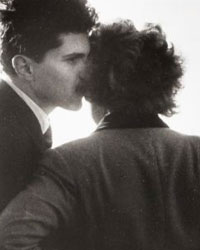
Ľubo Stacho - Sagrada Família


04
天
23
小时
05
分钟
37
秒

没有出价记录
Catawiki买家保障
在您收到物品之前,您的付款将在我们这里受到安全保管。查看详细信息
Trustpilot 4.4分 | 139719条评论
在Trustpilot上被评为优秀。
卖家的描述
Size: 29 x 22
Cutout: 18 x 17,5 cm
photo from the portfolio Meetings 1983 IN MEMORIAM TO TARAS KUŠĈYŃSKÍMU, Exchange action 1983
the album was made in only 55 pieces and only for the author of the photo from the given album. Every family protects the albums like the apple of their eye, that's why these photos can't be bought on the market. They are inherited. That's why you have a unique opportunity to own one of these photos.
I am only selling the photo itself.
Setkání 1983 – In Memoriam Taras Kuščynskyj
The photographic album Setkání 1983 – Výměnná akce, created in memory of the Czech photographer Taras Kuščynskyj (1932–1983), is a particularly interesting document of the Czech photographic scene of the late socialist period.
Kuščynskyj died on 27 December 1983 and had been one of the important Czech photographers of his generation. He was a co-founder of the photographic group Setkání, established in 1976. During his career he held 35 exhibitions, including exhibitions abroad in the Netherlands, Austria and Japan. His work was particularly associated with portraits, the female nude and photography in the landscape. (wwg.cz)
The Výměnná akce project is significant because it represents a different way of circulating photographic art outside the conventional exhibition system. Rather than functioning simply as a standard exhibition catalogue, these photographic books and portfolios allowed individual photographers to exchange and distribute original photographic works among themselves.
This type of activity was especially meaningful in the cultural environment of Czechoslovakia under communist rule, when opportunities for independent artistic presentation were limited and the official exhibition system was subject to institutional control. Informal photographic groups, personal networks and exchange projects therefore became important ways of maintaining contact between artists and allowing experimental work to circulate.
The 1983 volume acquired an additional memorial significance following Kuščynskyj’s death. The Czech national digital collection eSbirky records works explicitly identified as belonging to “Výměnná akce 1983. In memoriam Tarasu Kusčynskému”, as well as a work described as part of the “14. kniha 83”. (eSbírky)
For collectors, this makes Setkání 1983 more than simply a photographic album. It is a document of the Czech photographic community and its methods of artistic exchange during the communist period. Its importance lies not only in the individual photographs, but also in the provenance, collective authorship and historical circumstances surrounding its creation.
The connection with Taras Kuščynskyj is particularly important. In the year of his death, he had his final Prague exhibition at Fotochema as part of Interkamera, while his final exhibition during his lifetime took place at the Museum of Ukrainian Culture in Svidník. (wwg.cz)
For this reason, a complete and well-preserved example of Setkání 1983 – Výměnná akce / In Memoriam Taras Kuščynskyj can be regarded as a rare piece of photographic ephemera documenting the underground or semi-independent circulation of photography in 1980s Czechoslovakia. Its value is therefore both artistic and historical.
Ľubo Stacho (born 1953) is one of the most important figures in Slovak photography. He is not only an internationally exhibited photographer, but also a respected professor, curator and influential teacher who played a fundamental role in the development of photography education in Slovakia.
Stacho was born in Handlová, Czechoslovakia. He first studied Civil Engineering at the Slovak University of Technology in Bratislava and later studied photography at FAMU in Prague, under the renowned professor Ján Šmok. (stacho photography)
One of his greatest achievements came in 1990, when he established the first university-level photography programme in Slovakia at the Academy of Fine Arts and Design in Bratislava. He subsequently became one of the most influential photography educators in the country and was appointed Professor in 2010. (stacho photography)
Stacho has achieved significant international recognition. His work has been exhibited in Europe, the United States and Asia, including exhibitions in Tokyo, Houston, Pittsburgh, Vienna, Ljubljana, Tel Aviv, London, Warsaw and Wrocław. He has held more than 70 solo exhibitions and participated in more than 300 group exhibitions. His photographs are also held in important international collections, including the Museum of Fine Arts, Houston. (stacho photography)
Among his most important awards are the First Prize of the UNESCO World Heritage Fund competition in 1993 and a prize at the Photography Biennial of the Metropolitan Museum of Photography in Tokyo in 1995. He also received the prestigious Petzval Gold Medal and, in 2022, was named Personality of Slovak Photography 2021, an important national recognition of his lifetime contribution to photography. (stacho photography)
Artistically, Stacho has never limited himself to conventional documentary photography. His work encompasses documentary photography, conceptual photography, architectural photography, diptychs, photomontage, photo-monotypes, installation, performance and other interdisciplinary forms. His early experiments with diptychs and photo-monotypes became an important part of his artistic language. (stacho photography)
A particularly important part of his work is his long-term interest in architecture, memory and social change. His projects have documented Slovak architecture and changing urban environments, while his later collaborative work with Monika Stacho has focused strongly on religious architecture, historical memory and the transformation of cultural heritage. Their Synagógy.sk project, for example, documents more than 150 synagogues across Slovakia and examines their disappearance, transformation and survival. (lubostacho.webnode.sk)
Stacho’s importance therefore goes beyond the individual photographs he created. He belongs to the generation that helped establish Slovak photography as an independent contemporary art discipline, while simultaneously connecting Slovak photographers with the international photographic scene.
For collectors, his work is particularly interesting because it represents an important period in the development of Slovak conceptual and documentary photography from the late socialist period through the post-1989 era. His combination of experimental photographic techniques, conceptual thinking and documentary observation gives his work a distinctive position within Central European photography.
In recognition of his overall contribution, Ľubo Stacho is today regarded as one of the key personalities of Slovak photography of the second half of the 20th century and the beginning of the 21st century.
Size: 29 x 22
Cutout: 18 x 17,5 cm
photo from the portfolio Meetings 1983 IN MEMORIAM TO TARAS KUŠĈYŃSKÍMU, Exchange action 1983
the album was made in only 55 pieces and only for the author of the photo from the given album. Every family protects the albums like the apple of their eye, that's why these photos can't be bought on the market. They are inherited. That's why you have a unique opportunity to own one of these photos.
I am only selling the photo itself.
Setkání 1983 – In Memoriam Taras Kuščynskyj
The photographic album Setkání 1983 – Výměnná akce, created in memory of the Czech photographer Taras Kuščynskyj (1932–1983), is a particularly interesting document of the Czech photographic scene of the late socialist period.
Kuščynskyj died on 27 December 1983 and had been one of the important Czech photographers of his generation. He was a co-founder of the photographic group Setkání, established in 1976. During his career he held 35 exhibitions, including exhibitions abroad in the Netherlands, Austria and Japan. His work was particularly associated with portraits, the female nude and photography in the landscape. (wwg.cz)
The Výměnná akce project is significant because it represents a different way of circulating photographic art outside the conventional exhibition system. Rather than functioning simply as a standard exhibition catalogue, these photographic books and portfolios allowed individual photographers to exchange and distribute original photographic works among themselves.
This type of activity was especially meaningful in the cultural environment of Czechoslovakia under communist rule, when opportunities for independent artistic presentation were limited and the official exhibition system was subject to institutional control. Informal photographic groups, personal networks and exchange projects therefore became important ways of maintaining contact between artists and allowing experimental work to circulate.
The 1983 volume acquired an additional memorial significance following Kuščynskyj’s death. The Czech national digital collection eSbirky records works explicitly identified as belonging to “Výměnná akce 1983. In memoriam Tarasu Kusčynskému”, as well as a work described as part of the “14. kniha 83”. (eSbírky)
For collectors, this makes Setkání 1983 more than simply a photographic album. It is a document of the Czech photographic community and its methods of artistic exchange during the communist period. Its importance lies not only in the individual photographs, but also in the provenance, collective authorship and historical circumstances surrounding its creation.
The connection with Taras Kuščynskyj is particularly important. In the year of his death, he had his final Prague exhibition at Fotochema as part of Interkamera, while his final exhibition during his lifetime took place at the Museum of Ukrainian Culture in Svidník. (wwg.cz)
For this reason, a complete and well-preserved example of Setkání 1983 – Výměnná akce / In Memoriam Taras Kuščynskyj can be regarded as a rare piece of photographic ephemera documenting the underground or semi-independent circulation of photography in 1980s Czechoslovakia. Its value is therefore both artistic and historical.
Ľubo Stacho (born 1953) is one of the most important figures in Slovak photography. He is not only an internationally exhibited photographer, but also a respected professor, curator and influential teacher who played a fundamental role in the development of photography education in Slovakia.
Stacho was born in Handlová, Czechoslovakia. He first studied Civil Engineering at the Slovak University of Technology in Bratislava and later studied photography at FAMU in Prague, under the renowned professor Ján Šmok. (stacho photography)
One of his greatest achievements came in 1990, when he established the first university-level photography programme in Slovakia at the Academy of Fine Arts and Design in Bratislava. He subsequently became one of the most influential photography educators in the country and was appointed Professor in 2010. (stacho photography)
Stacho has achieved significant international recognition. His work has been exhibited in Europe, the United States and Asia, including exhibitions in Tokyo, Houston, Pittsburgh, Vienna, Ljubljana, Tel Aviv, London, Warsaw and Wrocław. He has held more than 70 solo exhibitions and participated in more than 300 group exhibitions. His photographs are also held in important international collections, including the Museum of Fine Arts, Houston. (stacho photography)
Among his most important awards are the First Prize of the UNESCO World Heritage Fund competition in 1993 and a prize at the Photography Biennial of the Metropolitan Museum of Photography in Tokyo in 1995. He also received the prestigious Petzval Gold Medal and, in 2022, was named Personality of Slovak Photography 2021, an important national recognition of his lifetime contribution to photography. (stacho photography)
Artistically, Stacho has never limited himself to conventional documentary photography. His work encompasses documentary photography, conceptual photography, architectural photography, diptychs, photomontage, photo-monotypes, installation, performance and other interdisciplinary forms. His early experiments with diptychs and photo-monotypes became an important part of his artistic language. (stacho photography)
A particularly important part of his work is his long-term interest in architecture, memory and social change. His projects have documented Slovak architecture and changing urban environments, while his later collaborative work with Monika Stacho has focused strongly on religious architecture, historical memory and the transformation of cultural heritage. Their Synagógy.sk project, for example, documents more than 150 synagogues across Slovakia and examines their disappearance, transformation and survival. (lubostacho.webnode.sk)
Stacho’s importance therefore goes beyond the individual photographs he created. He belongs to the generation that helped establish Slovak photography as an independent contemporary art discipline, while simultaneously connecting Slovak photographers with the international photographic scene.
For collectors, his work is particularly interesting because it represents an important period in the development of Slovak conceptual and documentary photography from the late socialist period through the post-1989 era. His combination of experimental photographic techniques, conceptual thinking and documentary observation gives his work a distinctive position within Central European photography.
In recognition of his overall contribution, Ľubo Stacho is today regarded as one of the key personalities of Slovak photography of the second half of the 20th century and the beginning of the 21st century.
详细资料
确切的年份
1983
艺术家
Ľubo Stacho
出售者
所有者或经销商
作品名称
Sagrada Família
状态
精美
技术
明胶银版法印像
高度
18 cm
宽度
17,5 cm
签名
带签名
类别
建筑学