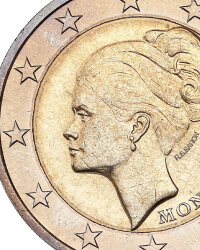
欧洲. 2 Euro 2000/2014 (4 coins with cancellation marks) (没有保留价)


03
天
02
小时
07
分钟
02
秒

 | €1 |
|---|
Catawiki买家保障
在您收到物品之前,您的付款将在我们这里受到安全保管。查看详细信息
Trustpilot 4.4分 | 140462条评论
在Trustpilot上被评为优秀。
四枚欧洲联盟流通的2欧元硬币,发行于2000–2014年,重量8.5克,直径25.75毫米,厚度2.2毫米,存在铸造缺陷与模具磨耗。
AI辅助摘要
卖家的描述
Period: European Union (Euro) 2000 Photo 23
Currency: Euro (blank disc)
Type: Circulation coins
Denomination: 2 euro (blank disc)
Year: 2000
Bimetallic alloy.
Centre: Brass plated with medium nickel plating. Cupronickel ring, smooth, without grooves
Rim inscription: None
Shape: Round
Obverse/Reverse orientation: Not reversed
Weight (g) 8.5
Diameter (mm) 25.75
Thickness (mm) 2.2
Obverse: Coin core blank, without symbols or date
During minting, die impressions are subjected to high dynamic loads, which sometimes results in damage such as cracks or chips. Friction between the die surfaces and the coin blank causes gradual wear of the die. Contrary to popular belief, non-currency flaws are highly sought after by collectors because their uniqueness makes them interesting and often very valuable due to their rarity and exceptionality.
Coin obverse:
The outer ring and core of the coin are damaged by three grooves visible on the reverse as fissures.
The interior core of the coin has separated from the outer ring.
Coin reverse: The central core of the coin, separated from the outer ring, is separated by three very deep fissures running through the center of the coin. All grooves were created during the pressing and minting process under enormous pressure.
A mint blank (planchet) with specific cuts made during the minting process, a rare form of mint distortion confirming the authenticity of the error. Such pieces rarely appear at auction, making them valuable acquisitions for collectors worldwide.
The Belgian 2 Euro commemorative coin from 2009 (photo no. 33) commemorates the 200th anniversary of the birth of Louis Braille (1809-1852), the French creator of an alphabet for the blind.
(very rare)
Type: Circulation coins
Denomination: 2 euro
Year: 2009
Bimetallic alloy.
Centre: Brass plated with medium nickel plating. Cupronickel ring, smooth, without grooves.
NOTE: Rim inscription: No serrations with a concave inscription "2" and two stars.
Shape: Round
Obverse/Reverse orientation: Not reversed
Weight (g) 8.5
Diameter (mm) 25.75
Thickness (mm) 2.2
Obverse: In the center of the coin, a bust of Louis Braille slightly to the right; on either side of his Initials - the letters L and B written in Braille; along the top edge: LOUIS BRAILLE; along the bottom edge: BE (the ISO 3166-2 designation for Belgium) separated by the dates: 1809 / 2009; along the edge: twelve five-pointed stars - the symbol of the European Union.
Reverse: To the left of the coin's center, the denomination: 2, to the right: EURO; in the background of the inscription, a map of Europe; in the background of the map, vertically, six parallel lines terminating on both sides with five-pointed stars (the reverse is common to all euro coins).
Issue date: September 25, 2009.
Design: Luc Luycx (initials LL below the letter O in EURO on the reverse).
Mint: Mark of the Royal Belgian Mint (in Dutch). Belgique (in French) (Royal Belgian Mint), Brussels (mint mark before 1809 on the obverse, after 2009 the symbol of the mint director - Serge Lesens)
Irregularity caused by die wear; bends in the metal in the form of longitudinal lines are visible on the coin.
During the minting of coins, the dies are subjected to high dynamic loads, which sometimes causes damage in the form of cracks or even chips. Friction between the surfaces of the dies and the coin causes gradual wear of the dies. Contrary to appearances, mint damage to this type of Portugal 2 Euro coin is highly sought after by collectors, as its uniqueness makes it interesting and often very valuable due to its rarity and exceptional nature.
An interesting and unique, very rare and unusual form of damage to the Belgium 2 Euro coin.
Period: European Union (Euro) Year 2003- Spain photo no. 36
Spain Currency: 2 x Euro (bust of King Juan Carlos I) - Spain
Type: Circulation Coins
Denomination: 2 Euro
Year: 2003
Bimetallic alloy.
Nickel-plated brass.
Cupronickel ring
Side type: Edge serrations the number 2 and two stars repeating symmetrically
Shape: Round
Obverse/Reverse arrangement: Not reversed
Weight (g) 8.5
Diameter (mm) 25.75
Thickness (mm) 2.2
Obverse: In the center of the coin, the bust of King Juan Carlos I, slightly to the left; On the left edge, in concave letters, ESPAÑA (Spain); along the edge, twelve five-pointed stars – the symbol of the European Union; four stars on the upper right edge are concave; on the lower edge, the year of issue, separated by the lowest star.
Reverse: To the left of the center, the coin's denomination: 2; to the right: EURO; in the background of the inscription, a simplified map of Europe with the outlines of the European Union member states in 1999; in the background of the map, vertically, six parallel lines ending on both sides with five-pointed stars (the reverse is common to all euro coins).
Irregularity caused by die wear; bends in the metal are visible on the coin in the form of longitudinal lines.
During the minting of coins, high dynamic loads occur on the dies, which sometimes causes damage in the form of cracks or even chips. Friction between the surfaces of the dies and the coin causes gradual wear of the dies. Contrary to appearances, mint damage on this type of Spain 2 Euro coin is highly sought after by collectors, as its uniqueness makes it interesting and often highly valuable due to its rarity and exceptional quality.
An interesting and unique, very rare and unusual form of damage on a Spain 2 Euro coin.
Luxembourg 2 Euro year 2014 - circulation coin DESTRUKT (photo number 44)
A very rare coin sought after by collectors
Bimetal alloy.
Nickel brass center covered with nickel.
Copper-nickel ring
Side type Serrated with inscription
Inscription on the edge'2 ★ ★ 2 ★ ★ 2 ★ ★ 2 ★ ★ 2 ★ ★'
ShapeRound
Obverse/reverse layout Not reversed
Weight (g) 8.5
Diameter (mm) 25.75
Thickness (mm) 2.2
Obverse: Map of Europe inscription 2 Euro
Designers: Nicolas Cozon
Reverse: Henri, Grand Duke of Luxembourg
inscription: LËTZEBUERG 2014
Designers: Joaquin Jimenez, Yvette Gastauer-Claire (YGC)
Irregularity due to die wear, the coin shows metal crushing in the form of longitudinal lines.
During minting, the dies are subjected to high dynamic loads, which sometimes causes damage in the form of cracks or even chips. The friction between the surfaces of the dies and the coin disc causes gradual wear of the dies. Contrary to appearances, mint destructs are highly sought after by collectors, because their uniqueness makes them interesting and often very valuable, due to their rarity and exceptionality.
The inner core of the coin was torn off from the outer ring, creating two separate elements: the central core and the outer ring.
The inscription LËTZEBUERG and the year 2014
additionally visible 3 very narrow convex grooves on the coin struck during the movement of the die.
Reverse of the coin: leakage of the central ring, with together visible 4 very wide outer gaps in the form of cones, running in 3 points of the coin. All grooves struck during the movement of the press die and minting under enormous pressure. Number 2 damaged
Interesting and unique very rare and unusual form of destruction of this coin.
Period: European Union (Euro) 2000 Photo 23
Currency: Euro (blank disc)
Type: Circulation coins
Denomination: 2 euro (blank disc)
Year: 2000
Bimetallic alloy.
Centre: Brass plated with medium nickel plating. Cupronickel ring, smooth, without grooves
Rim inscription: None
Shape: Round
Obverse/Reverse orientation: Not reversed
Weight (g) 8.5
Diameter (mm) 25.75
Thickness (mm) 2.2
Obverse: Coin core blank, without symbols or date
During minting, die impressions are subjected to high dynamic loads, which sometimes results in damage such as cracks or chips. Friction between the die surfaces and the coin blank causes gradual wear of the die. Contrary to popular belief, non-currency flaws are highly sought after by collectors because their uniqueness makes them interesting and often very valuable due to their rarity and exceptionality.
Coin obverse:
The outer ring and core of the coin are damaged by three grooves visible on the reverse as fissures.
The interior core of the coin has separated from the outer ring.
Coin reverse: The central core of the coin, separated from the outer ring, is separated by three very deep fissures running through the center of the coin. All grooves were created during the pressing and minting process under enormous pressure.
A mint blank (planchet) with specific cuts made during the minting process, a rare form of mint distortion confirming the authenticity of the error. Such pieces rarely appear at auction, making them valuable acquisitions for collectors worldwide.
The Belgian 2 Euro commemorative coin from 2009 (photo no. 33) commemorates the 200th anniversary of the birth of Louis Braille (1809-1852), the French creator of an alphabet for the blind.
(very rare)
Type: Circulation coins
Denomination: 2 euro
Year: 2009
Bimetallic alloy.
Centre: Brass plated with medium nickel plating. Cupronickel ring, smooth, without grooves.
NOTE: Rim inscription: No serrations with a concave inscription "2" and two stars.
Shape: Round
Obverse/Reverse orientation: Not reversed
Weight (g) 8.5
Diameter (mm) 25.75
Thickness (mm) 2.2
Obverse: In the center of the coin, a bust of Louis Braille slightly to the right; on either side of his Initials - the letters L and B written in Braille; along the top edge: LOUIS BRAILLE; along the bottom edge: BE (the ISO 3166-2 designation for Belgium) separated by the dates: 1809 / 2009; along the edge: twelve five-pointed stars - the symbol of the European Union.
Reverse: To the left of the coin's center, the denomination: 2, to the right: EURO; in the background of the inscription, a map of Europe; in the background of the map, vertically, six parallel lines terminating on both sides with five-pointed stars (the reverse is common to all euro coins).
Issue date: September 25, 2009.
Design: Luc Luycx (initials LL below the letter O in EURO on the reverse).
Mint: Mark of the Royal Belgian Mint (in Dutch). Belgique (in French) (Royal Belgian Mint), Brussels (mint mark before 1809 on the obverse, after 2009 the symbol of the mint director - Serge Lesens)
Irregularity caused by die wear; bends in the metal in the form of longitudinal lines are visible on the coin.
During the minting of coins, the dies are subjected to high dynamic loads, which sometimes causes damage in the form of cracks or even chips. Friction between the surfaces of the dies and the coin causes gradual wear of the dies. Contrary to appearances, mint damage to this type of Portugal 2 Euro coin is highly sought after by collectors, as its uniqueness makes it interesting and often very valuable due to its rarity and exceptional nature.
An interesting and unique, very rare and unusual form of damage to the Belgium 2 Euro coin.
Period: European Union (Euro) Year 2003- Spain photo no. 36
Spain Currency: 2 x Euro (bust of King Juan Carlos I) - Spain
Type: Circulation Coins
Denomination: 2 Euro
Year: 2003
Bimetallic alloy.
Nickel-plated brass.
Cupronickel ring
Side type: Edge serrations the number 2 and two stars repeating symmetrically
Shape: Round
Obverse/Reverse arrangement: Not reversed
Weight (g) 8.5
Diameter (mm) 25.75
Thickness (mm) 2.2
Obverse: In the center of the coin, the bust of King Juan Carlos I, slightly to the left; On the left edge, in concave letters, ESPAÑA (Spain); along the edge, twelve five-pointed stars – the symbol of the European Union; four stars on the upper right edge are concave; on the lower edge, the year of issue, separated by the lowest star.
Reverse: To the left of the center, the coin's denomination: 2; to the right: EURO; in the background of the inscription, a simplified map of Europe with the outlines of the European Union member states in 1999; in the background of the map, vertically, six parallel lines ending on both sides with five-pointed stars (the reverse is common to all euro coins).
Irregularity caused by die wear; bends in the metal are visible on the coin in the form of longitudinal lines.
During the minting of coins, high dynamic loads occur on the dies, which sometimes causes damage in the form of cracks or even chips. Friction between the surfaces of the dies and the coin causes gradual wear of the dies. Contrary to appearances, mint damage on this type of Spain 2 Euro coin is highly sought after by collectors, as its uniqueness makes it interesting and often highly valuable due to its rarity and exceptional quality.
An interesting and unique, very rare and unusual form of damage on a Spain 2 Euro coin.
Luxembourg 2 Euro year 2014 - circulation coin DESTRUKT (photo number 44)
A very rare coin sought after by collectors
Bimetal alloy.
Nickel brass center covered with nickel.
Copper-nickel ring
Side type Serrated with inscription
Inscription on the edge'2 ★ ★ 2 ★ ★ 2 ★ ★ 2 ★ ★ 2 ★ ★'
ShapeRound
Obverse/reverse layout Not reversed
Weight (g) 8.5
Diameter (mm) 25.75
Thickness (mm) 2.2
Obverse: Map of Europe inscription 2 Euro
Designers: Nicolas Cozon
Reverse: Henri, Grand Duke of Luxembourg
inscription: LËTZEBUERG 2014
Designers: Joaquin Jimenez, Yvette Gastauer-Claire (YGC)
Irregularity due to die wear, the coin shows metal crushing in the form of longitudinal lines.
During minting, the dies are subjected to high dynamic loads, which sometimes causes damage in the form of cracks or even chips. The friction between the surfaces of the dies and the coin disc causes gradual wear of the dies. Contrary to appearances, mint destructs are highly sought after by collectors, because their uniqueness makes them interesting and often very valuable, due to their rarity and exceptionality.
The inner core of the coin was torn off from the outer ring, creating two separate elements: the central core and the outer ring.
The inscription LËTZEBUERG and the year 2014
additionally visible 3 very narrow convex grooves on the coin struck during the movement of the die.
Reverse of the coin: leakage of the central ring, with together visible 4 very wide outer gaps in the form of cones, running in 3 points of the coin. All grooves struck during the movement of the press die and minting under enormous pressure. Number 2 damaged
Interesting and unique very rare and unusual form of destruction of this coin.
详细资料
时代
2000年后
重量
8,5 g
物品件数
4
国家/省
欧洲
描述/主题
王族
附加信息
2000/2014 (4 coins with cancellation marks)
面额
2 Euro
状态
未评级