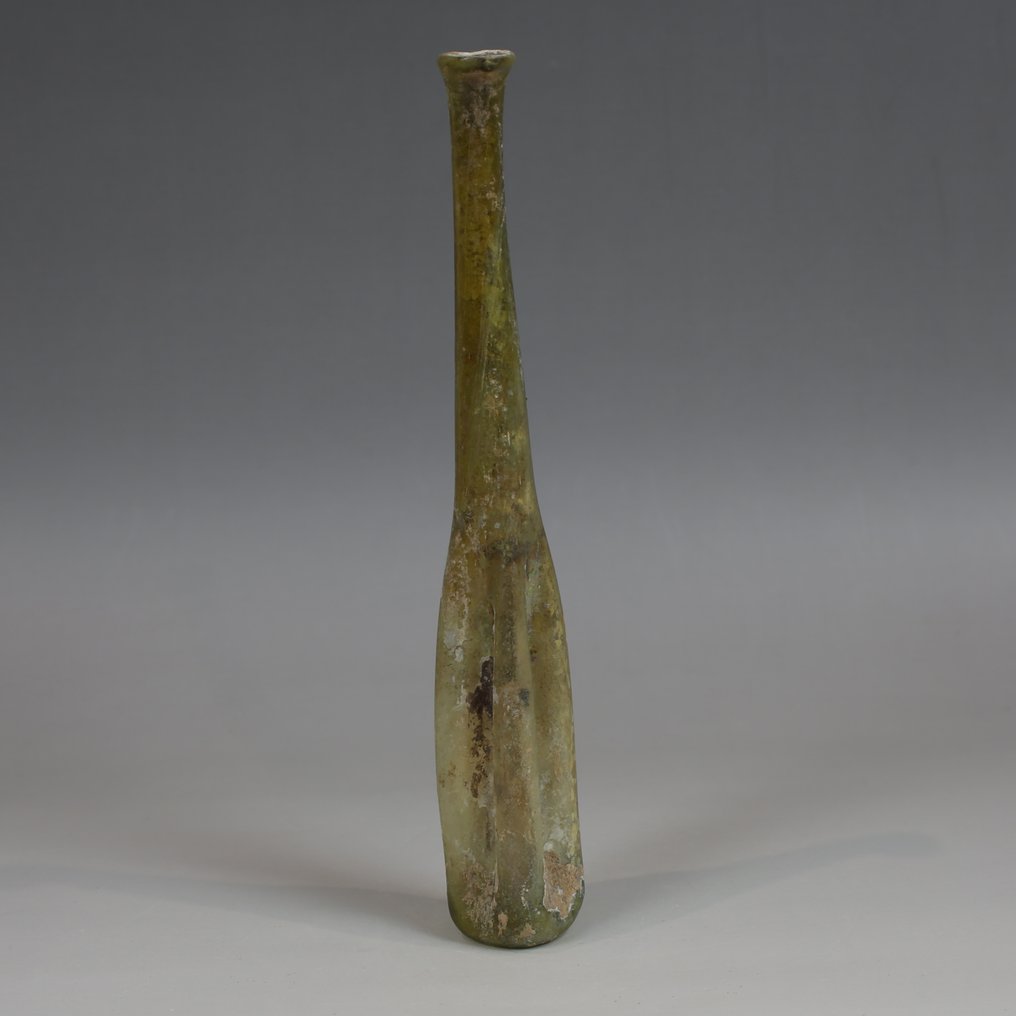
古罗马 玻璃 Flask


01
天
04
小时
21
分钟
39
秒

10名其他人正在关注此物品
 竞买人 6431 竞买人 6431 | €60 | |
|---|---|---|
 竞买人 1839 竞买人 1839 | €1 |
Catawiki买家保障
在您收到物品之前,您的付款将在我们这里受到安全保管。查看详细信息
Trustpilot 4.4分 | 121899条评论
在Trustpilot上被评为优秀。
罗马玻璃瓶,165 × 21 毫米,时间为公元1–3世纪,状况良好,附真实证书和出口许可,来自德国私人收藏。
AI辅助摘要
卖家的描述
ITEM: Flask
MATERIAL: Glass
CULTURE: Roman
PERIOD: 1st - 3rd Century A.D
DIMENSIONS: 165 mm x 21 mm
CONDITION: Good condition
PROVENANCE: Ex German private collection, acquired before 2000s
Roman flasks were versatile and functional vessels used primarily for storing and transporting liquids such as oils, perfumes, and medicinal concoctions. These flasks, which were typically made from glass or ceramic, varied in size and shape, reflecting their diverse uses and the craftsmanship of the period. Glass flasks were particularly valued for their ability to contain and preserve aromatic oils and perfumes, which were essential in daily Roman life for personal grooming and religious rituals. Ceramic flasks, on the other hand, were often used for more practical purposes, such as storing cooking oils or vinegar.
The design of Roman flasks often included features that facilitated their use and storage. Many flasks had narrow necks to minimize spillage and maintain the quality of their contents. Some were equipped with handles or spouts to make pouring easier, while others had stoppers or lids to seal the contents securely. The artistic quality of these vessels varied from simple, utilitarian designs to more elaborate forms decorated with patterns or inscriptions. Inscriptions on flasks sometimes indicated the type of liquid contained or the name of the owner, adding a personalized touch to these everyday objects.
Roman flasks also provide valuable insights into trade and cultural exchanges within the Roman Empire. Glass production techniques, including the use of molds and blowing methods, were advanced during the Roman period, and Roman glassware was widely traded across the empire. The distribution of Roman flasks throughout various provinces reflects the extensive trade networks and the integration of different cultures within the empire. Additionally, the variety in flask designs and materials reveals the adaptability of Roman artisans to different regional tastes and technological innovations.
Comes with Certificate of Authenticity and Export license
If you bid outside the European Union and win the item, we will have to apply for an export licence for your country and shipping will take 3 to 5 weeks.
卖家故事
您的古董商提供古代艺术品和古钱币。我们的主要目标是以最优惠的价格提供最高的质量,尊重并严格遵守遗产保护法和联合国教科文组织遗产规范。因此,出版的作品全部来自可查出处的私人收藏或国际拍卖。我们所有的古物和硬币都附有真品证书。我们有 90 天无条件退货政策。在 Your Antiquarian,我们致力于帮助弱势群体,因此每次购买的产品都会捐赠一部分给慈善机构,以帮助有需要的人。
使用Google翻译翻译ITEM: Flask
MATERIAL: Glass
CULTURE: Roman
PERIOD: 1st - 3rd Century A.D
DIMENSIONS: 165 mm x 21 mm
CONDITION: Good condition
PROVENANCE: Ex German private collection, acquired before 2000s
Roman flasks were versatile and functional vessels used primarily for storing and transporting liquids such as oils, perfumes, and medicinal concoctions. These flasks, which were typically made from glass or ceramic, varied in size and shape, reflecting their diverse uses and the craftsmanship of the period. Glass flasks were particularly valued for their ability to contain and preserve aromatic oils and perfumes, which were essential in daily Roman life for personal grooming and religious rituals. Ceramic flasks, on the other hand, were often used for more practical purposes, such as storing cooking oils or vinegar.
The design of Roman flasks often included features that facilitated their use and storage. Many flasks had narrow necks to minimize spillage and maintain the quality of their contents. Some were equipped with handles or spouts to make pouring easier, while others had stoppers or lids to seal the contents securely. The artistic quality of these vessels varied from simple, utilitarian designs to more elaborate forms decorated with patterns or inscriptions. Inscriptions on flasks sometimes indicated the type of liquid contained or the name of the owner, adding a personalized touch to these everyday objects.
Roman flasks also provide valuable insights into trade and cultural exchanges within the Roman Empire. Glass production techniques, including the use of molds and blowing methods, were advanced during the Roman period, and Roman glassware was widely traded across the empire. The distribution of Roman flasks throughout various provinces reflects the extensive trade networks and the integration of different cultures within the empire. Additionally, the variety in flask designs and materials reveals the adaptability of Roman artisans to different regional tastes and technological innovations.
Comes with Certificate of Authenticity and Export license
If you bid outside the European Union and win the item, we will have to apply for an export licence for your country and shipping will take 3 to 5 weeks.
卖家故事
您的古董商提供古代艺术品和古钱币。我们的主要目标是以最优惠的价格提供最高的质量,尊重并严格遵守遗产保护法和联合国教科文组织遗产规范。因此,出版的作品全部来自可查出处的私人收藏或国际拍卖。我们所有的古物和硬币都附有真品证书。我们有 90 天无条件退货政策。在 Your Antiquarian,我们致力于帮助弱势群体,因此每次购买的产品都会捐赠一部分给慈善机构,以帮助有需要的人。
使用Google翻译翻译详细资料
文化
古罗马
世纪/时段
1st - 3rd Century A.D
Name of object
Flask.
获得来源
私人收藏
获得年份
2025
材质
玻璃
获得国家
德国
状态
好
前任拥有者获得来源
古董市场
前任拥有者获得年份
2000
前任拥有者获得国家
德国
我确认我合法获得此物品,并且我有权将它出售
是的
免责声明
卖家已就文件要求收到了Catawiki的通知并保证以下内容: - 该物品是合法获得的, - 卖家有权出售和/或出口该物品(如适用), - 卖家将提供必要的出处或来源地信息,并根据当地法律安排所需的文件和许可证/执照, - 如果在获取许可证/执照方面出现任何延误,卖家将通知买家。 出价竞投,表明您知晓根据您居住的国家和地区可能会被需要提供进口文件,以及获得许可证/执照可能会导致物品交付的延迟。
卖家已就文件要求收到了Catawiki的通知并保证以下内容: - 该物品是合法获得的, - 卖家有权出售和/或出口该物品(如适用), - 卖家将提供必要的出处或来源地信息,并根据当地法律安排所需的文件和许可证/执照, - 如果在获取许可证/执照方面出现任何延误,卖家将通知买家。 出价竞投,表明您知晓根据您居住的国家和地区可能会被需要提供进口文件,以及获得许可证/执照可能会导致物品交付的延迟。
