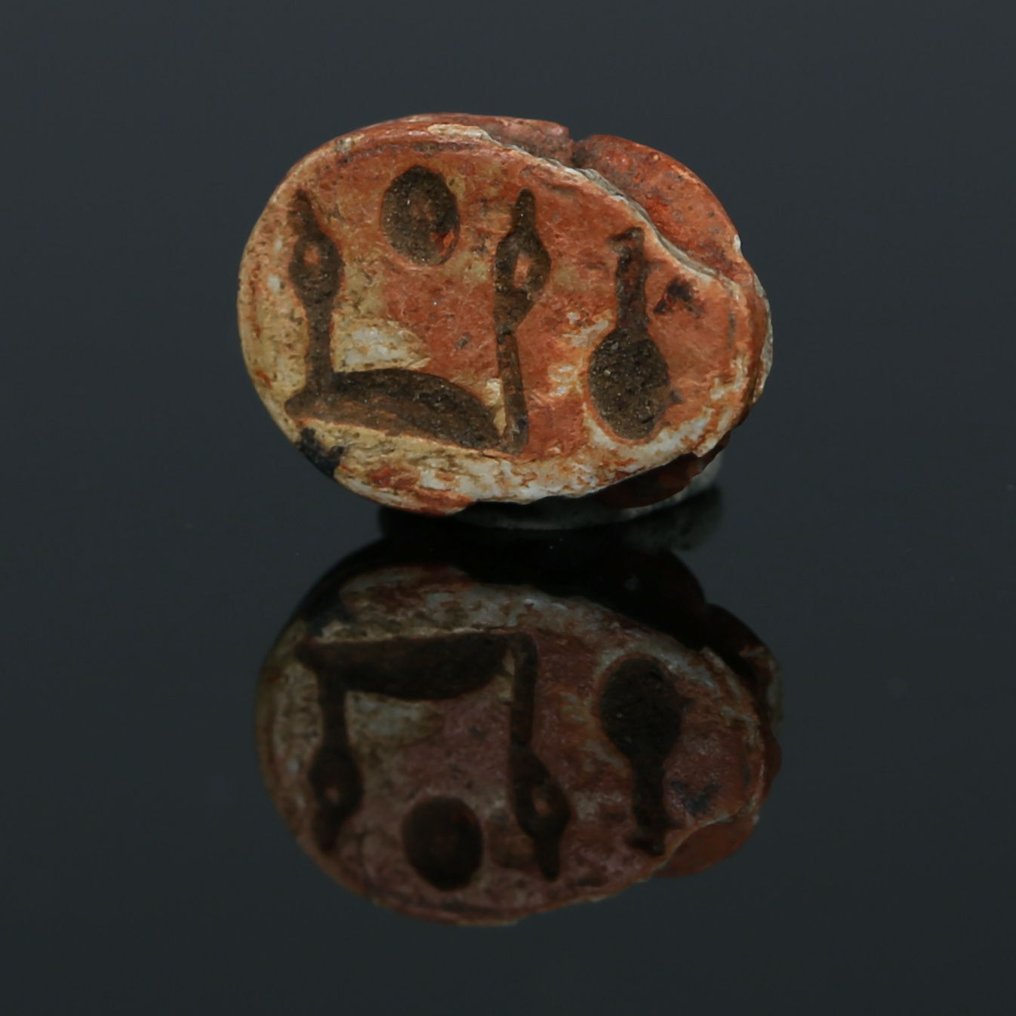
古代埃及,第三中間時期 滑石 尼费尔卡雷的甲虫,来自博物馆。西班牙出口许可证。




03
天
16
小時
32
分鐘
54
秒

另有15人對此物品感興趣
 競投者 3948 競投者 3948 | €52 | |
|---|---|---|
| 競投者 3948 | €46 | |
| 競投者 3948 | €41 | |
Catawiki買家保障
在您收到物品前,我們會妥善保管您的付款。查看詳情
Trustpilot評分 4.4 | 128679 則評論
在Trustpilot獲得極佳評等。
Neferkare 的蝌蚪螋牌,屬於第三中期、25王朝(公元前713–公元前698年)的真正燧石燒臼,尺寸為 7 mm × 11 mm,狀況良好,源自 Ex Museum,附有真實性證書與出口許可。
AI輔助摘要
賣家描述
物品:Scarab of Neferkare
材料:Steatite
文化:Egyptian
时期:Third Intermediate Period, 25th Dynasty, 713 - 698 B.C
尺寸:7 mm x 11 mm
状态:Good condition
出处:Ex Museum Exhibiton of the Arbeitsgruppe für Biblische Archäologie, Germany (Deaccession)
Comes with Certificate of Authenticity and Export license
If you bid outside the european union and win the item, we will have to apply for an export licence for your country and shipping will take 3 to 5 weeks.
The Scarab of Pharaoh Shabako, identified by his prenomen (throne name) Neferkare, serves as an important artifact connecting the Kushite rulers of the 25th Dynasty to the ancient traditions of Egyptian kingship. Shabako, who reigned approximately from 713–698 B.C., was a Nubian pharaoh who successfully consolidated Kushite control over the whole of Egypt, reviving many old Egyptian customs and commissioning extensive building works. The appearance of his royal name, Neferkare ("Beautiful is the Soul of Re"), on a scarab is significant because the scarab beetle itself was a potent symbol of the sun god Khepri, representing rebirth, regeneration, and the daily cycle of the sun. By inscribing his name onto this powerful amulet, Shabako not only reinforced his divine authority but also firmly positioned himself as a legitimate successor to the pharaohs of Egypt's glorious past, even adopting the prenomen of the Sixth Dynasty ruler Pepi II.
Shabako’s royal-name scarabs were typically crafted from materials like hematite, blue faience, or glazed steatite and were small, worn as protective amulets, personal seals, or integrated into jewelry. These scarabs played a crucial dual role: they served a practical administrative function as seals, confirming royal decree or ownership, and an apotropaic, ritual function, providing protection and guaranteeing the pharaoh's success and eternal existence. Notably, the 25th Dynasty revived the tradition of creating large, commemorative scarabs—a practice originally associated with the powerful New Kingdom pharaoh Amenhotep III. These larger pieces were often used to advertise major royal achievements, such as military victories, thereby functioning as important political and diplomatic propaganda across the empire.
The legacy of the Neferkare Shabako scarab lies in its ability to embody the political and cultural agenda of the 25th Dynasty. As Kushites, these rulers needed to visibly demonstrate their piety and commitment to Egyptian state religion to secure the support of the influential Egyptian clergy and populace. By producing numerous artifacts like the royal-name scarabs, often mimicking classical Egyptian styles while maintaining their distinct Kushite identity, Shabako cemented the legitimacy of his rule over both the Delta and the Thebais. These ubiquitous small objects, recovered widely across Egypt and the Levant, confirm the extent of his consolidated control and his successful adoption of the millennia-old symbols of Egyptian royal power and divine protection.
#CollectorsFairMarch2026
賣家的故事
您的古董商提供古代藝術品和古錢幣。我們的主要目標是以最優惠的價格提供最高的質量,尊重並嚴格遵守遺產保護法和聯合國教科文組織遺產規範。因此,出版的作品全部來自可查出處的私人收藏或國際拍賣。我們所有的古物和硬幣都附有真品證書。我們有 90 天無條件退貨政策。在 Your Antiquarian,我們致力於幫助弱勢群體,因此每次購買的產品都會捐贈一部分給慈善機構,以幫助有需要的人。
由Google翻譯翻譯物品:Scarab of Neferkare
材料:Steatite
文化:Egyptian
时期:Third Intermediate Period, 25th Dynasty, 713 - 698 B.C
尺寸:7 mm x 11 mm
状态:Good condition
出处:Ex Museum Exhibiton of the Arbeitsgruppe für Biblische Archäologie, Germany (Deaccession)
Comes with Certificate of Authenticity and Export license
If you bid outside the european union and win the item, we will have to apply for an export licence for your country and shipping will take 3 to 5 weeks.
The Scarab of Pharaoh Shabako, identified by his prenomen (throne name) Neferkare, serves as an important artifact connecting the Kushite rulers of the 25th Dynasty to the ancient traditions of Egyptian kingship. Shabako, who reigned approximately from 713–698 B.C., was a Nubian pharaoh who successfully consolidated Kushite control over the whole of Egypt, reviving many old Egyptian customs and commissioning extensive building works. The appearance of his royal name, Neferkare ("Beautiful is the Soul of Re"), on a scarab is significant because the scarab beetle itself was a potent symbol of the sun god Khepri, representing rebirth, regeneration, and the daily cycle of the sun. By inscribing his name onto this powerful amulet, Shabako not only reinforced his divine authority but also firmly positioned himself as a legitimate successor to the pharaohs of Egypt's glorious past, even adopting the prenomen of the Sixth Dynasty ruler Pepi II.
Shabako’s royal-name scarabs were typically crafted from materials like hematite, blue faience, or glazed steatite and were small, worn as protective amulets, personal seals, or integrated into jewelry. These scarabs played a crucial dual role: they served a practical administrative function as seals, confirming royal decree or ownership, and an apotropaic, ritual function, providing protection and guaranteeing the pharaoh's success and eternal existence. Notably, the 25th Dynasty revived the tradition of creating large, commemorative scarabs—a practice originally associated with the powerful New Kingdom pharaoh Amenhotep III. These larger pieces were often used to advertise major royal achievements, such as military victories, thereby functioning as important political and diplomatic propaganda across the empire.
The legacy of the Neferkare Shabako scarab lies in its ability to embody the political and cultural agenda of the 25th Dynasty. As Kushites, these rulers needed to visibly demonstrate their piety and commitment to Egyptian state religion to secure the support of the influential Egyptian clergy and populace. By producing numerous artifacts like the royal-name scarabs, often mimicking classical Egyptian styles while maintaining their distinct Kushite identity, Shabako cemented the legitimacy of his rule over both the Delta and the Thebais. These ubiquitous small objects, recovered widely across Egypt and the Levant, confirm the extent of his consolidated control and his successful adoption of the millennia-old symbols of Egyptian royal power and divine protection.
#CollectorsFairMarch2026
賣家的故事
您的古董商提供古代藝術品和古錢幣。我們的主要目標是以最優惠的價格提供最高的質量,尊重並嚴格遵守遺產保護法和聯合國教科文組織遺產規範。因此,出版的作品全部來自可查出處的私人收藏或國際拍賣。我們所有的古物和硬幣都附有真品證書。我們有 90 天無條件退貨政策。在 Your Antiquarian,我們致力於幫助弱勢群體,因此每次購買的產品都會捐贈一部分給慈善機構,以幫助有需要的人。
由Google翻譯翻譯詳細資料
文化
古代埃及,第三中間時期
世紀/時間框架
25th Dynasty, 713 - 698 B.C
Name of object
Scarab of Neferkare, Ex MUSEUM. Spanish Export License.
獲得來源
私人收藏
獲得年份
2025
材質
滑石
獲得國家
德國
狀態
好
前任擁有者獲得來源
古董市場
前任擁有者獲得年份
1990
前任擁有者獲得國家
德國
我保證此物品為合法取得,且本人有權出售。
是
真偽
原創/正版
免責聲明
Catawiki已告知賣家有關文件的要求,賣家須保證如下: - 物品為合法獲得; - 賣家有權出售和/或出口相關物品; - 賣家依據當地法規(如適用)提供必要的原產地資訊,並辦理所需文件和許可證/執照; - 若許可證/執照的取得發生任何延誤,賣家須通知買家。 參與競標即表示您知悉,根據您的居住國,可能需要進口文件,而取得許可證/執照可能導致您的物品延遲交付。
Catawiki已告知賣家有關文件的要求,賣家須保證如下: - 物品為合法獲得; - 賣家有權出售和/或出口相關物品; - 賣家依據當地法規(如適用)提供必要的原產地資訊,並辦理所需文件和許可證/執照; - 若許可證/執照的取得發生任何延誤,賣家須通知買家。 參與競標即表示您知悉,根據您的居住國,可能需要進口文件,而取得許可證/執照可能導致您的物品延遲交付。
