古希臘,大希臘 Terracotta 带人物形像的酒壶,高38 cm。经热释光测定,产自公元前4世纪。


00
天
14
小時
05
分鐘
01
秒

另有17人對此物品感興趣
 競投者 0393 競投者 0393 | €170 | |
|---|---|---|
 競投者 9348 競投者 9348 | €160 | |
 競投者 8445 競投者 8445 | €150 | |
Catawiki買家保障
在您收到物品前,我們會妥善保管您的付款。查看詳情
Trustpilot評分 4.4 | 129542 則評論
在Trustpilot獲得極佳評等。
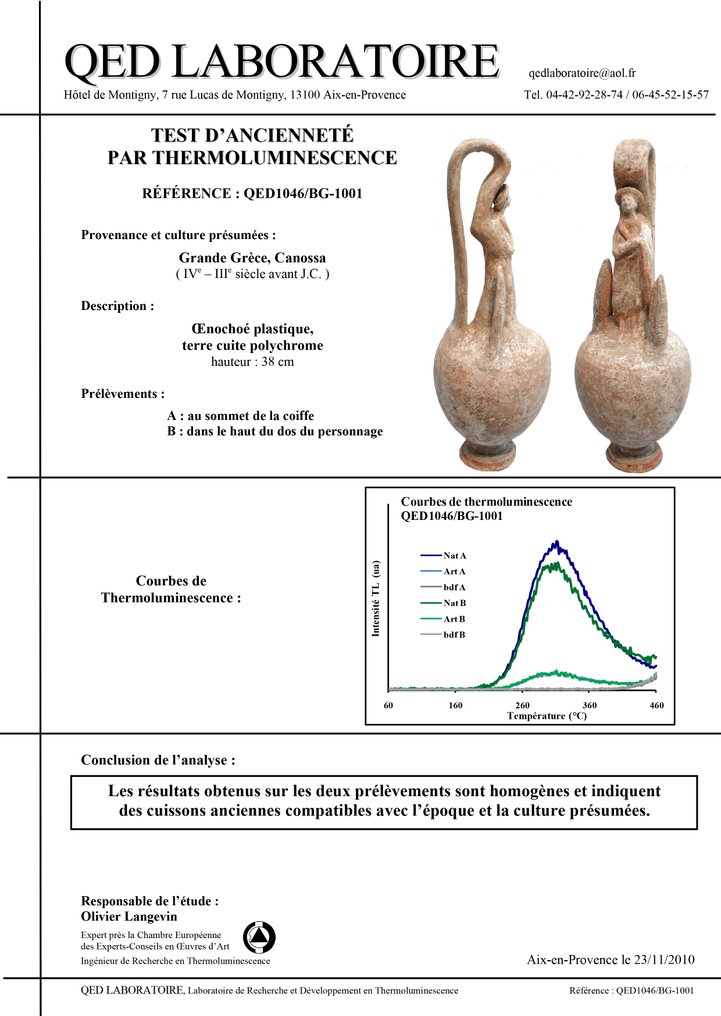
具象希臘陶瓶 Oenochoe, Magna Graecia Canosa 出土,公元前4世紀,陶土材質,高38公分,經 TL 測試,狀態良好,波彩部份修復;來源:私人收藏,巴黎,1970年以前。
AI輔助摘要
賣家描述
figurative Oenochoe
Ancient Greek, Magna Graecia, Canosa, 4th century BC
Height: 38 cm
Pottery
Attached thermoluminescence test
CONDITION: Good overall condition, with some areas of restoration to the polychromy, see photos.
PROVENANCE: Private collection, París, before 1970.
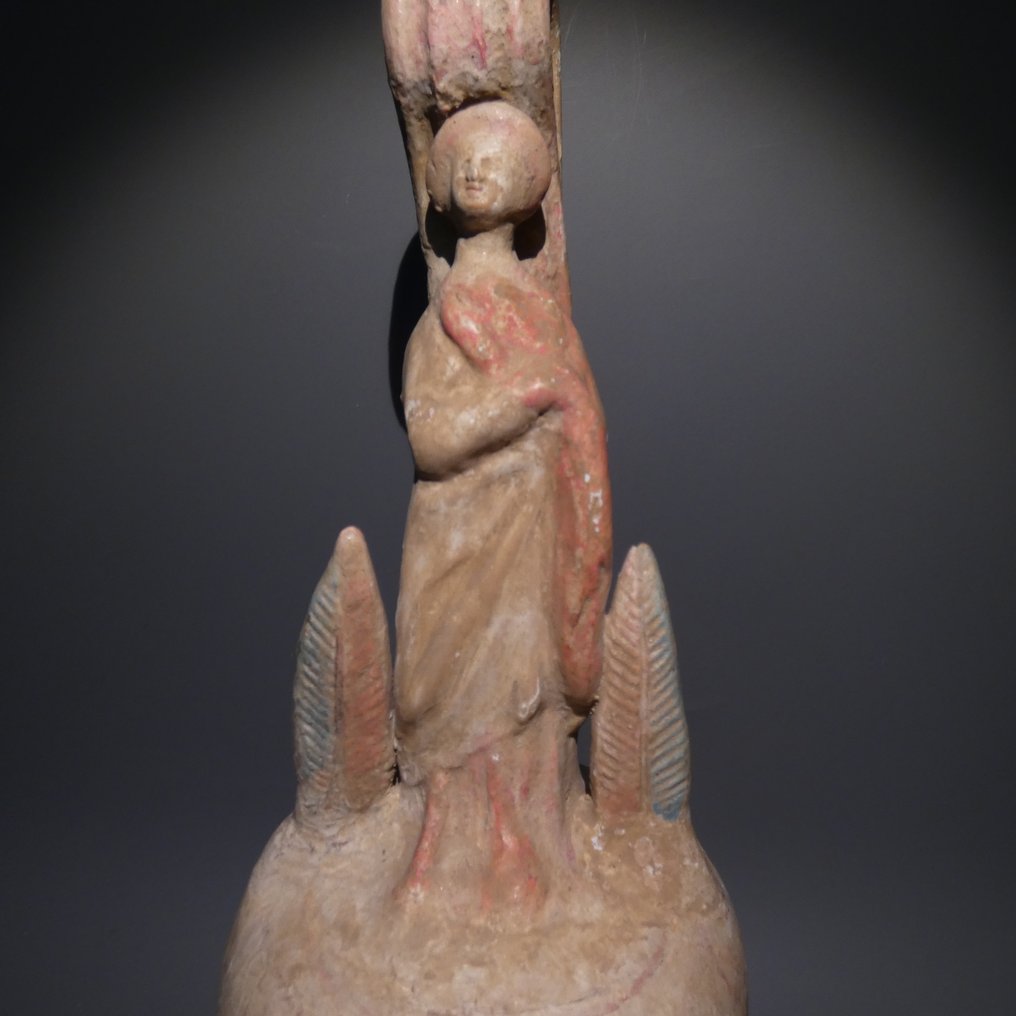
In the shape of a plastic-style oenochoe in polychrome terracotta. On the shoulder, two palmettes surround a young woman standing upright, dressed in a long peplum and a coat, leaning against a curved handle.
Magna Graecia was a region in southern Italy colonized by the Greeks between the 8th and 5th centuries BC. Canosa, known in ancient times as Canusium, although not a direct Greek colony, was strongly influenced by Hellenic culture due to its proximity to important Greek cities such as Taranto. This influence is reflected in its art, architecture, religion, and ceramics. Numerous funerary objects decorated with Greek motifs, such as craters and amphorae, have been found in Canosa, evidence of a strong presence of Greek beliefs and customs. The city was an important cultural and commercial center, where Greek, Roman, and local elements mixed, creating a unique identity. It also stood out for its production of painted pottery and for maintaining religious practices linked to Greek cults. Overall, Canosa represents a remarkable example of the cultural syncretism that characterized Magna Graecia in ancient times.
The oinochoe is a type of ceramic vessel from ancient Greece used mainly for serving wine. Its name comes from the Greek words “oinos” (wine) and “cheo” (to pour). It is characterized by a single vertical handle and a clover-shaped or rounded mouth, which made it easier to pour the liquid without spilling it. It was generally part of the set used in symposia, social gatherings where wine was drunk and various topics were discussed. Oinochoai were made of ceramic and often decorated with mythological scenes, rituals, or scenes from everyday life, especially in the black-figure and red-figure styles. In addition to their functional use, some oinochoai were placed in funerary contexts as offerings. Their shape and decoration vary according to period and region, allowing archaeologists to identify specific styles. These vessels are a valuable source of information about the life and culture of ancient Greece.
賣家的故事
重要提示:
-我們是專業賣家。
- 所有販售的商品均附有專業發票。
- 所有出售的商品都將附有自己的真品證書(保固文件),包括商品的描述、圖像和來源。
- 所有物品將透過帶有保險的私人快遞(DHL 快遞、西班牙 CORREOS 或其他類似的帶有追蹤號碼的快遞)運送。
- 所有物品在發貨時(如果需要)將被聲明為具有 100 年以上歷史的古董,並對其價格進行估價。
- 對於歐盟以外的運輸:交貨時間以清關為準。目的地國家/地區適用的責任和海關法規或進口要求由買方全權負責。我們對海關手續造成的延誤不承擔任何責任。進口稅和增值稅不包含在運費中。應付的進口稅或增值稅取決於目的地國家。任何稅款的支付或與海關當局的任何爭議均由買方自行承擔。
- 對於所提供的某些商品,如果要運送到歐盟以外的地區,則需要獲得出口許可證,該許可證將詳細說明買方根據西班牙立法支付的出口費用。如果有必要,它將在文章的描述中提及,因為並非在所有情況下都是如此。這些費用將添加到發票中,費用由買方承擔。這些出口費用根據最終拍賣價格決定,稅率並非直接適用於出口商品的總價值,而是以部分應用不同的百分比: 6,000 歐元以下:5%。 6,001 歐元至 60,000 歐元:10%。
此出口許可證申請過程最多可能需要 1-2 個月。
- 我們保證他根據與文化財產所有權相關的所有國家和國際法律獲得了這件作品。
由Google翻譯翻譯 figurative Oenochoe
Ancient Greek, Magna Graecia, Canosa, 4th century BC
Height: 38 cm
Pottery
Attached thermoluminescence test
CONDITION: Good overall condition, with some areas of restoration to the polychromy, see photos.
PROVENANCE: Private collection, París, before 1970.
In the shape of a plastic-style oenochoe in polychrome terracotta. On the shoulder, two palmettes surround a young woman standing upright, dressed in a long peplum and a coat, leaning against a curved handle.
Magna Graecia was a region in southern Italy colonized by the Greeks between the 8th and 5th centuries BC. Canosa, known in ancient times as Canusium, although not a direct Greek colony, was strongly influenced by Hellenic culture due to its proximity to important Greek cities such as Taranto. This influence is reflected in its art, architecture, religion, and ceramics. Numerous funerary objects decorated with Greek motifs, such as craters and amphorae, have been found in Canosa, evidence of a strong presence of Greek beliefs and customs. The city was an important cultural and commercial center, where Greek, Roman, and local elements mixed, creating a unique identity. It also stood out for its production of painted pottery and for maintaining religious practices linked to Greek cults. Overall, Canosa represents a remarkable example of the cultural syncretism that characterized Magna Graecia in ancient times.
The oinochoe is a type of ceramic vessel from ancient Greece used mainly for serving wine. Its name comes from the Greek words “oinos” (wine) and “cheo” (to pour). It is characterized by a single vertical handle and a clover-shaped or rounded mouth, which made it easier to pour the liquid without spilling it. It was generally part of the set used in symposia, social gatherings where wine was drunk and various topics were discussed. Oinochoai were made of ceramic and often decorated with mythological scenes, rituals, or scenes from everyday life, especially in the black-figure and red-figure styles. In addition to their functional use, some oinochoai were placed in funerary contexts as offerings. Their shape and decoration vary according to period and region, allowing archaeologists to identify specific styles. These vessels are a valuable source of information about the life and culture of ancient Greece.
賣家的故事
重要提示:
-我們是專業賣家。
- 所有販售的商品均附有專業發票。
- 所有出售的商品都將附有自己的真品證書(保固文件),包括商品的描述、圖像和來源。
- 所有物品將透過帶有保險的私人快遞(DHL 快遞、西班牙 CORREOS 或其他類似的帶有追蹤號碼的快遞)運送。
- 所有物品在發貨時(如果需要)將被聲明為具有 100 年以上歷史的古董,並對其價格進行估價。
- 對於歐盟以外的運輸:交貨時間以清關為準。目的地國家/地區適用的責任和海關法規或進口要求由買方全權負責。我們對海關手續造成的延誤不承擔任何責任。進口稅和增值稅不包含在運費中。應付的進口稅或增值稅取決於目的地國家。任何稅款的支付或與海關當局的任何爭議均由買方自行承擔。
- 對於所提供的某些商品,如果要運送到歐盟以外的地區,則需要獲得出口許可證,該許可證將詳細說明買方根據西班牙立法支付的出口費用。如果有必要,它將在文章的描述中提及,因為並非在所有情況下都是如此。這些費用將添加到發票中,費用由買方承擔。這些出口費用根據最終拍賣價格決定,稅率並非直接適用於出口商品的總價值,而是以部分應用不同的百分比: 6,000 歐元以下:5%。 6,001 歐元至 60,000 歐元:10%。
此出口許可證申請過程最多可能需要 1-2 個月。
- 我們保證他根據與文化財產所有權相關的所有國家和國際法律獲得了這件作品。
由Google翻譯翻譯詳細資料
文化
古希臘,大希臘
世紀/時間框架
Canosa, 4th century BC.
Name of object
Figurative Oenochoe. 38 cm H. TL tested. 4th century BC.
獲得來源
私人收藏
獲得年份
2025
材質
Terracotta
獲得國家
法國
狀態
好
前任擁有者獲得來源
私人收藏
前任擁有者獲得年份
1970
前任擁有者獲得國家
法國
我保證此物品為合法取得,且本人有權出售。
是
免責聲明
Catawiki已告知賣家有關文件的要求,賣家須保證如下: - 物品為合法獲得; - 賣家有權出售和/或出口相關物品; - 賣家依據當地法規(如適用)提供必要的原產地資訊,並辦理所需文件和許可證/執照; - 若許可證/執照的取得發生任何延誤,賣家須通知買家。 參與競標即表示您知悉,根據您的居住國,可能需要進口文件,而取得許可證/執照可能導致您的物品延遲交付。
Catawiki已告知賣家有關文件的要求,賣家須保證如下: - 物品為合法獲得; - 賣家有權出售和/或出口相關物品; - 賣家依據當地法規(如適用)提供必要的原產地資訊,並辦理所需文件和許可證/執照; - 若許可證/執照的取得發生任何延誤,賣家須通知買家。 參與競標即表示您知悉,根據您的居住國,可能需要進口文件,而取得許可證/執照可能導致您的物品延遲交付。
