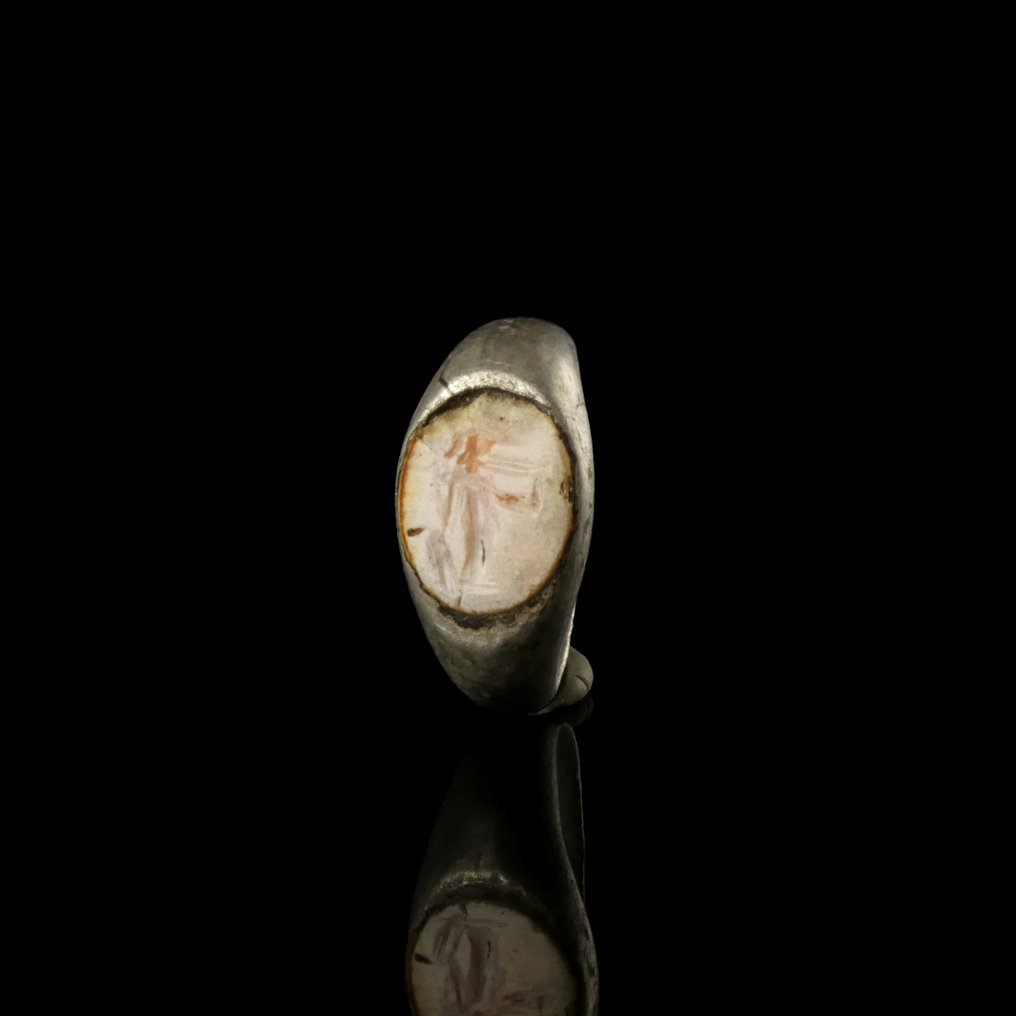
古羅馬 銀 印章戒指,红玉髓浮雕,刻有雅典娜



03
天
19
小時
59
分鐘
22
秒

另有30人對此物品感興趣
 | €70 | |
|---|---|---|
| €65 | |
| €60 | |
Catawiki買家保障
在您收到物品前,我們會妥善保管您的付款。查看詳情
Trustpilot評分 4.4 | 132661 則評論
在Trustpilot獲得極佳評等。
古羅馬銀印戒,橢圓形紅隨浮雕刻有雅典娜女神,環圈逐漸收窄,年代為公元1–2世紀;狀態良好,細節精緻。
AI輔助摘要
賣家描述
Attention: 由于海关规定,我们只能在欧盟内运输。请在出价前确保您拥有有效的欧盟配送地址。
罗马银戒指印章,椭圆形红玉髓浮雕,展示精细刻画的站立女神雅典娜,手持长矛与盾牌,佩戴科林斯头盔。戒环逐渐收窄。
外径:± 22,7 mm
内径:± 18 - 13,5 mm
状态:良好且坚固。浮雕细节极为丰富。随年龄与使用略有磨损。请见图片。
真实性证书:应要求提供(pdf格式)。
-> Roman goddess Minerva (the Greek goddess Athena) was the goddess of strategic warfare and wisdom. Athena represented the disciplined, strategic side of war.
Celtic, Roman and Byzantine rings
-> Ancient Romans appreciated complex jewellery designs and used a wide range of materials. Semi-precious stones like lapis lazuli, emeralds, jasper and carnelian were very popular. They were imported from various parts of the Roman Empire or via the trade routes which stretched from the Baltic area, the Persian Gulf, the Silk Road to the Far East.
Rings were worn by both men and women, often richly decorated with intaglios, (semi-)precious gemstones and metals. Gems forming cameos with portraits, gods or other symbols were used in rings, pendants and earrings. The lower classed Romans used cheaper imitations of glass or various metal alloys to reduce the cost of manufacture while displaying their social status.
Roman men typically wore one or more finger rings and fibulae. Jewellery was of particular importance to women in Roman society. They had the right to buy, sell or barter their jewellery independently as it was considered their own personal property. Jewellery for children not only showed the wealth and social status of the parents, it often included amulets to protect the children from illness and ward off evil forces.
Material:
This object has been carefully examined for its material and surface characteristics.
Laboratory analysis (e.g. XRF) is not routinely undertaken in private collecting, and destructive testing is avoided as it causes permanent damage to archaeological material.
Before modern hallmarking, gold and silver alloys varied depending on local resources, recycling practices and economic conditions.
賣家的故事
由Google翻譯翻譯Attention: 由于海关规定,我们只能在欧盟内运输。请在出价前确保您拥有有效的欧盟配送地址。
罗马银戒指印章,椭圆形红玉髓浮雕,展示精细刻画的站立女神雅典娜,手持长矛与盾牌,佩戴科林斯头盔。戒环逐渐收窄。
外径:± 22,7 mm
内径:± 18 - 13,5 mm
状态:良好且坚固。浮雕细节极为丰富。随年龄与使用略有磨损。请见图片。
真实性证书:应要求提供(pdf格式)。
-> Roman goddess Minerva (the Greek goddess Athena) was the goddess of strategic warfare and wisdom. Athena represented the disciplined, strategic side of war.
Celtic, Roman and Byzantine rings
-> Ancient Romans appreciated complex jewellery designs and used a wide range of materials. Semi-precious stones like lapis lazuli, emeralds, jasper and carnelian were very popular. They were imported from various parts of the Roman Empire or via the trade routes which stretched from the Baltic area, the Persian Gulf, the Silk Road to the Far East.
Rings were worn by both men and women, often richly decorated with intaglios, (semi-)precious gemstones and metals. Gems forming cameos with portraits, gods or other symbols were used in rings, pendants and earrings. The lower classed Romans used cheaper imitations of glass or various metal alloys to reduce the cost of manufacture while displaying their social status.
Roman men typically wore one or more finger rings and fibulae. Jewellery was of particular importance to women in Roman society. They had the right to buy, sell or barter their jewellery independently as it was considered their own personal property. Jewellery for children not only showed the wealth and social status of the parents, it often included amulets to protect the children from illness and ward off evil forces.
Material:
This object has been carefully examined for its material and surface characteristics.
Laboratory analysis (e.g. XRF) is not routinely undertaken in private collecting, and destructive testing is avoided as it causes permanent damage to archaeological material.
Before modern hallmarking, gold and silver alloys varied depending on local resources, recycling practices and economic conditions.
賣家的故事
由Google翻譯翻譯詳細資料
文化
古羅馬
世紀/時間框架
1st - 2nd century AD
Name of object
Seal Ring, carnelian intaglio with Athena
獲得來源
古董市場
獲得年份
2024
材質
銀
獲得國家
荷蘭
狀態
好
前任擁有者獲得來源
古董市場
前任擁有者獲得年份
2024
前任擁有者獲得國家
荷蘭
我保證此物品為合法取得,且本人有權出售。
是
真偽
原創/正版
免責聲明
Catawiki已告知賣家有關文件的要求,賣家須保證如下: - 物品為合法獲得; - 賣家有權出售和/或出口相關物品; - 賣家依據當地法規(如適用)提供必要的原產地資訊,並辦理所需文件和許可證/執照; - 若許可證/執照的取得發生任何延誤,賣家須通知買家。 參與競標即表示您知悉,根據您的居住國,可能需要進口文件,而取得許可證/執照可能導致您的物品延遲交付。
Catawiki已告知賣家有關文件的要求,賣家須保證如下: - 物品為合法獲得; - 賣家有權出售和/或出口相關物品; - 賣家依據當地法規(如適用)提供必要的原產地資訊,並辦理所需文件和許可證/執照; - 若許可證/執照的取得發生任何延誤,賣家須通知買家。 參與競標即表示您知悉,根據您的居住國,可能需要進口文件,而取得許可證/執照可能導致您的物品延遲交付。
