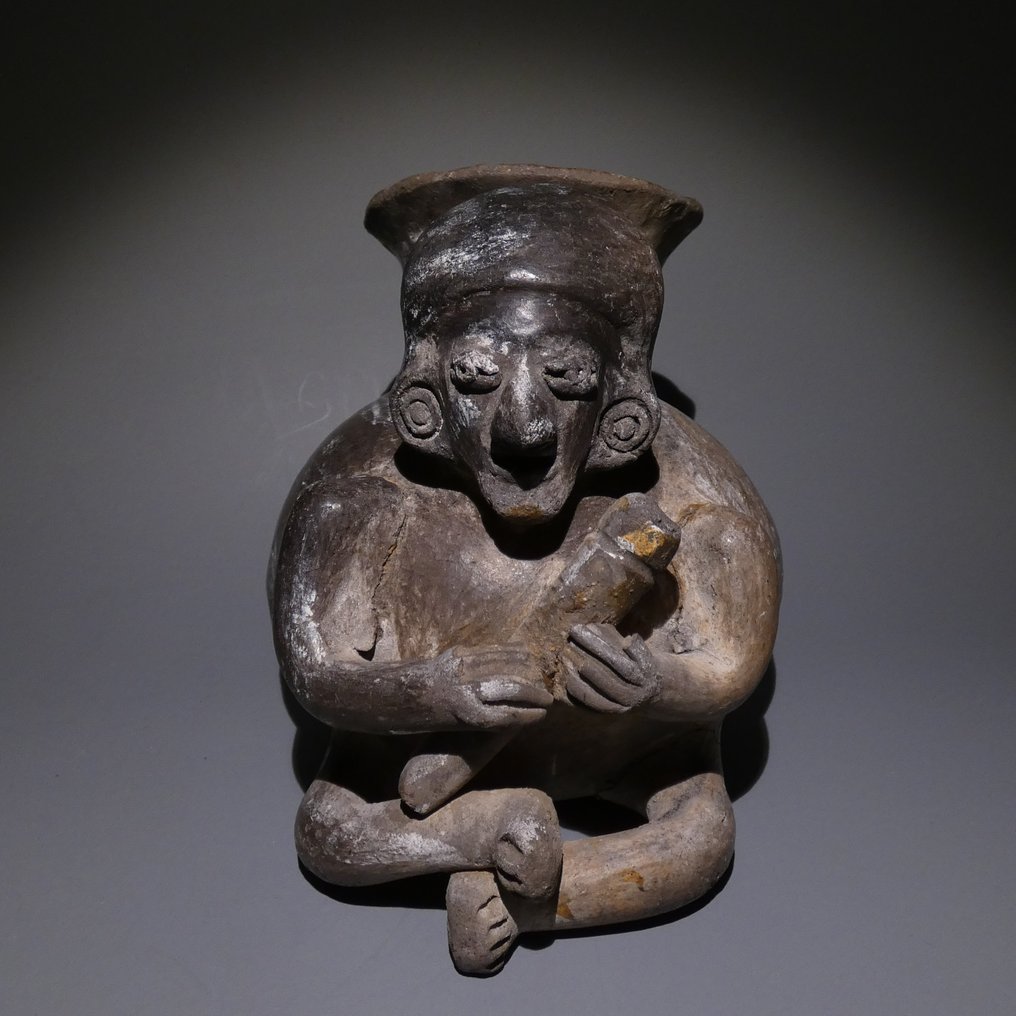
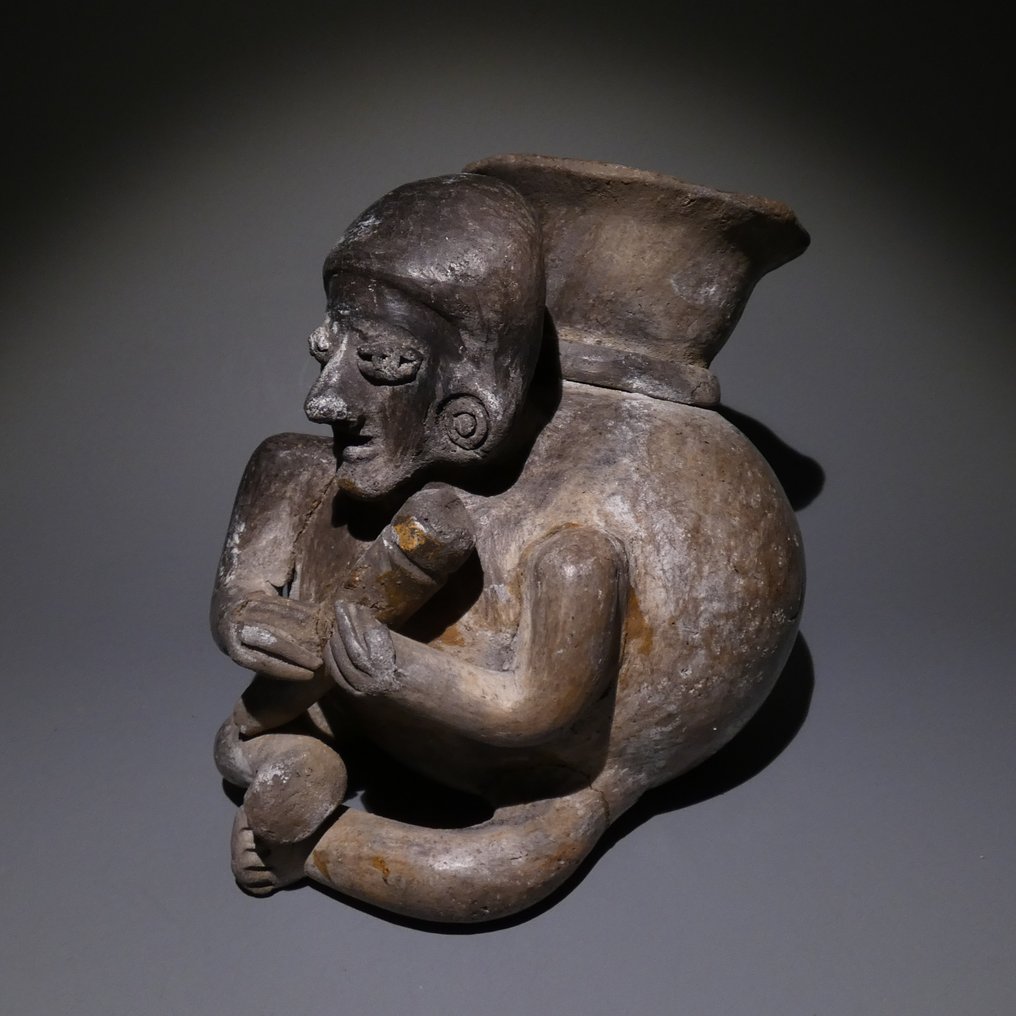
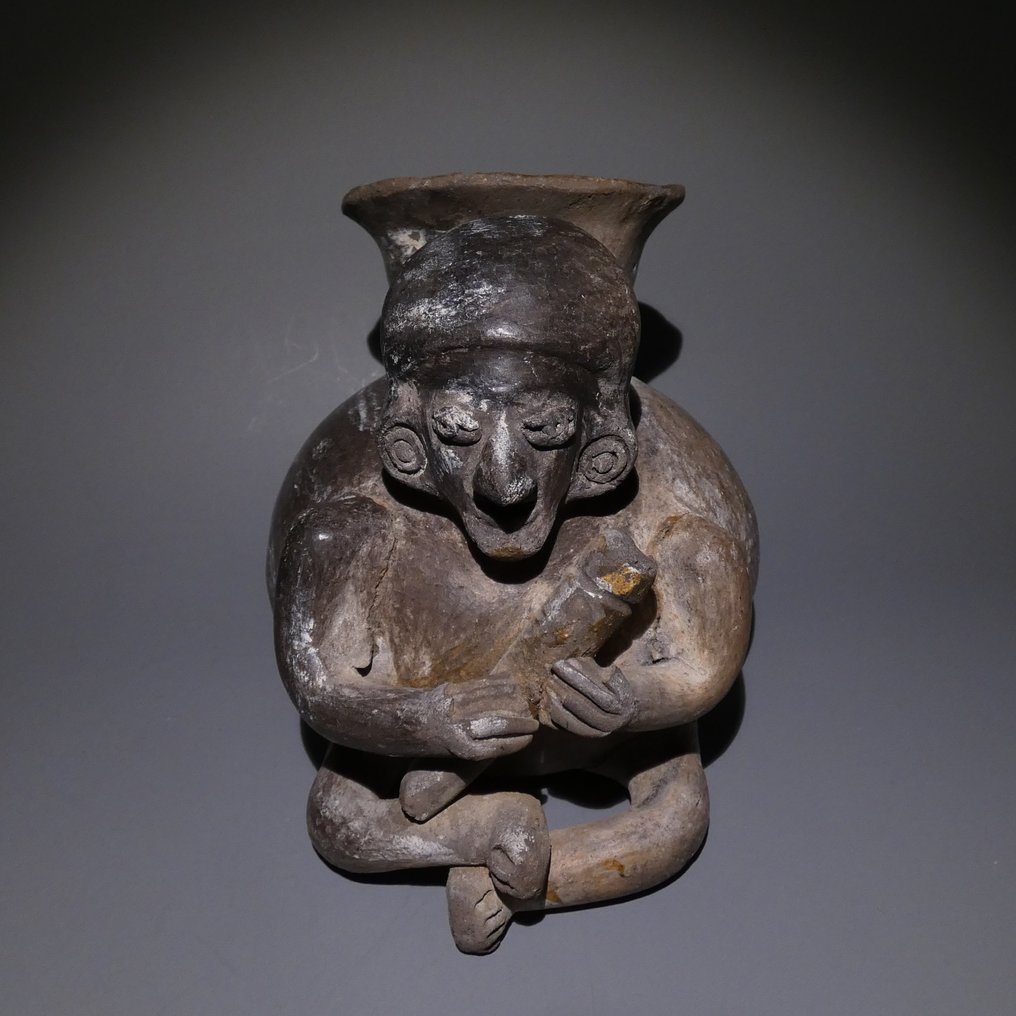
墨西哥,科利马, Terracotta 具象器皿。高13 cm。公元前100年—公元250年。西班牙出口许可证


02
天
10
小時
10
分鐘
48
秒

沒有出價記錄
Catawiki買家保障
在您收到物品前,我們會妥善保管您的付款。查看詳情
Trustpilot評分 4.4 | 134742 則評論
在Trustpilot獲得極佳評等。
科利馬文化陶土人像器皿,高13公分,直徑14公分,公元前100年至公元250年,來源於私人收藏,於2024年自西班牙取得,含真偽證書及西班牙出口許可證;品相良好。
AI輔助摘要
賣家描述
figurative vessel.
Colima, Mexico, 100 BC - 250 AD.
Terracotta
13 cm height and 14 cm diameter
Provenance:
- Private collection, J. R. (1928 - 2013) Barcelona, formed since 1950 until 2000. Thence by descendent.
DOCUMENTS:
- Spanish Export License.
Condition: Good condition, see photos.
The Colima people lived in northwest Mexico, in a rugged, low-lying coastal region carved by valleys, each with its own ecology and a warm, humid climate.
Colima ceramics display a wide variety of figures and shapes, but little variation in technique. Most pieces have a burnished red finish and some are decorated with orange or white incisions. Molded figures are common, especially of plants, animals (especially dogs) and seashells. Human representations typically feature dwarfs and hunchbacks more than others, and few female forms. Many of these figures have “coffee-bean” eyes and are dressed in finely detailed traditional attire. Little is known of Colima stonework; only a few pieces such as mace heads, small masks and figurines have been found. These people also practiced basketweaving and weaving, and used metallurgy to make objects such as needles, axes, rattles, nose rings and ear ornaments.
The vast majority of ceramic pieces that have been ascribed to this culture are grave goods found in the tombs of individuals of high social rank. The Colima buried their dead in family tombs up to 30 meters deep, some with multiple chambers. The bodies were accompanied by a wide variety of grave goods, including ceramic statuettes of armed men, which served as symbolic guardians. Ceramic sculptures of dogs were another common grave good, and were believed to be the emissaries of Xolotl, the god of death.
Notes:
- The piece includes authenticity certificate.
- The piece includes Spanish Export License (Passport for European Union). NOT TAXES.
- According to Spanish legislation, items sent outside the European Union are subject to export taxes and will be added to the invoice, at the buyer's expense. These export fees are fixed on the final auction price and the tax rate is not applied directly on the total value of the item to be exported, but rather the different percentages by sections are applied to it:
- Up to 6,000 euros: 5%.
- From 6,001 to 60,000 euros: 10%.
This export permit application process can take between 1-2 months maximum.
- The seller guarantees that he acquired this piece according to all national and international laws related to the ownership of cultural property. Provenance statement seen by Catawiki.
賣家的故事
重要提示:
-我們是專業賣家。
- 所有販售的商品均附有專業發票。
- 所有出售的商品都將附有自己的真品證書(保固文件),包括商品的描述、圖像和來源。
- 所有物品將透過帶有保險的私人快遞(DHL 快遞、西班牙 CORREOS 或其他類似的帶有追蹤號碼的快遞)運送。
- 所有物品在發貨時(如果需要)將被聲明為具有 100 年以上歷史的古董,並對其價格進行估價。
- 對於歐盟以外的運輸:交貨時間以清關為準。目的地國家/地區適用的責任和海關法規或進口要求由買方全權負責。我們對海關手續造成的延誤不承擔任何責任。進口稅和增值稅不包含在運費中。應付的進口稅或增值稅取決於目的地國家。任何稅款的支付或與海關當局的任何爭議均由買方自行承擔。
- 對於所提供的某些商品,如果要運送到歐盟以外的地區,則需要獲得出口許可證,該許可證將詳細說明買方根據西班牙立法支付的出口費用。如果有必要,它將在文章的描述中提及,因為並非在所有情況下都是如此。這些費用將添加到發票中,費用由買方承擔。這些出口費用根據最終拍賣價格決定,稅率並非直接適用於出口商品的總價值,而是以部分應用不同的百分比: 6,000 歐元以下:5%。 6,001 歐元至 60,000 歐元:10%。
此出口許可證申請過程最多可能需要 1-2 個月。
- 我們保證他根據與文化財產所有權相關的所有國家和國際法律獲得了這件作品。
由Google翻譯翻譯 figurative vessel.
Colima, Mexico, 100 BC - 250 AD.
Terracotta
13 cm height and 14 cm diameter
Provenance:
- Private collection, J. R. (1928 - 2013) Barcelona, formed since 1950 until 2000. Thence by descendent.
DOCUMENTS:
- Spanish Export License.
Condition: Good condition, see photos.
The Colima people lived in northwest Mexico, in a rugged, low-lying coastal region carved by valleys, each with its own ecology and a warm, humid climate.
Colima ceramics display a wide variety of figures and shapes, but little variation in technique. Most pieces have a burnished red finish and some are decorated with orange or white incisions. Molded figures are common, especially of plants, animals (especially dogs) and seashells. Human representations typically feature dwarfs and hunchbacks more than others, and few female forms. Many of these figures have “coffee-bean” eyes and are dressed in finely detailed traditional attire. Little is known of Colima stonework; only a few pieces such as mace heads, small masks and figurines have been found. These people also practiced basketweaving and weaving, and used metallurgy to make objects such as needles, axes, rattles, nose rings and ear ornaments.
The vast majority of ceramic pieces that have been ascribed to this culture are grave goods found in the tombs of individuals of high social rank. The Colima buried their dead in family tombs up to 30 meters deep, some with multiple chambers. The bodies were accompanied by a wide variety of grave goods, including ceramic statuettes of armed men, which served as symbolic guardians. Ceramic sculptures of dogs were another common grave good, and were believed to be the emissaries of Xolotl, the god of death.
Notes:
- The piece includes authenticity certificate.
- The piece includes Spanish Export License (Passport for European Union). NOT TAXES.
- According to Spanish legislation, items sent outside the European Union are subject to export taxes and will be added to the invoice, at the buyer's expense. These export fees are fixed on the final auction price and the tax rate is not applied directly on the total value of the item to be exported, but rather the different percentages by sections are applied to it:
- Up to 6,000 euros: 5%.
- From 6,001 to 60,000 euros: 10%.
This export permit application process can take between 1-2 months maximum.
- The seller guarantees that he acquired this piece according to all national and international laws related to the ownership of cultural property. Provenance statement seen by Catawiki.
賣家的故事
重要提示:
-我們是專業賣家。
- 所有販售的商品均附有專業發票。
- 所有出售的商品都將附有自己的真品證書(保固文件),包括商品的描述、圖像和來源。
- 所有物品將透過帶有保險的私人快遞(DHL 快遞、西班牙 CORREOS 或其他類似的帶有追蹤號碼的快遞)運送。
- 所有物品在發貨時(如果需要)將被聲明為具有 100 年以上歷史的古董,並對其價格進行估價。
- 對於歐盟以外的運輸:交貨時間以清關為準。目的地國家/地區適用的責任和海關法規或進口要求由買方全權負責。我們對海關手續造成的延誤不承擔任何責任。進口稅和增值稅不包含在運費中。應付的進口稅或增值稅取決於目的地國家。任何稅款的支付或與海關當局的任何爭議均由買方自行承擔。
- 對於所提供的某些商品,如果要運送到歐盟以外的地區,則需要獲得出口許可證,該許可證將詳細說明買方根據西班牙立法支付的出口費用。如果有必要,它將在文章的描述中提及,因為並非在所有情況下都是如此。這些費用將添加到發票中,費用由買方承擔。這些出口費用根據最終拍賣價格決定,稅率並非直接適用於出口商品的總價值,而是以部分應用不同的百分比: 6,000 歐元以下:5%。 6,001 歐元至 60,000 歐元:10%。
此出口許可證申請過程最多可能需要 1-2 個月。
- 我們保證他根據與文化財產所有權相關的所有國家和國際法律獲得了這件作品。
由Google翻譯翻譯詳細資料
文化
Colima, Mexico,
世紀/時間框架
100 BC - 250 AD.
Name of object
Figurative vessel. 13 cm H. 100 BC - 250 AD. Spanish Export License
獲得來源
私人收藏
獲得年份
2024
材質
Terracotta
獲得國家
西班牙
狀態
好
前任擁有者獲得來源
私人收藏
前任擁有者獲得年份
1960
前任擁有者獲得國家
西班牙
我保證此物品為合法取得,且本人有權出售。
是
真偽
原創/正版
免責聲明
Catawiki已告知賣家有關文件的要求,賣家須保證如下: - 物品為合法獲得; - 賣家有權出售和/或出口相關物品; - 賣家依據當地法規(如適用)提供必要的原產地資訊,並辦理所需文件和許可證/執照; - 若許可證/執照的取得發生任何延誤,賣家須通知買家。 參與競標即表示您知悉,根據您的居住國,可能需要進口文件,而取得許可證/執照可能導致您的物品延遲交付。
Catawiki已告知賣家有關文件的要求,賣家須保證如下: - 物品為合法獲得; - 賣家有權出售和/或出口相關物品; - 賣家依據當地法規(如適用)提供必要的原產地資訊,並辦理所需文件和許可證/執照; - 若許可證/執照的取得發生任何延誤,賣家須通知買家。 參與競標即表示您知悉,根據您的居住國,可能需要進口文件,而取得許可證/執照可能導致您的物品延遲交付。
