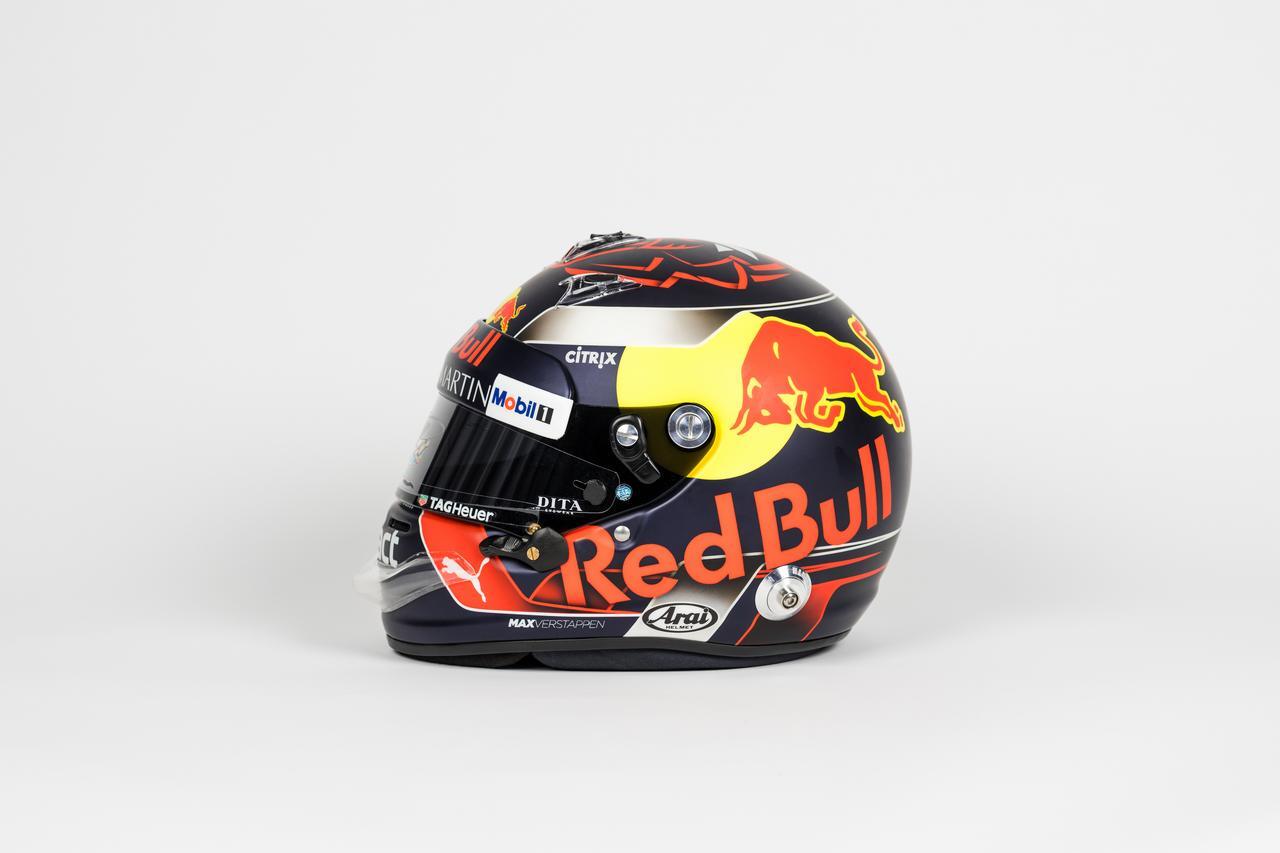
法拉利 - Formula 1 - 麥可·舒馬克 - 2002 - 賽程表, 书、剪贴板和日历


04
天
01
小時
13
分鐘
32
秒

另有4人對此物品感興趣
 | €2 | |
|---|---|---|
 | €1 |
Catawiki買家保障
在您收到物品前,我們會妥善保管您的付款。查看詳情
Trustpilot評分 4.4 | 135538 則評論
在Trustpilot獲得極佳評等。
原裝體育紀念品套裝,包括1974年蒙地卡羅大獎賽剪板、2002年F1賽季書籍,以及26本口袋日曆,狀態良好。
AI輔助摘要
賣家描述
Sports Memorabilia Set - Formula One - Monaco Grand Prix clipboard, F1 Book and 26 Calendars
Monaco Grand Prix clipboard 1974 from the Automobile Club of Monaco
The 1974 Monaco Grand Prix was one of the most dramatic races in Formula 1 history, held on the Monte Carlo street circuit
Winner: Ronnie Peterson (Team Lotus), 2nd: Jody Scheckter, 3rd: Jean-Pierre Jarier
The race was marked by a chaotic final phase:
In the final laps, several leaders retired or had mechanical problems. Niki Lauda, who dominated the race with Ferrari, faced issues and lost the victory. Emerson Fittipaldi also retired when in a strong position.
This allowed Ronnie Peterson to take the lead almost at the end — an unexpected and memorable victory.
The 1974 season was incredibly competitive. The World Championship was ultimately won by Emerson Fittipaldi.
Monte Carlo, Monaco
Features: narrow streets, few overtaking zones, and high risk — one of the most iconic F1 circuits.
Ronnie Peterson
Bengt Ronnie Peterson (1944–1978) was a Swedish Formula 1 driver regarded as one of the fastest of the 1970s. Known as the “SuperSwede,” he competed from 1970 to 1978 and became a legendary figure for his speed and aggressive driving style.
Key facts
• Born: February 14, 1944, Örebro, Sweden
• Died: September 11, 1978, Milan, Italy
• Primary team: Team Lotus
• Grand Prix wins: 10
• Podiums: 26 • Poles: 14 • Total points: 206
Beginnings and Rise
Peterson started in karting before progressing to Formula 3 and winning the European Formula 2 Championship in 1971. In the same year he emerged in Formula 1 with March, finishing as World Vice-Champion behind Jackie Stewart. His talent took him to Lotus in 1973, where he claimed his first victory at the French Grand Prix and finished third in the championship.
Years with Lotus and the peak
Between 1973 and 1974, Peterson won seven races with the Lotus 72, establishing himself as one of the most spectacular drivers in the field. After stints with March and Tyrrell, he returned to Lotus in 1978 to drive the revolutionary Lotus 79 with ground effect, serving as teammate to Mario Andretti. Although often the second driver, he won two races and again finished as vice-champion.
Death and legacy
Peterson suffered a severe crash at the 1978 Italian Grand Prix in Monza, dying the following day from complications of leg injuries. He had signed with McLaren for 1979. His death prompted safety reforms in Formula 1 and left a lasting legacy as the most successful Swedish driver in the sport.
Style and reputation
Known for bold driving and technical prowess, Ronnie Peterson was admired by colleagues and fans for his humility and team spirit. He is remembered as one of the most talented drivers never to win a World Championship.
The Automobile Club of Monaco (ACM) is the body responsible for organizing and promoting the major motor sport events in Monaco.
Founded in 1890, the ACM began as a club of motorists and evolved into one of the most prestigious organizations in motor sport.
The club organizes some of the world’s most famous events:
Monaco Grand Prix (F1), Monte Carlo Rally and Monaco E-Prix
It is a member of the Fédération Internationale de l'Automobile (FIA), the global governing body of motorsport.
The ACM has a peculiarity: unlike other Grands Prix, it itself manages much of the organization of the Monte Carlo street circuit.
The Monaco Grand Prix track is not a permanent race track — the ACM transforms the city streets into a circuit every year, requiring huge logistics.
Rainier III was the ruler of Monaco for almost 56 years, and one of the most important figures in the principality's history.
Full name: Rainier Louis Henri Maxence Bertrand Grimaldi
Born: May 31, 1923
Died: April 6, 2005
Reign: 1949 – 2005
Rainier III profoundly transformed Monaco:
Modernized the economy, reducing dependence on gambling (casinos).
Developed tourism and attracted international investment.
Expanded the country’s territory through land reclamation at sea.
Married Hollywood actress Grace Kelly in 1956 — one of the century’s most publicized weddings.
During his reign, the Monaco Grand Prix became one of the most prestigious F1 races, with strong support from the princely family.
After his death, he was succeeded by his son - Albert II
Rainier III is often called the “Builder Prince,” due to the large-scale projects and urban transformations he led in Monaco.
Article in very good conservation condition, no visible signs of wear or age
Ideal for sports memorabilia collectors, especially Formula 1 enthusiasts, of the Automobile Club of Monaco and the Monaco Grand Prix
F1 book - 2002 season
The book covers everything related to the 2002 Formula 1 season, including drivers, teams, circuits and statistics
Mentions drivers such as:
Michael Schumacher • Rubens Barrichello
• David Coulthard • Kimi Räikkönen
• Ralf Schumacher • Juan Pablo Montoya
• Nick Heidfeld • Felipe Massa
• Giancarlo Fisichella • Takuma Sato
• Jacques Villeneuve • Olivier Panis
• Jarno Trulli • Jenson Button
• Eddie Irvine • Pedro de la Rosa
• Heinz-Harald Frentzen • Enrique Bernoldi
• Mark Webber • Alexander Yoong
• Mika Salo • Allan McNish
Interview with Michael Schumacher
Teams: FERRARI • McLAREN • WILLIAMS
• SAUBER • JORDAN • BAR • RENAULT
• JAGUAR • ARROWS • MINARDI • TOYOTA
Circuits: Australia Malta Brazil São Marino Spain Austria Monaco Canada Europe Great Britain France Germany Hungary Belgium Italy United States Japan
Ideal for motorsport fans and memorabilia collectors, especially Formula 1 enthusiasts
Book written in French
26 Pocket Calendars on F1 Teams
Teams and Drivers
Lotus-Renault and Elio de Angelis
When talking about the “Lotus Renault” from the Elio de Angelis era, we refer to the historic Team Lotus, which used Renault turbo engines in the 1980s. It has no direct relation to the Lotus Renault GP of 2011, other than the Lotus name.
The Lotus-Renault partnership
In 1983, Lotus abandoned the traditional Ford Cosworth atmospheric engines and switched to Renault 1.5 L turbo V6 engines, as F1 entered the turbo era. The first competitive model of this phase was the Lotus 94T, designed by Gérard Ducarouge, which revitalized the team.
The big year: 1984
De Angelis's peak with Lotus-Renault occurred in 1984 with the Lotus 95T.
Finished the season 3rd, behind only Niki Lauda and Alain Prost.
Achieved several podiums despite not winning a race.
Lotus finished 3rd in the Constructors' Championship, the best result for the team since the late 1970s.
Many consider 1984 the best season of De Angelis, for his enormous consistency. He scored points in 11 of the 16 races that season.
Imola victory
In 1985, at the wheel of the Lotus 97T, equipped with the Renault turbo EF4, De Angelis claimed his last F1 victory at the San Marino Grand Prix. It was a special season because his new teammate was a young Ayrton Senna.
From mid-1985, Lotus focused increasingly on Senna, who was exceptionally fast in qualifying. De Angelis remained competitive and consistent, but left the team at the end of the season.
The De Angelis Lotus-Renault is remembered for:
The iconic John Player Special black-and-gold livery.
Powerful Renault turbo engines.
De Angelis's elegant driving style.
The transition between two generations of drivers: De Angelis, the “gentleman” of F1, and Senna, the future superstar.
Many fans consider the Lotus 95T and 97T among the most beautiful and charismatic cars of the turbo era.
Brabham-BMW
Brabham-BMW was one of the most iconic teams of the turbo era in the 1980s. The partnership between Motor Racing Developments (Brabham) and BMW produced one of the most revolutionary cars and one of the most feared engines in F1 history.
The protagonists
Nelson Piquet
Riccardo Patrese
Gordon Murray (designer)
Bernie Ecclestone (team owner)
Paul Rosche (engine lead)
The legendary BT52
The most famous car of the partnership was the Brabham BT52, launched in 1983. After the FIA banned ground effect, Gordon Murray created a highly original single-seater, with a needle-like nose, radiators tucked behind the cockpit and a large rear wing to recover downforce.
The BMW turbo engine
The BT52’s heart was the 1.5-liter turbo BMW M12/13, an inline-four engine that became legendary. In race trim it produced around 650 hp, but in qualifying, it was estimated to exceed 1,200 hp, making it one of the most powerful engines ever in F1.
The 1983 title
In 1983, Piquet won the World Championship at the wheel of the BT52, becoming the first F1 world champion to win with a turbo engine. Brabham finished third in the Constructors' Championship.
Why is it so special?
For many turbo-era fans, Brabham-BMW represents:
Innovative engineering by Gordon Murray.
Brutal BMW turbo power.
Piquet’s tactical intelligence.
The classic Parmalat white-and-blue livery.
Alongside Senna and De Angelis’s Lotus-Renault, Mansell and Piquet’s Williams-Honda, and Prost and Lauda’s McLaren-TAG Porsche, Brabham-BMW is considered one of the era’s most emblematic teams.
Renault and Patrick Tambay
The link between Patrick Tambay and Renault occurred in the 1984-1985 seasons, at the tail end of Renault’s stint as a full factory team in the first turbo era of F1.
Joining Renault
After stints with Scuderia Ferrari and Theodore, Tambay was hired by Renault to replace Alain Prost, who had left the team at the end of 1983.
It was a tough task: Prost had been World Vice-Champion in 1983 and was Renault’s flagship.
Renault RE50 (1984)
In 1984, Tambay drove the:
Renault RE50
Renault continued to have some of the turbo engines on the grid, but reliability was no longer as superior as in previous years, and teams like McLaren and Brabham were very strong.
Tambay achieved several podiums during the season and finished 7th in the championship.
Renault RE60 (1985)
In 1985 appeared the:
Renault RE60
The car proved less competitive than expected.
Despite this, Tambay achieved some respectable results and helped Renault stay in the midfield.
The end of Renault’s official team
At the end of 1985, Renault decided to withdraw as a factory team.
The brand continued as an engine supplier, later becoming one of the most successful manufacturers in F1 history, powering champions such as:
Williams
Benetton
Red Bull Racing
Why is it remembered?
Renault-Tambay symbolizes the end of an era:
The first F1 turbo engines that won.
France’s attempt to win a world title with a French team, engine and driver.
The final years of Renault as an official team before 1985 withdrawal.
When fans talk about the Renault of the 1980s, they often recall Jean-Pierre Jabouille, René Arnoux and Prost. But Tambay and Warwick were the men who drove Renault’s last official yellow cars of the first turbo era.
A fun fact: the yellow-and-black Renault of 1984–85 is frequently regarded as one of the decade’s most stylish cars, especially the RE50 driven by Tambay and Warwick.
Williams-Honda and Keke Rosberg
The partnership between Keke Rosberg and Williams was one of the most important of the 1980s, but there’s an interesting detail: Rosberg won his World Championship in 1982 with Ford Cosworth engines, before Honda arrived.
The arrival of Honda
In 1983, Williams began collaborating with Honda. Initially, Honda turbo engines were still developing and were less competitive than Renault or BMW.
Rosberg was instrumental in helping develop this new Williams-Honda combination.
First Honda-Williams victories
In 1984, Rosberg secured the partnership’s first win at the:
Dallas Grand Prix, 1984
A historic result for Honda, signaling its emergence as a turbo-era powerhouse.
The legendary FW10
In 1985 appeared the:
Williams FW10
Equipped with the Honda RA165E V6 turbo, it became one of the fastest cars on the grid.
Rosberg won:
Detroit Grand Prix, 1985
Australian Grand Prix, 1985
His teammate was:
Nigel Mansell
The “King of Qualifying”
Rosberg was renowned for his pure speed.
One of the era’s most famous laps occurred at:
British Grand Prix, 1985
where he achieved a pole with an average speed over 258 km/h, extraordinary for the time.
The end of the partnership
At the end of 1985, Rosberg left Williams to race for:
McLaren
In 1986, Williams-Honda became the championship’s dominant team, with:
Nigel Mansell
Nelson Piquet
Many fans like to say Rosberg helped build the technical base that allowed Williams-Honda to dominate F1 in the following years.
Why is it remembered?
Keke Rosberg’s Williams-Honda represents:
The transition of Williams from the Cosworth era to the turbo era.
The birth of Honda power in modern F1.
An extremely fast and brave driver.
Some of the decade’s most beautiful cars, with Williams-Honda’s classic white, yellow and blue livery.
Although he did not win a title with Honda, Rosberg was the key piece that linked the 1982 Williams to the dominant Williams of 1986–1987.
McLaren TAG and Niki Lauda
The partnership of Niki Lauda and a TAG-Porsche powered McLaren is one of the most memorable stories of 1980s F1.
The unexpected comeback
Lauda had left F1 at the end of 1979 after his stint with Ferrari. Many believed his career was over.
But in 1982, McLaren chief Ron Dennis persuaded him to return.
Lauda returned to driving a McLaren and quickly proved he remained among the world’s best.
The arrival of the TAG-Porsche engine
In 1984, McLaren began using the engine:
TAG-Porsche TTE P01
The project was funded by TAG and developed by Porsche.
The car was the legendary:
McLaren MP4/2
Driven by:
Niki Lauda
Alain Prost
The 1984 title
The 1984 season produced one of the sport’s most famous battles.
Lauda won the championship by just half a point over Prost, the smallest margin in F1 World Championship history.
Lauda’s results:
5 wins
Consistent overall performance
Excellent race and fuel management
While Prost was often faster per lap, Lauda’s edge came from experience and consistency.
The master of intelligence
Lauda was not known for being the flashiest driver on track.
He was known for:
Sharp technical analysis.
Ability to develop the car.
Tire and fuel management.
Strategic intelligence.
Many engineers of the era considered his technical feedback exceptional.
1985: last win
In 1985, Lauda achieved his last F1 win:
Dutch Grand Prix, 1985
It was also his 25th and final Grand Prix victory.
Definitive retirement
At the end of 1985, Lauda retired from Formula 1.
Left the sport with:
3 World titles.
25 wins.
Reputation as one of the most intelligent and resilient drivers ever.
The McLaren TAG-Porsche
The combination:
Lauda
Prost
Ron Dennis
Tag-Porsche engine
transformed McLaren into the dominant force in mid-80s F1.
The MP4/2 won 12 of 16 races in 1984, an impressive dominance for the era.
Why is it so special?
For many turbo-era fans, Niki Lauda’s McLaren TAG-Porsche represents the peak of efficiency:
Not the flashiest car.
Not the brutal BMW turbo power.
Not the aggressive visuals of Lotus-Renault.
But it was extremely balanced, reliable and effective.
Thus, when discussing the era’s great combos — Brabham-BMW/Piquet, Lotus-Renault/Senna, Williams-Honda/Mansell and Rosberg — McLaren TAG-Porsche/Lauda almost always rises as one of the decade’s referential benchmarks.
Ferrari and Michele Alboreto
The partnership between Michele Alboreto and Scuderia Ferrari is one of the most moving stories of 1980s F1.
Alboreto was Ferrari’s last driver to seriously contend for a world title before Michael Schumacher’s era.
Joining Ferrari
After standout performance with Tyrrell, Alboreto was contracted by Ferrari for the 1984 season.
For the tifosi, he was the ideal candidate:
Italian.
Very fast.
Technically intelligent.
Elegant in driving.
The Italian press even saw him as the natural successor to Gilles Villeneuve.
Ferrari 156/85 and the title fight
The standout year was 1985.
Alboreto drove the:
Ferrari 156/85
Equipped with the Ferrari V6 turbo engine.
During the first half of the season, Alboreto seemed to have everything needed to win the championship.
Wins:
Canadian Grand Prix 1985
German Grand Prix 1985
European Grand Prix 1985
Detroit Grand Prix 1985
San Marino Grand Prix 1985
Leading the championship at mid-season.
Campaign collapse
In the second half of the year, the situation changed.
Ferrari began to suffer:
Reliability problems.
Turbo failures.
Fuel consumption issues.
Lower development of the car.
Meanwhile, Prost’s McLaren showed impressive consistency.
Alboreto lost valuable points with several retirements.
In the end:
Prost was champion.
Alboreto finished runner-up.
It was Ferrari’s best driver result between Jody Scheckter’s title (1979) and Schumacher’s (2000).
Relationship with Ferrari
Despite talent and popularity, the following years were tougher.
Ferrari’s cars in 1986, 1987 and 1988 failed to maintain the competitiveness needed to contend for titles.
Alboreto left Ferrari at the end of 1988.
Why is he remembered?
For many Italian fans, Alboreto represents:
The last great Italian Ferrari hero of the 20th century.
A driver highly technical and consistently reliable.
Italy’s last hope to win a Ferrari title before Schumacher’s era.
Many tifosi still look back at 1985 with nostalgia, because for several months it seemed a Italian driving a Ferrari could win the world championship — a dream for Enzo Ferrari.
Williams and Jacques Laffite
Williams before Honda
Laffite drove for Williams when the team was still in its early years, using Ford Cosworth engines. At that stage, Williams was far from the powerhouse it would become in the 80s.
The results were modest, and Laffite eventually returned to Ligier, where he achieved the greatest successes of his career.
The true symbol of Ligier
Laffite’s enduring legacy is with Ligier:
6 Grand Prix wins.
Several podiums.
unofficial vice-champion among the best drivers of the early 80s.
Central figure of French F1.
The era’s famous cars include:
Ligier JS11
Ligier JS17
Williams-Honda: other drivers
When Williams used Honda engines (1983-1987), the main drivers were:
Keke Rosberg
Nigel Mansell
Nelson Piquet
So, when people talk about Williams-Honda, the associated names are Rosberg, Mansell and Piquet; when mentioning Jacques Laffite, the association is almost automatically Ligier, one of F1’s most emblematic French teams.
26 Calendars on mythical F1 teams from the 60s to 80s
Registered mail worldwide
Sports Memorabilia Set - Formula One - Monaco Grand Prix clipboard, F1 Book and 26 Calendars
Monaco Grand Prix clipboard 1974 from the Automobile Club of Monaco
The 1974 Monaco Grand Prix was one of the most dramatic races in Formula 1 history, held on the Monte Carlo street circuit
Winner: Ronnie Peterson (Team Lotus), 2nd: Jody Scheckter, 3rd: Jean-Pierre Jarier
The race was marked by a chaotic final phase:
In the final laps, several leaders retired or had mechanical problems. Niki Lauda, who dominated the race with Ferrari, faced issues and lost the victory. Emerson Fittipaldi also retired when in a strong position.
This allowed Ronnie Peterson to take the lead almost at the end — an unexpected and memorable victory.
The 1974 season was incredibly competitive. The World Championship was ultimately won by Emerson Fittipaldi.
Monte Carlo, Monaco
Features: narrow streets, few overtaking zones, and high risk — one of the most iconic F1 circuits.
Ronnie Peterson
Bengt Ronnie Peterson (1944–1978) was a Swedish Formula 1 driver regarded as one of the fastest of the 1970s. Known as the “SuperSwede,” he competed from 1970 to 1978 and became a legendary figure for his speed and aggressive driving style.
Key facts
• Born: February 14, 1944, Örebro, Sweden
• Died: September 11, 1978, Milan, Italy
• Primary team: Team Lotus
• Grand Prix wins: 10
• Podiums: 26 • Poles: 14 • Total points: 206
Beginnings and Rise
Peterson started in karting before progressing to Formula 3 and winning the European Formula 2 Championship in 1971. In the same year he emerged in Formula 1 with March, finishing as World Vice-Champion behind Jackie Stewart. His talent took him to Lotus in 1973, where he claimed his first victory at the French Grand Prix and finished third in the championship.
Years with Lotus and the peak
Between 1973 and 1974, Peterson won seven races with the Lotus 72, establishing himself as one of the most spectacular drivers in the field. After stints with March and Tyrrell, he returned to Lotus in 1978 to drive the revolutionary Lotus 79 with ground effect, serving as teammate to Mario Andretti. Although often the second driver, he won two races and again finished as vice-champion.
Death and legacy
Peterson suffered a severe crash at the 1978 Italian Grand Prix in Monza, dying the following day from complications of leg injuries. He had signed with McLaren for 1979. His death prompted safety reforms in Formula 1 and left a lasting legacy as the most successful Swedish driver in the sport.
Style and reputation
Known for bold driving and technical prowess, Ronnie Peterson was admired by colleagues and fans for his humility and team spirit. He is remembered as one of the most talented drivers never to win a World Championship.
The Automobile Club of Monaco (ACM) is the body responsible for organizing and promoting the major motor sport events in Monaco.
Founded in 1890, the ACM began as a club of motorists and evolved into one of the most prestigious organizations in motor sport.
The club organizes some of the world’s most famous events:
Monaco Grand Prix (F1), Monte Carlo Rally and Monaco E-Prix
It is a member of the Fédération Internationale de l'Automobile (FIA), the global governing body of motorsport.
The ACM has a peculiarity: unlike other Grands Prix, it itself manages much of the organization of the Monte Carlo street circuit.
The Monaco Grand Prix track is not a permanent race track — the ACM transforms the city streets into a circuit every year, requiring huge logistics.
Rainier III was the ruler of Monaco for almost 56 years, and one of the most important figures in the principality's history.
Full name: Rainier Louis Henri Maxence Bertrand Grimaldi
Born: May 31, 1923
Died: April 6, 2005
Reign: 1949 – 2005
Rainier III profoundly transformed Monaco:
Modernized the economy, reducing dependence on gambling (casinos).
Developed tourism and attracted international investment.
Expanded the country’s territory through land reclamation at sea.
Married Hollywood actress Grace Kelly in 1956 — one of the century’s most publicized weddings.
During his reign, the Monaco Grand Prix became one of the most prestigious F1 races, with strong support from the princely family.
After his death, he was succeeded by his son - Albert II
Rainier III is often called the “Builder Prince,” due to the large-scale projects and urban transformations he led in Monaco.
Article in very good conservation condition, no visible signs of wear or age
Ideal for sports memorabilia collectors, especially Formula 1 enthusiasts, of the Automobile Club of Monaco and the Monaco Grand Prix
F1 book - 2002 season
The book covers everything related to the 2002 Formula 1 season, including drivers, teams, circuits and statistics
Mentions drivers such as:
Michael Schumacher • Rubens Barrichello
• David Coulthard • Kimi Räikkönen
• Ralf Schumacher • Juan Pablo Montoya
• Nick Heidfeld • Felipe Massa
• Giancarlo Fisichella • Takuma Sato
• Jacques Villeneuve • Olivier Panis
• Jarno Trulli • Jenson Button
• Eddie Irvine • Pedro de la Rosa
• Heinz-Harald Frentzen • Enrique Bernoldi
• Mark Webber • Alexander Yoong
• Mika Salo • Allan McNish
Interview with Michael Schumacher
Teams: FERRARI • McLAREN • WILLIAMS
• SAUBER • JORDAN • BAR • RENAULT
• JAGUAR • ARROWS • MINARDI • TOYOTA
Circuits: Australia Malta Brazil São Marino Spain Austria Monaco Canada Europe Great Britain France Germany Hungary Belgium Italy United States Japan
Ideal for motorsport fans and memorabilia collectors, especially Formula 1 enthusiasts
Book written in French
26 Pocket Calendars on F1 Teams
Teams and Drivers
Lotus-Renault and Elio de Angelis
When talking about the “Lotus Renault” from the Elio de Angelis era, we refer to the historic Team Lotus, which used Renault turbo engines in the 1980s. It has no direct relation to the Lotus Renault GP of 2011, other than the Lotus name.
The Lotus-Renault partnership
In 1983, Lotus abandoned the traditional Ford Cosworth atmospheric engines and switched to Renault 1.5 L turbo V6 engines, as F1 entered the turbo era. The first competitive model of this phase was the Lotus 94T, designed by Gérard Ducarouge, which revitalized the team.
The big year: 1984
De Angelis's peak with Lotus-Renault occurred in 1984 with the Lotus 95T.
Finished the season 3rd, behind only Niki Lauda and Alain Prost.
Achieved several podiums despite not winning a race.
Lotus finished 3rd in the Constructors' Championship, the best result for the team since the late 1970s.
Many consider 1984 the best season of De Angelis, for his enormous consistency. He scored points in 11 of the 16 races that season.
Imola victory
In 1985, at the wheel of the Lotus 97T, equipped with the Renault turbo EF4, De Angelis claimed his last F1 victory at the San Marino Grand Prix. It was a special season because his new teammate was a young Ayrton Senna.
From mid-1985, Lotus focused increasingly on Senna, who was exceptionally fast in qualifying. De Angelis remained competitive and consistent, but left the team at the end of the season.
The De Angelis Lotus-Renault is remembered for:
The iconic John Player Special black-and-gold livery.
Powerful Renault turbo engines.
De Angelis's elegant driving style.
The transition between two generations of drivers: De Angelis, the “gentleman” of F1, and Senna, the future superstar.
Many fans consider the Lotus 95T and 97T among the most beautiful and charismatic cars of the turbo era.
Brabham-BMW
Brabham-BMW was one of the most iconic teams of the turbo era in the 1980s. The partnership between Motor Racing Developments (Brabham) and BMW produced one of the most revolutionary cars and one of the most feared engines in F1 history.
The protagonists
Nelson Piquet
Riccardo Patrese
Gordon Murray (designer)
Bernie Ecclestone (team owner)
Paul Rosche (engine lead)
The legendary BT52
The most famous car of the partnership was the Brabham BT52, launched in 1983. After the FIA banned ground effect, Gordon Murray created a highly original single-seater, with a needle-like nose, radiators tucked behind the cockpit and a large rear wing to recover downforce.
The BMW turbo engine
The BT52’s heart was the 1.5-liter turbo BMW M12/13, an inline-four engine that became legendary. In race trim it produced around 650 hp, but in qualifying, it was estimated to exceed 1,200 hp, making it one of the most powerful engines ever in F1.
The 1983 title
In 1983, Piquet won the World Championship at the wheel of the BT52, becoming the first F1 world champion to win with a turbo engine. Brabham finished third in the Constructors' Championship.
Why is it so special?
For many turbo-era fans, Brabham-BMW represents:
Innovative engineering by Gordon Murray.
Brutal BMW turbo power.
Piquet’s tactical intelligence.
The classic Parmalat white-and-blue livery.
Alongside Senna and De Angelis’s Lotus-Renault, Mansell and Piquet’s Williams-Honda, and Prost and Lauda’s McLaren-TAG Porsche, Brabham-BMW is considered one of the era’s most emblematic teams.
Renault and Patrick Tambay
The link between Patrick Tambay and Renault occurred in the 1984-1985 seasons, at the tail end of Renault’s stint as a full factory team in the first turbo era of F1.
Joining Renault
After stints with Scuderia Ferrari and Theodore, Tambay was hired by Renault to replace Alain Prost, who had left the team at the end of 1983.
It was a tough task: Prost had been World Vice-Champion in 1983 and was Renault’s flagship.
Renault RE50 (1984)
In 1984, Tambay drove the:
Renault RE50
Renault continued to have some of the turbo engines on the grid, but reliability was no longer as superior as in previous years, and teams like McLaren and Brabham were very strong.
Tambay achieved several podiums during the season and finished 7th in the championship.
Renault RE60 (1985)
In 1985 appeared the:
Renault RE60
The car proved less competitive than expected.
Despite this, Tambay achieved some respectable results and helped Renault stay in the midfield.
The end of Renault’s official team
At the end of 1985, Renault decided to withdraw as a factory team.
The brand continued as an engine supplier, later becoming one of the most successful manufacturers in F1 history, powering champions such as:
Williams
Benetton
Red Bull Racing
Why is it remembered?
Renault-Tambay symbolizes the end of an era:
The first F1 turbo engines that won.
France’s attempt to win a world title with a French team, engine and driver.
The final years of Renault as an official team before 1985 withdrawal.
When fans talk about the Renault of the 1980s, they often recall Jean-Pierre Jabouille, René Arnoux and Prost. But Tambay and Warwick were the men who drove Renault’s last official yellow cars of the first turbo era.
A fun fact: the yellow-and-black Renault of 1984–85 is frequently regarded as one of the decade’s most stylish cars, especially the RE50 driven by Tambay and Warwick.
Williams-Honda and Keke Rosberg
The partnership between Keke Rosberg and Williams was one of the most important of the 1980s, but there’s an interesting detail: Rosberg won his World Championship in 1982 with Ford Cosworth engines, before Honda arrived.
The arrival of Honda
In 1983, Williams began collaborating with Honda. Initially, Honda turbo engines were still developing and were less competitive than Renault or BMW.
Rosberg was instrumental in helping develop this new Williams-Honda combination.
First Honda-Williams victories
In 1984, Rosberg secured the partnership’s first win at the:
Dallas Grand Prix, 1984
A historic result for Honda, signaling its emergence as a turbo-era powerhouse.
The legendary FW10
In 1985 appeared the:
Williams FW10
Equipped with the Honda RA165E V6 turbo, it became one of the fastest cars on the grid.
Rosberg won:
Detroit Grand Prix, 1985
Australian Grand Prix, 1985
His teammate was:
Nigel Mansell
The “King of Qualifying”
Rosberg was renowned for his pure speed.
One of the era’s most famous laps occurred at:
British Grand Prix, 1985
where he achieved a pole with an average speed over 258 km/h, extraordinary for the time.
The end of the partnership
At the end of 1985, Rosberg left Williams to race for:
McLaren
In 1986, Williams-Honda became the championship’s dominant team, with:
Nigel Mansell
Nelson Piquet
Many fans like to say Rosberg helped build the technical base that allowed Williams-Honda to dominate F1 in the following years.
Why is it remembered?
Keke Rosberg’s Williams-Honda represents:
The transition of Williams from the Cosworth era to the turbo era.
The birth of Honda power in modern F1.
An extremely fast and brave driver.
Some of the decade’s most beautiful cars, with Williams-Honda’s classic white, yellow and blue livery.
Although he did not win a title with Honda, Rosberg was the key piece that linked the 1982 Williams to the dominant Williams of 1986–1987.
McLaren TAG and Niki Lauda
The partnership of Niki Lauda and a TAG-Porsche powered McLaren is one of the most memorable stories of 1980s F1.
The unexpected comeback
Lauda had left F1 at the end of 1979 after his stint with Ferrari. Many believed his career was over.
But in 1982, McLaren chief Ron Dennis persuaded him to return.
Lauda returned to driving a McLaren and quickly proved he remained among the world’s best.
The arrival of the TAG-Porsche engine
In 1984, McLaren began using the engine:
TAG-Porsche TTE P01
The project was funded by TAG and developed by Porsche.
The car was the legendary:
McLaren MP4/2
Driven by:
Niki Lauda
Alain Prost
The 1984 title
The 1984 season produced one of the sport’s most famous battles.
Lauda won the championship by just half a point over Prost, the smallest margin in F1 World Championship history.
Lauda’s results:
5 wins
Consistent overall performance
Excellent race and fuel management
While Prost was often faster per lap, Lauda’s edge came from experience and consistency.
The master of intelligence
Lauda was not known for being the flashiest driver on track.
He was known for:
Sharp technical analysis.
Ability to develop the car.
Tire and fuel management.
Strategic intelligence.
Many engineers of the era considered his technical feedback exceptional.
1985: last win
In 1985, Lauda achieved his last F1 win:
Dutch Grand Prix, 1985
It was also his 25th and final Grand Prix victory.
Definitive retirement
At the end of 1985, Lauda retired from Formula 1.
Left the sport with:
3 World titles.
25 wins.
Reputation as one of the most intelligent and resilient drivers ever.
The McLaren TAG-Porsche
The combination:
Lauda
Prost
Ron Dennis
Tag-Porsche engine
transformed McLaren into the dominant force in mid-80s F1.
The MP4/2 won 12 of 16 races in 1984, an impressive dominance for the era.
Why is it so special?
For many turbo-era fans, Niki Lauda’s McLaren TAG-Porsche represents the peak of efficiency:
Not the flashiest car.
Not the brutal BMW turbo power.
Not the aggressive visuals of Lotus-Renault.
But it was extremely balanced, reliable and effective.
Thus, when discussing the era’s great combos — Brabham-BMW/Piquet, Lotus-Renault/Senna, Williams-Honda/Mansell and Rosberg — McLaren TAG-Porsche/Lauda almost always rises as one of the decade’s referential benchmarks.
Ferrari and Michele Alboreto
The partnership between Michele Alboreto and Scuderia Ferrari is one of the most moving stories of 1980s F1.
Alboreto was Ferrari’s last driver to seriously contend for a world title before Michael Schumacher’s era.
Joining Ferrari
After standout performance with Tyrrell, Alboreto was contracted by Ferrari for the 1984 season.
For the tifosi, he was the ideal candidate:
Italian.
Very fast.
Technically intelligent.
Elegant in driving.
The Italian press even saw him as the natural successor to Gilles Villeneuve.
Ferrari 156/85 and the title fight
The standout year was 1985.
Alboreto drove the:
Ferrari 156/85
Equipped with the Ferrari V6 turbo engine.
During the first half of the season, Alboreto seemed to have everything needed to win the championship.
Wins:
Canadian Grand Prix 1985
German Grand Prix 1985
European Grand Prix 1985
Detroit Grand Prix 1985
San Marino Grand Prix 1985
Leading the championship at mid-season.
Campaign collapse
In the second half of the year, the situation changed.
Ferrari began to suffer:
Reliability problems.
Turbo failures.
Fuel consumption issues.
Lower development of the car.
Meanwhile, Prost’s McLaren showed impressive consistency.
Alboreto lost valuable points with several retirements.
In the end:
Prost was champion.
Alboreto finished runner-up.
It was Ferrari’s best driver result between Jody Scheckter’s title (1979) and Schumacher’s (2000).
Relationship with Ferrari
Despite talent and popularity, the following years were tougher.
Ferrari’s cars in 1986, 1987 and 1988 failed to maintain the competitiveness needed to contend for titles.
Alboreto left Ferrari at the end of 1988.
Why is he remembered?
For many Italian fans, Alboreto represents:
The last great Italian Ferrari hero of the 20th century.
A driver highly technical and consistently reliable.
Italy’s last hope to win a Ferrari title before Schumacher’s era.
Many tifosi still look back at 1985 with nostalgia, because for several months it seemed a Italian driving a Ferrari could win the world championship — a dream for Enzo Ferrari.
Williams and Jacques Laffite
Williams before Honda
Laffite drove for Williams when the team was still in its early years, using Ford Cosworth engines. At that stage, Williams was far from the powerhouse it would become in the 80s.
The results were modest, and Laffite eventually returned to Ligier, where he achieved the greatest successes of his career.
The true symbol of Ligier
Laffite’s enduring legacy is with Ligier:
6 Grand Prix wins.
Several podiums.
unofficial vice-champion among the best drivers of the early 80s.
Central figure of French F1.
The era’s famous cars include:
Ligier JS11
Ligier JS17
Williams-Honda: other drivers
When Williams used Honda engines (1983-1987), the main drivers were:
Keke Rosberg
Nigel Mansell
Nelson Piquet
So, when people talk about Williams-Honda, the associated names are Rosberg, Mansell and Piquet; when mentioning Jacques Laffite, the association is almost automatically Ligier, one of F1’s most emblematic French teams.
26 Calendars on mythical F1 teams from the 60s to 80s
Registered mail worldwide
詳細資料
體育
一級方程式
種類
Book, Clipboard and Calendars, 賽程表
商品序號
1
團隊
法拉利
品牌
Marlboro
年份
2002
運動員
麥可·舒馬克
狀態
很好
體育賽事
Formula 1
原裝/複製品
原件