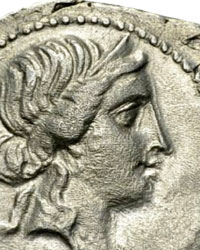
塞琉古帝國. Civic issue. AE14 Circa 150–145 BC (Seemingly unpublished in the standard references)


06
天
14
小時
42
分鐘
24
秒

 | €120 | |
|---|---|---|
 | €110 | |
| €100 |
Catawiki買家保障
在您收到物品前,我們會妥善保管您的付款。查看詳情
Trustpilot評分 4.4 | 139958 則評論
在Trustpilot獲得極佳評等。
青銅 AE14,塞琉克王國 Adelphoi Demi 封裝,塞琉基亞皮里亞,公元前150–145年左右,正面為塞琉基亞與安條克 Demoi 併列頭像,背面為雷電與 AD EL 字樣,NGC AU評級,證書編號2164075-001,重量8.24 g。
AI輔助摘要
賣家描述
UNIQUE/EXCESSIVELY RARE ANCIENT GREECE.
SELEUKIS AND PIERIA, SELEUKEIA AND ANTIOCH.
Bronze AE14, circa 150-145 BC.
Adelphoi Demi issue. Obv: jugate bearded heads of the Demoi of Seleukeia and Antioch right, wearing tainiai.
Rev: thunderbolt, АДЕЛФ above, AHMON and uncertain monogram below; all within wreath.
In secure plastic holder, graded NGC Graded AU Strike:
4/5, Surface:
4/5 Fine Style, certification number 2164075-001.
Unique: unpublished in the standard references and no other examples on CoinArchives.
A fascinating issue, the Adelphoi Demi coins have sparked a great deal of debate, largely centred on who exactly these 'brother peoples' were who were responsible for their minting. The traditional view, that these coins were issued jointly from a tetrarchy of the cities of Antioch on the Orontes, Apameia on the Orontes, Laodikeia ad Mare and Seleukeia Pieria, followed from Strabo's statement that these cities 'were called sisters (adelphai) because of the concord (homonoia) between them' (16.2.4). The consensus now, however, is that this issue was released by the cities of Antioch and Seleukeia only, in alliance: examples of this coinage have been found only in these two cities; for the most part, the 'typology of the series is entirely drawn from the regular numismatic iconography' of the two
'brother peoples' conjoined rather than four.
This series is interesting for a number of other reasons. It contains one of the earliest personifications of the Demos (the 'People') in the numismatic record; it looks forward to the Roman Imperial period, when such
'alliance' (homonoia) coinages between cities were common, particularly in the Greek East; and it speaks to the strength and rulership of the Seleukid kings, in particular Alexander I Balas, under whose reign this issue was produced - for example, there has been debate as to whether the existence of city-based alliances within the Kingdom implies that the relative power of the Seleukid overlords was waning
which combines the heads of the Demoi with the thunderbolt motif usually found only in conjunction with the head of Zeus (HGC 9-1396).
Reference: Unpublished in the standard references:
BMC-; HGC-; SNG Copenhagen-; Mionnet-; for obv., cf.
HGC 6-1395; for rev., cf. HGC 6-1396.
Weight: 8.24 g.
Shipping Restrictions
Worldwide free shipping is offered.
Sorry, but I am unable to ship to the following countries:
Russia, Belarus, Ukraine, China, India, Turkey, Brazil and Mexico.
Thank you for your understanding.
UNIQUE/EXCESSIVELY RARE ANCIENT GREECE.
SELEUKIS AND PIERIA, SELEUKEIA AND ANTIOCH.
Bronze AE14, circa 150-145 BC.
Adelphoi Demi issue. Obv: jugate bearded heads of the Demoi of Seleukeia and Antioch right, wearing tainiai.
Rev: thunderbolt, АДЕЛФ above, AHMON and uncertain monogram below; all within wreath.
In secure plastic holder, graded NGC Graded AU Strike:
4/5, Surface:
4/5 Fine Style, certification number 2164075-001.
Unique: unpublished in the standard references and no other examples on CoinArchives.
A fascinating issue, the Adelphoi Demi coins have sparked a great deal of debate, largely centred on who exactly these 'brother peoples' were who were responsible for their minting. The traditional view, that these coins were issued jointly from a tetrarchy of the cities of Antioch on the Orontes, Apameia on the Orontes, Laodikeia ad Mare and Seleukeia Pieria, followed from Strabo's statement that these cities 'were called sisters (adelphai) because of the concord (homonoia) between them' (16.2.4). The consensus now, however, is that this issue was released by the cities of Antioch and Seleukeia only, in alliance: examples of this coinage have been found only in these two cities; for the most part, the 'typology of the series is entirely drawn from the regular numismatic iconography' of the two
'brother peoples' conjoined rather than four.
This series is interesting for a number of other reasons. It contains one of the earliest personifications of the Demos (the 'People') in the numismatic record; it looks forward to the Roman Imperial period, when such
'alliance' (homonoia) coinages between cities were common, particularly in the Greek East; and it speaks to the strength and rulership of the Seleukid kings, in particular Alexander I Balas, under whose reign this issue was produced - for example, there has been debate as to whether the existence of city-based alliances within the Kingdom implies that the relative power of the Seleukid overlords was waning
which combines the heads of the Demoi with the thunderbolt motif usually found only in conjunction with the head of Zeus (HGC 9-1396).
Reference: Unpublished in the standard references:
BMC-; HGC-; SNG Copenhagen-; Mionnet-; for obv., cf.
HGC 6-1395; for rev., cf. HGC 6-1396.
Weight: 8.24 g.
Shipping Restrictions
Worldwide free shipping is offered.
Sorry, but I am unable to ship to the following countries:
Russia, Belarus, Ukraine, China, India, Turkey, Brazil and Mexico.
Thank you for your understanding.
詳細資料
時代
1400年前
重量
8,24 g
文化/地區
塞琉古帝國
描述/主題
Civic alliance (Adelphoi Demoi)
額外資料
Circa 150–145 BC (Seemingly unpublished in the standard references)
統治者
Civic issue
物品數量
1
Denomination
AE14
金屬
BRONZE
狀態
獲NGC評級
認證編號
2164075-001