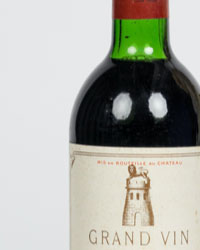
1998 M. Chapoutier, Chante Alouette, Hermitage - Hermitage - 2 瓶 (0.75L)


06
天
16
小時
01
分鐘
05
秒

 | €1 |
|---|
Catawiki買家保障
在您收到物品前,我們會妥善保管您的付款。查看詳情
Trustpilot評分 4.4 | 141873 則評論
在Trustpilot獲得極佳評等。
M. Chapoutier, Chante Alouette Hermitage, 1998, 兩瓶0,75 L,來自法國.
AI輔助摘要
賣家描述
Hermitage Chante Alouette Chapoutier 199
La Maison Chapoutier, sans conteste l'un des noms les plus connus de la vallée du Rhône, produit ses flacons les plus prestigieux sur l'appellation Hermitage. Le domaine s'étend sur près de 300 hectares de vignes converties en biodynamie. C'est à ce jour le plus grand vignoble de France à avoir adopté ce mode cultural, et ce depuis l'obtention de la certification en 1999. Chapoutier est souvent le dernier à vendanger ses vignes, afin d'obtenir une maturité optimale du raisin. Le savoir-faire Chapoutier s'est aussi étendu vers d'autres vignobles : Provence, Beaujolais, Roussillon, Champagne, Alsace, Portugal mais aussi le sud de l'Australie.
L'histoire familiale a débuté en 1808, mais c'est véritablement en 1879 que ses contours se sont dessinés, lorsque Polydor Chapoutier achète quelques hectares de vignes pour devenir éleveur de vins et négociant. Depuis, sept générations se sont succédées, jusqu'à Michel Chapoutier. Celui-ci passe désormais la main à ses enfants Mathilde (au commerce et à la communication) et Maxime (aux vignes et à la cave). Ensemble, ils perpétuent l’héritage familial avec l’envie de mettre en valeur les typicités des grands terroirs rhodaniens.
Lire l'article du Journal sur le domaine Chapoutier
A propos de la cuvée
L'hermitage blanc Chante Alouette de la Maison Chapoutier est élaboré à base du cépage marsanne, sur des vignes situées sous la maison blanche du même nom ; les raisins proviennent de trois parcelles différentes : "Le Méal" est un sol d'alluvions fluvio-glaciaires, "Les Murets" se constitue sur de l'arène granitique, et "Chante-Alouette" repose sur du loess avec une couche argilo-calcaire. La vendange est vinifiée pour un tiers en pièces neuves et le reste en cuves, puis élevée pendant un an environ. Ce vin blanc d'exception développe des arômes complexes et subtils de coing, de gingembre, de miel, d'acacia avec une note de tilleul. D'une remarquable richesse en bouche, soulignée par une finale amandée très persistante, il pourra se conserver plusieurs dizaines d'années.
Maison Chapoutier, undoubtedly one of the best-known names in the Rhone Valley, produces its most prestigious bottles on the Hermitage appellation. The estate extends over nearly 300 hectares of vineyards converted into biodynamics. To date, it is the largest vineyard in France to have adopted this cultural mode since obtaining certification in 1999. Chapoutier is often the last to harvest his vines, in order to obtain an optimal maturity of the grapes. Chapoutier's know-how has also extended to other vineyards: Provence, Beaujolais, Roussillon, Champagne, Alsace, Portugal but also the south of Australia.
The family history began in 1808, but it was really in 1879 that its contours were outlined, when Polydor Chapoutier bought a few hectares of vineyards to become a wine breeder and merchant. Since then, seven generations have succeeded each other, up to Michel Chapoutier. He now passes the hand to his children Mathilde (in commerce and communication) and Maxime (in the vineyards and the cellar). Together, they perpetuate the family heritage with the desire to highlight the typicalities of the great Rhodan terroirs.
Read the article in the Journal on the Chapoutier estate
About the vintage
The white hermitage Chante Alouette de la Maison Chapoutier is made from the Marsan grape variety, on vines located under the white house of the same name; the grapes come from three different plots: "Le Méal" is a soil of fluvio-glacial alluvium, "Les Murets" is formed on granitic arena, and "Chante-Alouette" is based on loess with a clay-limestone layer. The harvest is vinified for a third in new parts and the rest in vats, then aged for about a year. This exceptional white wine develops complex and subtle aromas of coin, ginger, honey, acacia with a note of lime. With a remarkable richness in the mouth, underlined by a very persistent almond finish, it can be kept for several decades.
Hermitage Chante Alouette Chapoutier 199
La Maison Chapoutier, sans conteste l'un des noms les plus connus de la vallée du Rhône, produit ses flacons les plus prestigieux sur l'appellation Hermitage. Le domaine s'étend sur près de 300 hectares de vignes converties en biodynamie. C'est à ce jour le plus grand vignoble de France à avoir adopté ce mode cultural, et ce depuis l'obtention de la certification en 1999. Chapoutier est souvent le dernier à vendanger ses vignes, afin d'obtenir une maturité optimale du raisin. Le savoir-faire Chapoutier s'est aussi étendu vers d'autres vignobles : Provence, Beaujolais, Roussillon, Champagne, Alsace, Portugal mais aussi le sud de l'Australie.
L'histoire familiale a débuté en 1808, mais c'est véritablement en 1879 que ses contours se sont dessinés, lorsque Polydor Chapoutier achète quelques hectares de vignes pour devenir éleveur de vins et négociant. Depuis, sept générations se sont succédées, jusqu'à Michel Chapoutier. Celui-ci passe désormais la main à ses enfants Mathilde (au commerce et à la communication) et Maxime (aux vignes et à la cave). Ensemble, ils perpétuent l’héritage familial avec l’envie de mettre en valeur les typicités des grands terroirs rhodaniens.
Lire l'article du Journal sur le domaine Chapoutier
A propos de la cuvée
L'hermitage blanc Chante Alouette de la Maison Chapoutier est élaboré à base du cépage marsanne, sur des vignes situées sous la maison blanche du même nom ; les raisins proviennent de trois parcelles différentes : "Le Méal" est un sol d'alluvions fluvio-glaciaires, "Les Murets" se constitue sur de l'arène granitique, et "Chante-Alouette" repose sur du loess avec une couche argilo-calcaire. La vendange est vinifiée pour un tiers en pièces neuves et le reste en cuves, puis élevée pendant un an environ. Ce vin blanc d'exception développe des arômes complexes et subtils de coing, de gingembre, de miel, d'acacia avec une note de tilleul. D'une remarquable richesse en bouche, soulignée par une finale amandée très persistante, il pourra se conserver plusieurs dizaines d'années.
Maison Chapoutier, undoubtedly one of the best-known names in the Rhone Valley, produces its most prestigious bottles on the Hermitage appellation. The estate extends over nearly 300 hectares of vineyards converted into biodynamics. To date, it is the largest vineyard in France to have adopted this cultural mode since obtaining certification in 1999. Chapoutier is often the last to harvest his vines, in order to obtain an optimal maturity of the grapes. Chapoutier's know-how has also extended to other vineyards: Provence, Beaujolais, Roussillon, Champagne, Alsace, Portugal but also the south of Australia.
The family history began in 1808, but it was really in 1879 that its contours were outlined, when Polydor Chapoutier bought a few hectares of vineyards to become a wine breeder and merchant. Since then, seven generations have succeeded each other, up to Michel Chapoutier. He now passes the hand to his children Mathilde (in commerce and communication) and Maxime (in the vineyards and the cellar). Together, they perpetuate the family heritage with the desire to highlight the typicalities of the great Rhodan terroirs.
Read the article in the Journal on the Chapoutier estate
About the vintage
The white hermitage Chante Alouette de la Maison Chapoutier is made from the Marsan grape variety, on vines located under the white house of the same name; the grapes come from three different plots: "Le Méal" is a soil of fluvio-glacial alluvium, "Les Murets" is formed on granitic arena, and "Chante-Alouette" is based on loess with a clay-limestone layer. The harvest is vinified for a third in new parts and the rest in vats, then aged for about a year. This exceptional white wine develops complex and subtle aromas of coin, ginger, honey, acacia with a note of lime. With a remarkable richness in the mouth, underlined by a very persistent almond finish, it can be kept for several decades.
詳細資料
年份(Vintage)
1998
生產商,葡萄酒名稱
M. Chapoutier, Chante Alouette, Hermitage
瓶數
2
瓶身大小
瓶 (0.75L)
發行地
法國
地區
Hermitage
Grape varieties
Marsanne, Roussanne
填充級別
勃艮第/香檳/長笛瓶型, 高液面
封膜/軟木塞的狀況
完整的原金屬封膜
標籤的狀態
完全原封,可辨識的標籤