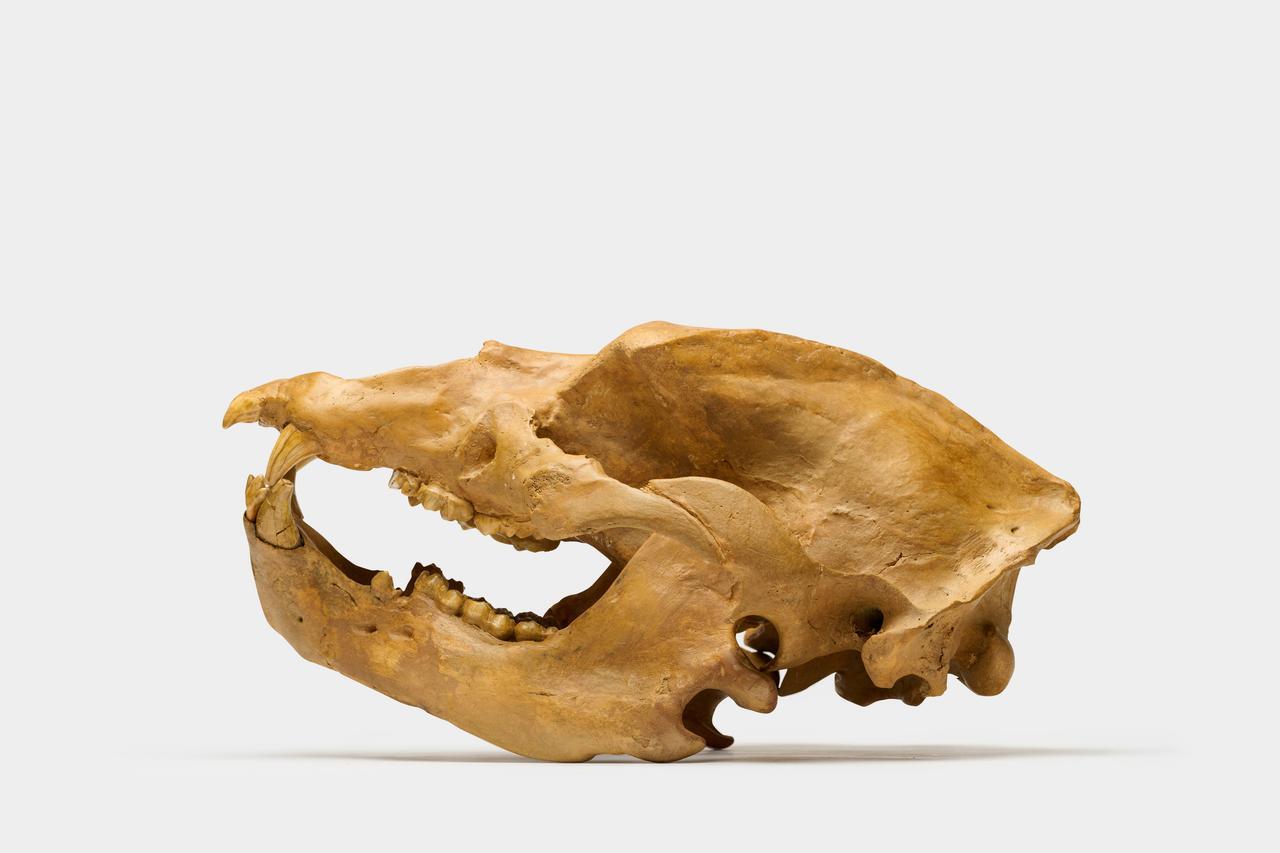
博物馆级恐龙标本 - 動物化石 - Mei long - 40 cm - 35 cm


02
天
18
小時
21
分鐘
29
秒

 | €7 | |
|---|---|---|
 | €6 | |
| €5 |
Catawiki買家保障
在您收到物品前,我們會妥善保管您的付款。查看詳情
Trustpilot評分 4.4 | 142553 則評論
在Trustpilot獲得極佳評等。
Mei long,一塊來自中國的自然、原創、博物館級標本,屬於下白堊紀早期,高40 cm,寬35 cm。
AI輔助摘要
賣家描述
Scientific Name: Mei long
Category: Small troodontid theropod dinosaur
Period: Early Cretaceous
Locality: Yixian Formation, western Liaoning, China
Year Named: 2004
Etymology: "Mei long" translates to "sleeping dragon"
Matrix Size: 40 cm
Authenticity: Genuine/Original
Mei long is one of the most representative small theropod dinosaurs from China's Early Cretaceous period and is a paleontological find renowned for preserving a specific behavior—specifically, the act of sleeping—in fossil form.
Unlike most dinosaur fossils that preserve only skeletal structures, the scientific significance of Mei long lies in its classic specimens, which preserve an exceptionally rare curled-up resting posture. The body is tucked in, with hind limbs folded beneath the torso, the head resting close to the body, and the long tail curving around the exterior of the frame—a posture strikingly similar to that of modern birds while sleeping.
For this reason, Mei long is often cited as key evidence for the behavioral continuity between non-avian theropods and birds. It reveals more than just skeletal morphology; it captures a moment of life frozen in time hundreds of millions of years ago.
Specimen Highlights
This specimen features a compact overall composition, with its most striking visual characteristic being the complete and distinct "sleeping posture."
As seen in the photographs, the skull is positioned close to the torso, the limbs are tucked around the body, the spine shows a distinct curve, and the long tail sweeps in a wide arc along the edge of the stone slab, creating an overall curled, elliptical silhouette.
The spatial relationships between the head, ribs, vertebrae, limbs, and tail are clearly discernible. In particular, the way the long tail wraps around the body lends the specimen a strong sense of visual completeness and narrative quality.
Compared to the common "extended" skeletal mounts, this curled posture allows viewers to more easily visualize the animal's true state in life, making it exceptionally compelling for natural history exhibitions. Scientific Value
Mei belongs to the Troodontidae, a group of small theropod dinosaurs closely related to birds.
Its discovery not only supplements morphological data on small Early Cretaceous dinosaurs but also holds significant importance for understanding the resting behaviors and thermoregulation of theropods, as well as the evolutionary origins of avian behaviors.
In particular, its posture—with the head tucked close to the body and limbs drawn in—resembles the sleeping positions common among modern birds, making Mei a highly representative specimen for paleontological discussions regarding the evolution of dinosaur behavior.
Value for Collection and Exhibition
The value of this specimen lies not merely in the dinosaur itself, but in its unique posture and the narrative quality it conveys.
It presents far more than a simple skeletal display; it captures a moment imbued with a sense of life:
a small dinosaur curling up to rest hundreds of millions of years ago, a pose that was ultimately preserved intact within the geological strata.
Fossils exhibiting such distinct behavioral characteristics are particularly compelling in natural history exhibitions, serving as key display pieces for collections focused on dinosaurs, the origins of birds, or Mesozoic ecosystems.
Scientific Name: Mei long
Category: Small troodontid theropod dinosaur
Period: Early Cretaceous
Locality: Yixian Formation, western Liaoning, China
Year Named: 2004
Etymology: "Mei long" translates to "sleeping dragon"
Matrix Size: 40 cm
Authenticity: Genuine/Original
Mei long is one of the most representative small theropod dinosaurs from China's Early Cretaceous period and is a paleontological find renowned for preserving a specific behavior—specifically, the act of sleeping—in fossil form.
Unlike most dinosaur fossils that preserve only skeletal structures, the scientific significance of Mei long lies in its classic specimens, which preserve an exceptionally rare curled-up resting posture. The body is tucked in, with hind limbs folded beneath the torso, the head resting close to the body, and the long tail curving around the exterior of the frame—a posture strikingly similar to that of modern birds while sleeping.
For this reason, Mei long is often cited as key evidence for the behavioral continuity between non-avian theropods and birds. It reveals more than just skeletal morphology; it captures a moment of life frozen in time hundreds of millions of years ago.
Specimen Highlights
This specimen features a compact overall composition, with its most striking visual characteristic being the complete and distinct "sleeping posture."
As seen in the photographs, the skull is positioned close to the torso, the limbs are tucked around the body, the spine shows a distinct curve, and the long tail sweeps in a wide arc along the edge of the stone slab, creating an overall curled, elliptical silhouette.
The spatial relationships between the head, ribs, vertebrae, limbs, and tail are clearly discernible. In particular, the way the long tail wraps around the body lends the specimen a strong sense of visual completeness and narrative quality.
Compared to the common "extended" skeletal mounts, this curled posture allows viewers to more easily visualize the animal's true state in life, making it exceptionally compelling for natural history exhibitions. Scientific Value
Mei belongs to the Troodontidae, a group of small theropod dinosaurs closely related to birds.
Its discovery not only supplements morphological data on small Early Cretaceous dinosaurs but also holds significant importance for understanding the resting behaviors and thermoregulation of theropods, as well as the evolutionary origins of avian behaviors.
In particular, its posture—with the head tucked close to the body and limbs drawn in—resembles the sleeping positions common among modern birds, making Mei a highly representative specimen for paleontological discussions regarding the evolution of dinosaur behavior.
Value for Collection and Exhibition
The value of this specimen lies not merely in the dinosaur itself, but in its unique posture and the narrative quality it conveys.
It presents far more than a simple skeletal display; it captures a moment imbued with a sense of life:
a small dinosaur curling up to rest hundreds of millions of years ago, a pose that was ultimately preserved intact within the geological strata.
Fossils exhibiting such distinct behavioral characteristics are particularly compelling in natural history exhibitions, serving as key display pieces for collections focused on dinosaurs, the origins of birds, or Mesozoic ecosystems.
詳細資料
標本
Museum-quality dinosaur specimens
科學名稱
Mei long
原產國
中國
地質時期
白堊紀,下 (14500 - 10050 萬年)
狀態
自然
Height
40 cm
Width
35 cm
真偽
原創/正版