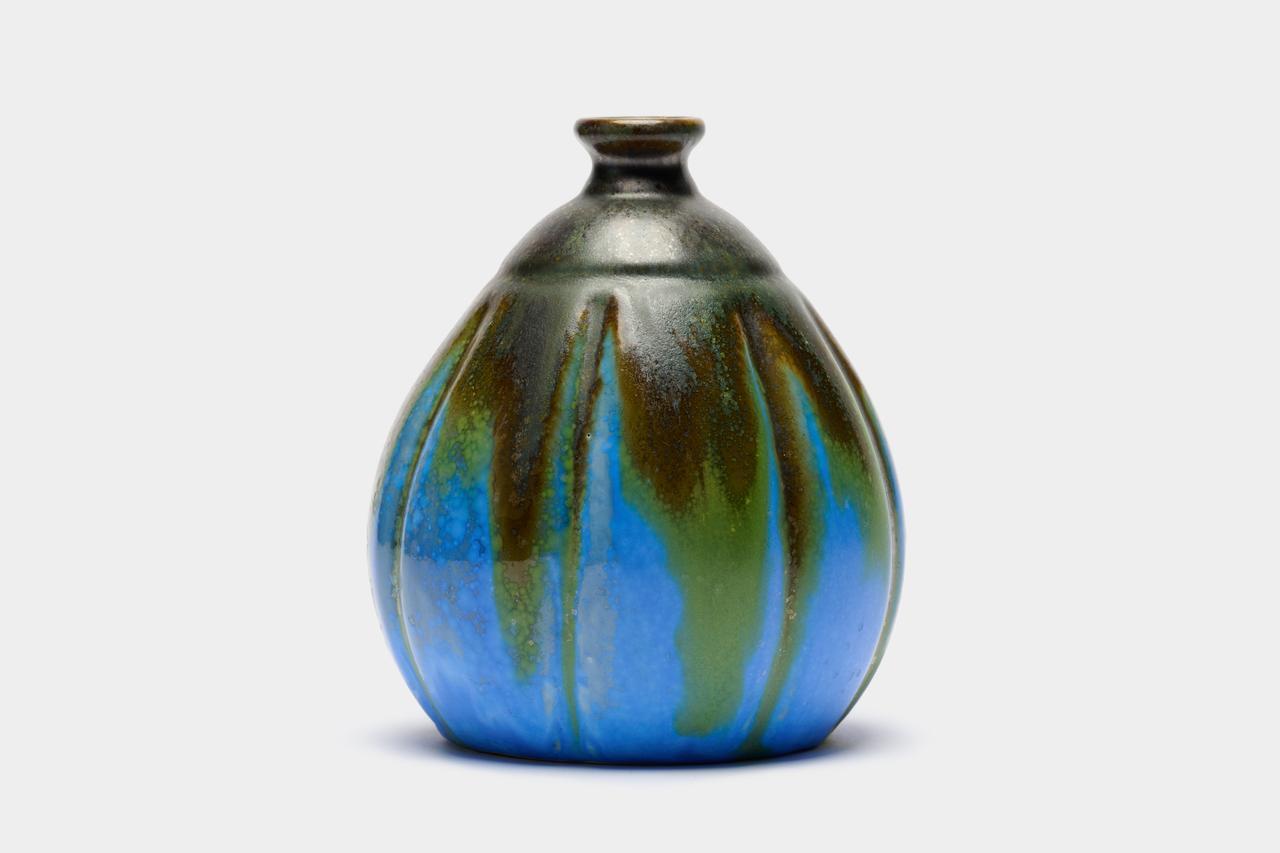
Jarrón Tango Art Déco - 花瓶 - 玻璃



Catawiki買家保障
在您收到物品前,我們會妥善保管您的付款。查看詳情
Trustpilot評分 4.4 | 143362 則評論
在Trustpilot獲得極佳評等。
賣家描述
艺术玻璃风格的布拉格波希米亚艺术 deco Tango 花瓶。约1920–1930年。灵感来自洛茨/洛茨 Ausführung 166 的装饰语言。
我 presented 这只 Tango 花瓶,属于 Art Déco 时代,采用波希米亚艺术玻璃制成,散发光与喜悦。就视觉而言,这件作品的施加装饰让人联想到洛茨/洛茨 Ausführung 166 的构成语言:单色主体、施加的玻璃线以及直接覆於主体上的独立玻璃圆珠。
Tango Glass 的特征在于使用强烈色彩的玻璃块,通过施加的装饰元素——边缘、线条、按钮或圆珠——来产生色彩对比,而作品在仍然炽热、处于可塑状态时即呈现出这些效果。
DESCRIPTION:
花瓶通过吹制手工制成,这一点可从与当时技术相符的气泡种子可见。
它以雄浑圆展的轮廓而著称,口直径约14厘米,在短颈处大胆张开,颈部修长而优雅地变窄。本体由此向下发展成反向水滴形,实心且基地较低,赋予其稳定且明显具有雕塑感的姿态。
作品的生动来自于黄玻璃的强烈对比与蓝色装饰元素的点缀——通过一条水平的施加玻璃带以及一系列浮雕圆珠在视觉上结构化体积。这些元素为流线型的吹制造型注入明显的几何节奏。
PONTIL & ATRIBUCIÓN
底座保留了原始断点 pontil 的粗糙标记(rough pontil mark),这是该手工制造过程的典型遗留物,呈现不规则轮廓和粗糙纹理,体现未完全打磨的 pontil。
此件可能属于波希米亚制造商如 Welz、Kralik、Rückl 或 Rindskopf 的生产领域;然而,进行具体归属并不严格亦不诚实,因为这一大批作品中很大一部分没有署名或识别标记。pontil 的性质也不能单独确立归属,因为同一厂房内也可能有粗糙和抛光两种 pontil 的作品。
在这一时期,许多玻璃制品目前无法可靠地归属于某一特定制造商,原因在于丢失的记录、模具书和工业文献,以及对某些工厂身份的现今了解不足。
DATE:大约1920–1930年(两次世界大战之间的时期)。
DIMENSIONES:
高度:20 cm
口径:13.5 cm
主体最大直径:16 cm
底径:9 cm
ESTADO:
极好,无裂纹或缺口。仅有少许定居灰尘及与其年龄相符的历史摩擦痕迹。
NOTAS ADICIONALES:
** 照片是描述的一部分。
** 最终尺寸和重量指示均为确保运输中妥善保护所需的安全包装配置。
::::::::::::::::::::::::::::::::: ENGLISH :::::::::::::::::::::::::::::::::
Art Deco Tango vase in Bohemian art glass. ca. 1920–1930. Inspired by the decorative language of Lötz/Loetz Ausführung 166.
I present this Tango vase from the Art Deco period, made of Bohemian art glass that radiates light and joy. Visually, the applied decoration of this piece recalls the compositional language of Lötz/Loetz Ausführung 166: monochrome body, applied glass thread and independent glass cabochons applied directly onto the body.
Tango Glass is characterized by the use of intensely colored glass masses and chromatic contrasts produced by means of applied decorative elements—rims, threads, buttons or cabochons—while the piece is still incandescent, in a plastic state.
DESCRIPTION:
The vase is handcrafted by blowing, as evidenced by the presence of air seeds consistent with the technology of the period.
It stands out for its bold and full flared silhouette, with a wide mouth of approximately 14 cm that opens audaciously over a short and elegantly narrowed neck. From there, the body develops into a suggestive inverted teardrop shape, massive and with a low base, giving it a stable and distinctly sculptural presence.
The piece lives from the contrast between the intensity of the yellow glass and the blue decorative elements, which visually structure the volume through a horizontal band of applied glass and a succession of raised cabochons. These elements provide a marked geometric rhythm to the fluidity of the blown form.
PONTIL & ATTRIBUTION
The base preserves the original fracture pontil mark (rough pontil mark), a characteristic vestige of the artisanal manufacturing process that this piece preserves, showing an irregular outline and rough texture, characteristic of a not completely polished pontil.
The piece could be situated within the production sphere of Bohemian manufacturers such as Welz, Kralik, Rückl or Rindskopf; however, it would not be rigorous or honest to make a specific attribution, since an important part of this production lacks a signature or identifying mark. Nor does the nature of the pontil alone allow an attribution to be established, since within the same manufactory pieces with both rough and polished pontils can be found.
Much of the glass produced during this period cannot currently be reliably attributed to a specific manufacturer, due to the loss of records, pattern books and industrial documentation, as well as the current lack of knowledge regarding the identity of certain glassworks.
DATING: Circa 1920–1930 (Interwar Period).
DIMENSIONS:
Height: 20 cm
Mouth diameter: 13.5 cm
Maximum body diameter: 16 cm
Base diameter: 9 cm
CONDITION:
Excellent, with no cracks or chips. It presents only a patina from historical settling and slight signs of historical friction consistent with its age.
ADDITIONAL NOTES:
• The photographs form part of the description.
• The final measurements and weight indicated correspond to the configuration of secure packaging, which is essential to ensure the proper protection of this piece during transport.
艺术玻璃风格的布拉格波希米亚艺术 deco Tango 花瓶。约1920–1930年。灵感来自洛茨/洛茨 Ausführung 166 的装饰语言。
我 presented 这只 Tango 花瓶,属于 Art Déco 时代,采用波希米亚艺术玻璃制成,散发光与喜悦。就视觉而言,这件作品的施加装饰让人联想到洛茨/洛茨 Ausführung 166 的构成语言:单色主体、施加的玻璃线以及直接覆於主体上的独立玻璃圆珠。
Tango Glass 的特征在于使用强烈色彩的玻璃块,通过施加的装饰元素——边缘、线条、按钮或圆珠——来产生色彩对比,而作品在仍然炽热、处于可塑状态时即呈现出这些效果。
DESCRIPTION:
花瓶通过吹制手工制成,这一点可从与当时技术相符的气泡种子可见。
它以雄浑圆展的轮廓而著称,口直径约14厘米,在短颈处大胆张开,颈部修长而优雅地变窄。本体由此向下发展成反向水滴形,实心且基地较低,赋予其稳定且明显具有雕塑感的姿态。
作品的生动来自于黄玻璃的强烈对比与蓝色装饰元素的点缀——通过一条水平的施加玻璃带以及一系列浮雕圆珠在视觉上结构化体积。这些元素为流线型的吹制造型注入明显的几何节奏。
PONTIL & ATRIBUCIÓN
底座保留了原始断点 pontil 的粗糙标记(rough pontil mark),这是该手工制造过程的典型遗留物,呈现不规则轮廓和粗糙纹理,体现未完全打磨的 pontil。
此件可能属于波希米亚制造商如 Welz、Kralik、Rückl 或 Rindskopf 的生产领域;然而,进行具体归属并不严格亦不诚实,因为这一大批作品中很大一部分没有署名或识别标记。pontil 的性质也不能单独确立归属,因为同一厂房内也可能有粗糙和抛光两种 pontil 的作品。
在这一时期,许多玻璃制品目前无法可靠地归属于某一特定制造商,原因在于丢失的记录、模具书和工业文献,以及对某些工厂身份的现今了解不足。
DATE:大约1920–1930年(两次世界大战之间的时期)。
DIMENSIONES:
高度:20 cm
口径:13.5 cm
主体最大直径:16 cm
底径:9 cm
ESTADO:
极好,无裂纹或缺口。仅有少许定居灰尘及与其年龄相符的历史摩擦痕迹。
NOTAS ADICIONALES:
** 照片是描述的一部分。
** 最终尺寸和重量指示均为确保运输中妥善保护所需的安全包装配置。
::::::::::::::::::::::::::::::::: ENGLISH :::::::::::::::::::::::::::::::::
Art Deco Tango vase in Bohemian art glass. ca. 1920–1930. Inspired by the decorative language of Lötz/Loetz Ausführung 166.
I present this Tango vase from the Art Deco period, made of Bohemian art glass that radiates light and joy. Visually, the applied decoration of this piece recalls the compositional language of Lötz/Loetz Ausführung 166: monochrome body, applied glass thread and independent glass cabochons applied directly onto the body.
Tango Glass is characterized by the use of intensely colored glass masses and chromatic contrasts produced by means of applied decorative elements—rims, threads, buttons or cabochons—while the piece is still incandescent, in a plastic state.
DESCRIPTION:
The vase is handcrafted by blowing, as evidenced by the presence of air seeds consistent with the technology of the period.
It stands out for its bold and full flared silhouette, with a wide mouth of approximately 14 cm that opens audaciously over a short and elegantly narrowed neck. From there, the body develops into a suggestive inverted teardrop shape, massive and with a low base, giving it a stable and distinctly sculptural presence.
The piece lives from the contrast between the intensity of the yellow glass and the blue decorative elements, which visually structure the volume through a horizontal band of applied glass and a succession of raised cabochons. These elements provide a marked geometric rhythm to the fluidity of the blown form.
PONTIL & ATTRIBUTION
The base preserves the original fracture pontil mark (rough pontil mark), a characteristic vestige of the artisanal manufacturing process that this piece preserves, showing an irregular outline and rough texture, characteristic of a not completely polished pontil.
The piece could be situated within the production sphere of Bohemian manufacturers such as Welz, Kralik, Rückl or Rindskopf; however, it would not be rigorous or honest to make a specific attribution, since an important part of this production lacks a signature or identifying mark. Nor does the nature of the pontil alone allow an attribution to be established, since within the same manufactory pieces with both rough and polished pontils can be found.
Much of the glass produced during this period cannot currently be reliably attributed to a specific manufacturer, due to the loss of records, pattern books and industrial documentation, as well as the current lack of knowledge regarding the identity of certain glassworks.
DATING: Circa 1920–1930 (Interwar Period).
DIMENSIONS:
Height: 20 cm
Mouth diameter: 13.5 cm
Maximum body diameter: 16 cm
Base diameter: 9 cm
CONDITION:
Excellent, with no cracks or chips. It presents only a patina from historical settling and slight signs of historical friction consistent with its age.
ADDITIONAL NOTES:
• The photographs form part of the description.
• The final measurements and weight indicated correspond to the configuration of secure packaging, which is essential to ensure the proper protection of this piece during transport.
詳細資料
時代
1900-2000
具體原產地
Bohemia
物品數量
1
原產國
捷克共和國
設計師/藝術家/製作者
Jarrón Tango Art Déco
材質
玻璃
Style
藝術裝飾
顏色
藍色, 黃色
狀態
極佳 - 幾乎沒有 使用痕跡/老化/小瑕疵
Height
20 cm
Width
16 cm
Depth
20 cm
大概年份
1920-1930